Vienna is the capital of Austria and a city full of historical buildings and some of the most astounding palace complexes in the world. Over the centuries, Vienna has been part of the Holy Roman Empire, the Babenberg dynasty, the Habsburg Empire, the Austrian Empire and then the Austro-Hungarian Empire, so all of the royal families required royal palaces.
One of the best ways to see Vienna is on foot. It is a remarkable city that has retained its eclectic elegance throughout the centuries despite the severe structural casualties of World War II.
This is what caught my eye, I hope you enjoy!
Do you like the images posted?
Click here to explore the shop.
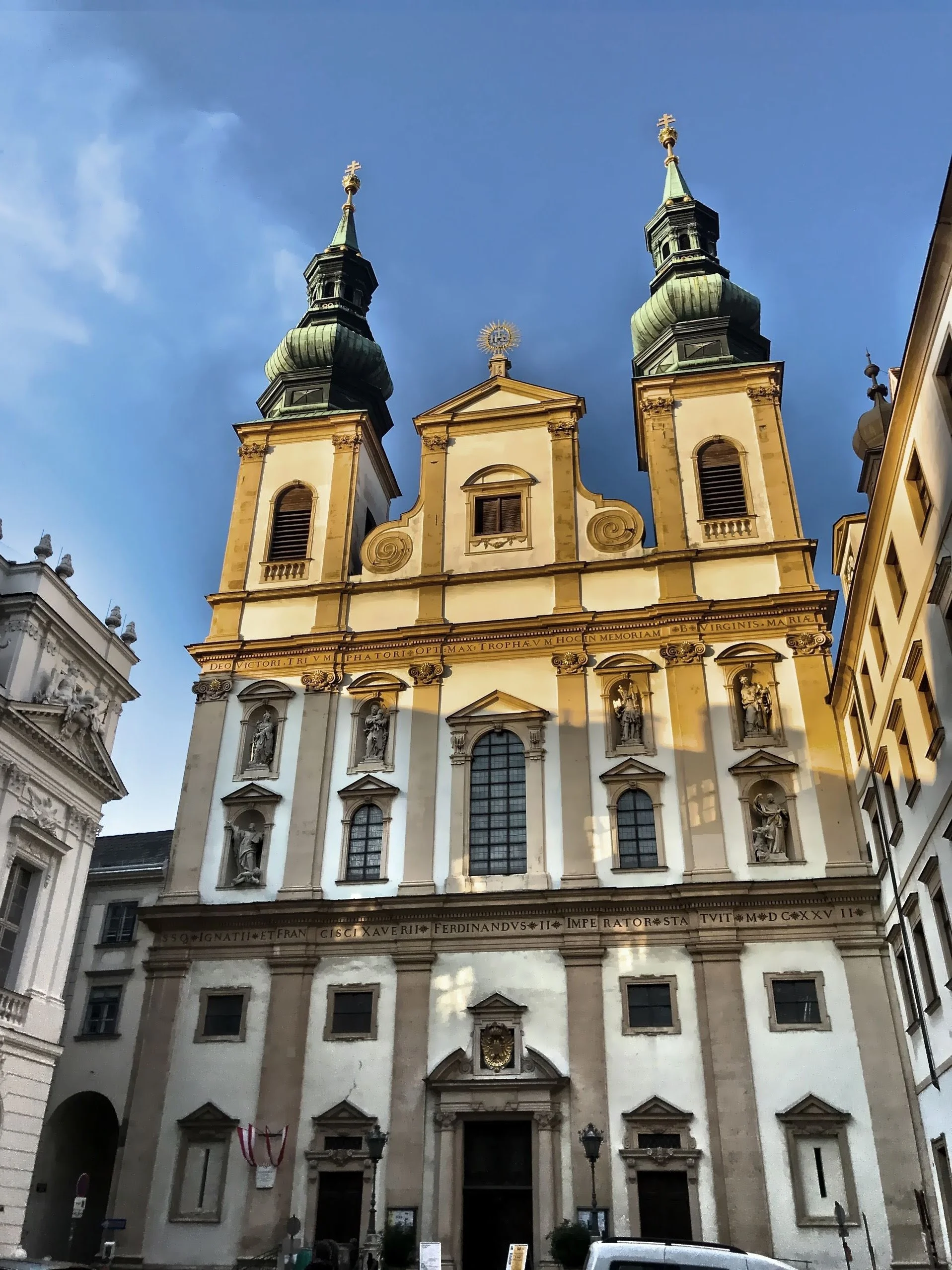
The Jesuite Church (Jesuitenkirche) was consecrated on 1631
Opulent church interiors
.
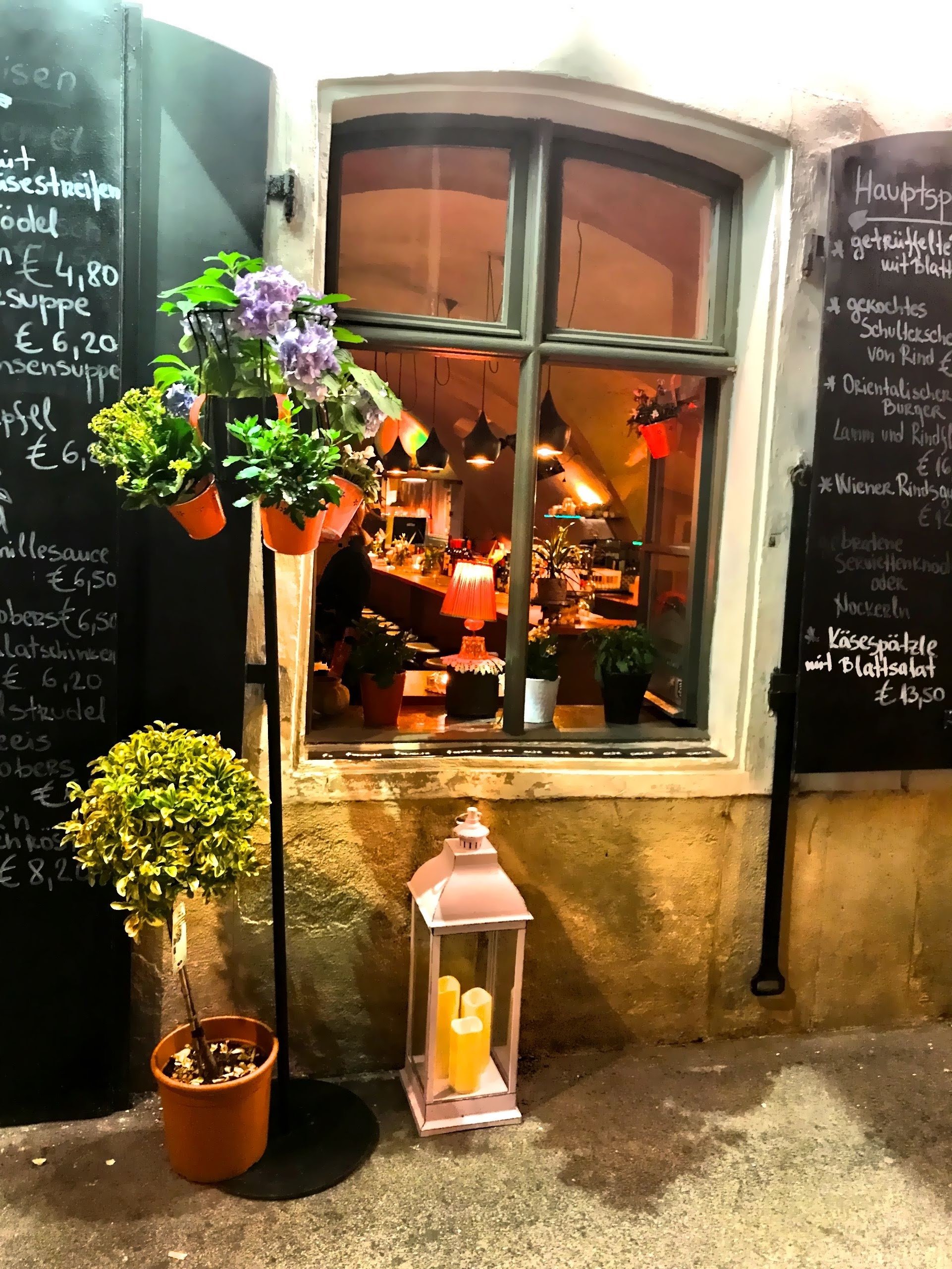
There are many inviting spots for a bite and cocktails
.
Kings, queens, emperors have all called the vibrant city home, and it played an important part as a leading European music center.
The stunning architecture all around is a blend of different historic periods that complement each other.
.
.
.
.
The entrance to the Vienna State Opera House.
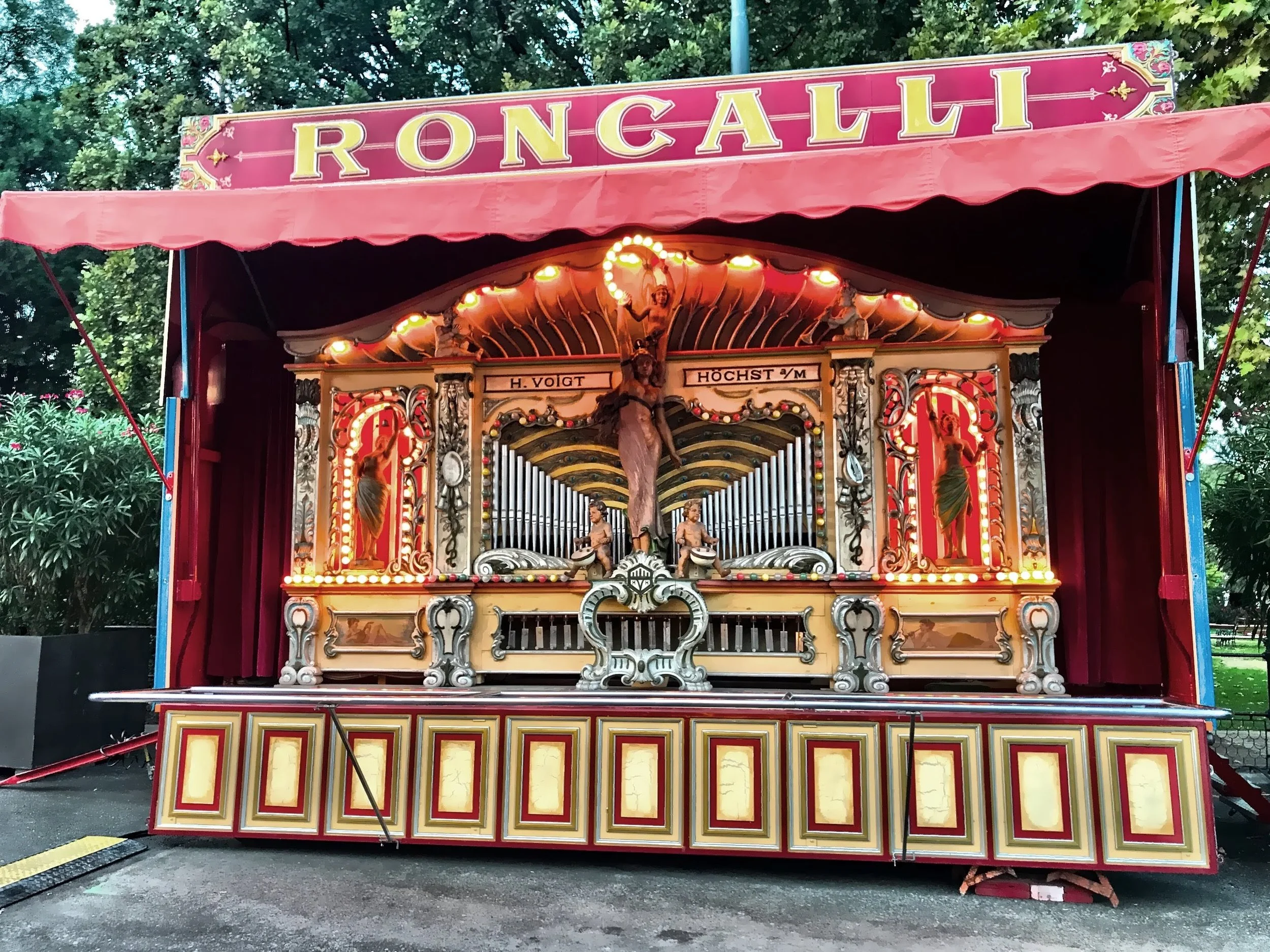
A part of the Circus Roncalli, that has entertained audiences for over four decades balancing between nostalgia and modern day.
The Rathaus Vienna pictured here hosting the Roncalli Circus. The Rathaus was opened in 1883 and operates as the City Hall and hosts one of Vienna’s largest Christmas markets.
St. Charles Church (Karlskirche) is widely considered one of the city’s greatest buildings. The 18th century church was built by Emperor Charles IV.
This original Art Nouveau above ground Karlsplatz Stadtbahn Station was opened in 1899. When the U-ban (underground rail) was upgraded this building was going to be demolished. After public outcry it was saved and now serves as an exhibition space for the museum.
Some Art Nouveau details of the Karlsplatz Stadtbahn Station
These horses pulling carriages lining the streets may not be from Vienna’s Spanish Riding School, but I would like to mention that the school is one of the oldest in the world. They train Lipizzan horses in classical riding for parades, galas and other celebrations.
There is always time for a hot chocolate stop along the way
Stylish store fronts
.
.
.
.
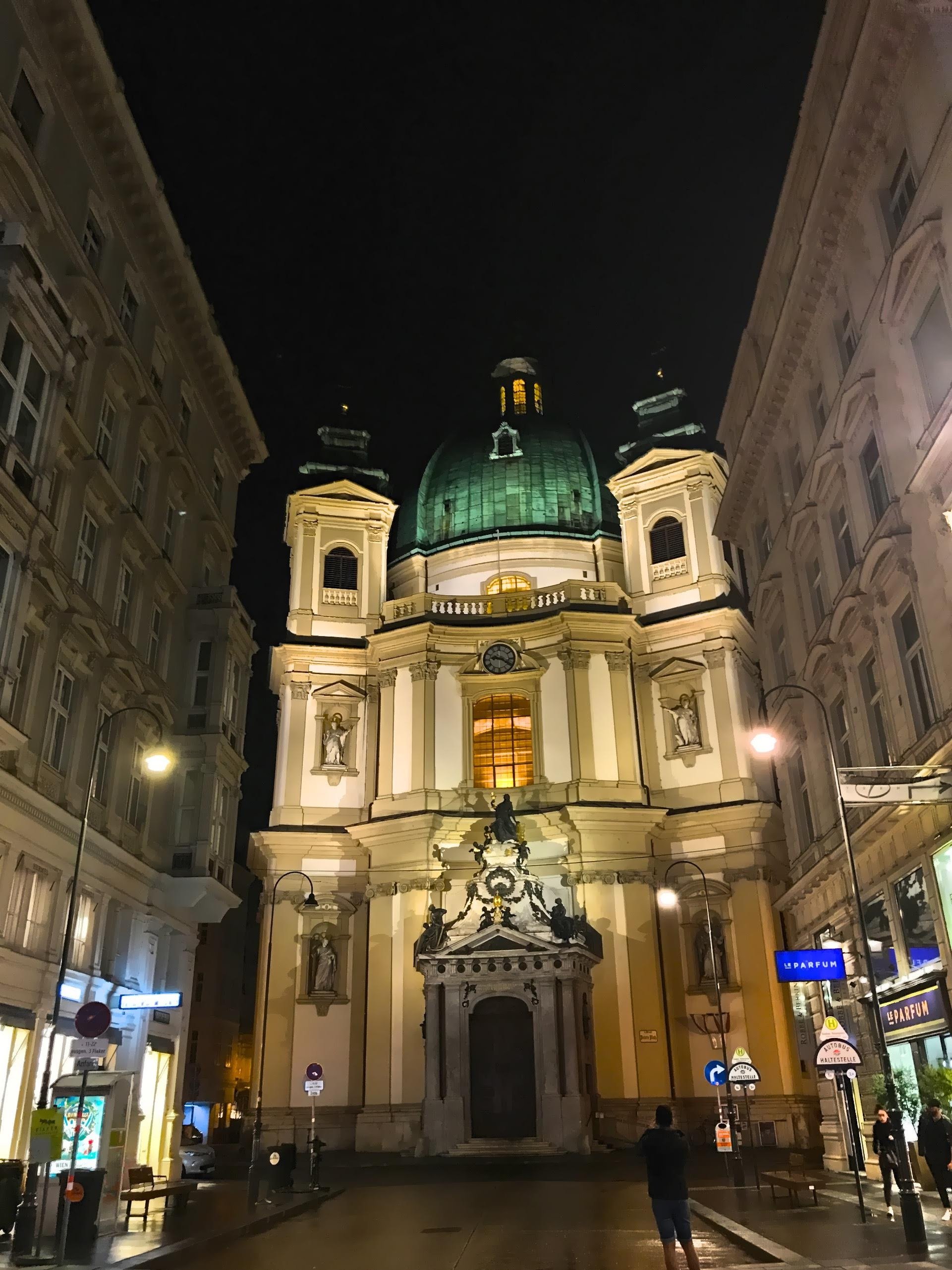
St. Peter’s Catholic Church (Peterskirche) main facade. The church was constructed in 1733
Interior shots of St. Peter’s Catholic Church
.
For those with a sweet tooth
The approach to Belvedere Palace, a historic building complex made up of two Baroque palaces.
The Belvedere Gates
The Belvedere Palace was built in 1712-1723 by Johann Lucas von Hildebrandt for Prince Eugene of Savoy.
The Belvedere Palace first opened as a museum in 1781.
The Belvedere Palace is an important UNESCO site for its showy architecture and sculpted gardens
The fountain at Belvedere Palace
Votivkirche (Votive Church) construction began in 1856 and completed in 1879.
Votivkirche has undergone extensive renovations after being badly damaged during Work War II.
Votivkirche interiors show a unity of several styles
.
.
An on the ground sculpture representing a Jewish man who was humiliated when forced to wash the streets. The back of the statue is covered with barbed wire, one of the symbols of imprisonment.
The Hofburg Imperial Palace was the official headquarters for the Habsburg Empire from 1273-1918.
The grand entrance to the Hofburg Imperial Palace
Close-up detail the Power At Sea (Die Macht zur See Brunnen) sculpture and fountain by Rudolf Weyrand fountain outside the Hofburg Imperial Palace.
The Russian Orthodox Cathedral of St. Nicholas, with five golden domes, was completed in 1899.
Kunsthistorisches Museum houses the massive art collection of the Habsburg, among other collections on permanent display.
Schonbrunn Palace was used by the Habsburg Monarchy as a summer residence. There are 1,441 rooms, but only 40 are open to the public. Unfortunately, no photography is allowed inside the palace.
During the reign of Maria Theresa, Schonbrunn Palace was the center of social activity.
Statues in the gardens at Schonbrunn Palace.
Schonbrunn Palace and gardens are on the list of UNESCO World Cultural Heritage Sites since 1996.
Schonbrunn Palace has been open for visitors to tour since the 1960’s.
Part of the Schonbrunn Palace fountain in the Palace gardens. The gardens were opened to the public in the 1770’s
This is the magnificent Neptune fountain with sits across from Schonbrunn Palace. It was built in the late 1770’s.
St. Stephen’s Cathedral (Stephansdom) is widely considered the spiritual heart of Vienna. The building was severely damaged by fire at the end of WWII, but lovingly restored back to its former glory.
St. Stephen’s Cathedral has been the backdrop for many events in the Habsburg and Austrian history.
St. Stephen’s Cathedral is famous for its majestic towers which dominate Vienna’s skyline for centuries.
The interior of St. Stephen’s Cathedral
More of the awesome and eclectic architecture
.
.
.
What you should know:
This is a walkable city, and the best way to see the city.
Some public restrooms will charge to use.
There is a large amount of public art, so enjoy!
There are many restaurant options.
You will need valid passport and a travel power adapter and a valid passport if you are from the U.S.
Many people speak English, but German is the official language and Austrians are very direct.
Tipping is generally expected, it is added to the bill. The wait staff will not bring you the bill until requested.
Watch where you step (dog poop).
Most places close on Sundays.
Vienna has a hop-on hop-off bus as well as a good bus and Metro system.