Located in the heart of Virginia’s Shenandoah Valley, Staunton has interesting historic architecture, some dating back to the 18th century. The National Trust for Historic Preservation named Staunton “One of a Dozen Distinctive Destinations in the United States.” Staunton was also the first Virginia community to receive a “Great American Main Street Award.”
Here is what caught my eye; I hope you enjoy!
Trinity Church was constructed in 1855
.
The National Valley Bank (also known as United Virginia Bank) is a historic beaux arts-style building built in 1903.
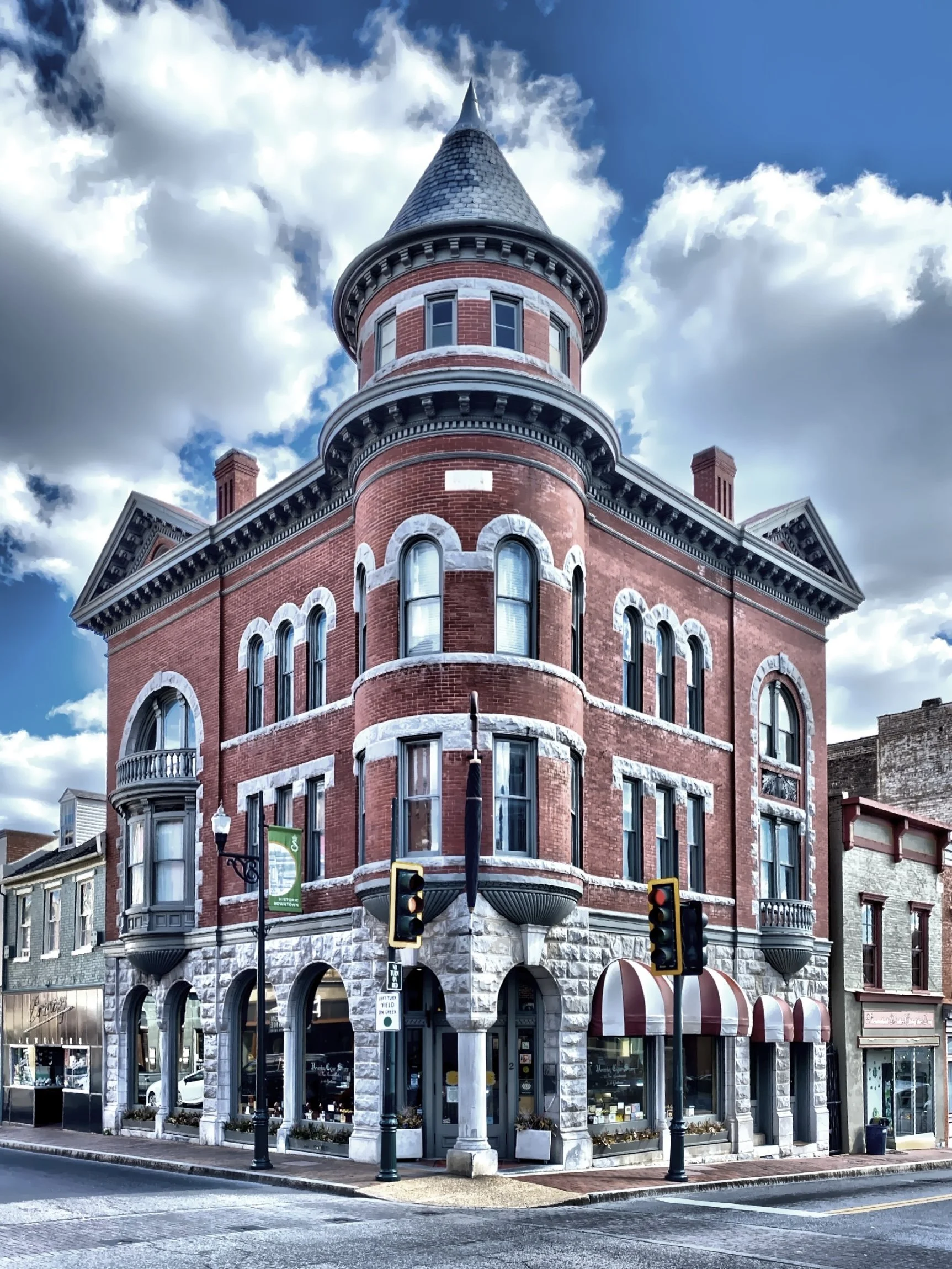
The 19th-century Romanesque-Revival style Marquis Building was built in 1896 for former Confederate Captain J.C. Marquis. His offices were on the top floor. The building has distinctive arched windows, a turret, and a giant umbrella suspended over the entrance.
Do you like the images posted?
Click here to explore the shop.
Most of the buildings in this area date from the 1870s to the 1920s. This historic district is small, and therefore perfect for exploring on foot.
.
The Staunton Clock Tower was built in 1880 and was designed by Architect S. W. Folk and remodeled by T. J. Collins around 1916. The original purpose for the building was the local YMCA, notable for being only the second one in Virginia. It contained a bowling alley, track, and gym. Many of the original components of the clock are still working today.
.
Some of the most notable architecture can be seen in the Beverley Historic District.
The Masonic Temple with tower was built in 1895, is a perfect example of one of Staunton’s oldest buildings retaining its history. One of Staunton’s tallest buildings, it features a gable roof and mixes classical and medieval elements.
.
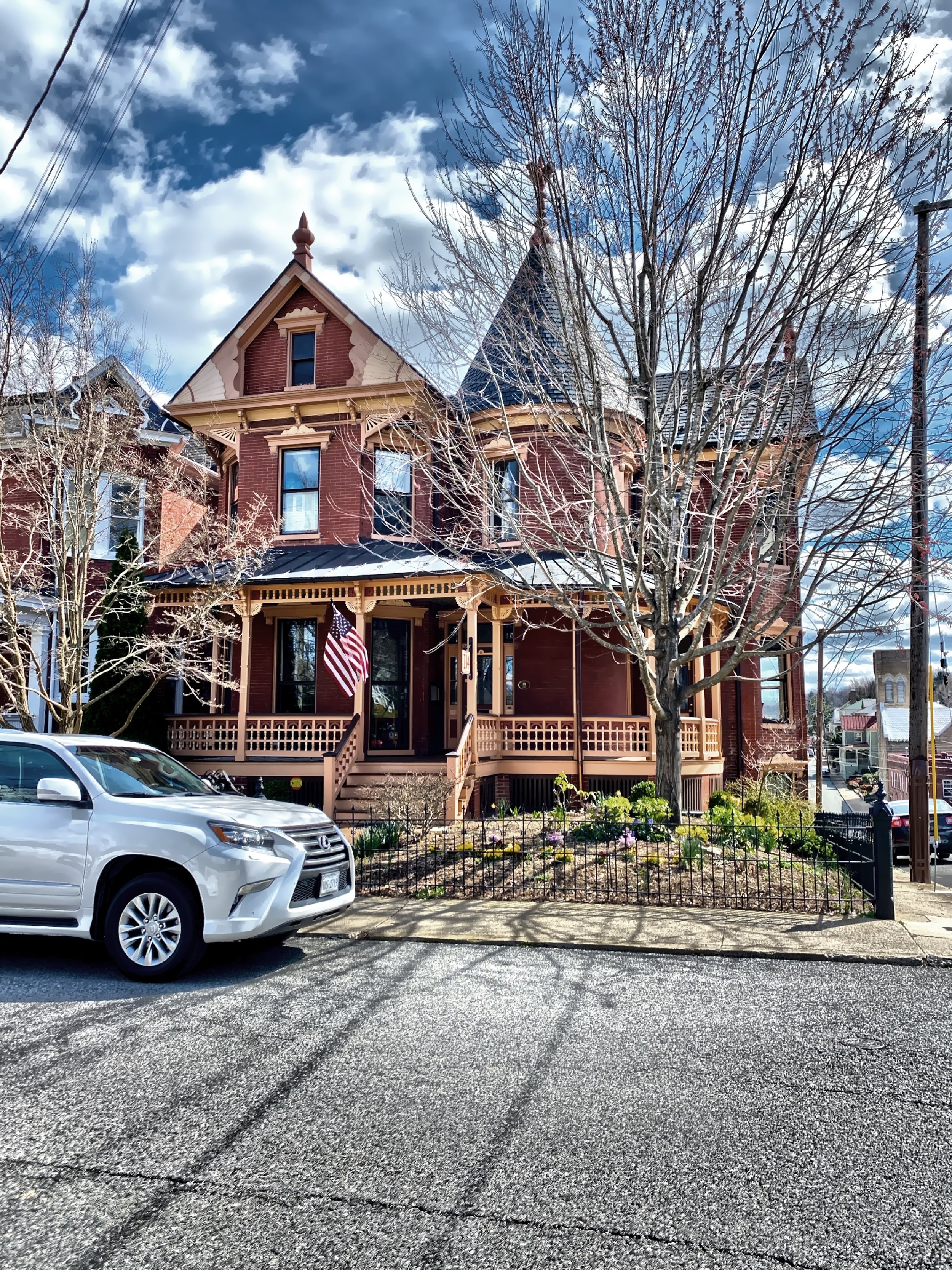
Downtown Staunton contains many examples of Virginia’s finest Victorian architecture.
.
The one-story stucco Moorish-revival Temple House of Israel was built in 1925 to house a growing congregation.
.
.
The construction of the first building of Mary Baldwin University was completed in 1844 and additional wings added in 1857.
.
.
The present railroad station is the third one built on the site. It was built in 1902 by the Chesapeake and Ohio Railway. The first station was destroyed by General Hunter’s Union troops in June, 1864, and a runaway train destroyed the second station in 1890.
.
.
What you should know:
On the street parking is available, some metered; check posted parking regulations signs.
Parking in season may be difficult.
This a a walkable town, and it is a great way to get around.
There are a few restaurant options and two theaters.
People are friendly and helpful.
You could spend a couple of hours to an entire day exploring here.
There are some restaurant and entertainment option.
For more information: Staunton, VA