Lucerne is a compact city renowned for its well-preserved medieval architecture, nestled amid snowcapped mountains on the shores of Lake Lucerne. The lake is not only one of the most beautiful in Switzerland, but also the largest in the region.
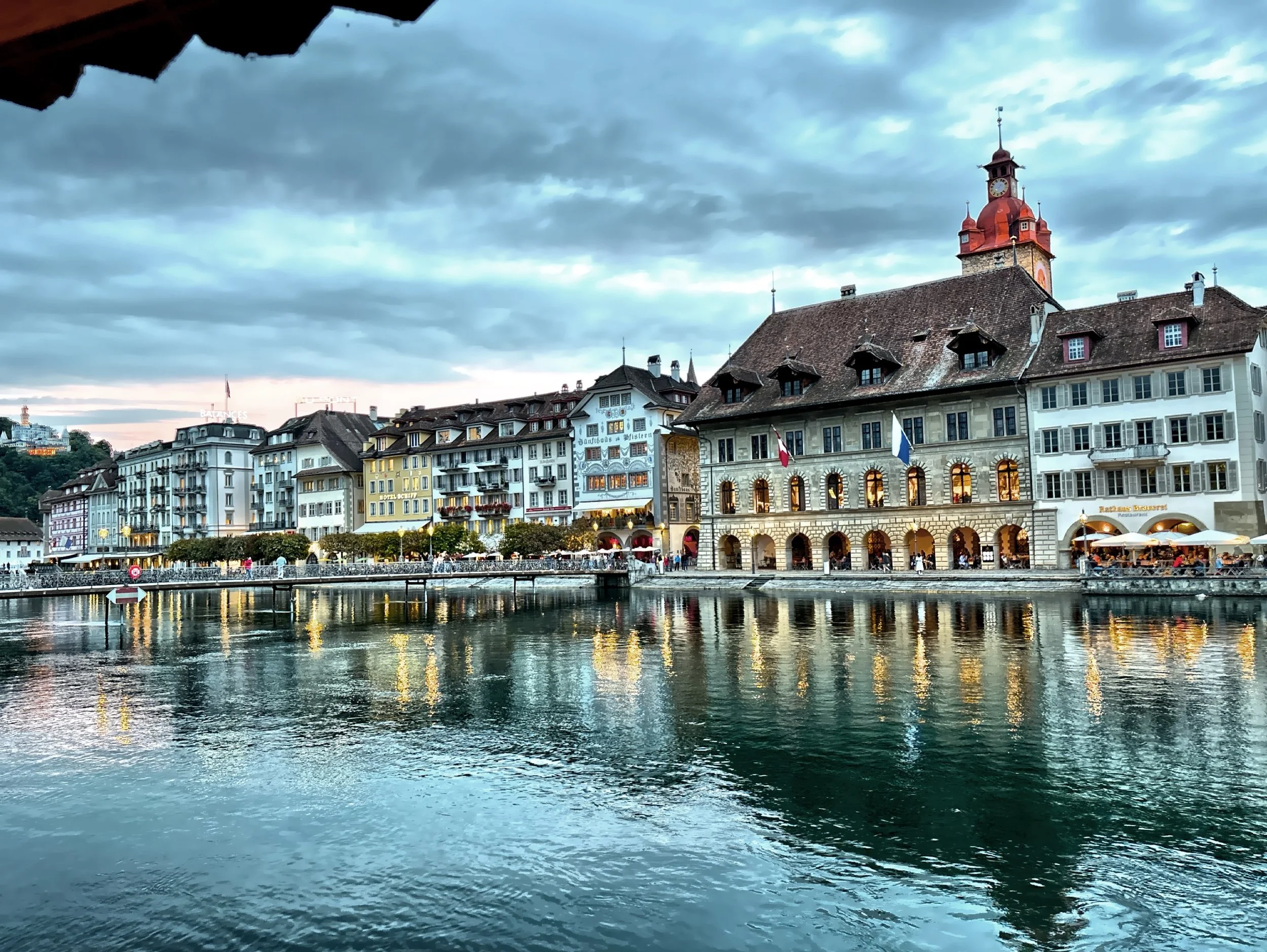
The pedestrian-friendly Old Town lies on the right bank of the Reuss River and features charming squares lined with tall, timber-framed buildings painted in bright colors—some adorned with elaborate frescos. These buildings are connected by winding cobblestone streets, creating a picturesque and walkable setting filled with shops and restaurants.
Two highlights of the city’s historic charm are the old city wall—built in the 1300s and complete with watchtowers that once protected Lucerne—and Europe’s oldest covered wooden bridge, Chapel Bridge, dating back to the 14th century. Originally part of the city’s fortifications, the bridge is decorated with pictorial panels added in the 17th century, depicting scenes from Swiss and Lucerne history.
This is what caught my eye, I hope you enjoy!
Do you like the images posted?
Click here to explore the shop.
The stunning view of Lake Lucerne with Mount Pilatus in the background
A boathouse on Lake Lucerne
The Lion of Lucerne memorial commemorates the fallen Swiss Guards of the French Revolution. It has been called the saddest stone in the world.
Another view of the Lion of Lucerne memorial, which was designed by the Danish sculptor Bertel Thovaldsen
A swimming spot on Lake Lucerne
The Mandarin Oriental Hotel on Lake Lucerne
Boats on Lake Lucerne
The Grand Hotel Europe near Lake Lucerne
The Grand Hotel Europe afternoon garden
Lake Lucerne and Mount Pilatus
A Lake Lucerne boathouse
Chapel Bridge, spans the Reuss, and is said to be the oldest wooden bridge in Europe. Built in 1333, it links the old town to the Ruess River’s right bank.
.
.
The interior of historic footbridge, Chapel Bridge
Chapel Bridge contains a number of interior paintings dating back to the 17th century, although many were destroyed in 1993 fire.
The small alter in the chapel on Chapel Bridge
The riverfront view from Chapel Bridge
The century-old Chapel Bridge serves as on of Switzerland’s main tourist attractions
The Lucerne Jesuit Church was the first Baroque church built in Switzerland, north of the Alps. Built between 1666 and 1673, the facade is quite plain.
This is the ornate, richly decorated white marble interior of the Jesuit Church.
The next couple of pictures are of the picturesque River Reuss waterfront
.
.
.
.
.
.
.
Classy waterfront dining
Needle Dam (Reuss Weir) was built between 1859 and 1861, and is a marvel of 19th century engineering. The water level of Lake Lucerne is still regulated manually with this dam to prevent flooding.
A colorful mural painted on the side of building
Old buildings, cobblestone street and fountain on a square
The winding streets
A side street near the fortification
A little place we stumbled upon while looking for a washroom near the fortification
This is one of nine original towers built in the 13th-14th centuries as part of the best preserved and longest fortifications in Switzerland.
Looking down on Lucerne from the tower window
This is the view from the Hotel Chateau Gutsch restaurant terrace overlooking Lucerne. There is a private funicular that takes you to the top.
Another view from the hotel / restaurant
Looking up at the Hotel Chateau Gutsch is set in a 19th century castle, overlooking Lucerne and Lake Lucerne.
Nolliturn Tower, part of Lucerne’s ancient city Musegg Wall
This is a picture of the beautiful Fritschi fountain in Kapellplatz. Built in 1918, the fountain stands in the tradition of much older fountains with painted allegoric figures on top. The story of the legendary Brother Fritschi plays an important part in Lucerne’s Carnival tradition dating back to about 1450.
The painted exterior walls of Restaurant Fritschi. The paintings depict scenes related to the Lucerne carnival and the legend of Brother Fritschi.
Bavarian-style architecture
Extremely ornamental architectural details
.
A scooter on Haldenstrasse
.
.
The Neptunbrunnen located in Muhlenplatz. The fountain was moved here in 1891.
.
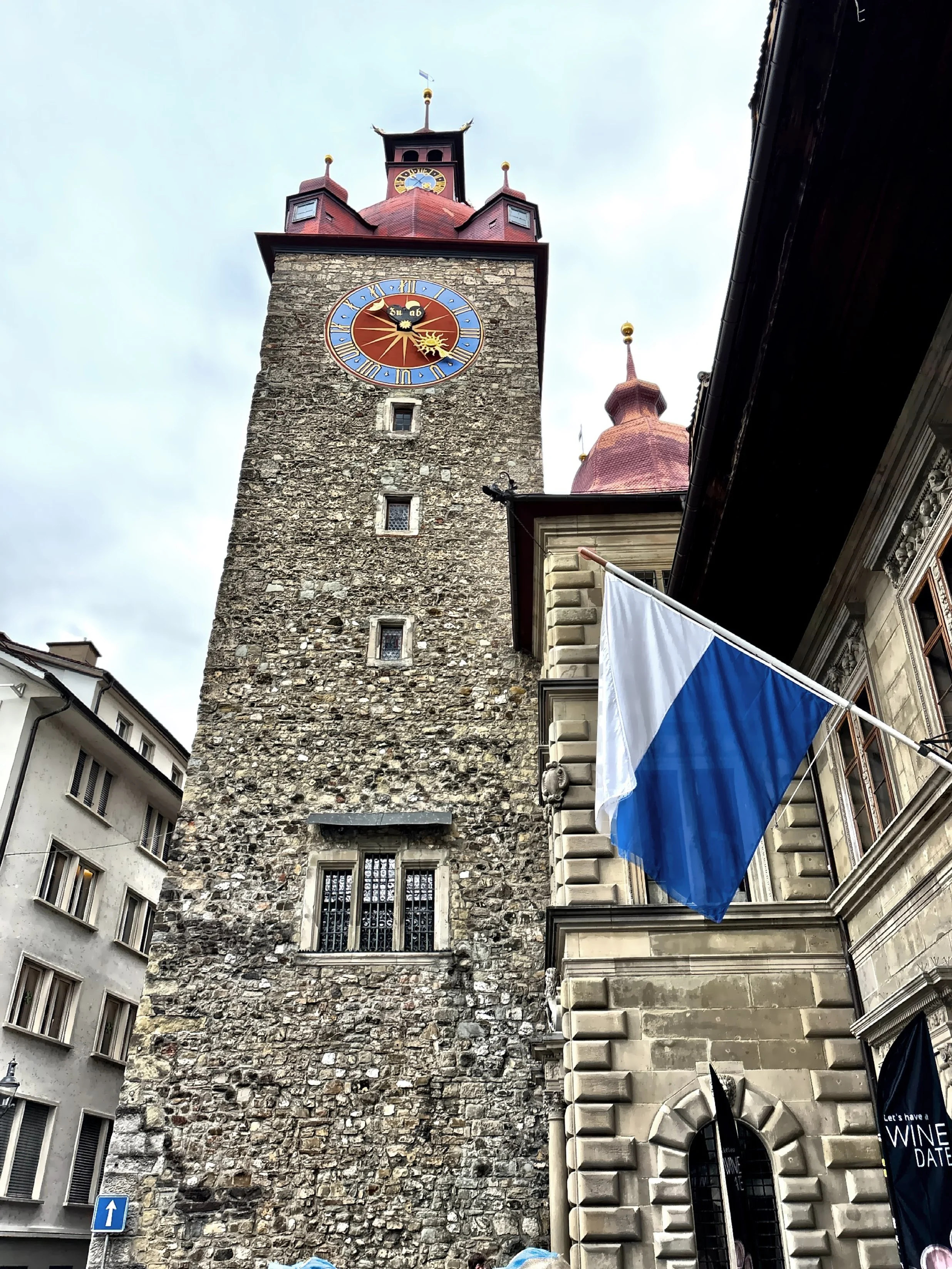
The Zytturm is one of the nine towers that make up the Musegg Wall that once protected the city.
The Weinmarkt Fountain was created in 1481 by Konrad Lux.
.
.
The ship originally built in 1907 now serves as a floating restaurant.
This stone arch is a remnant of the original 1896 train station and was preserved from the 1971 fire.
The Alte Suidtersche Apotheke (Old Suidter Pharmacy) operated from 1845 to 1989.
The Hotel Montana interior
The view from the hotel restaurant
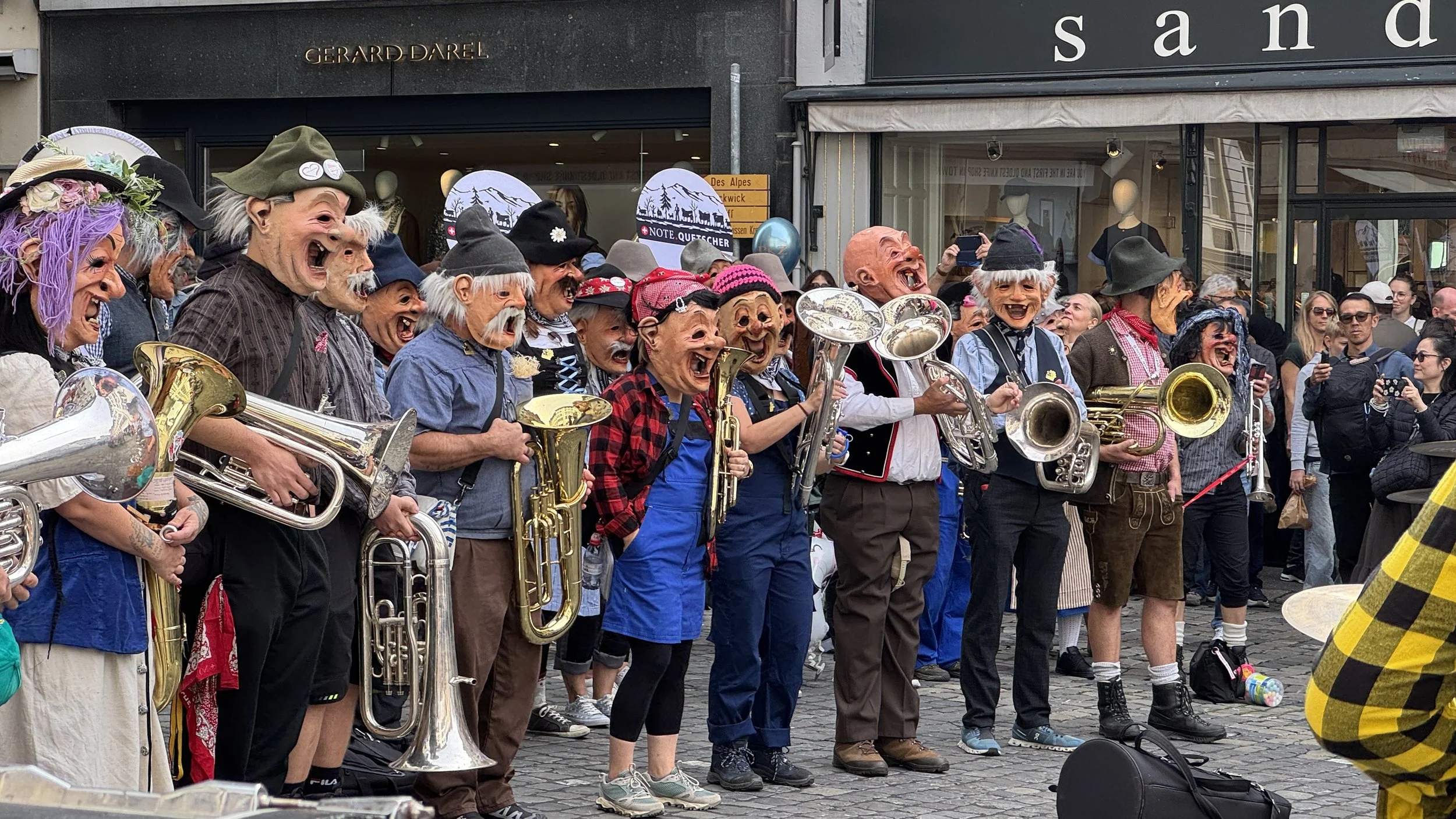
This was part of a Gugge band performance.
..
.
What you should know:
You will need a valid passport and a travel power adapter if you are from the US.
The currency used is the Swiss franc.
The main spoken language is a local dialect of Swiss German called Lucerne German but many people speak English.
People are friendly and helpful.
The Old Town is walkable.
The Visitor Card gives hotel guests in city hotels free use of buses and trains within zone 10 of the city network.
You can also take advantage of Free hotspots dotted around the city.
You could spend a couple of hours to a few days exploring here.
There are many restaurant options.
Some of the hotels may not have air conditioning.
Tipping is not generally expected.
There is a charge to use most public restrooms.