Thomas Edison is best known for the incandescent lamp and phonograph, but Edison’s greatest invention was a new way to invent: the industrial research and development laboratory. Edison had teams of scientists and technicians here in West Orange, New Jersey working on devices and technology that earned Edison 1,093 U.S. patents. The museum collections here are the largest single body of Edison-related materials. They are the product of Thomas Alva Edison's sixty-year career as an inventor, manufacturer, businessman, and private citizen. Well into old age he was trying new things like a technique for pouring concrete buildings, fluoroscope to view x-ray images, machines for extracting iron from ore. Thomas Edison died in 1931 and these lab buildings were closed up, but they were reopened as a museum in 1948.
This is what caught my eye; I hope you enjoy!
This is where America’s greatest inventor changed our world forever.
These buildings were designed by architect Henry Hudson Holly and built in 1887.
A statue of Thomas Edison holding a light bulb at the entrance to the complex.
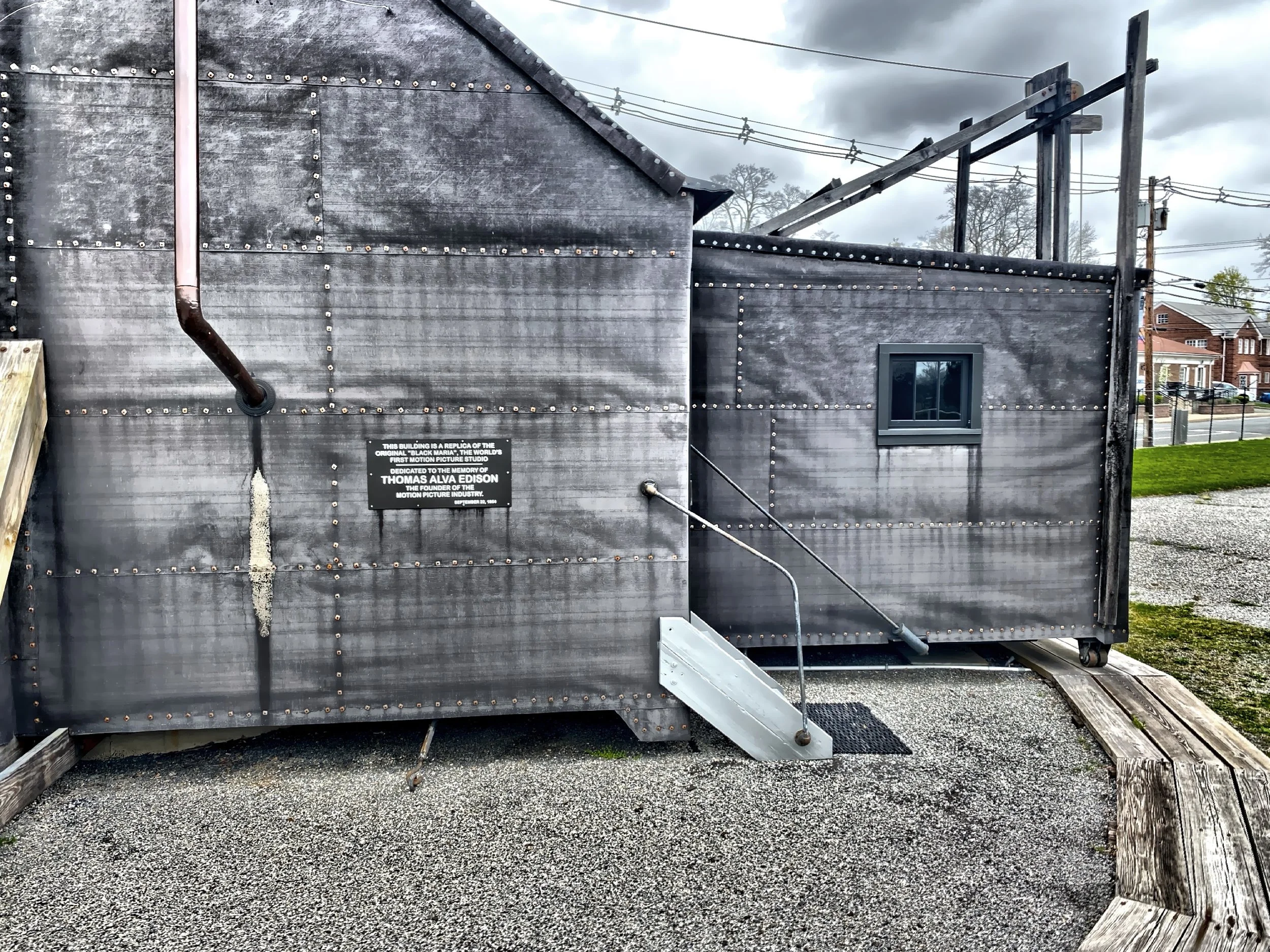
Edison introduced motion pictures, and manufactured cameras, projectors and films. This is a reconstruction, done in 1954, of Black Maria, the world’s first movie studio. The building could be rotated on a turntable to keep sunlight on the film subject.
Do you like the images posted?
Click here to explore the shop.
Thomas Edison’s laboratory is a step back in time.
.
The time clock where all employees, including Edison, were expected to punch in and out.
.
Inside Edison’s massive three-story library, which contains over 10,000 books.
The library was attached to the main laboratory building and all staff had access to use the library.
Edison’s desk, left exactly as it was on his last day of work in 1931.
Edison always believed that “what you are will show in what you do.”
Displayed here are invention examples, awards and gifts presented to him during his lifetime.
.
Edison spent most of his time at the labs, often working overnight and indulging in quick naps in his library.
Looking up in the three-story library
.
Inside the recording studio
Edison established dozens of companies during his career but the business side of the operation centered around the phonograph. This involved the mechanical aspect and the cabinetry.
.
This studio was where workers would photograph the inventions for advertising.
.
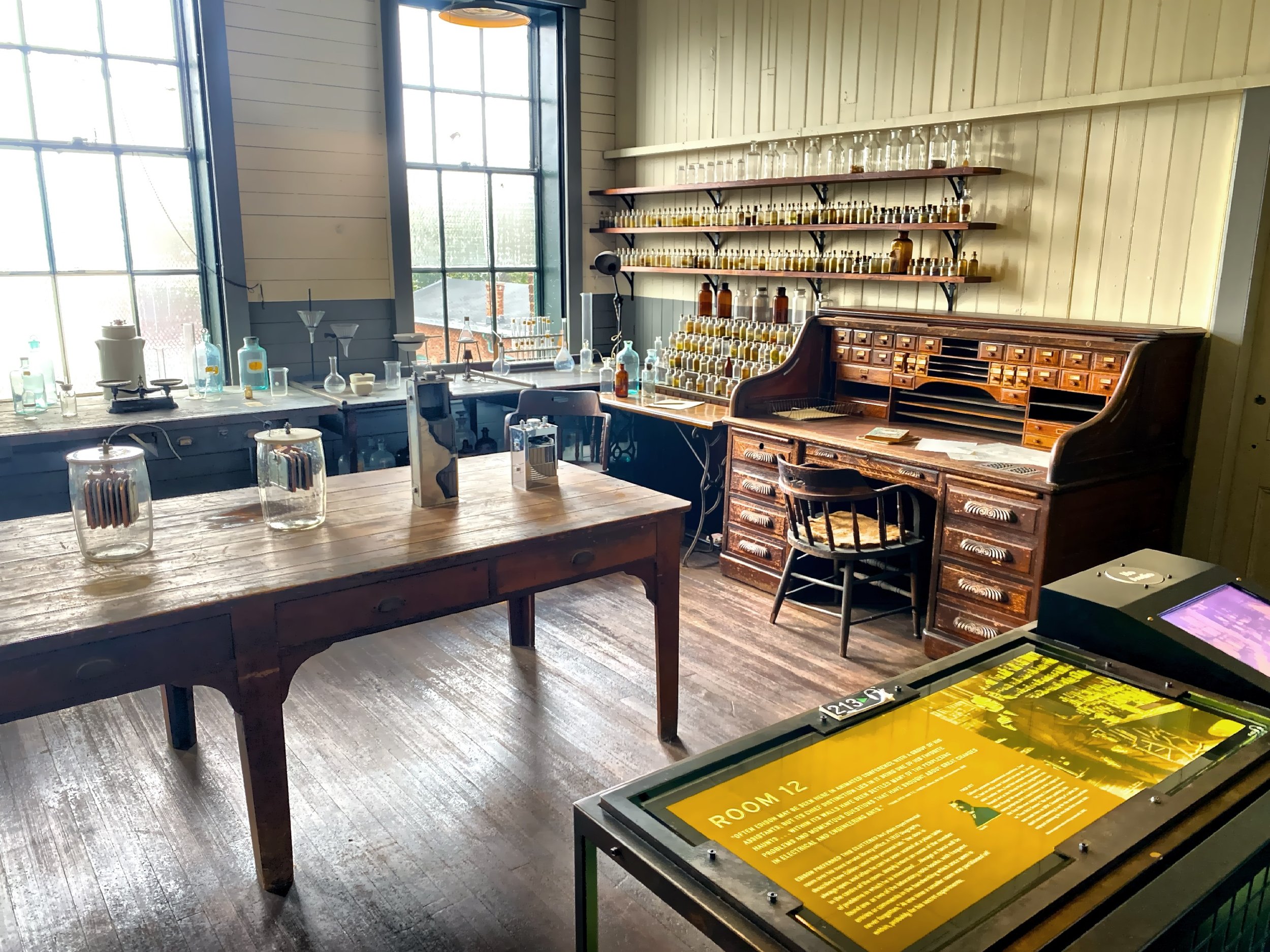
Some of the Edison's inventions on display
.
.
Photo developing lab
.
Small teams worked independently on aspects of projects, while Edison made daily rounds.
.
Back when they were in use, these shops were dangerous, and under the law of the time, if a worker was maimed or killed there was no compensation. The law only required that the company return the worker’s tools to their family.
.
Huge rooms filled with achines running by belts and pulleys.
.
Although Edison was the guiding force behind every project, a spirit of comaraderie prevailed among the employees.
.
This elevator was designated ‘for the use of Mr. Edison only.’
.
.
The laboratory complex includes more than a dozen buildings that supported Edison’s research into electricity, photography, motion pictures, chemistry and metallurgy.
.
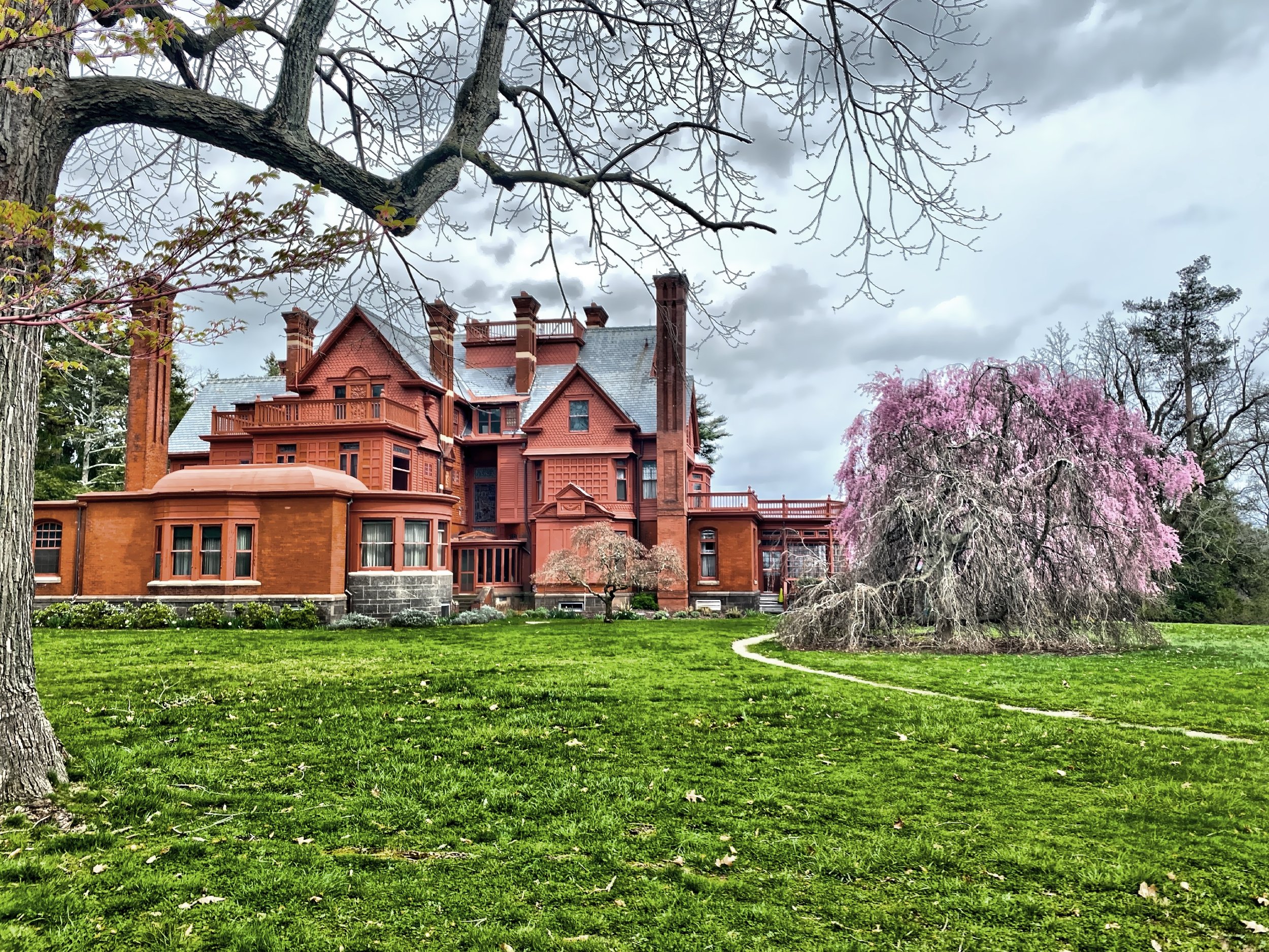
In 1886, Edison married Mina Miller and according to family lore, he gave his bride a choice to live in the city or the country. They soon settled on Glenmont in Llewellyn Park, a fashionable neighborhood that advertised as “Country Homes for City People.”
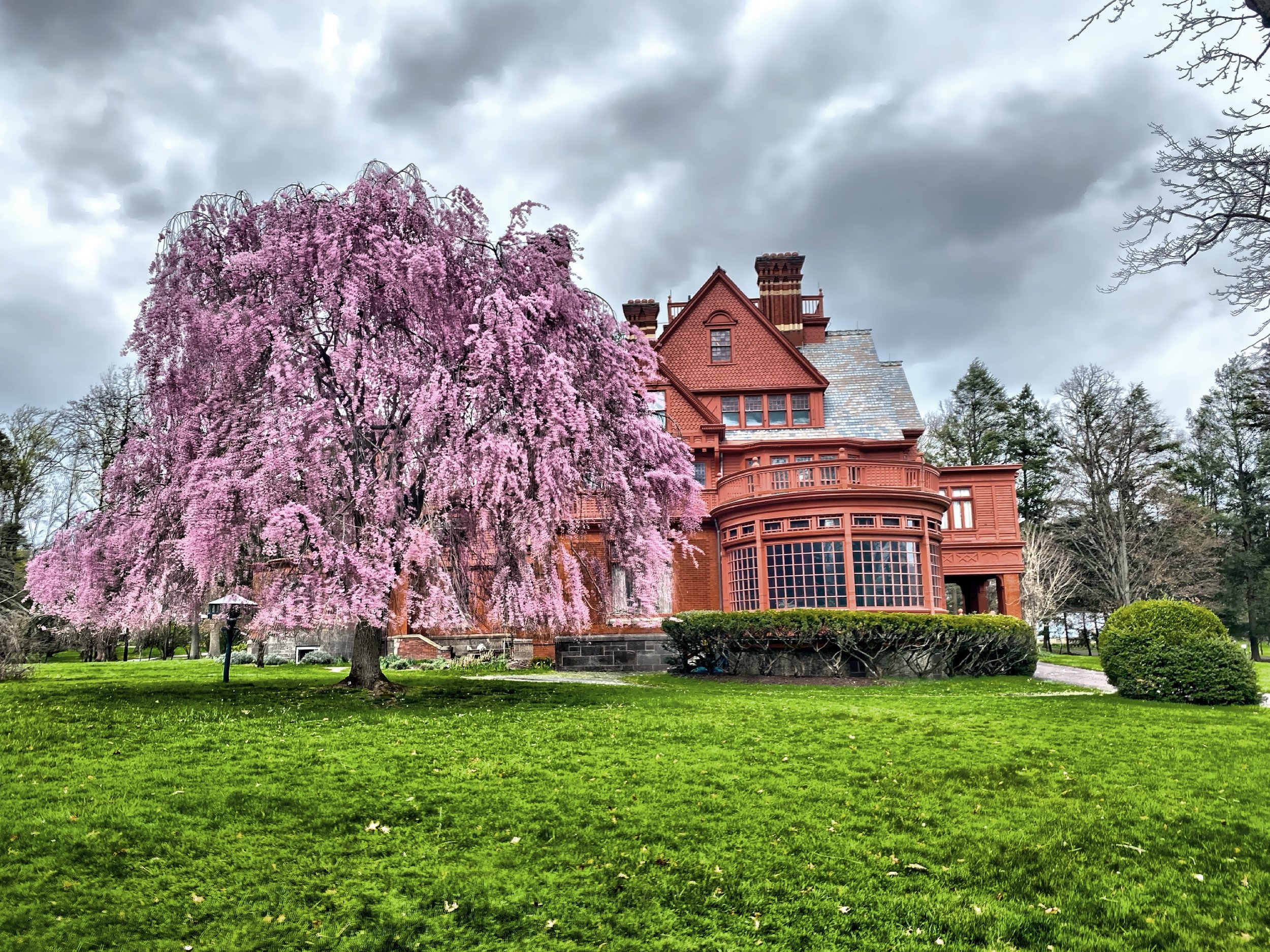
The Edisons purchased this 29-room red brick mansion built in 1880 for Henry Peddler. Peddler used embezzled funds from his employer to build the house and was forced to surrender the estate. The Edisons purchased the house for $125,000 in 1886, and made their own alterations and additions.
Mina Edison referred to herself as a '“Home Executive” and managed the money, servants, and raised the couple’s three children, as well as Edison’s three children from his first marriage.
Behind the mansion is the burial site of the Edisons, side by side.
The 20,000 square-foot mansion, designed by Henry Hudson Holly, contained 2 1/2 bathrooms, hot and cold indoor running water, 23 fireplaces, 91 windows, and refrigeration in the kitchen.
.
This is the poured-concrete garage built in 1908.
The special features included a vehicle turntable, revolving overhead washing system with hose, a battery charging station (for his electric car) and a gasoline pump. The second floor once housed the family’s live-in chauffeur and his family.
The expansive grounds included a greenhouse and potting shed.
Thomas Edison also had a Fort Myers winter estate called the Edison and Ford Winter Estates which can also be visited.
What you should know:
Rest rooms are available.
Nearby parking lot available.
Cash is not accepted to purchase park passes.
Check website for days and hours of operation, and any special events.
Laboratory tours are self-guided. A cell phone tour is available of the Laboratory Complex and Glenmont grounds.
Interior Glenmont mansion tours are guided.
You could spend from a couple of hours to an entire day exploring here, depending on your level of interest.
Tickets for all Glenmont mansion tours are only purchased on a first come first serve basis on Recreation.gov website. They are released seven days in advance. No tickets will be available at the Visitor's center. You must first visit the Laboratory Visitor Center to obtain a car pass to access the Glenmont development.
Location: 211 Main Street, West Orange, NJ 07052
For more information: Thomas Edison National Historic Park