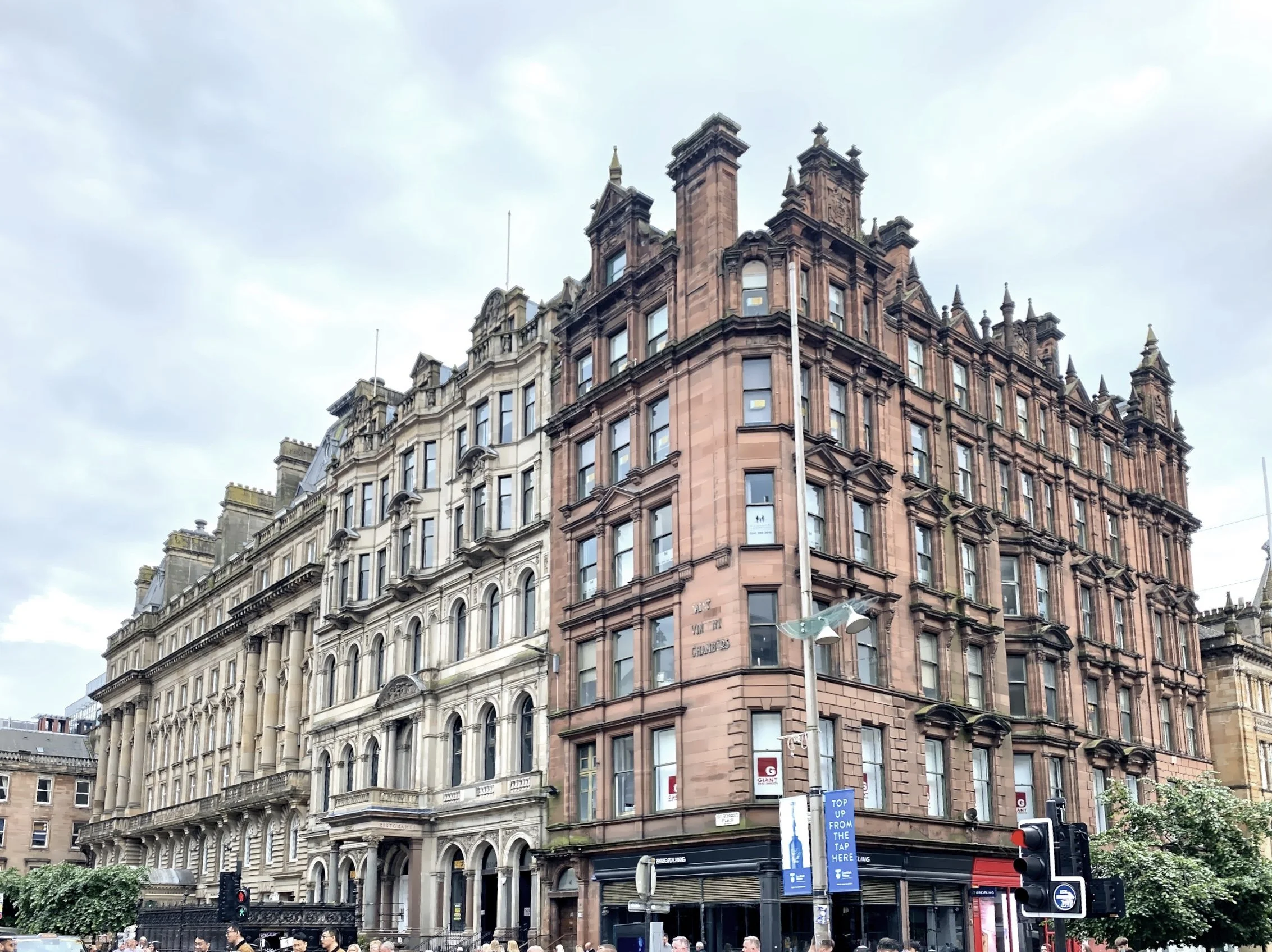
Glasgow is the largest and most populated city in Scotland and is a compact, easy-to-navigate destination with plenty to see and do. Known for its lively atmosphere and industrial heritage, Glasgow is sometimes described as Scotland’s blue-collar city. At the same time, the city has a rich cultural and architectural history, with many beautifully preserved Victorian buildings that reflect its prosperous past.
Glasgow is also an important center for education and culture, with four universities located throughout the city. One of its most interesting features is its underground railway system, which opened in 1896 and is the third-oldest underground railway system in the world. The subway provides an easy way to travel around the city and is affectionately known by locals as the “Clockwork Orange.”
During the 19th and early 20th centuries, Glasgow became one of the world’s most important shipbuilding centers. At its peak, around 20 percent of the world’s ships were built along the River Clyde, helping establish the city as a major industrial and maritime center. Today, Glasgow has transformed into a vibrant modern city known for its museums, music, restaurants, historic architecture, and whisky culture. With its combination of industrial history and modern creativity, Glasgow offers visitors a unique look at Scotland’s past and present.
Here is what caught my eye, I hope you enjoy!
King’s Theater
Built in 1937, the art deco-style Beresford Hotel building on Sauchiehall Street is now a residential apartment building.
St Andrew’s West (or Renfield St Stephen’s) was built between 1849 and 1852.
Do you like the images posted?
Click here to explore the shop.
Decorative wrought iron work
St Columba Church of Scotland opened its doors in 1904. St Columba first spotted the Loch Ness monster in the 6th century.
.
A street lamppost with Glasgow’s symbols of the bird, the bell, the fish and the tree.
The St Mungo Museum of Religious Life and Art located on Cathedral Square constructed in 1989.
.
Along Sauchiehall Street
Glasgow Cathedral was built in the 1100’s, dedicated to St Kentigern, also known as St Mungo the Patron Saint of Glasgow. It is considered Glasgow’s oldest building, and is the only church to survive the Reformation of 1560.
The King’s Theater is one of the most historic and significant theaters in Scotland. Designed by Frank Matcham, it was opened in 1904.
St Vincent Street Church was complete in 1859.
.
200 St Vincent Street was built in 1926
The Glasgow City Chamber, a Victorian masterpiece on George Square, was unveiled by Queen Victoria in 1888. A competition was held for the building’s design and Scottish architect William Young’s design won. George Square, named for King George III, is a central gathering place with some restaurants and bars and has often been the scene of political events and protests.
Out in front if the Gallery of Modern Art is the statue of the Duke of Wellington, pictured here with a street cone on his head.
The entrance arch to Royal Exchange Square
There are plenty food and drink options.
This is the Grand Central Hotel built by Scottish Victorian architect Sir Robert Rowand Anderson in 1883.
Inside Glasgow Central railway station
The old Victoria Bridge is the oldest surviving bridge in Glasgow. It is a foot bridge that crosses over the River Clyde and is named after Queen Victoria and was opened in 1854.
.
On the River Clyde
Some of the more modern buildings on the River Clyde
On the left is the Hatrack Building built around 1899 and the former Royal Bank building to the right.
The Tradeston Bridge, built in 2004 and also known as the Squiggly Bridge, crosses the River Clyde.
The Labor Movement Spanish Civil War memorial
The vibrant St Enoch Square
.
.
On Sauchiehall Street
Charing Cross Mansions, one of the city’s oldest and grandest tenements, built in 1891.
The beautiful clock, just above the tacky Burger King sign
Some more of the city’s beautiful architecture.
.
.
.
.
.
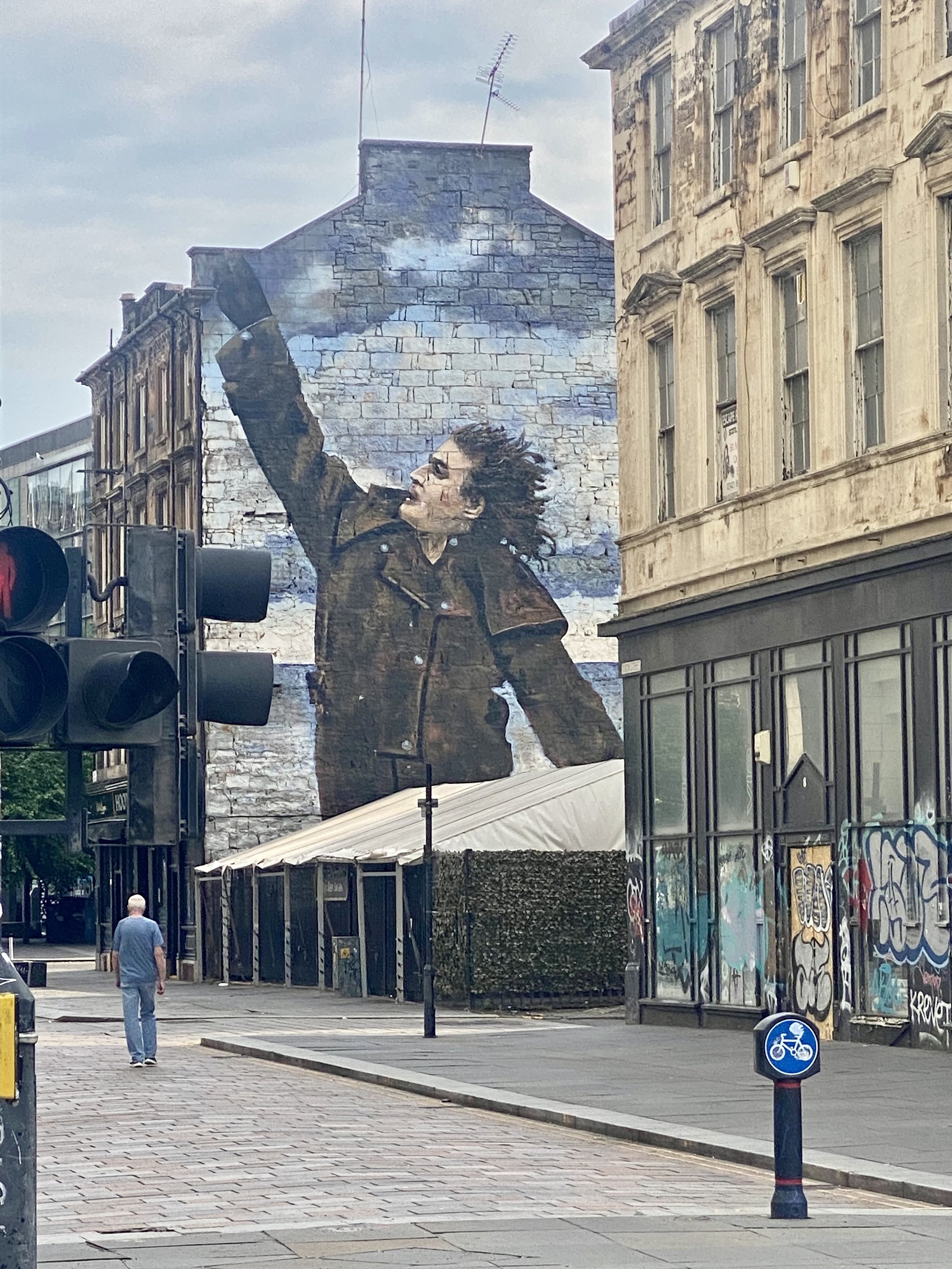
Some outdoor murals
.
.
While most buildings are maintained or rehabilitated, some are not.
What you should know:
You will need a valid passport and a UK travel power adapter.
The currency used is the Pound Stirling.
This is a very walkable city.
You could spend a couple of hours to a couple of days exploring the city, depending on you level of interest.
For more information: Glasgow