Did you know that that the capital city of Budapest was formed in 1873 joining together two different cities, Buda (on the west bank of the Danube) and the Pest (pronounced Pescht, on the east bank)? Although they are united under one name, they are still referred to separately.
I was pleasantly surprised when touring Budapest, Hungary. I had no idea how the people there embraced their history and architecture. There is so much that either has been, or is in the midst of, some form of restoration. The way they light the building along the Danube River made me happy I did the nighttime cruise.
I definitely want to go back again; there is so much more to see than the time I had allowed.
Here is what caught my eye. I hope you enjoy!
Do you like the images posted?
Click here to explore the shop.
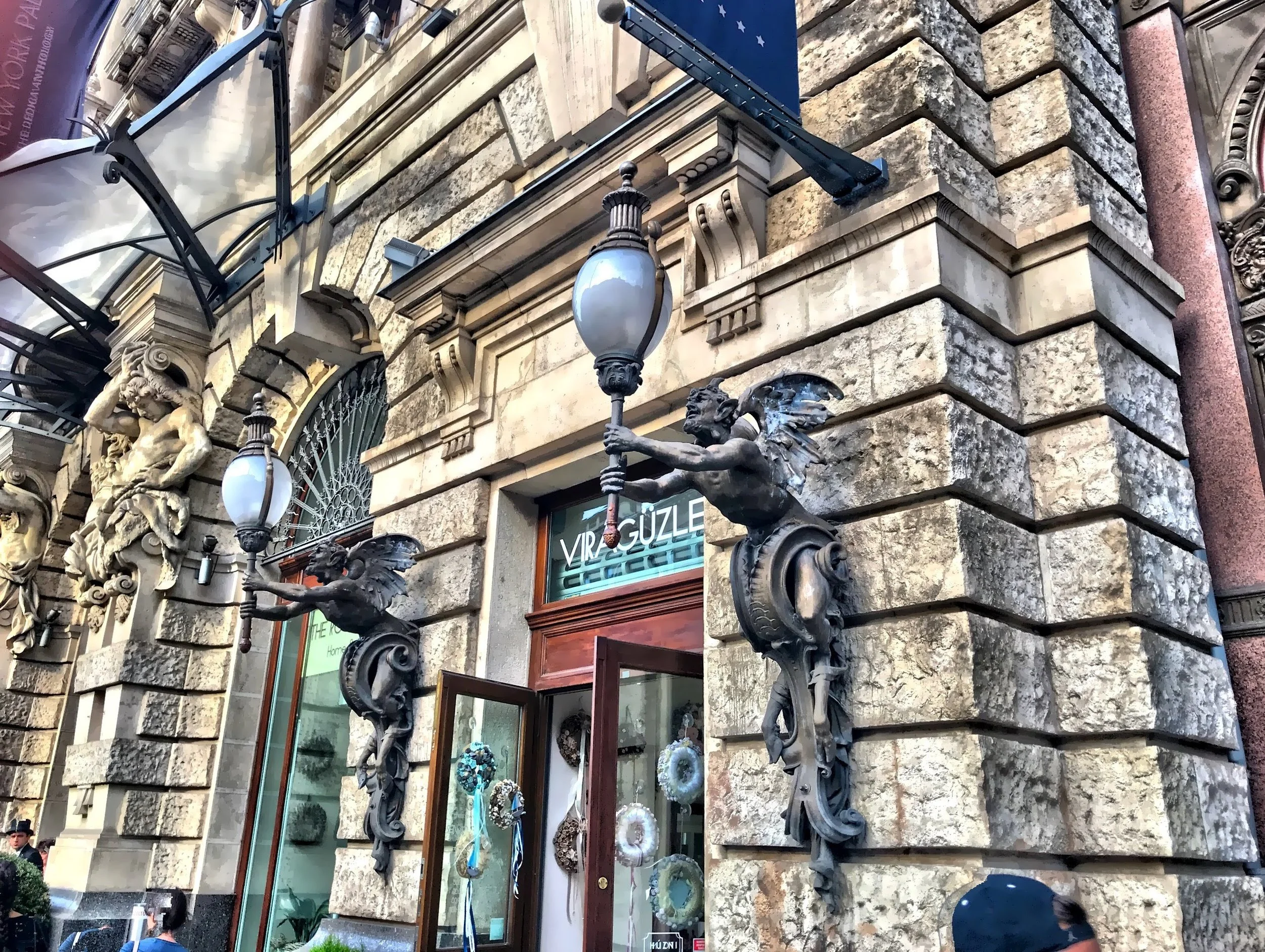
Building details incorporate wrought iron work, glass and architectural sculptures.
Buda Castle, or the Royal Palace, was built between 1749 and 1769 for the Hungarian kings.
Inner City Parish Church in Pest
St. Stephen’s Basilica (Szent Istvan Bazilika), built between 1851 and 1906, is the largest church in Budapest.
One of Budapest’s five Pointer Pubs
Heroes’ Square is the largest and most symbolic square in Budapest, designed in 1896 to mark the 1000th anniversary of the Magyar conquest of the Carpathian Basin.
Heroes’ Square
Heroes’ Square with Millenary Monument sunset
The richly decorated Szechenyi Thermal Baths, are the largest baths in Europe with fifteen indoor pools and three huge outdoor pools.
The elaborate cupola mosaics at the Szechenyi Thermal Baths are part of the overall regal and ornate design of pools, and statuary are incorporated into the architecture, designed by Gyozo Czigler, for hosting residents and visitors to the City of Baths.
Elaborate corridor - Szechenyi Thermal Baths
Changing Rooms - Szechenyi Thermal Baths
The Great Synagogue on Dohany Street
Looking up at a corner building’s architecture.
Architectural details
Vajdahunyad Castle was originally built in 1896 and rebuilt in the years 1904 to 1908 of more solid material.
Looking out the back of the funicular as it runs up Castle Hill to Buda’s Old Town
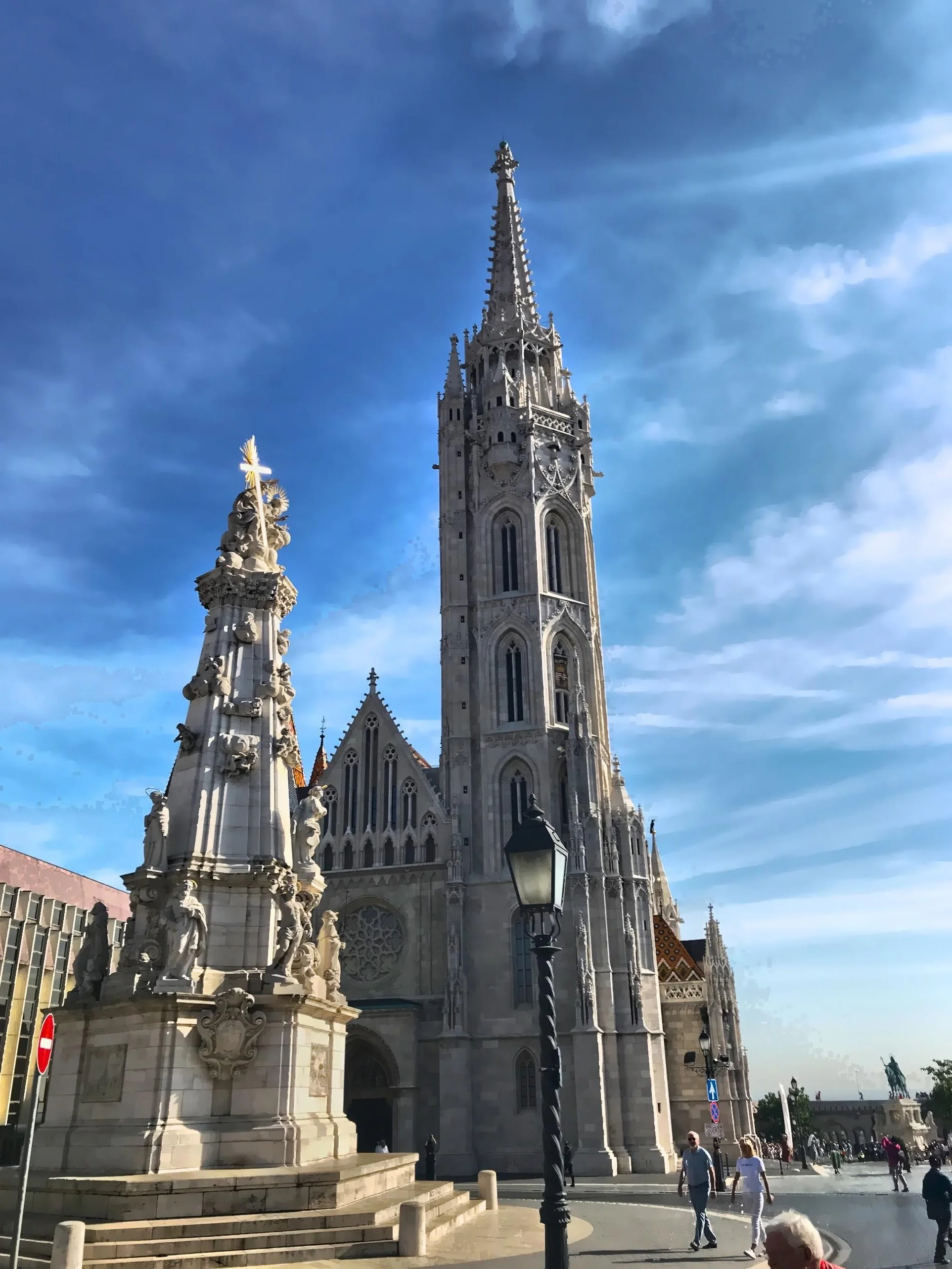
Matthias Church with Trinity Statue in the foreground
The Trinity Statue by Matthias Church
Wandering down a side street.
View from the windows of the Fisherman’s Bastion
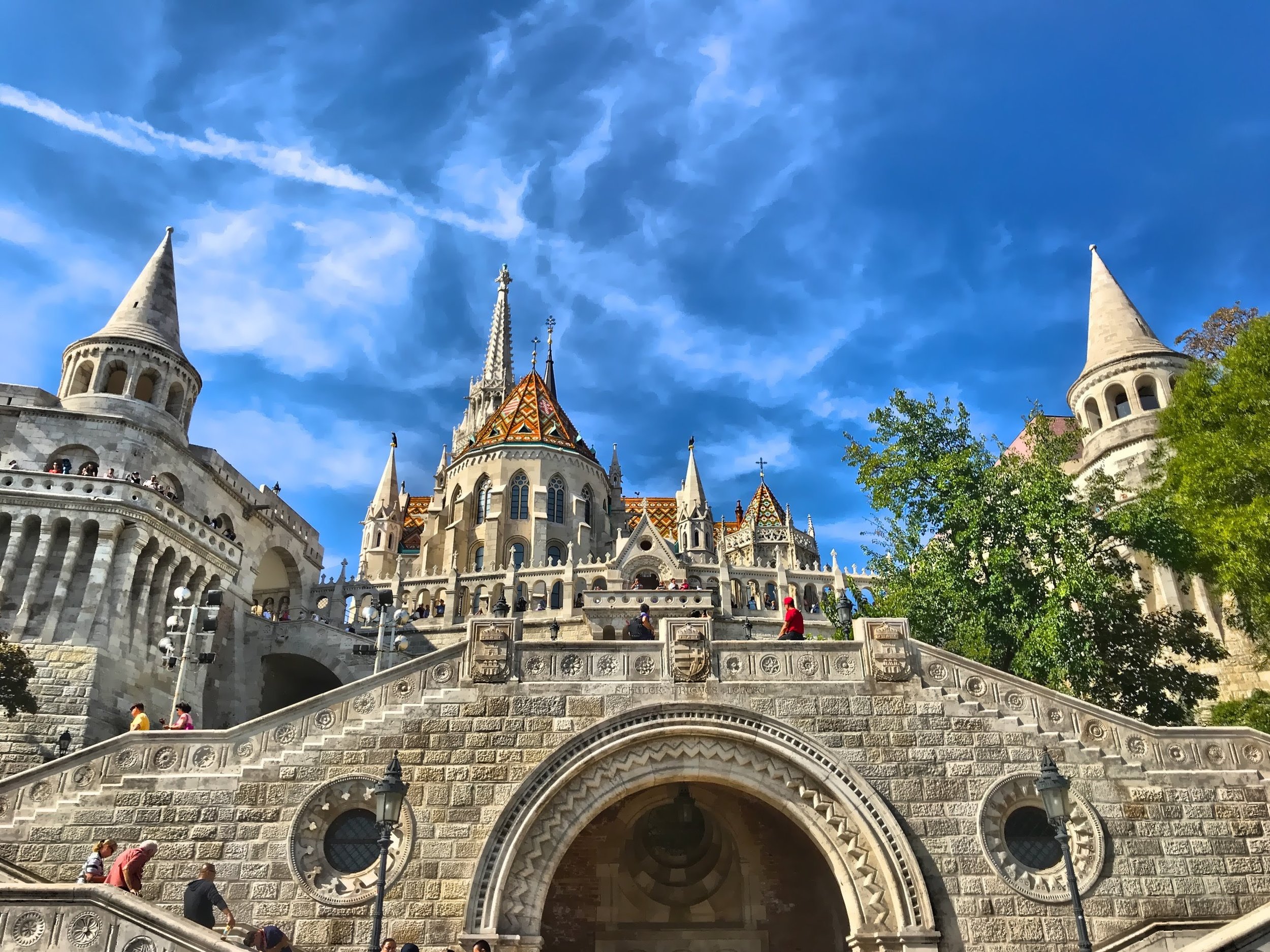
Fisherman’s Bastion
View from the windows of the Fisherman’s Bastion
Dome in Matthias Church - Pest
Interior Matthias Church
Interior Mathias Church
Interior Matthias Church
Fisherman’s Bastion
House of Parliament was built between 1885-1904.
The view from Parliament Building
Buda Castle interior
Side entrance of the Parliament building
Supreme Court Building was built between 1893-1896.
Budapest Nyugati Station in Pest was designed by the Gustave Eiffel Company.
Architectural details - Nyugati Station
Budapest Nyugati Station in Pest was opened in 1874 and is often referred to as the “Budapest Gate”.
Train arrival in Budapest Nyugato Station in Pest
Bridge - Margitsziget (Margaret Island)
Decorative architecture
Decorative wrought iron railing
The Tram
Architecture and neon
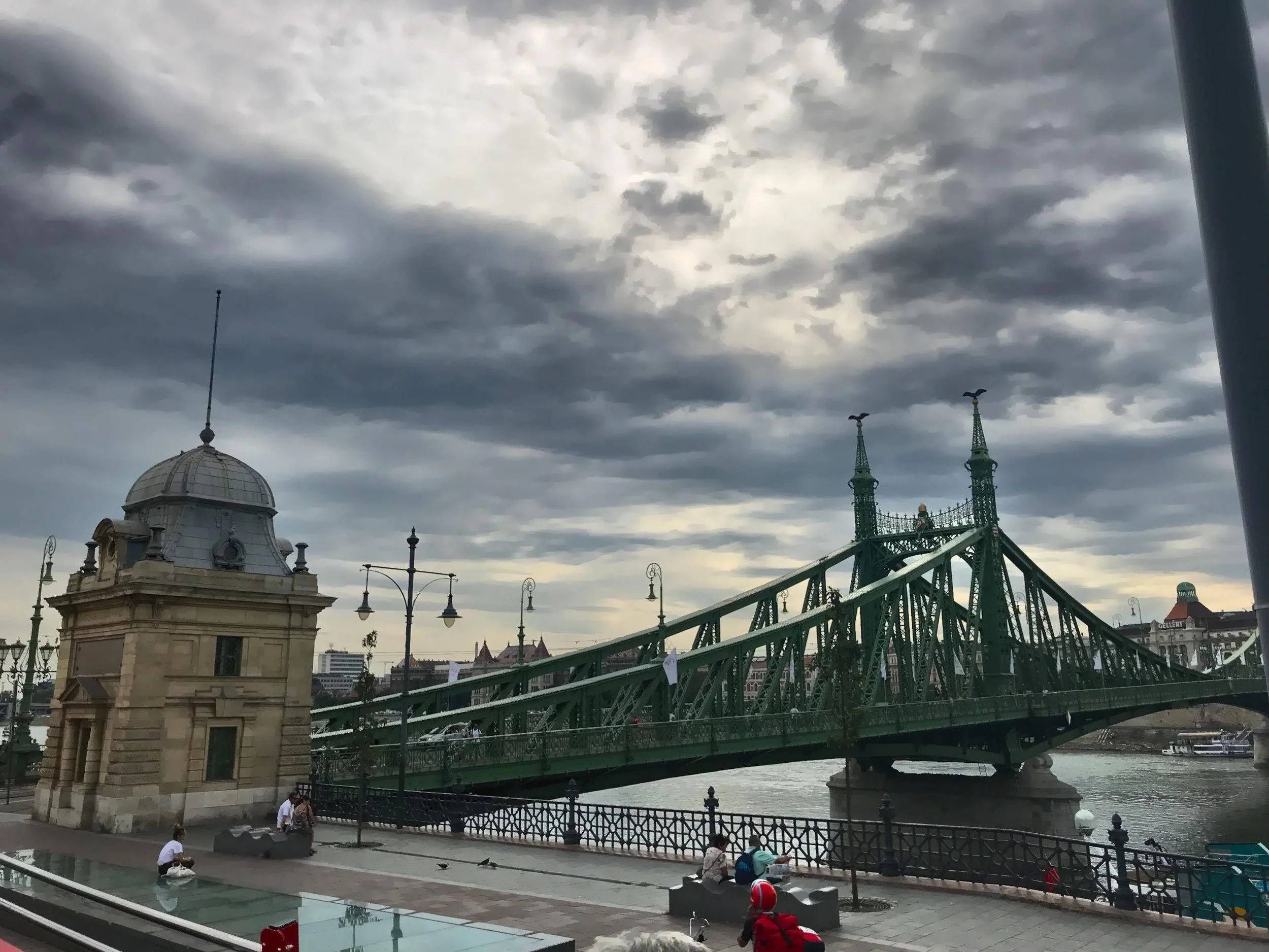
This is Liberty Bridge which connects Buda and Pest across the River Danube.
Art is all around, you just need to look up.
Great Market Hall was built between 1894 and 1897.
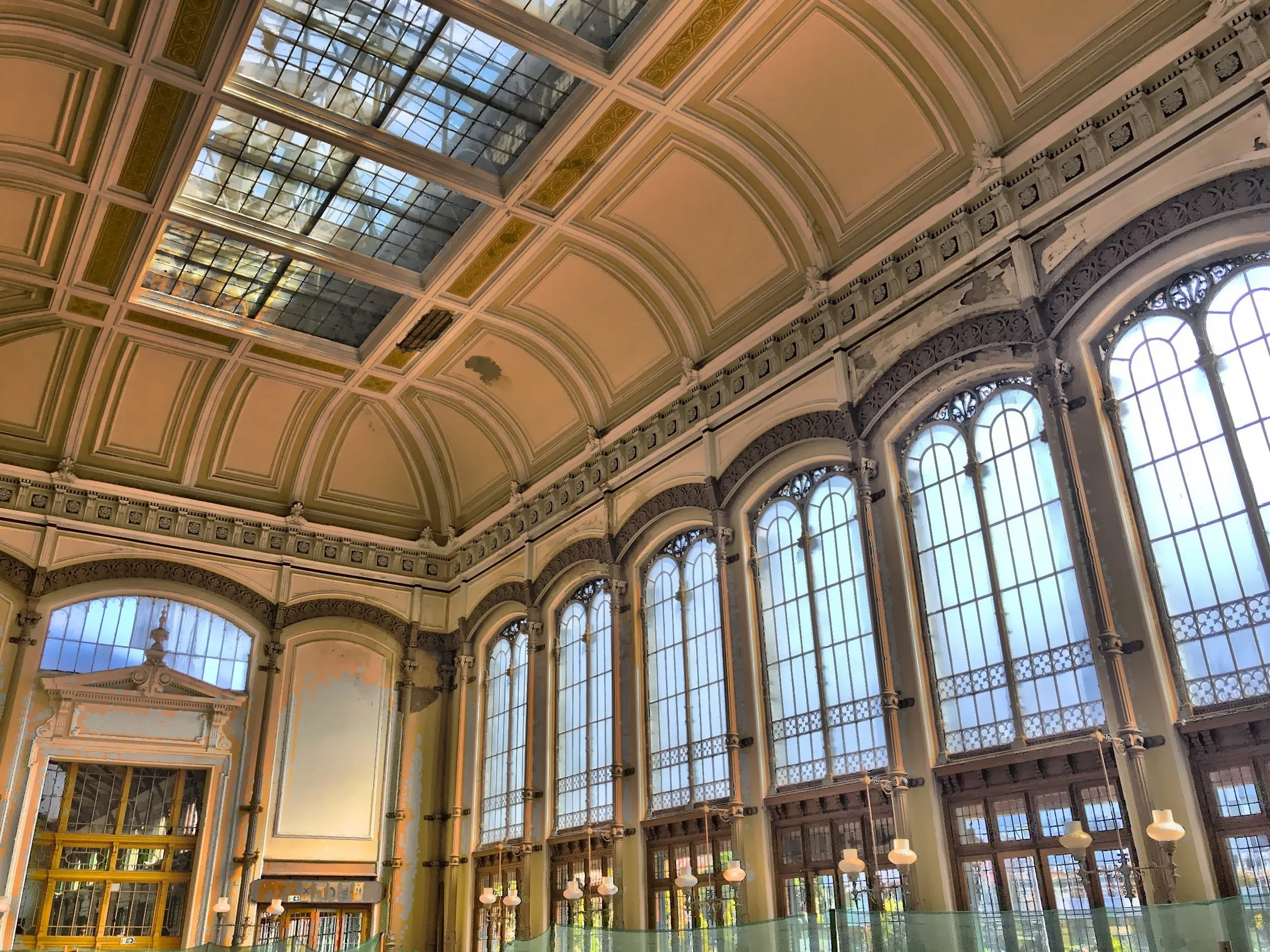
Great Market Hall
Liberty Bridge
Twilight
Parliament Building at night
Chain Bridge at night
Things you should know:
Budapest is a walkable city.
All Communist statues are in Memento Park (I missed this place, maybe next trip).
The City is abundantly rich in architectural treasures in many styles.
It’s easy to get around.
It’s affordable.
Bring a swimsuit for the baths (I forgot mine).
The Hop-on Hop-off bus is a great way of getting the lay of the land.
They use Forints (HUF), not the Euro(EUR) for spending.
It’s cheaper to buy your tram/bus ticket before boarding.
Many people speak English.
There is a large amount of public art, so enjoy it!
You will need a valid passport and a travel power adapter if you are from the US.
Tipping 10% to 15% is standard for good to excellent service.
If you enjoyed this post, feel free to check out my previous posts by clicking here.