Stony Brook, Long Island may not be your first guess if someone asked you where you could find the country’s finest collection of horse-drawn carriages, but it is. The Long Island Museum of Art, History and Carriages contains the Dorothy & Ward Melville Carriage Museum displaying almost 200 vehicles in eight galleries. Melville established the now internationally renowned carriage collection in the 1940’s, and now contains nine galleries: Going Places, A Carriage Exposition, Making Carriages, The Streets of New York, Driving For Sport or Pleasure, A Trip to Yesterday, Gentleman’s Coach House, European Vehicles, and Children’s Vehicles. Mr. Melville acquired the deteriorating Stony Brook Hotel and worked with architect Richard Haviland Smythe to convert the hotel building into a home for his collections of various types of carriages.
This is what caught my eye, I hope you enjoy!
Do you like the images posted?
Click here to explore the shop.
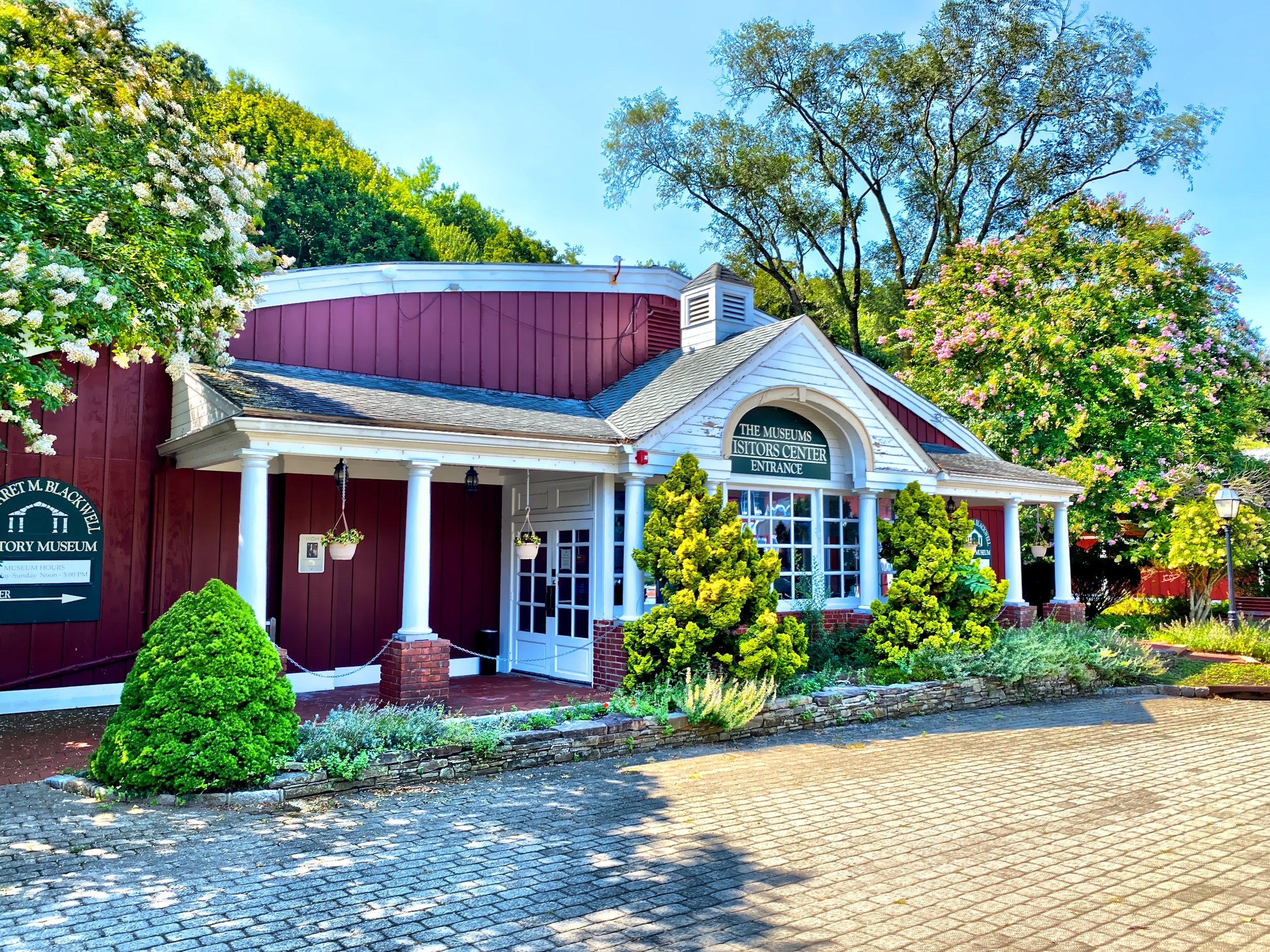
The Visitor’s Center, where your visit begins
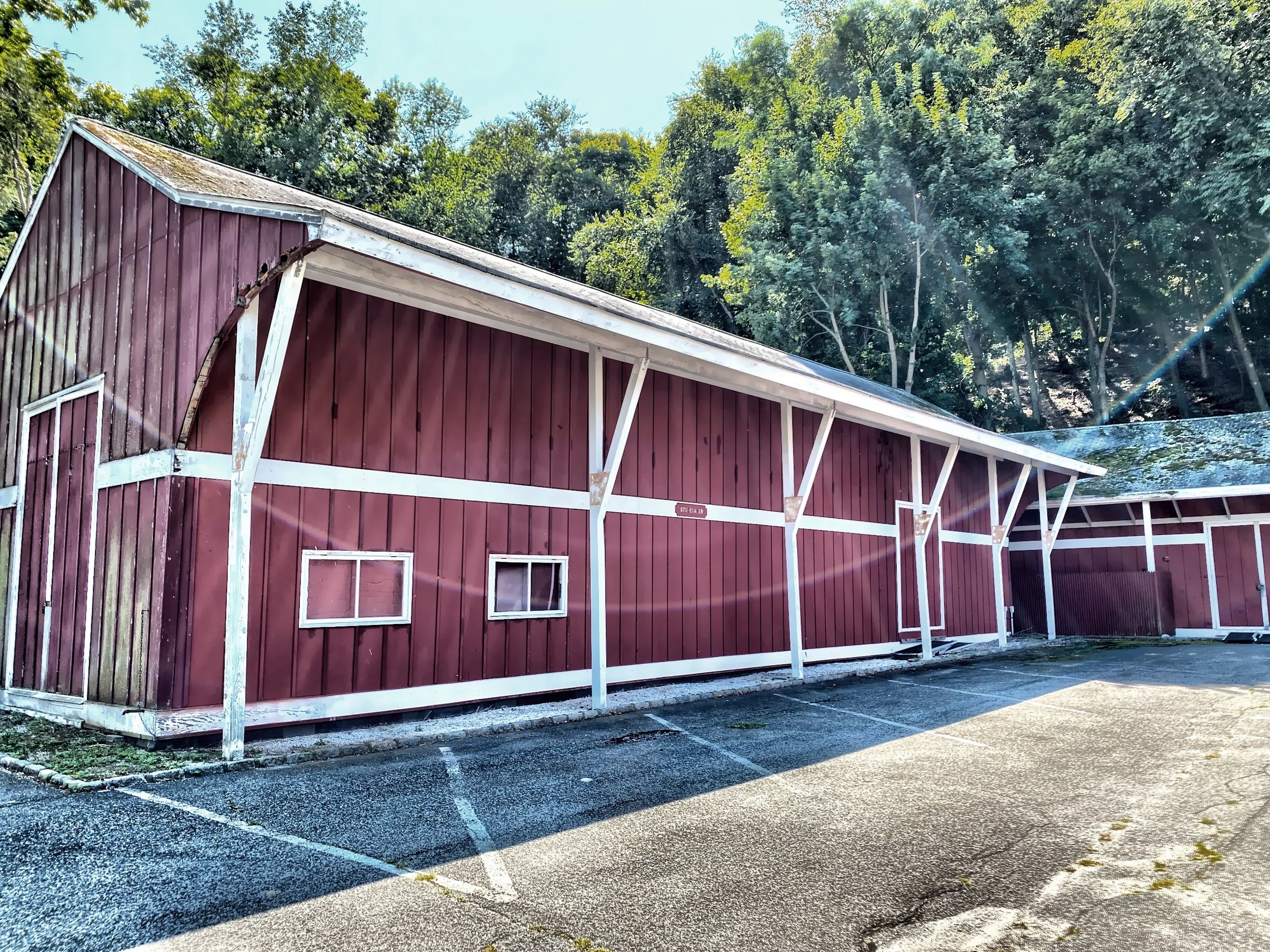
These barns are used to store additional carriages for restoring or parts
An open coach interior
Wells Fargo Coach (1868-1870) were critical to the expansion of the United States during the mining boom. Coaches like this transported millions of dollars worth of gold to exchange offices.
Market wagons (about 1900) carried produce from farms to urban markets. This wagon was owned bt G. Howland Leavitt, a landowner in Bayside, Queens, NY.
Mail Wagon (1900-1910)
Flandrau & Co, with a showroom in Manhattan, was a leading manufacturer of carriages like this one pictured above.
This Chariot D’Orsay (1880) was built for William K. Vanderbilt I.
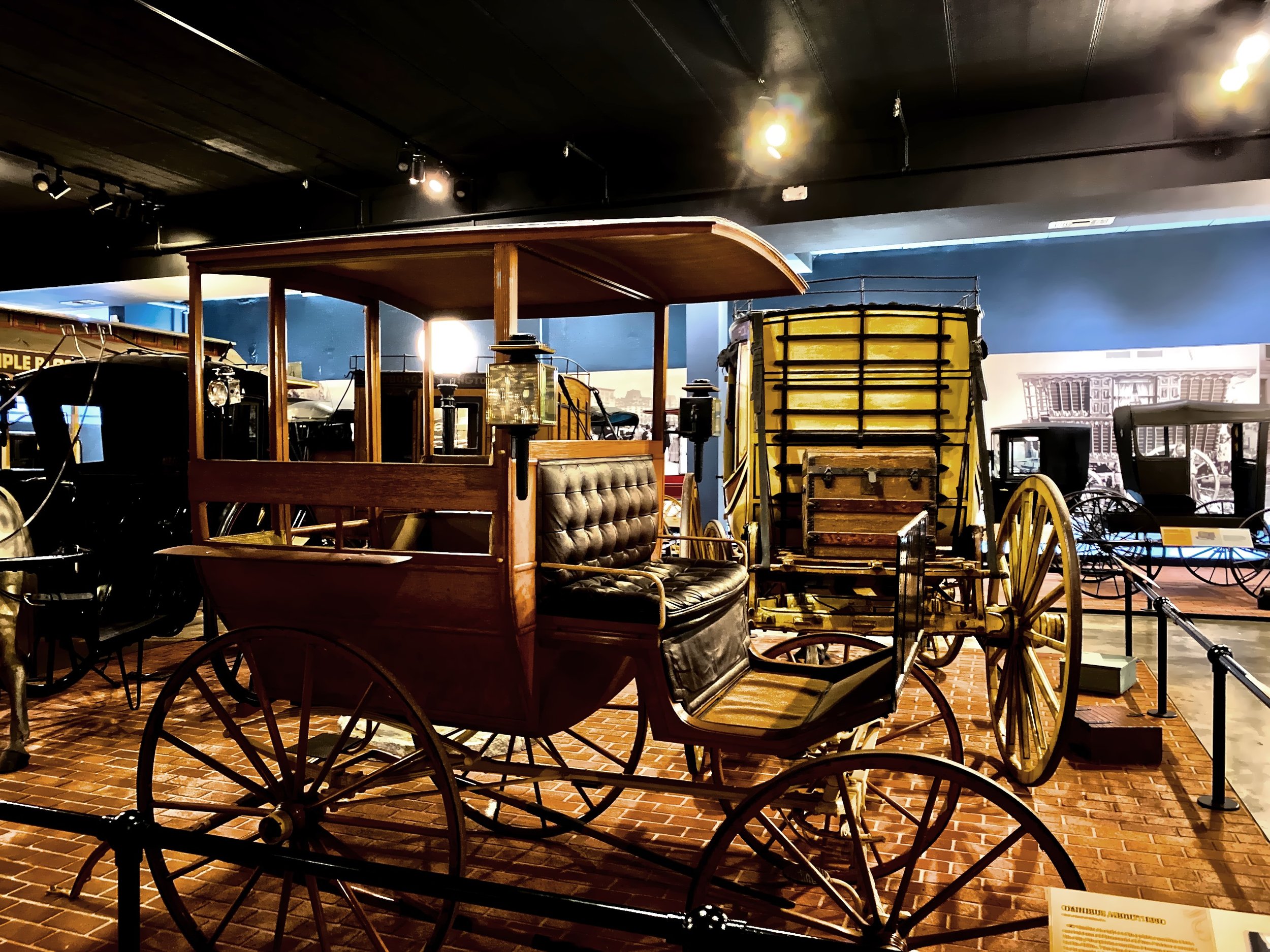
This is South Berwick, Maine’s Grace Darling, a beautifully decorated omnibus.
Rear view of Grace Darling
A Trip to Yesterday Gallery
Fire wagons on display in the Streets of New York gallery
Fire uniform display
Police wagon
This carriage collection, comprised of nearly 200 horse-drawn vehicles, is internationally renowned
Popcorn Wagon (1907)
Grocery Wagon (about 1890)
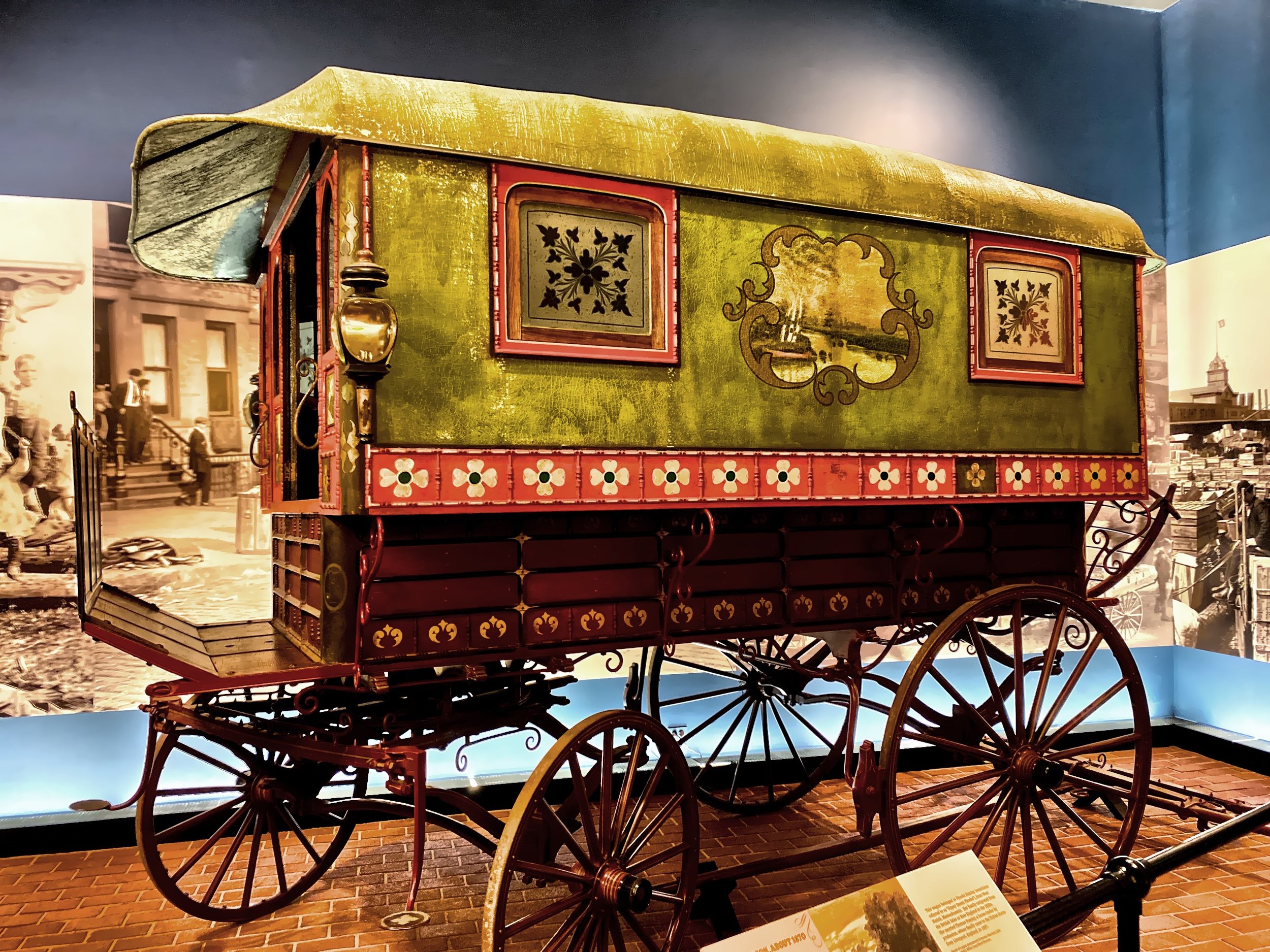
Gypsy wagons (about 1870) were found on the outskirts of urban areas in the United States after the Civil War.
Sterling Brummell Perfume and Extracts Wagon (about 1900)
Eastern Estate Tea Company (about 1880)
A Peddler’s Wagons (about 1870) were common sights in both rural and urban 19th century America.
On the left is the roof seat break carriage (about 1894)
This Phaeton (about 1780) was once owned by Revolutionary War hero Peter Gansevoort. It remained in the family in the Upper Hudson Valley prior to being acquired by the museum.
This is a Vis-A-Vis (1906), an informal vehicle driven by a coachman.
The black curricle (about 1870) is one of only a few two-wheeled pleasure driving vehicles pulled by two horses.
The other is an example of a pleasure wagon (about 1820), which were multi-purpose and wide used in New England.
The Crawford House Coach (1867) could transport as many as 20 passengers and their luggage.
Horse-drawn sleighs
Vehicles designed for use by children pulled by people, ponies, goats or dogs.
New York to Pelham
As great fortunes were made in 19th century America, luxury vehicles became the symbol of wealth and status.
A ride through Central Park in a spectacular carriage fulfilled the wish of many an elegant New Yorker to see and be seen.
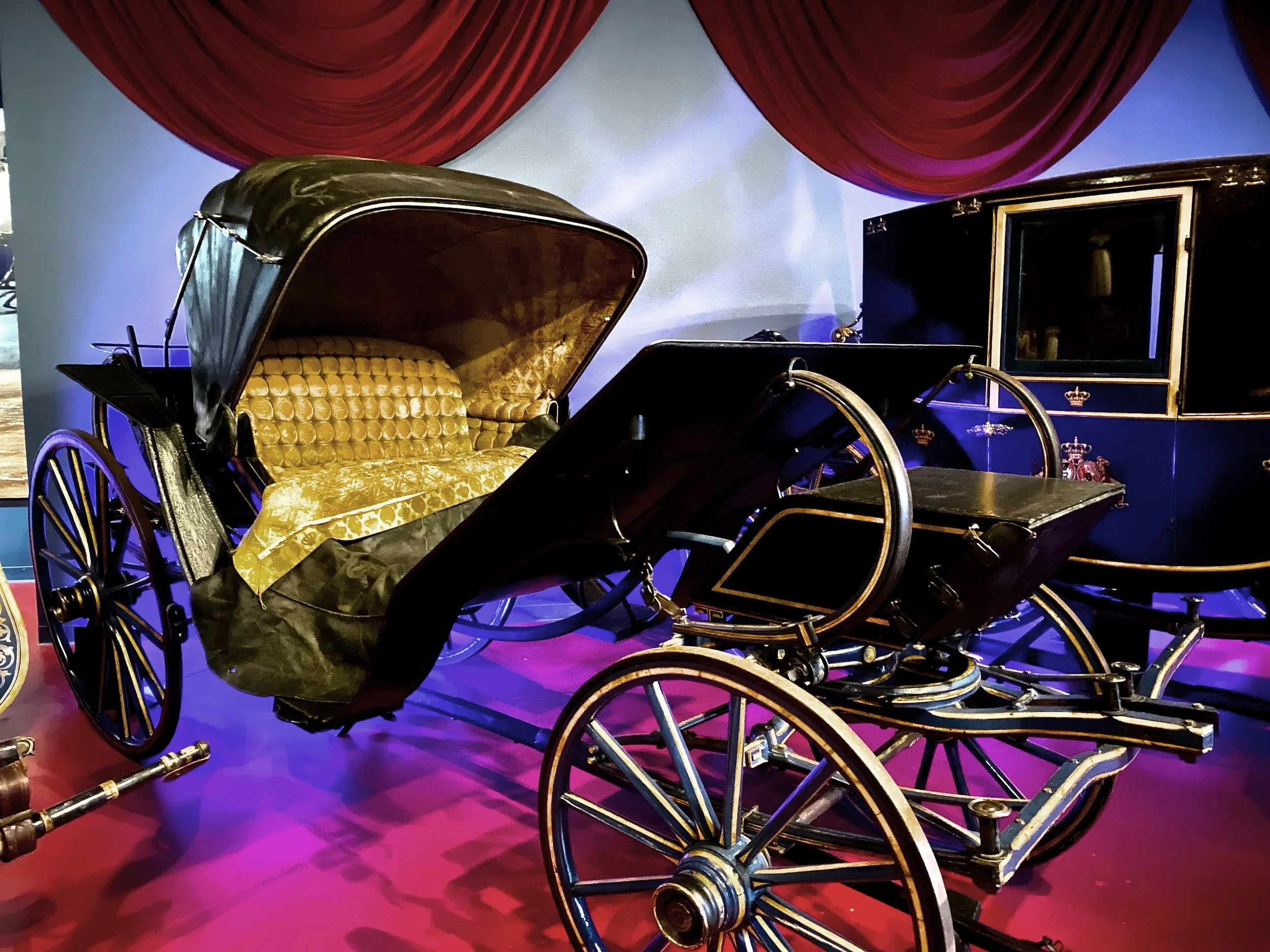
The Grand Duc (about 1850) was owned by Prince Adalbert of Bavaria and used for state affairs as well as family pleasure outings.
A horse model showing a funeral headdress
This is a Berlin Coach (about 1775-1785) on display in the European gallery
This is a Bavarian Sleigh (about 1870) belonged to Prince Adalbert of Bavaria, son of Ludwig I of Bavaria.
The State Coach (about 1850) was a formal vehicle used by European royalty or high officials in processions or on state business
Some vehicles were simple but elegant
.
.
A Studebaker
This 20-ton Beaux-Arts style Madison Square Fountain (1880) once stood at the corner of 23rd Street and Madison Avenue in Manhattan. It was a gift to the City from Olivia Phelps Stokes, a charter member of the ASPCA. She commissioned the fountain so that horses traveling Madison Avenue would have water.
During the 1950’s a number of period buildings were moved to the museum’s grounds including the Samuel H. West Blacksmith Shop from Setauket, NY.
The Nassakeag Schoolhouse built in 1877 was originally located in South Setauket. There are two front doors because the children were separated by gender. Girls entered and sat on the left, while the boys entered and sat on the right.
The schoolhouse was used up until 1910. It fell into disrepair and was eventually moved to the museum and restored in 1955.
The schoolhouse was built by Frederick Smith for the Town of Brookhaven’s 28th School District.
These few images are of the Ploch-Williamson Barn from Stony Brook.
.
What you should know:
There are walking trails.
Restrooms are available.
One price includes parking and access to all the museum’s indoor and outdoor exhibits.
The museum is not open every day; check website for days and hours of operation.
The people are friendly and helpful.
You could spend a couple of hours to an entire day.
Location: 1200 NY-25a, Stony Brook, NY 11790
For more information: Carriage Gallery