The Morse Museum houses the world’s most comprehensive collection of Louis C Tiffany’s work, including jewelry, pottery, paintings, leaded-glass windows and lamps. The museum contains the chapel interior from the 1893 World’s Columbian Exposition in Chicago and a collection of art pieces and architectural objects from his Long Island estate, Laurelton Hall. Jeannette Genius McKean founded the museum in 1942 and named it after her industrialist grandfather, Charles Hosmer Morse.
Here is what caught my eye; I hope you enjoy!
In 1885, Tiffany opened the Tiffany Glass Company in Corona, Queens, New York, and continued to design interiors and expand his glass making techniques and objects which he used to adorn his homes and those of his wealthy clients.
Tiffany was one of the most creative and prolific designers of the late 19th-century, characterized his life’s work simply and elegantly as a “quest of beauty.”
Magnolias and Irises
There are historic photos and documentation displayed in the galleries.
Do you like the images posted?
Click here to explore the shop.
Tiffany took the science of glassmaking and elevated it to an art of brilliance and beauty. Although his father, Charles Lewis, had founded the most prestigious silver and jewelry company in America, Louis chose another professional direction.
.
.
Few designers did more to bring art into the home than Louis Comfort Tiffany.
.
Tiffany introduced blown glass, molded glass and leaded-glass lamps just as the public began to move to electricity.
.
.
Tiffany’s craftsmanship was distinguished by his glass selection, skilled fabrication, and crisp metal work.
.
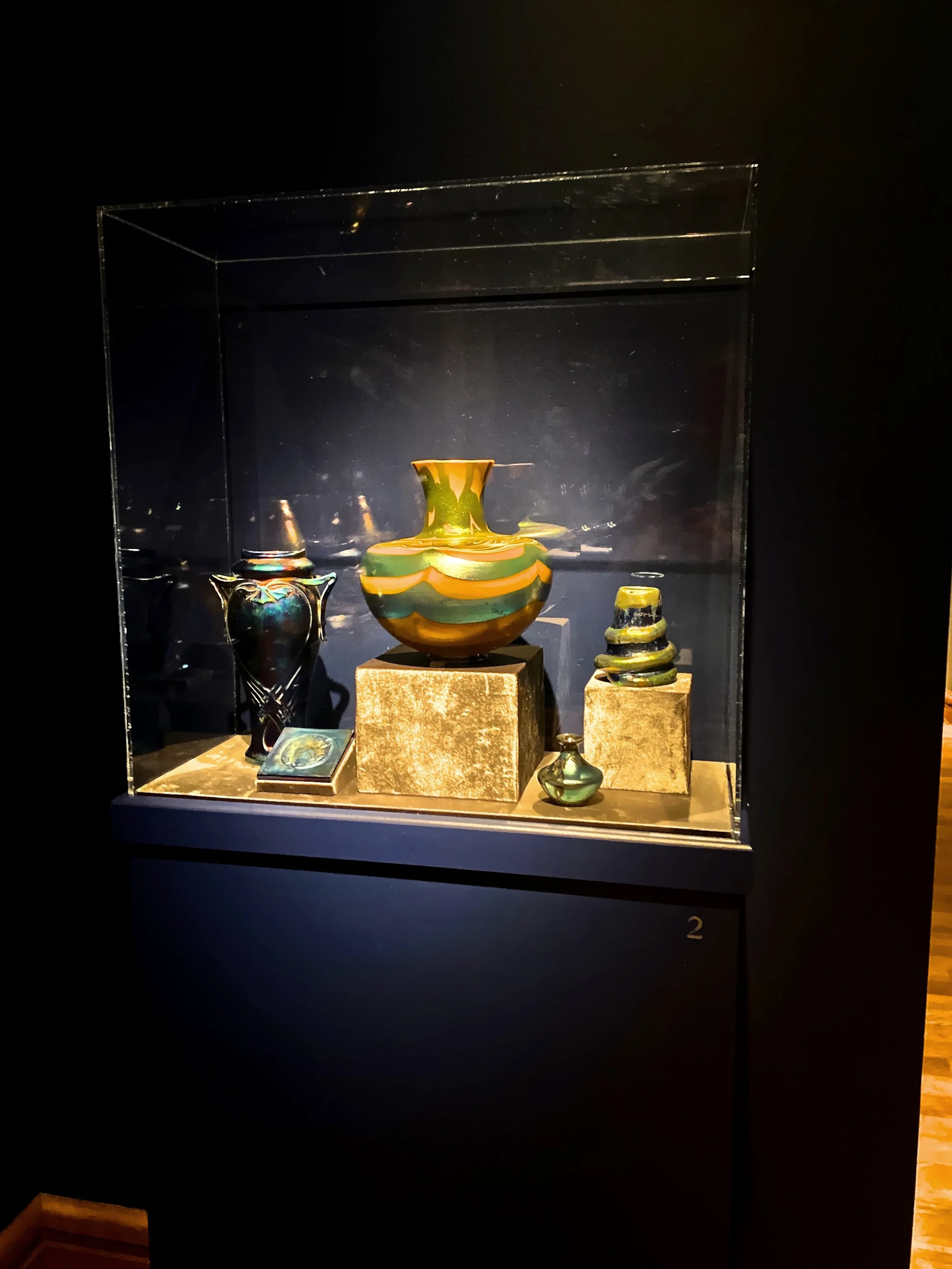
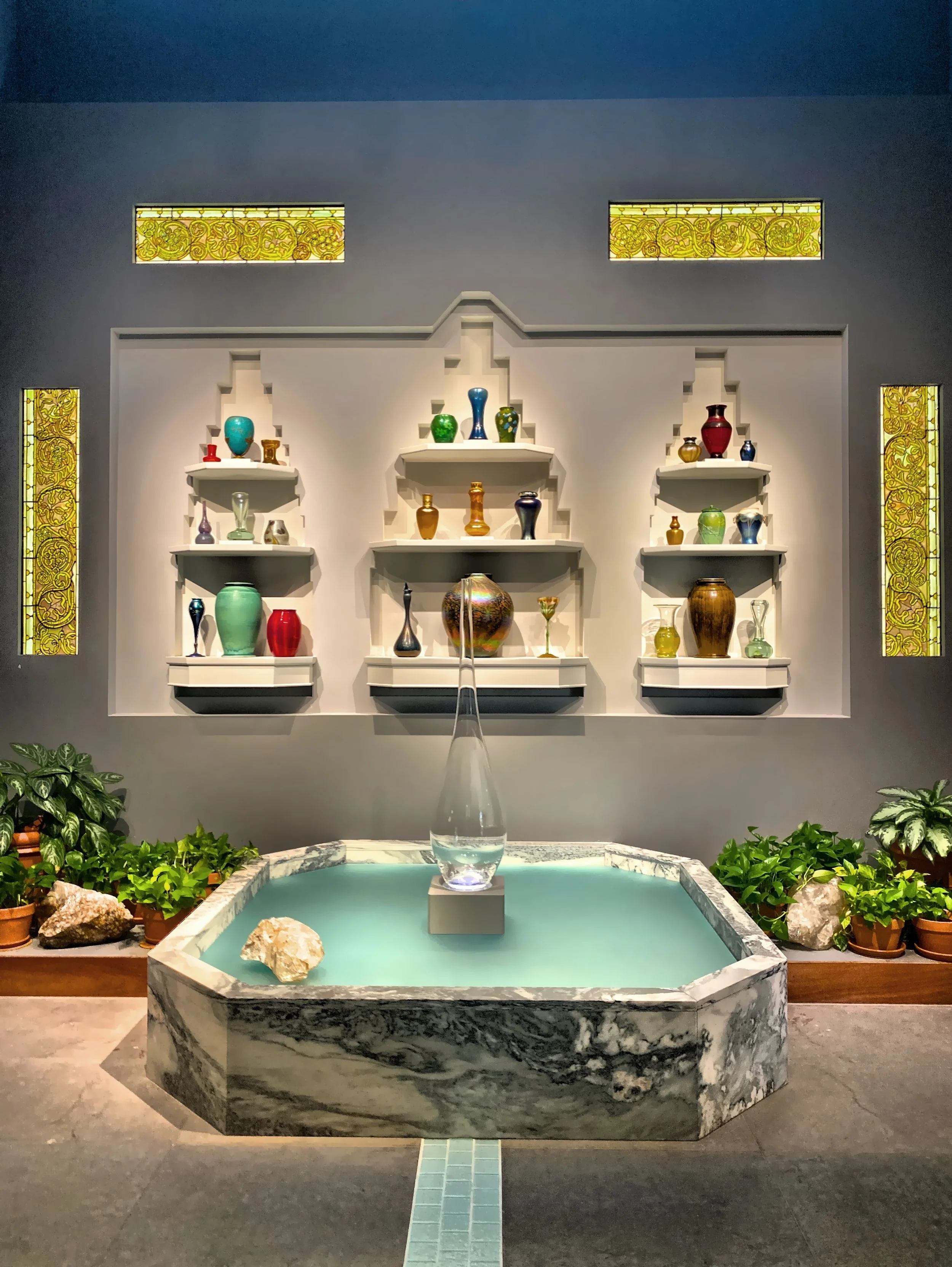
Tiffany produced art pottery between 1900 and 1915.
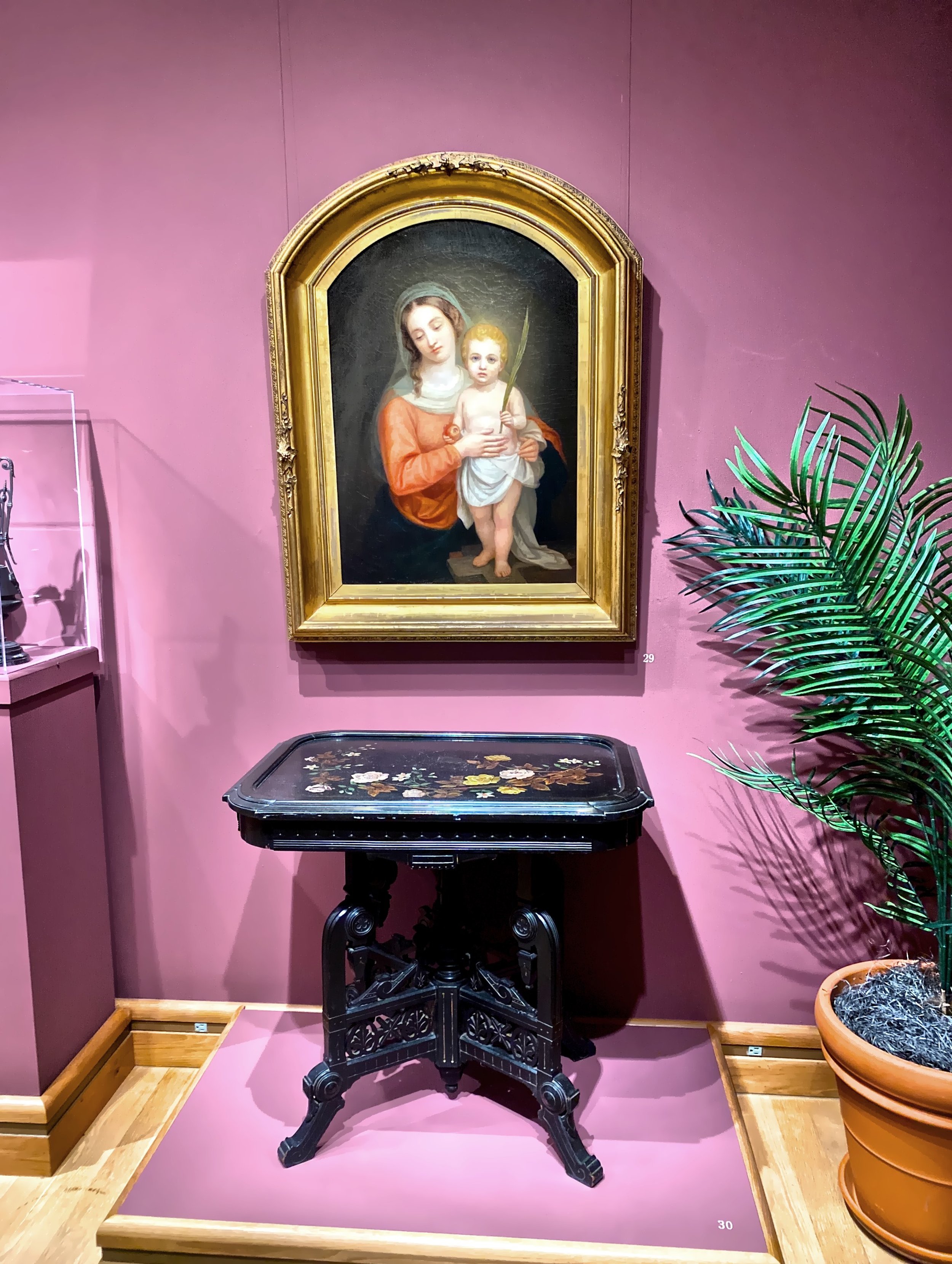
Furniture and art collections
.
.
.
.
'Loie Fuller, The Dancer’ table lamp by Raoul Larche
Art deco
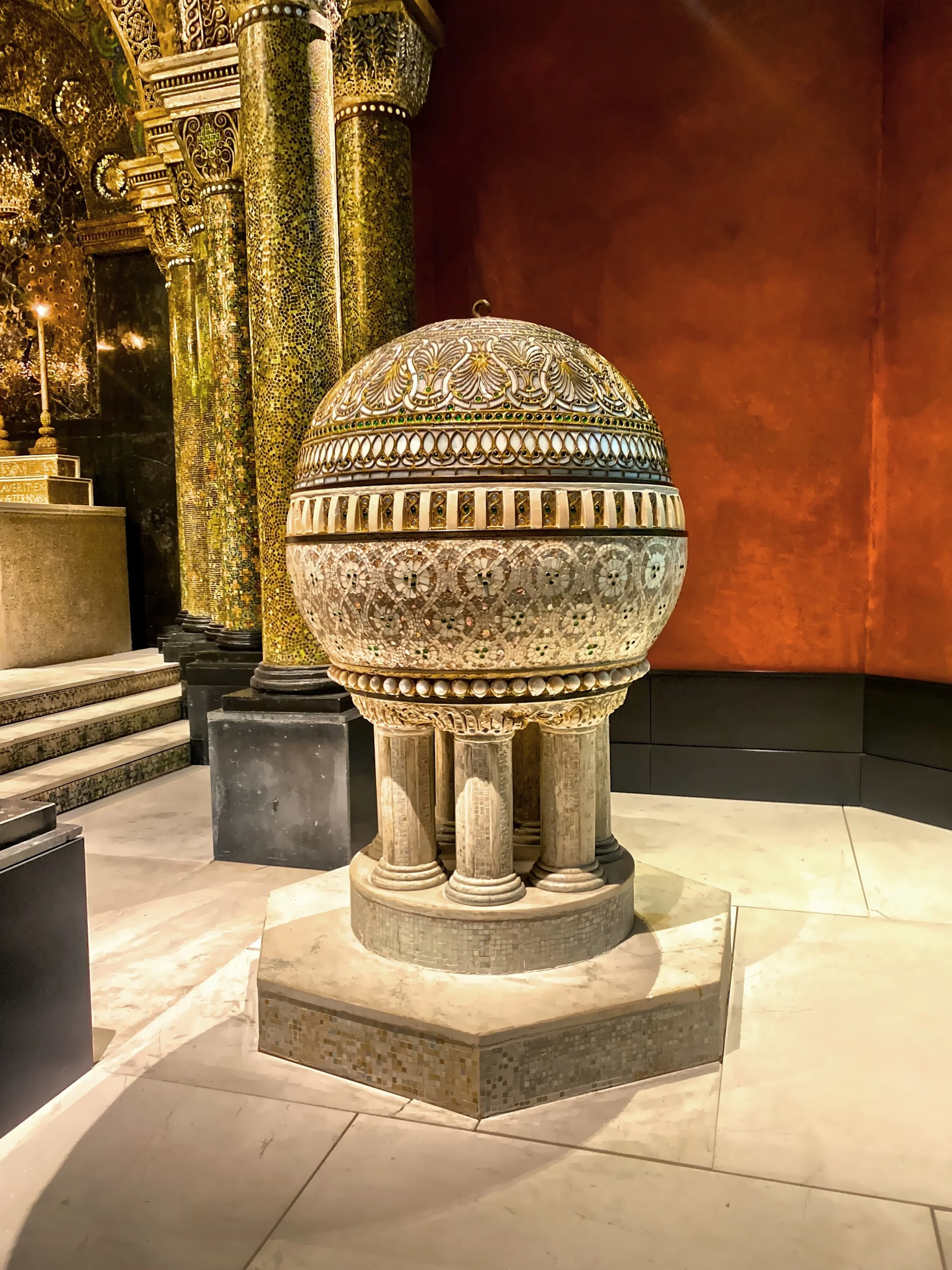
This is the chapel from the Tiffany exhibit at the 1893 World’s Columbian Exposition in Chicago.
Beautiful tile work and stained glass windows
After the fair, Tiffany reinstalled the chapel in his studios in New York City. It was then installed in the crypt of New York’s Cathedral of Saint John the Divine in 1898.
.
Though used for services, the chapel eventually fell into disrepair and in 1916, Tiffany reacquired the chapel, restored it, and installed it in a small builiding at his Long Island estate.
.
.
.
.
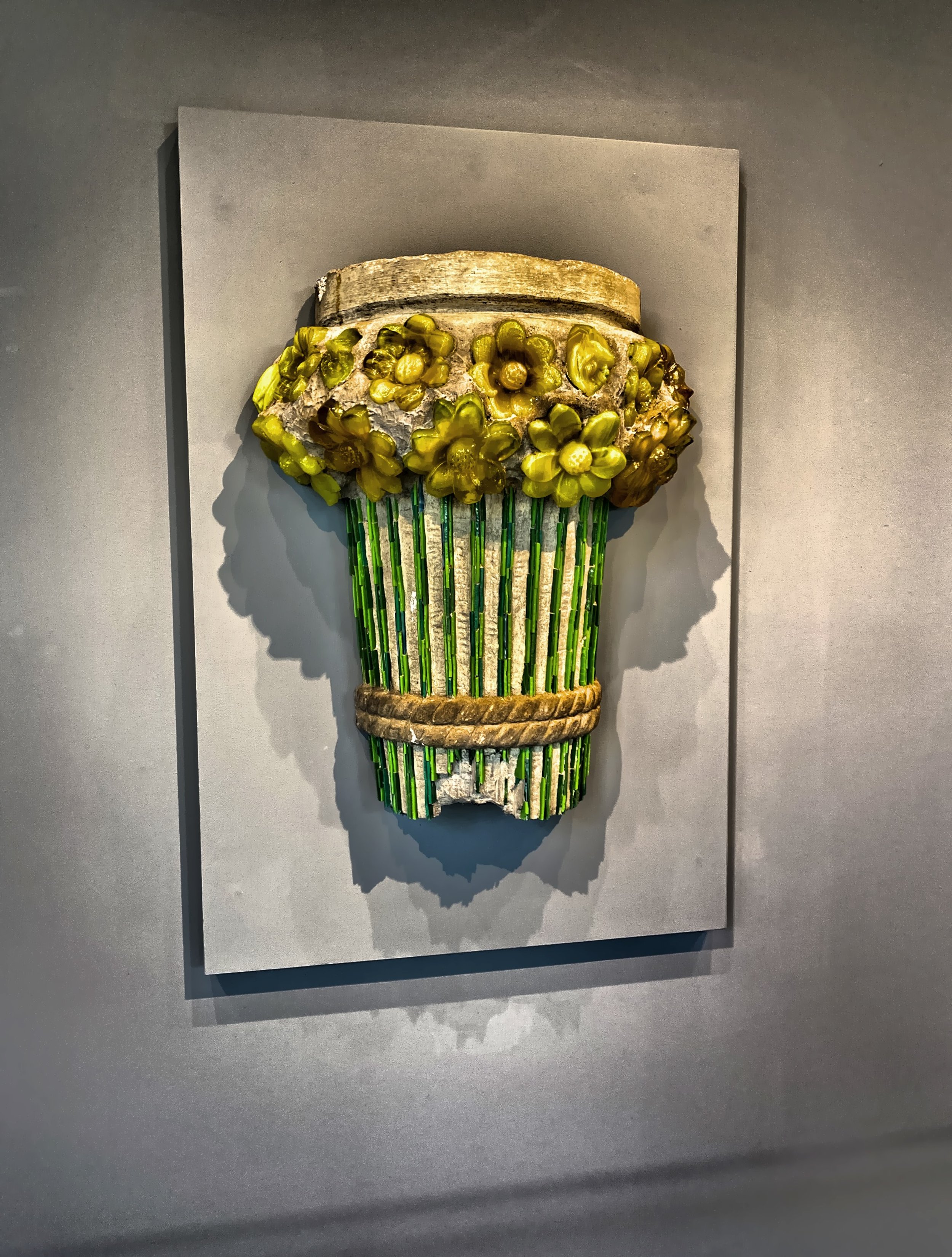
Hugh F. and Jeannette G. McKean rescued works from Tiffany’s Long Island mansion, Laurelton Hall, after the mansion was destroyed by fire in 1957. This daffodil capital was from the south facade and is made of cut glass and concrete.
Daffodil Terrace (from Laurelton Hall)
.
This fireplace hood is an amazing example of the unique artwork Tiffany created for his own residences. It was eventually installed in Laurelton Hall.
.
The Reception Gallery (from Laurelton Hall)
.
The dining room (from Laurelton Hall)
.
Living Room (from Laurelton Hall)
.
.
What you should know:
Restrooms are available.
There is a parking lot and on the street parking is also available; check posted parking regulations signs.
You could spend a few hours here, depending on your level of interest.
Tickets can be purchased online or in person.
Check website for days and hours of operation, and any special events.
People are friendly and helpful.
There is an introduction video and the galleries are all self-guided.
Location: 445 North Park Avenue, Winter Park, FL 32789
For more information: Morse Museum