
Jacqueline Onasis Led The Campaign To Save It - Grand Central Terminal
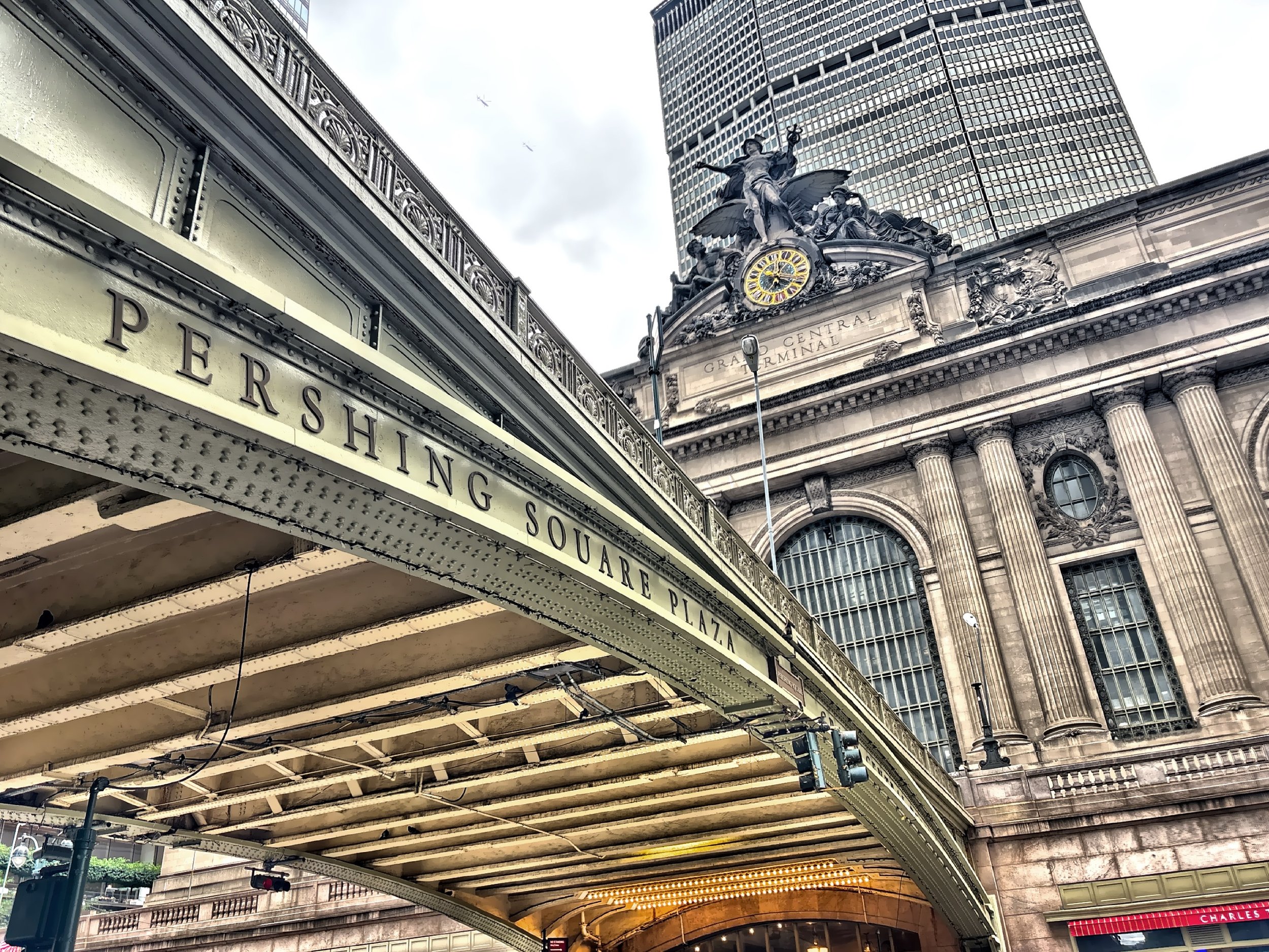
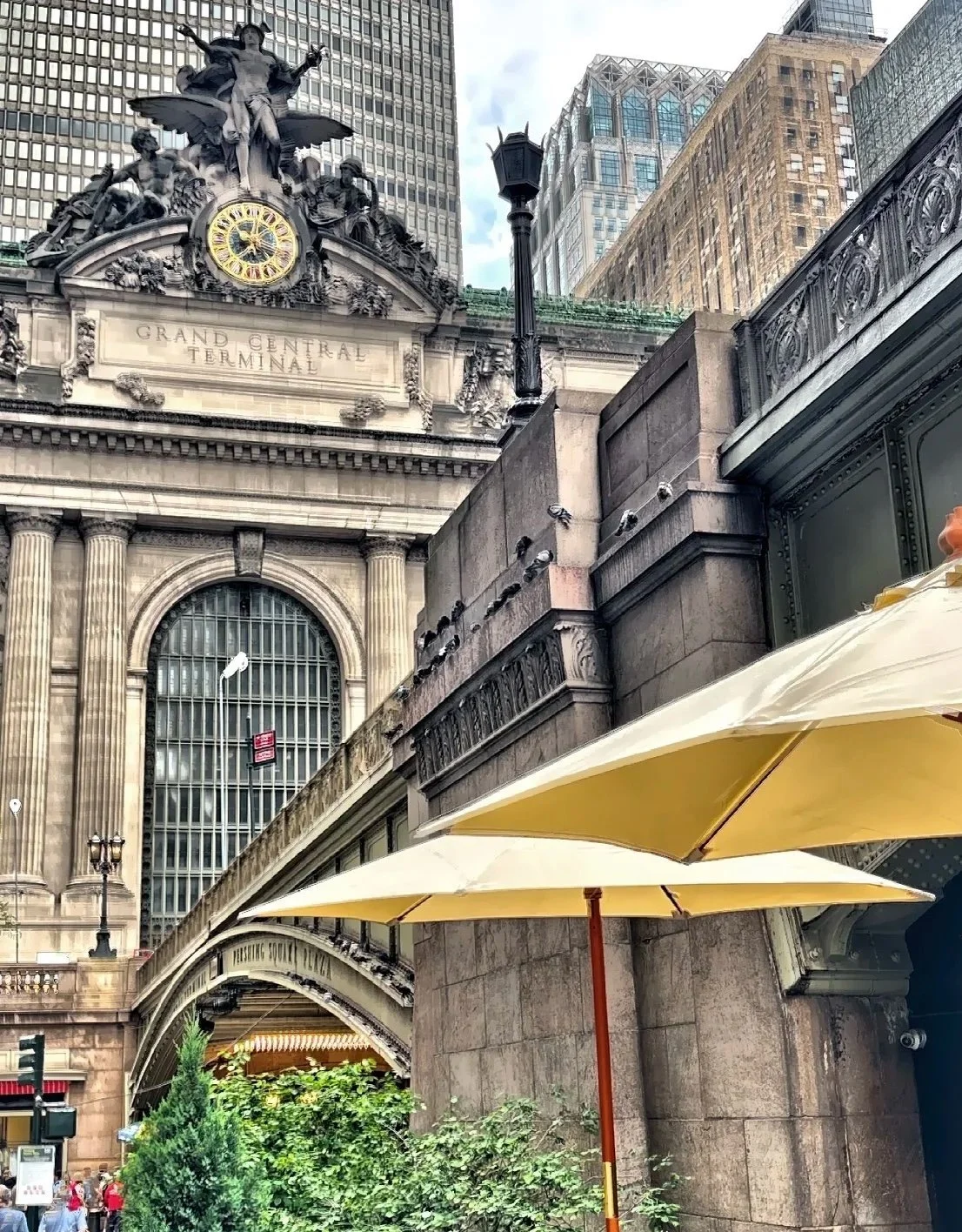
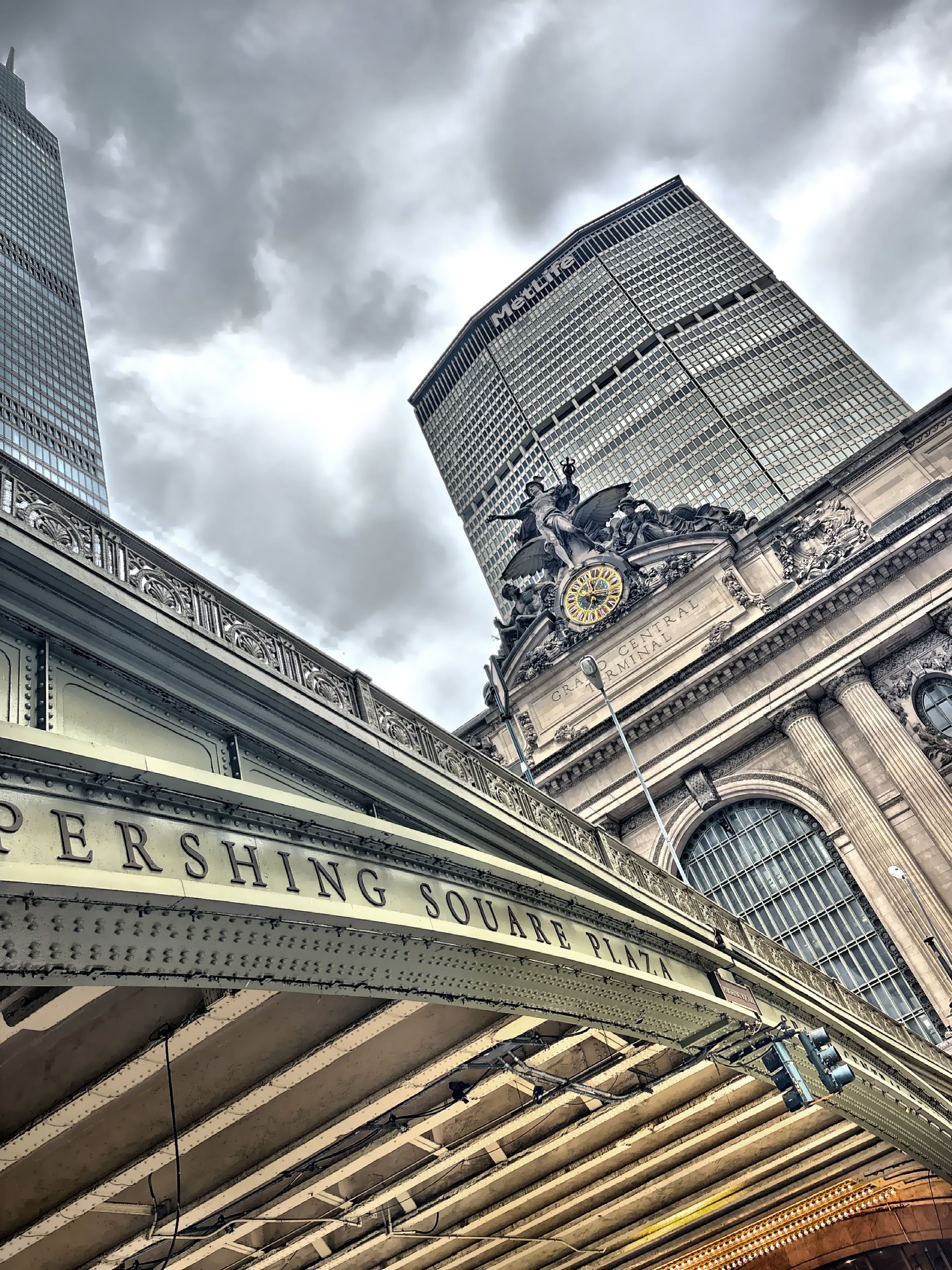
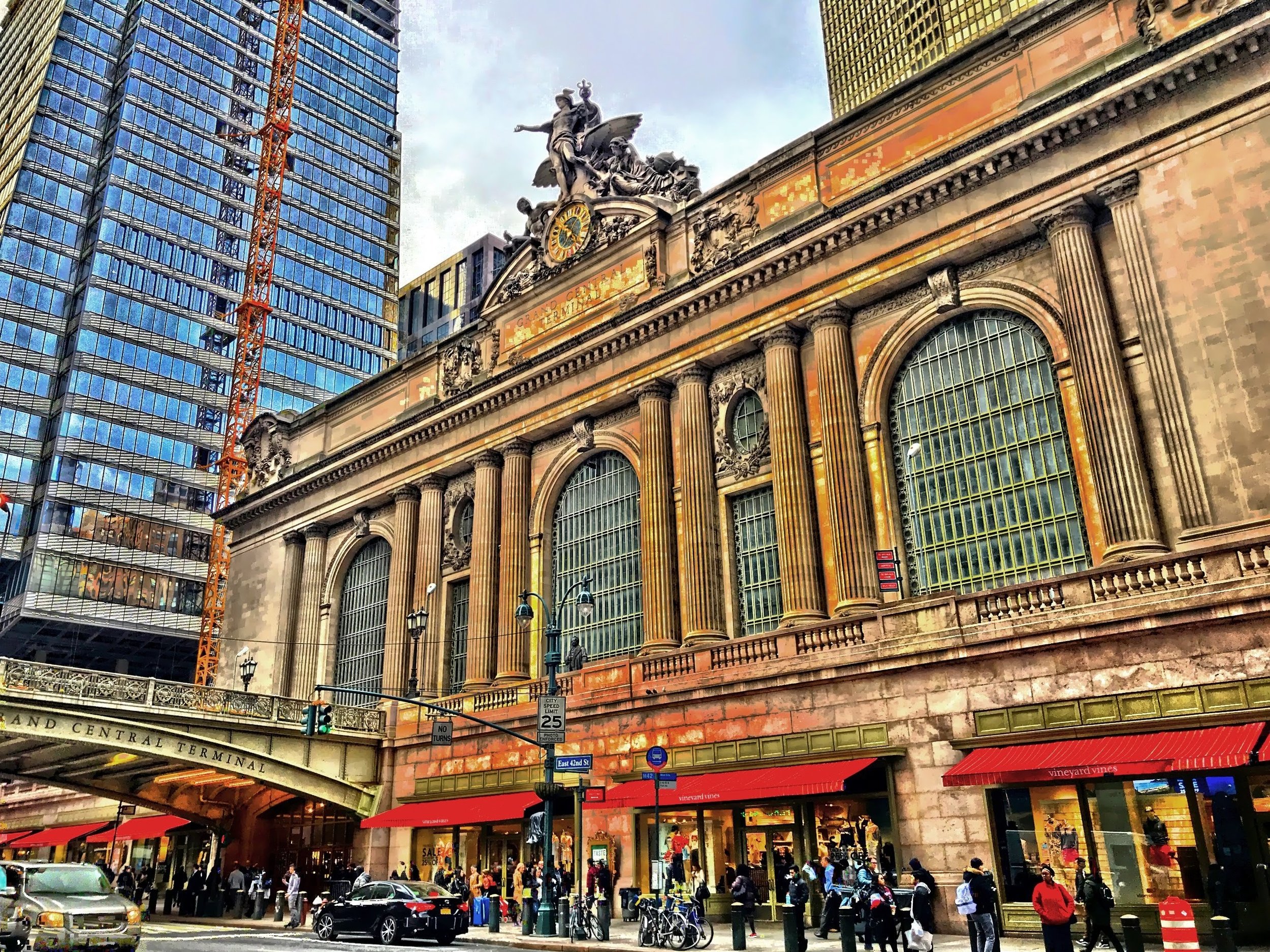
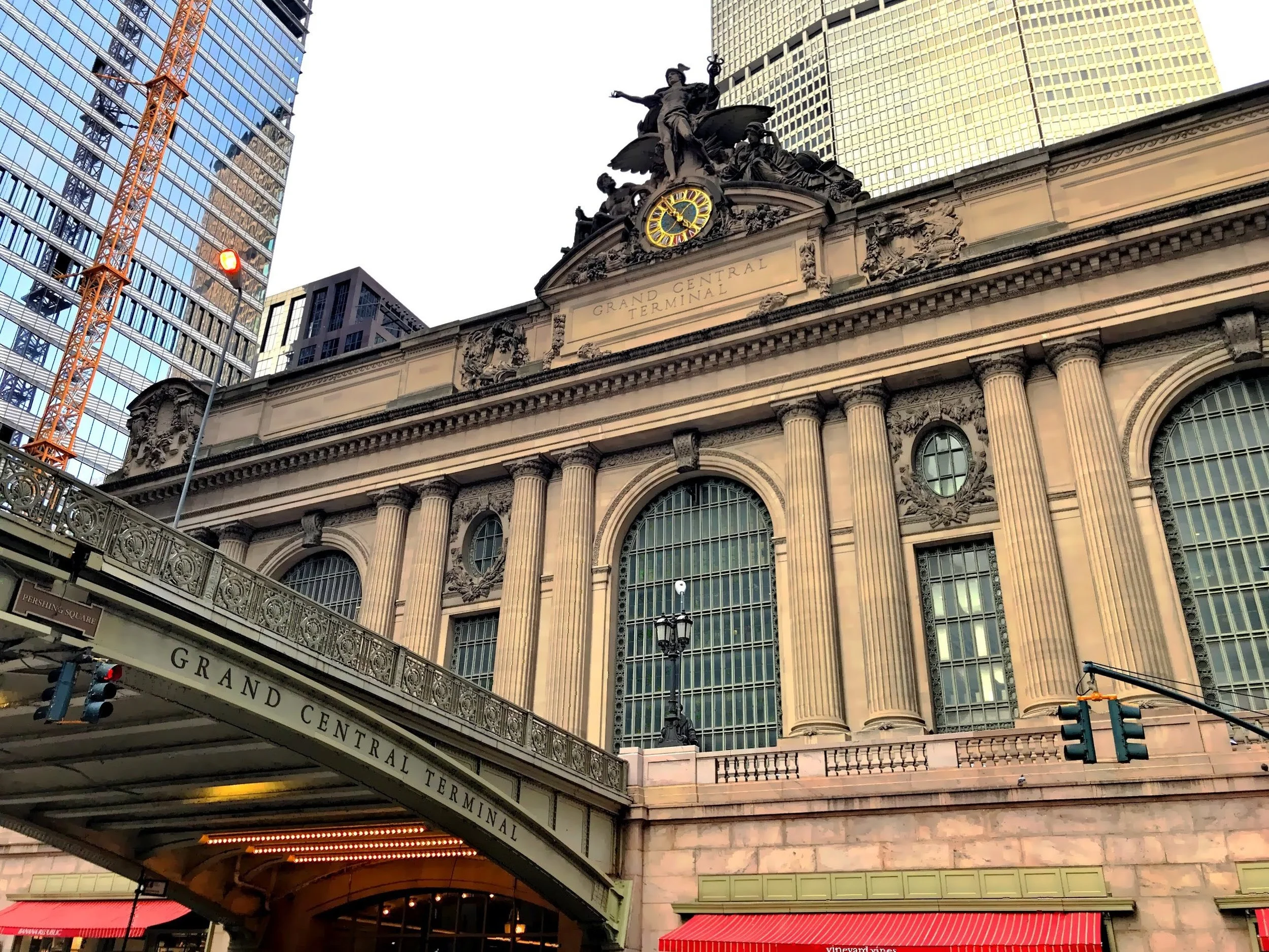
In 1871, railroad tycoon Cornelius Vanderbilt opened the original Grand Central Depot. As train travel expanded, the depot became overcrowded and was rebuilt into Grand Central Station in 1900. The current Grand Central Terminal was designed by the architectural firms Reed & Stem and Warren & Wetmore. Construction began in 1903 and took about a decade. When it opened in 1913, it was considered one of the greatest transportation terminals in the world.
By the mid-20th century, rail travel declined as automobiles and air travel grew. Parts of the terminal deteriorated, and in the 1960s there were plans to demolish the building and replace it with a skyscraper.
A major preservation campaign emerged, led in part by Jacqueline Kennedy Onassis. The effort helped save the terminal from demolition.
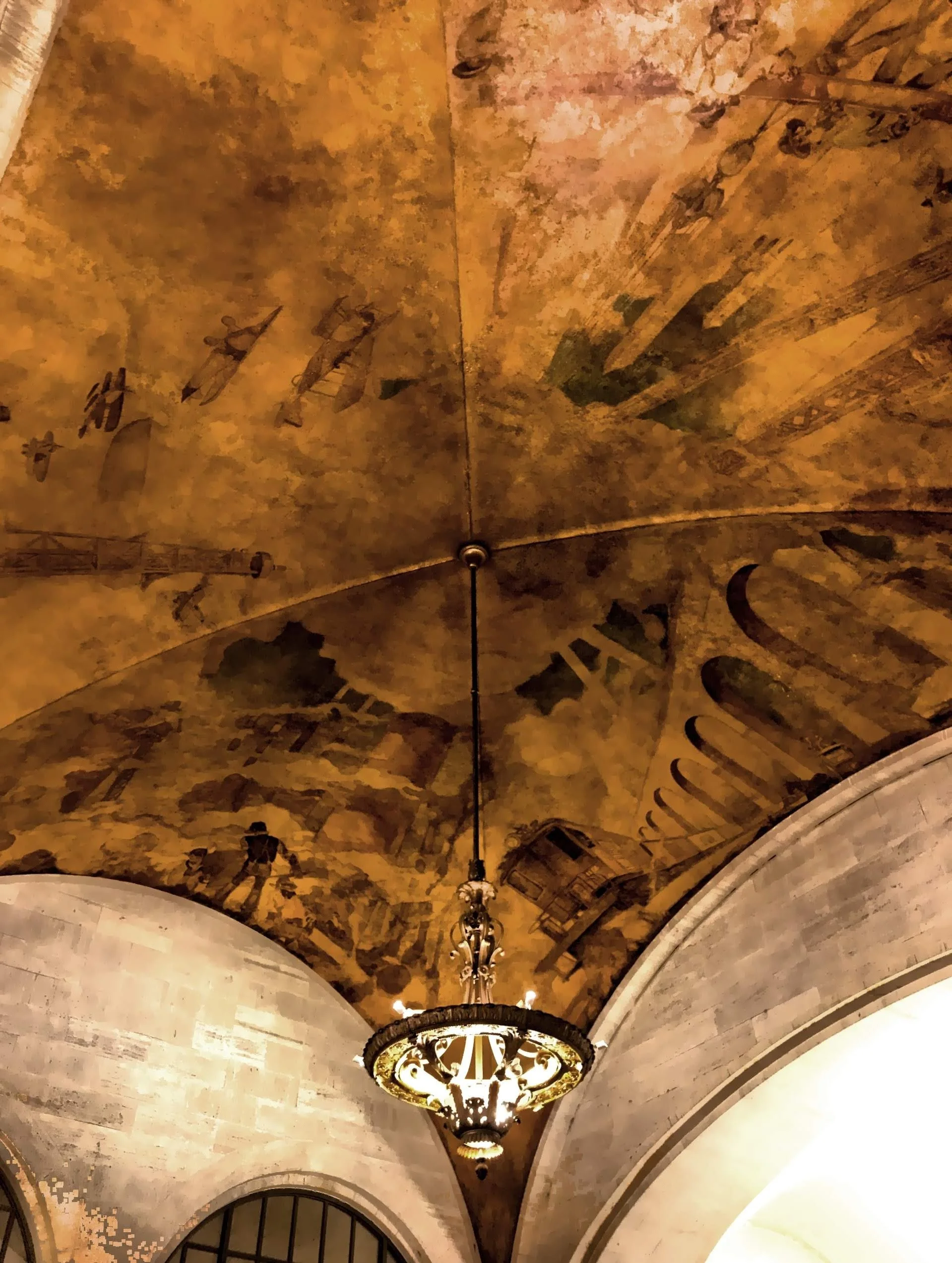
During the 1990s, the terminal underwent a major restoration and decades of grime were cleaned from the ceiling, historic details were repaired, and retail and dining spaces were revitalized.
—
Grand Central Terminal is a living piece of New York history. Its story began in 1871, when railroad magnate Cornelius Vanderbilt opened the original Grand Central Depot. As rail travel boomed and passenger numbers surged, the depot quickly became too small for the city's growing needs.
Designed by the architectural firms Reed & Stem and Warren & Wetmore, construction of the current terminal began in 1903 and took nearly a decade to complete. When Grand Central Terminal opened in 1913, it was celebrated as one of the world's most impressive transportation hubs—a symbol of New York's ambition and the golden age of rail travel.
The terminal's fortunes changed during the mid-20th century as automobiles and commercial air travel became increasingly popular. Passenger rail service declined, and portions of the building fell into disrepair. By the 1960s, plans were being considered to demolish the historic structure and replace it with a modern skyscraper.
Fortunately, a passionate preservation movement rallied to protect this architectural treasure. Among its most prominent advocates was Jacqueline Kennedy Onassis, whose efforts helped galvanize public support and ultimately save Grand Central from destruction.
Today, it's hard to imagine New York without it. A major restoration project in the 1990s transformed the terminal, removing decades of grime from its iconic ceiling, restoring historic architectural details, and breathing new life into its shops and restaurants. Thanks to those preservation efforts, Grand Central Terminal remains not only a vital transportation hub but also one of the city's most beloved landmarks.
This is what caught my eye - I hope you enjoy!
Do you like the images posted?
Click here to explore the shop.
Interesting facts:
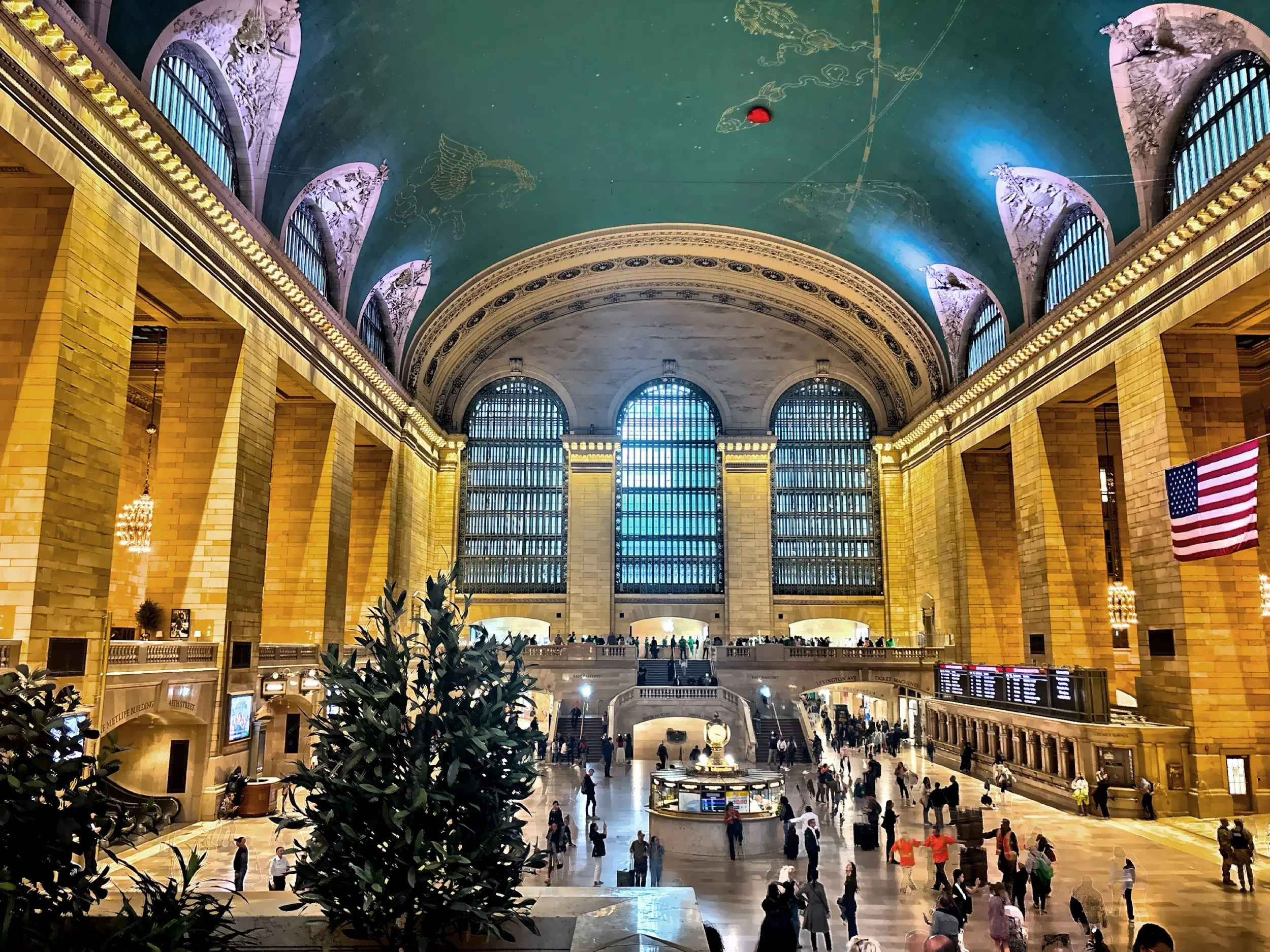
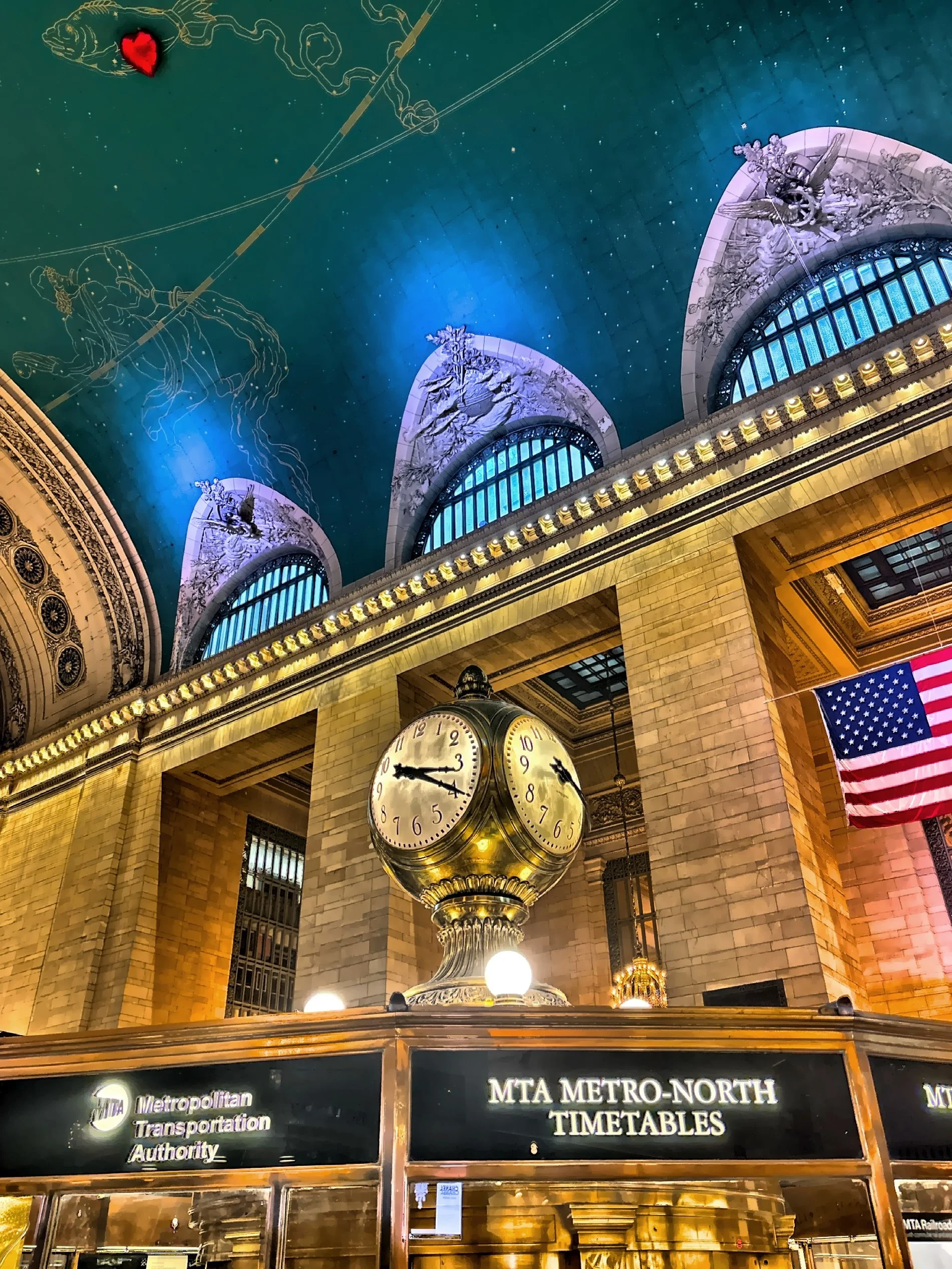
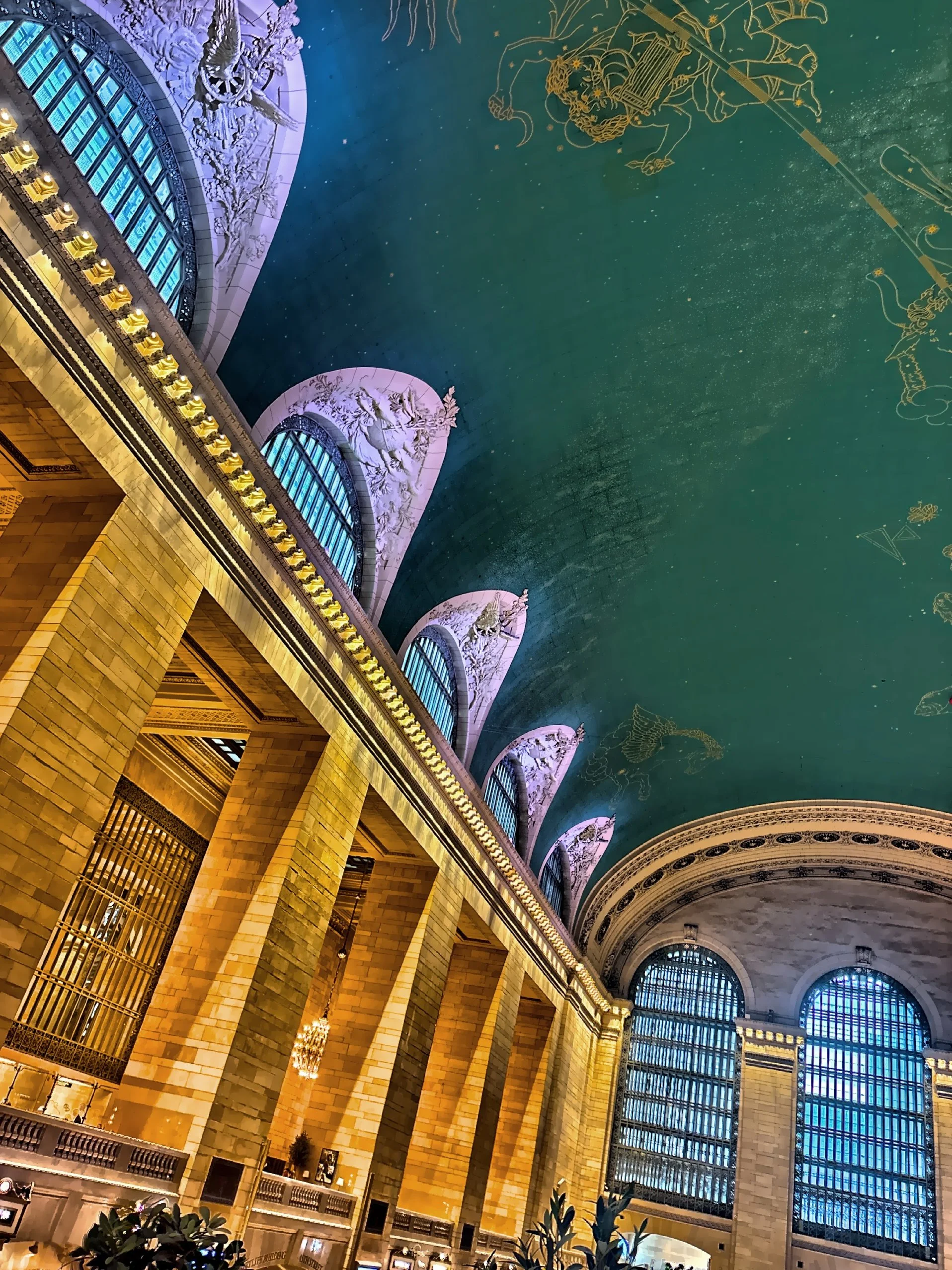
The famous turquoise ceiling in the Main Concourse shows zodiac constellations in reverse.
During the 1990s restoration, conservators intentionally left one small dark patch on the Main Concourse ceiling untouched. It shows visitors how filthy the ceiling had become from decades of tobacco smoke and pollution.
Near the Oyster Bar is an acoustic phenomenon called the Whispering Gallery. If two people stand at opposite corners of the tiled archway and whisper toward the wall, they can hear each other clearly across the space.
Track 61 is a secret rail platform beneath the terminal, associated with Franklin D. Roosevelt. Legend says he used it to discreetly enter the city while concealing the extent of his paralysis from the public. The track still exists but is not open to visitors.
The four-faced opal clock atop the information booth is one of the terminal’s most recognizable symbols. Estimates of its value range into the millions because of the rare materials and craftsmanship.
The Vanderbilt Tennis Club is hidden within the terminal.
What you should know:
The Main Concourse is busiest during weekday rush hours.
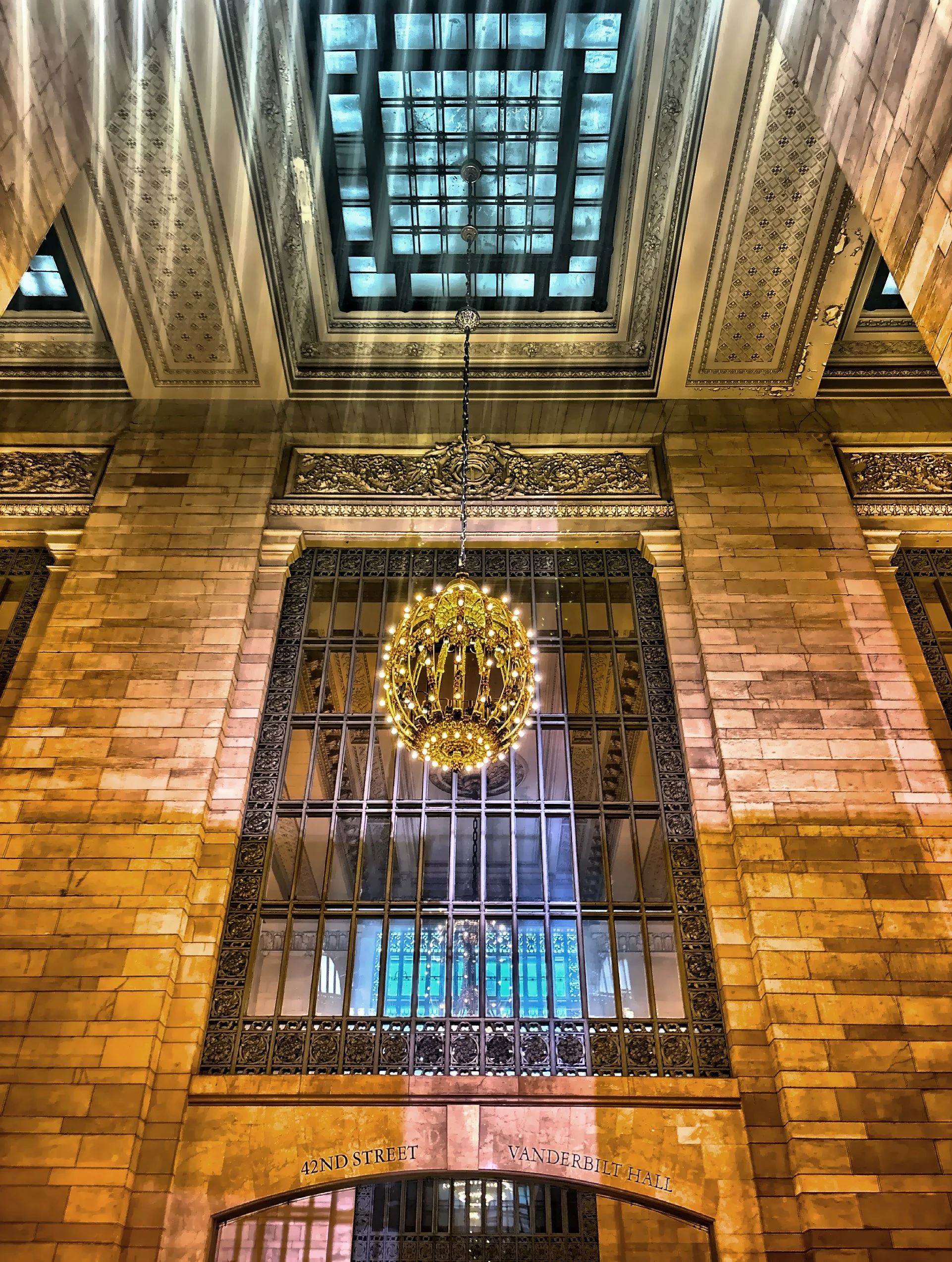
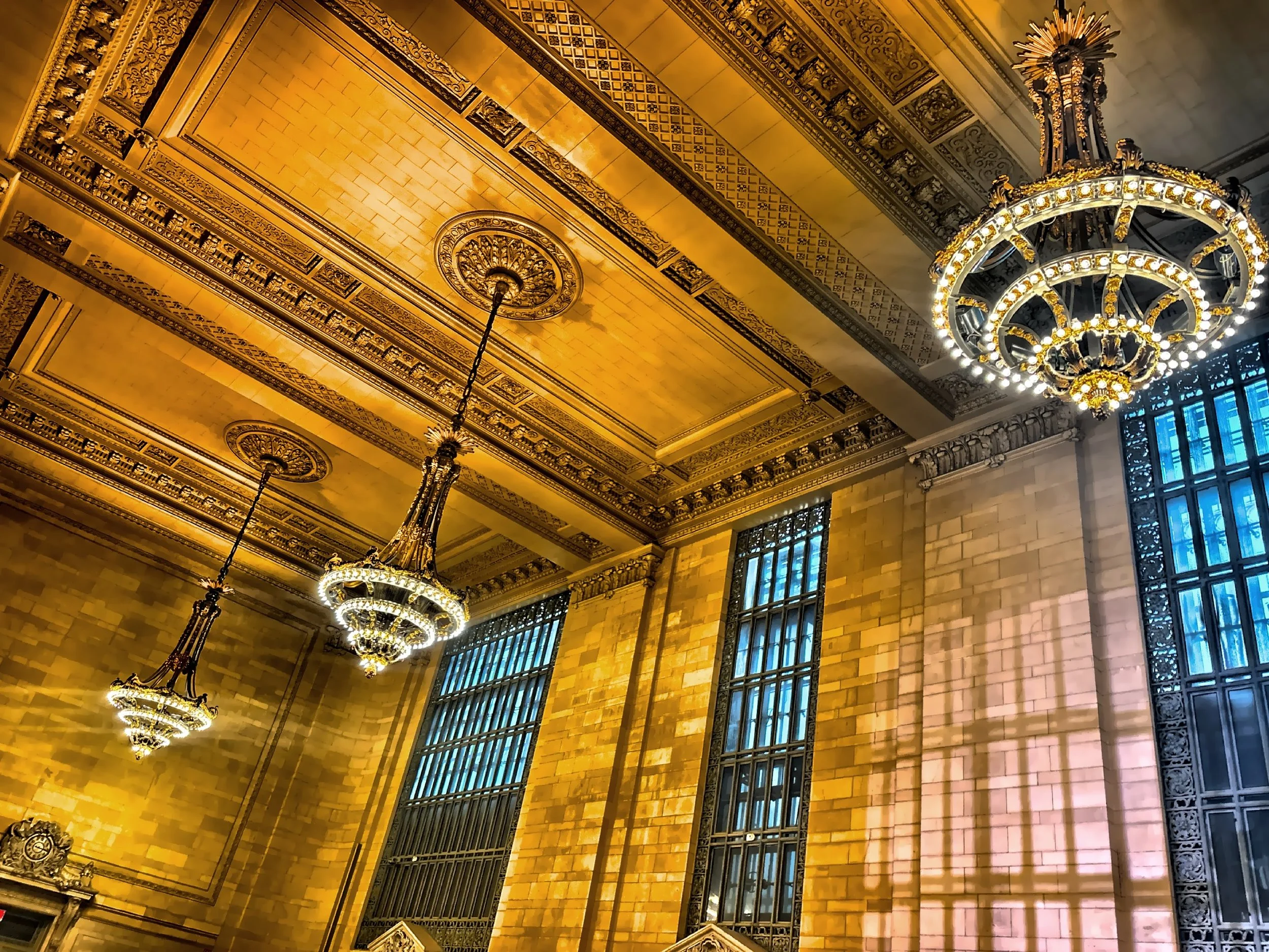
Take time to look up at the ceiling, admire the marble staircases, and explore the historic architecture throughout the terminal.
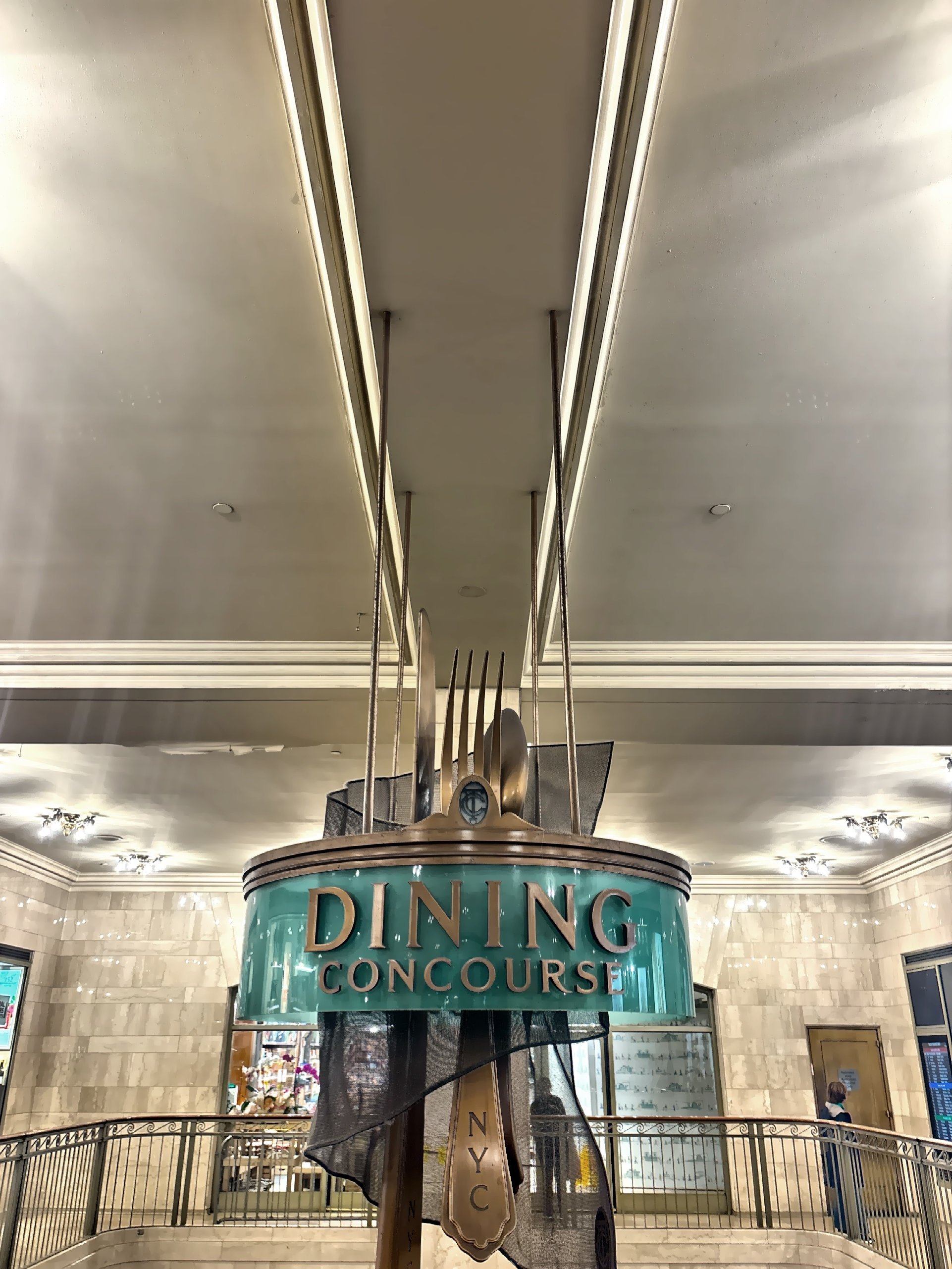
There is food available in the lower-level dining concourse.
Think about taking a guided tour.
There are public restrooms.
Parking near the terminal is difficult. Paid parking options are available.
Location: 89 East 42nd Street, New York, NY 10017
For more information: Grand Central Terminal
If you enjoyed this post, feel free to check out my previous posts by clicking here.