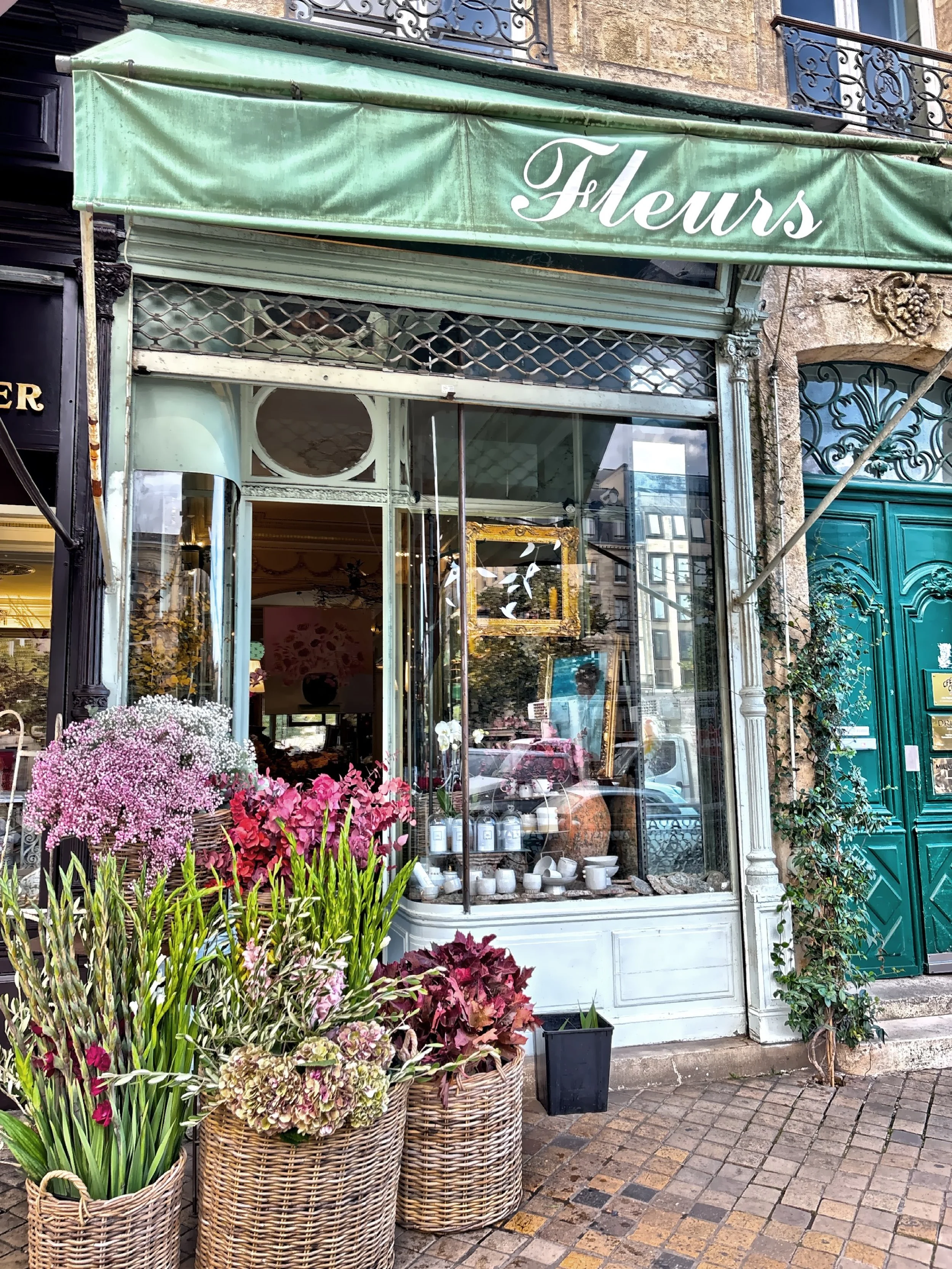
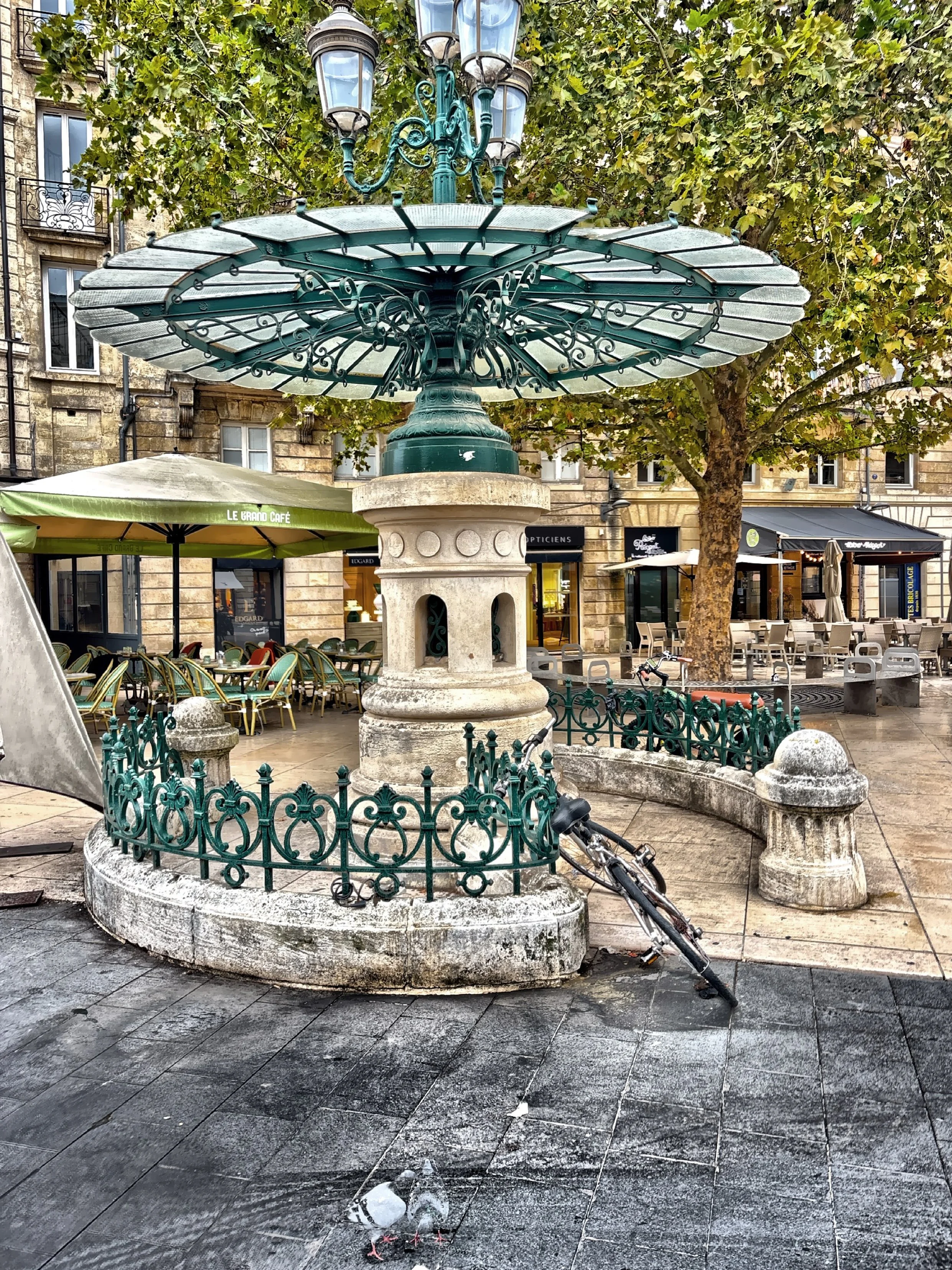
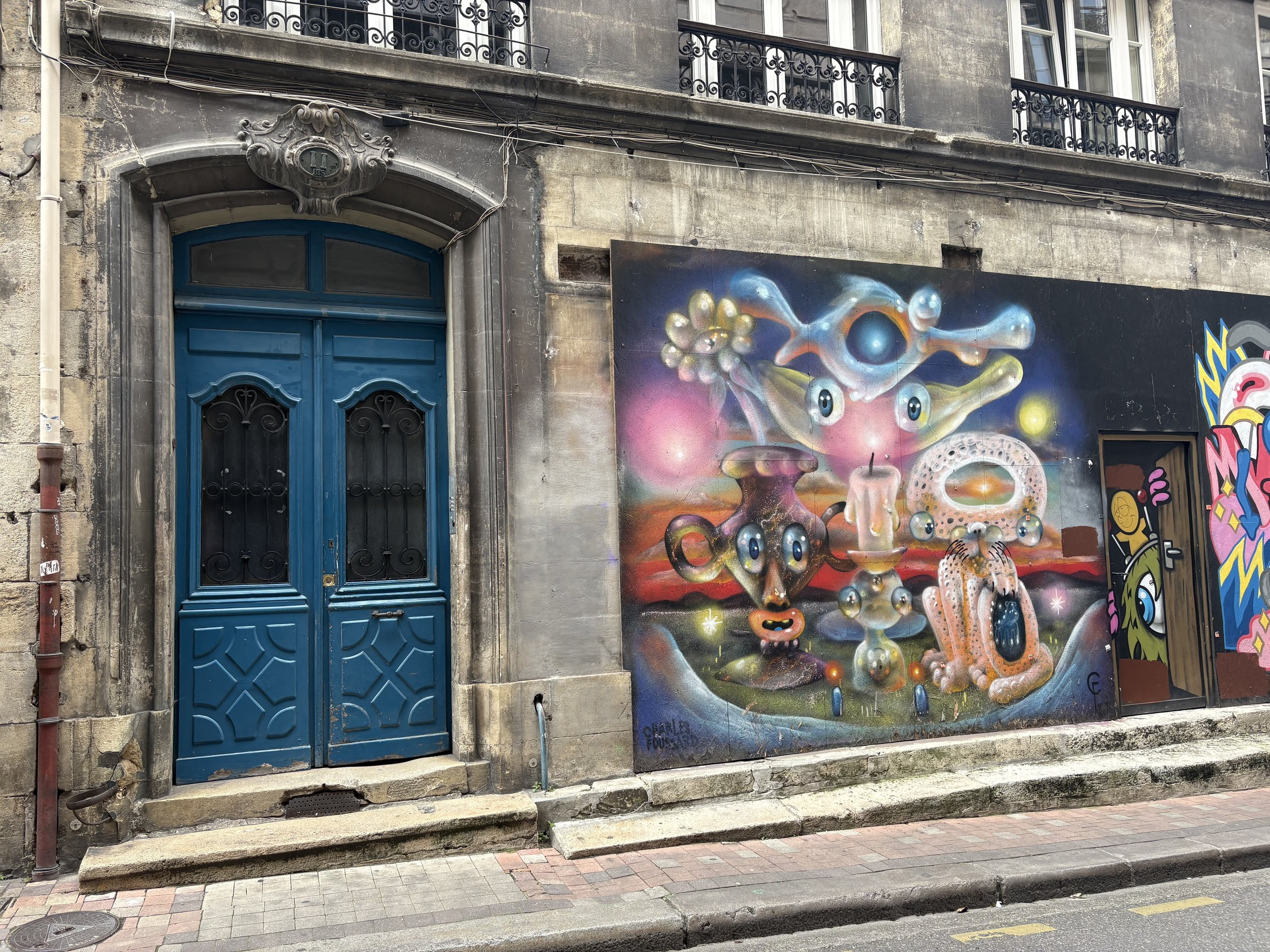
Bordeaux—often called “Little Paris”—pairs elegant architecture, grand squares, and thoughtful city planning reminiscent of the French capital, while still maintaining a relaxed, approachable charm all its own. The city is deeply rooted in wine culture, home to a serious academic program in viticulture, winemaking, and wine science at the University of Bordeaux. It’s also renowned for its strong saxophone tradition, centered at the Conservatoire de Bordeaux, and as the birthplace of the iconic canelé pastry.
Bordeaux is one of those cities that just gets it. It’s classy without being stuffy, fun without trying too hard, and effortlessly livable. You can bike almost anywhere, stop for pastries whenever the mood strikes, and end the day with a simple dinner followed by a sunset walk along the river. It isn’t loud or chaotic—just quietly beautiful, and the kind of place that makes you wish you could stay a little longer.
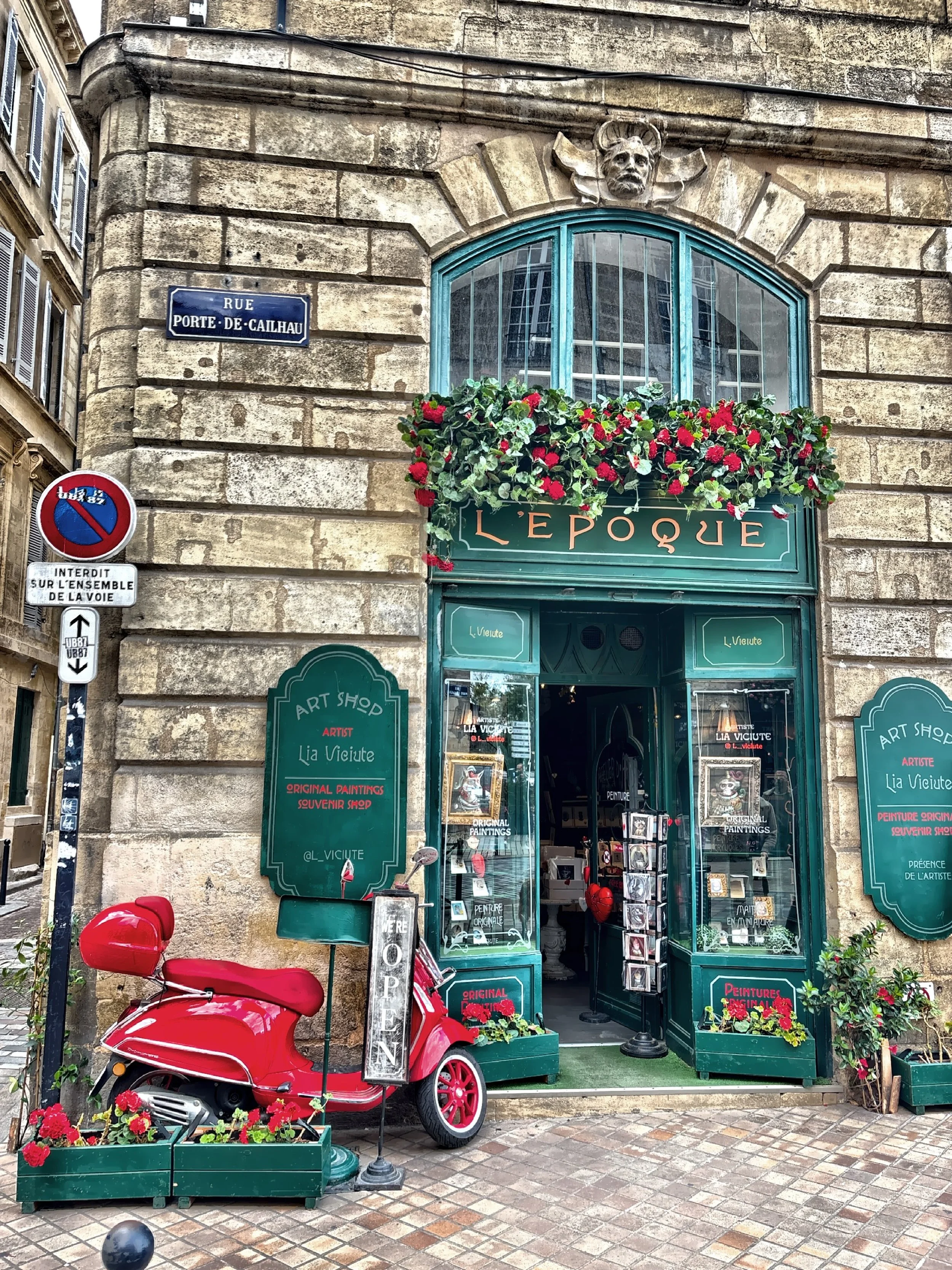
This is what caught my eye - I hope you enjoy!
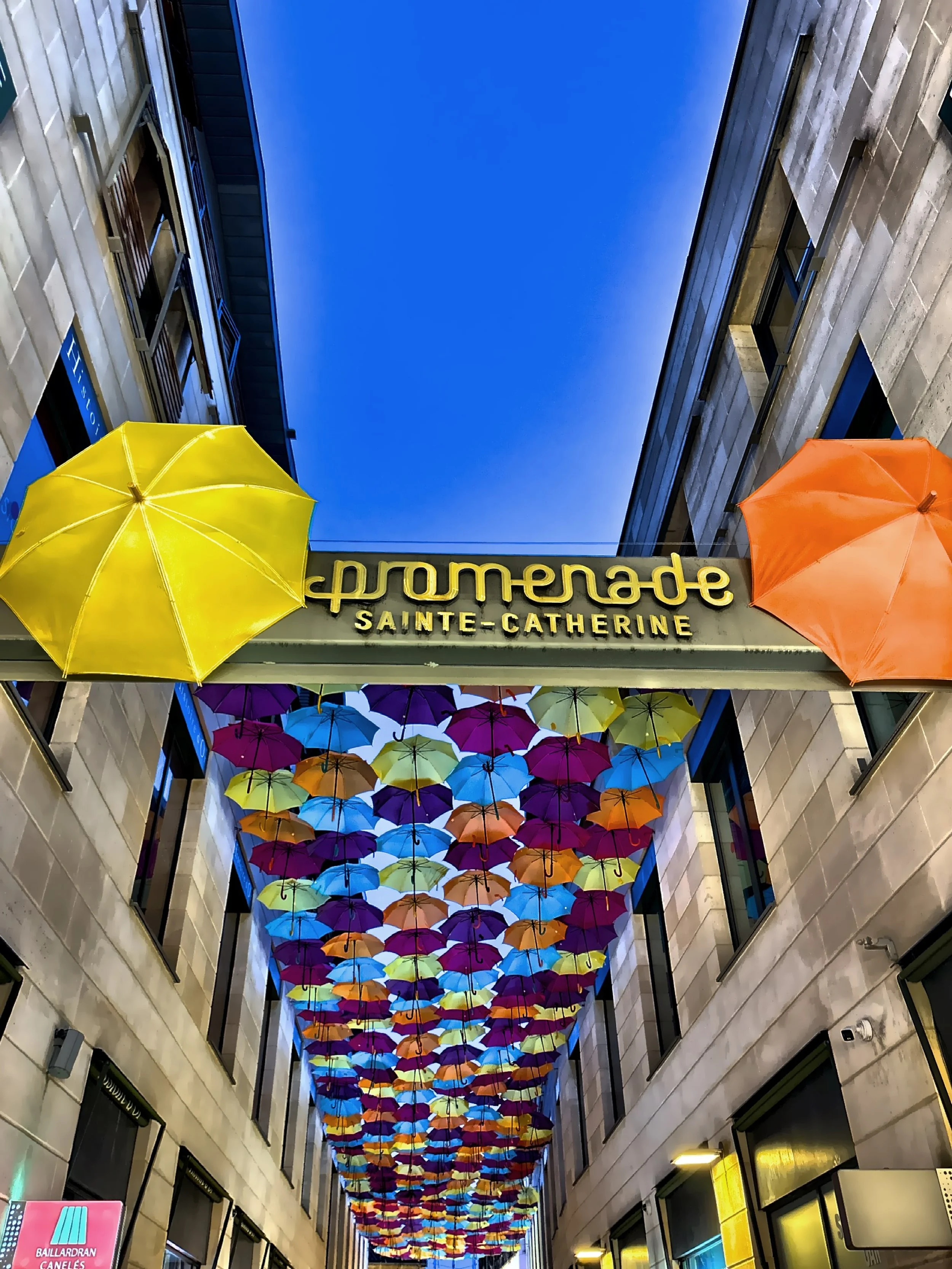
The entrance to the Promenade Sainte-Chatherine with a vibrant umbrella art installation.
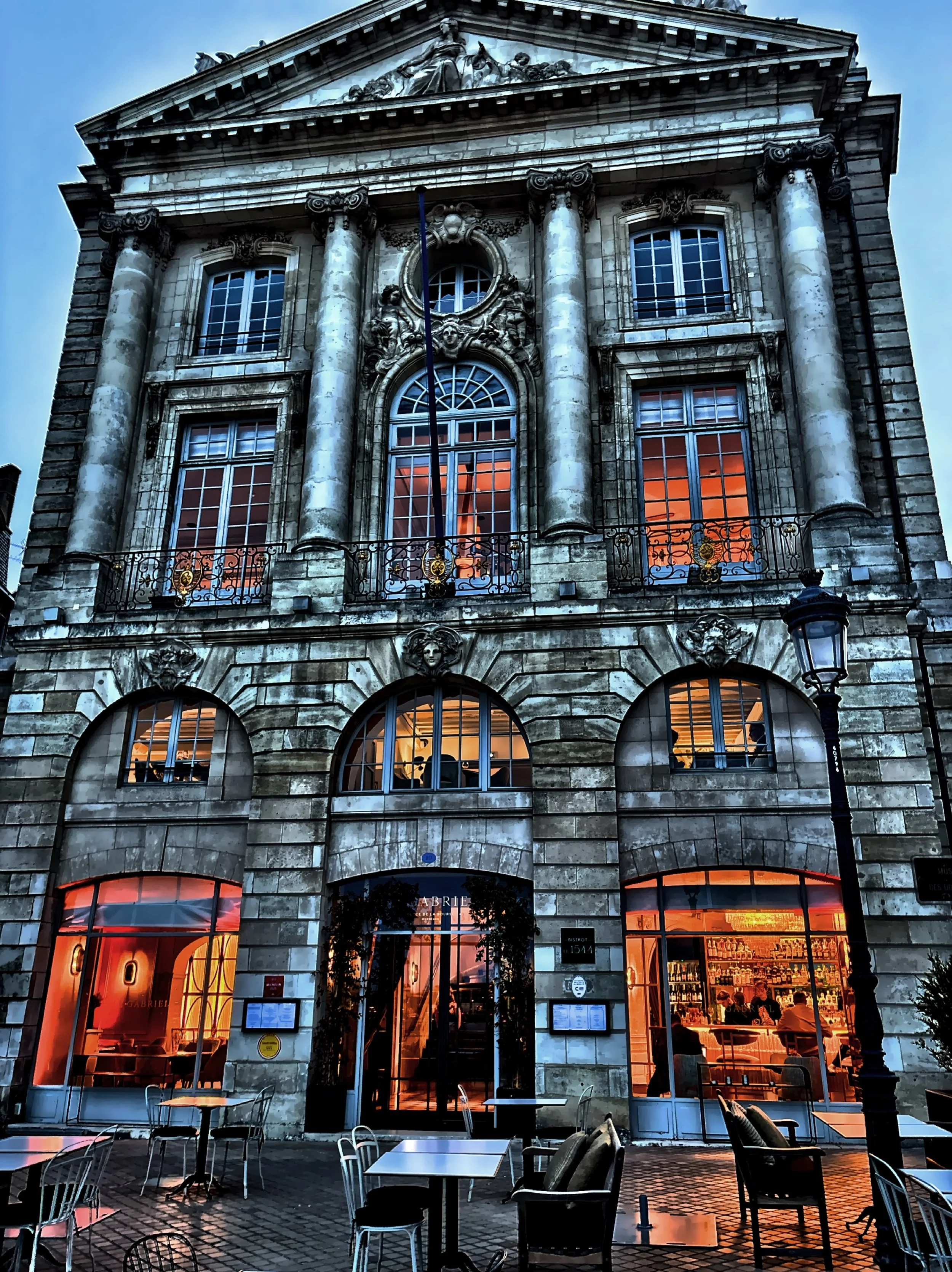
The lit windows of the Art Deco-inspired bar of Le Gabriel.
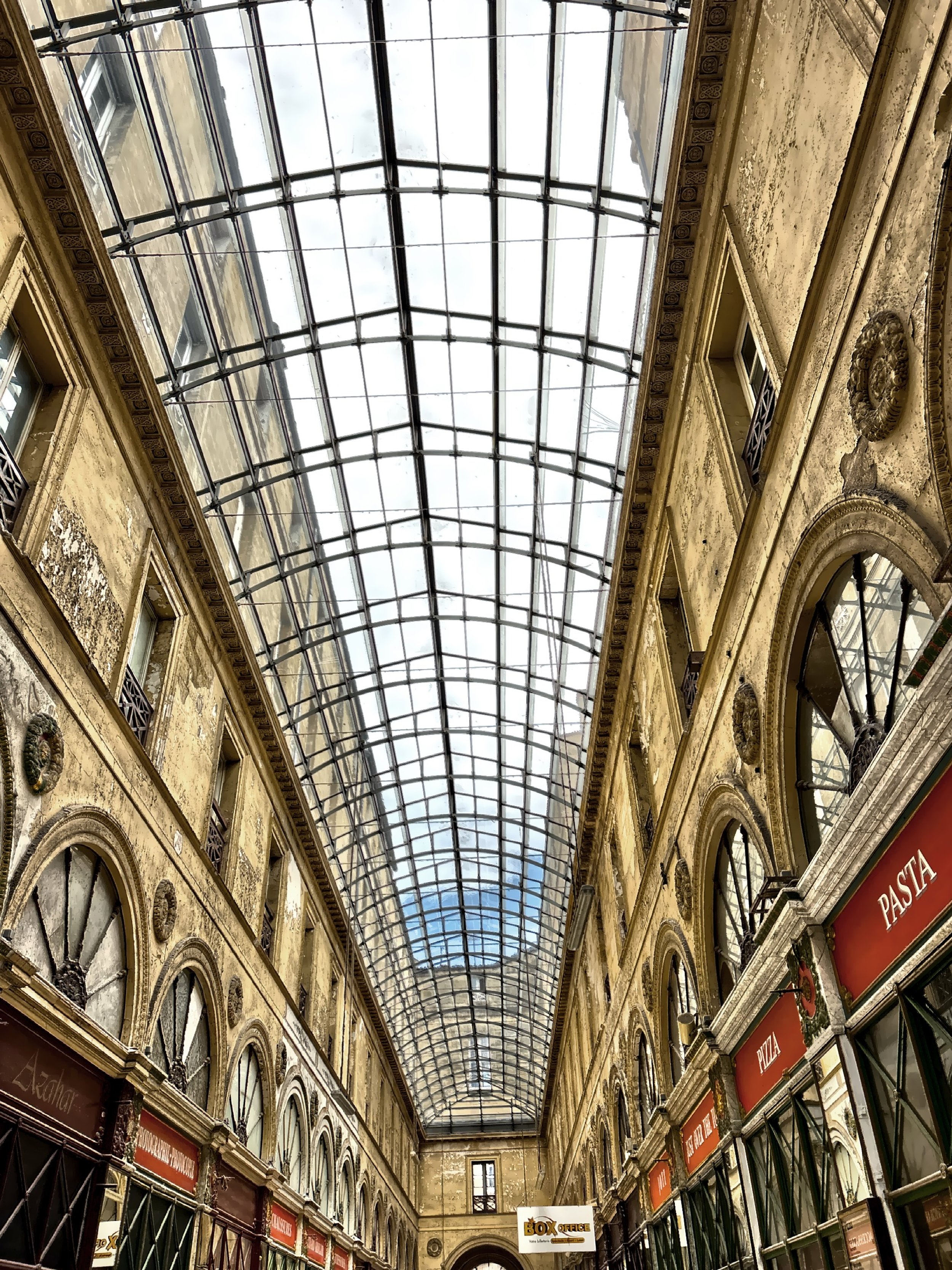
The Galarie Bordelaise, a historic covered shopping arcade built between 1833 and 1834.
80% of Bordeaux’s land is dedicated to wine production.
Do you like the images posted?
Click here to explore the shop.
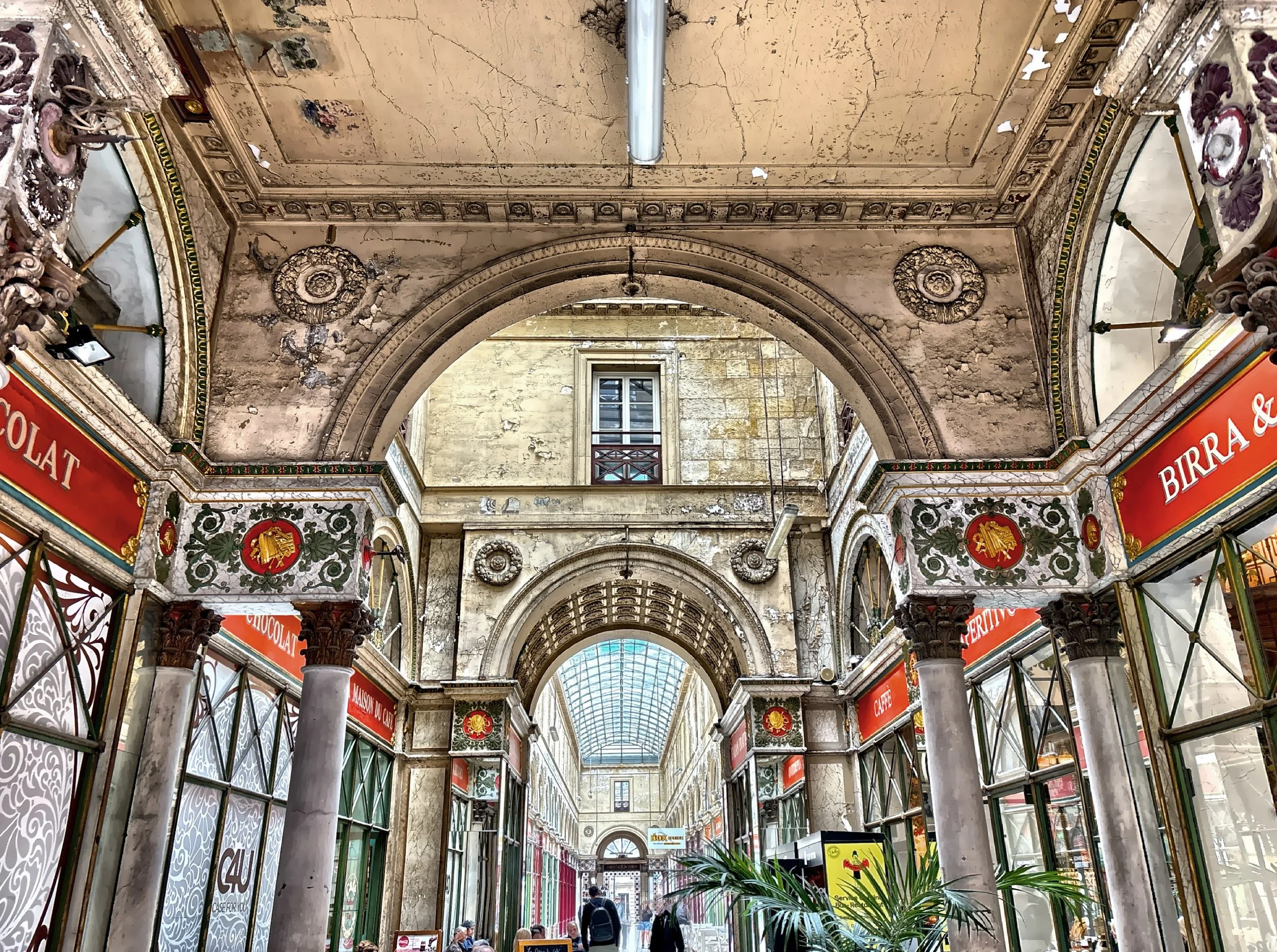
Galerie Bordelaise
.
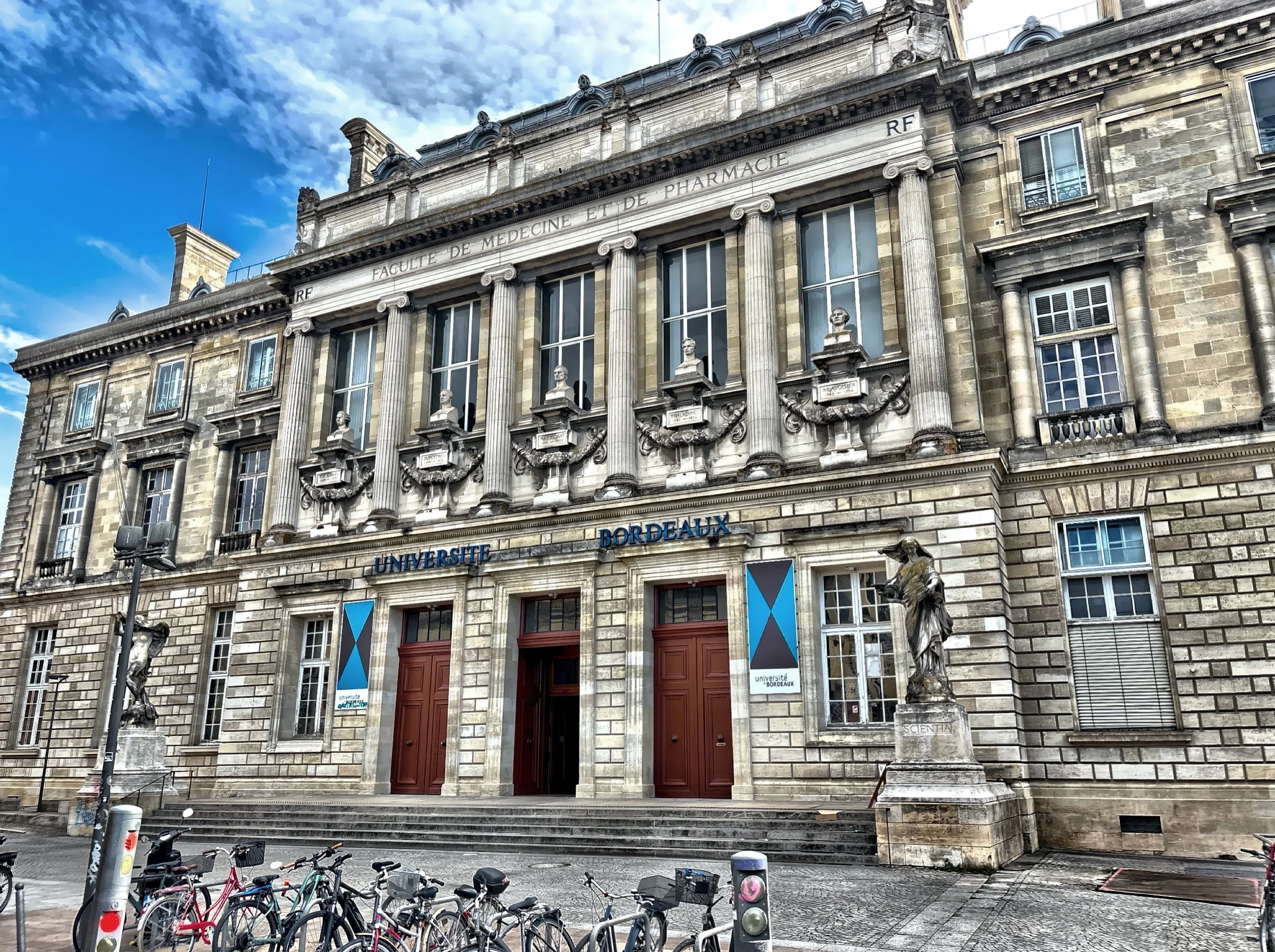
The University of Bordeaux was founded in 1441 and it is one of the oldest universities in the country.
.
.
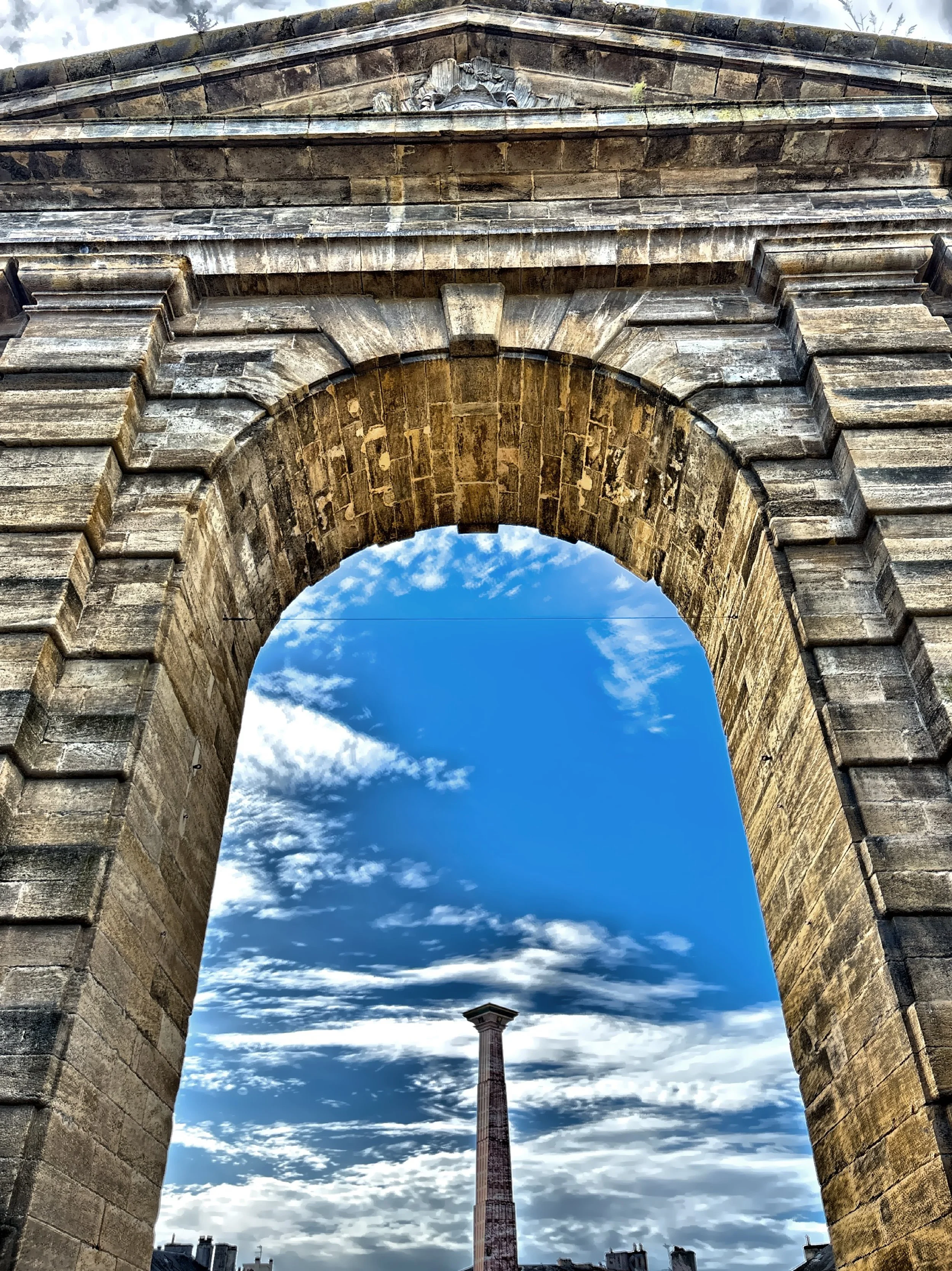
The Aquitaine Gate was built in 1753, and the obelisk was erected here in Victory Square in 2005.
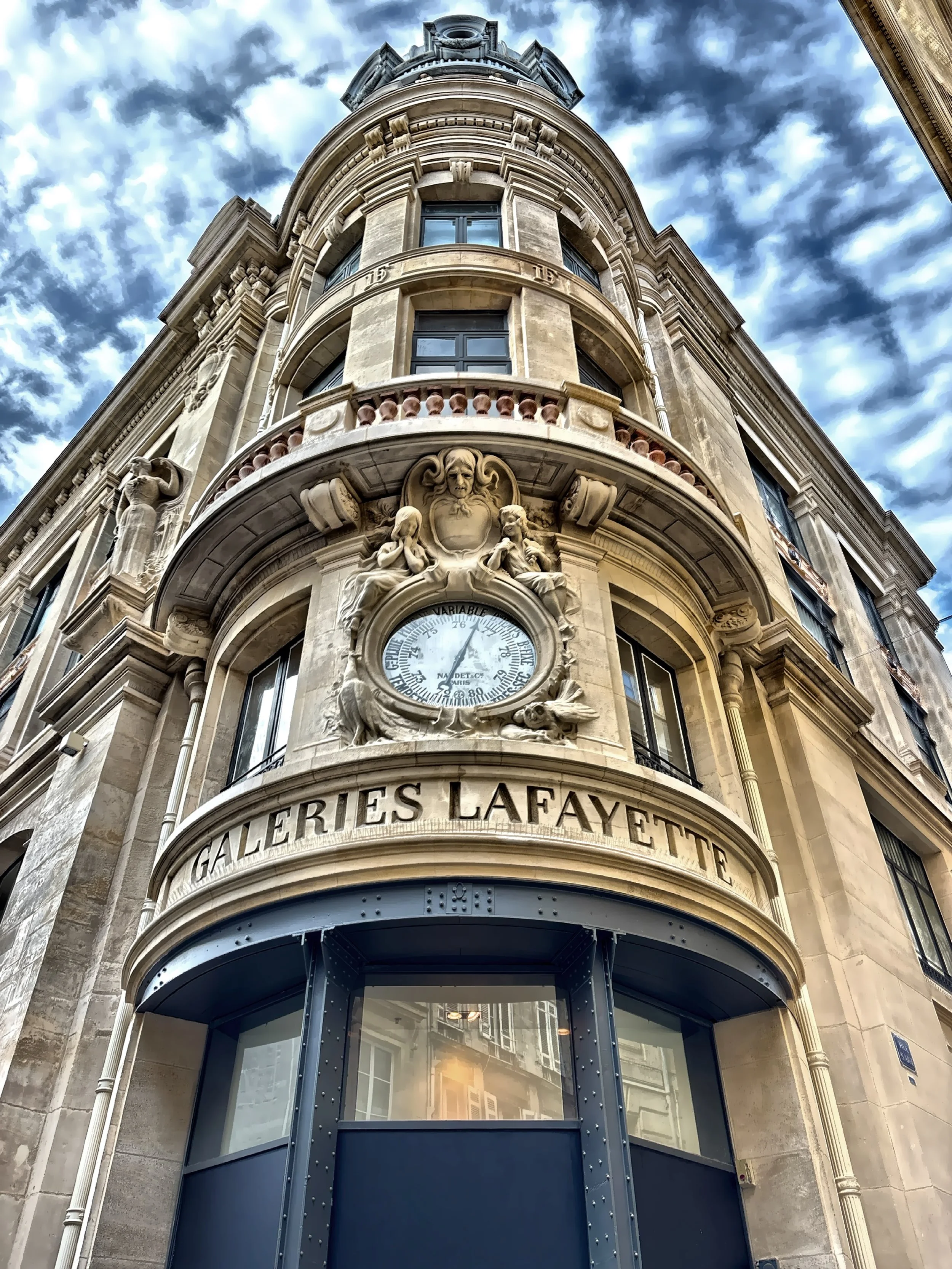
The Galeries Lafayette department store.
.
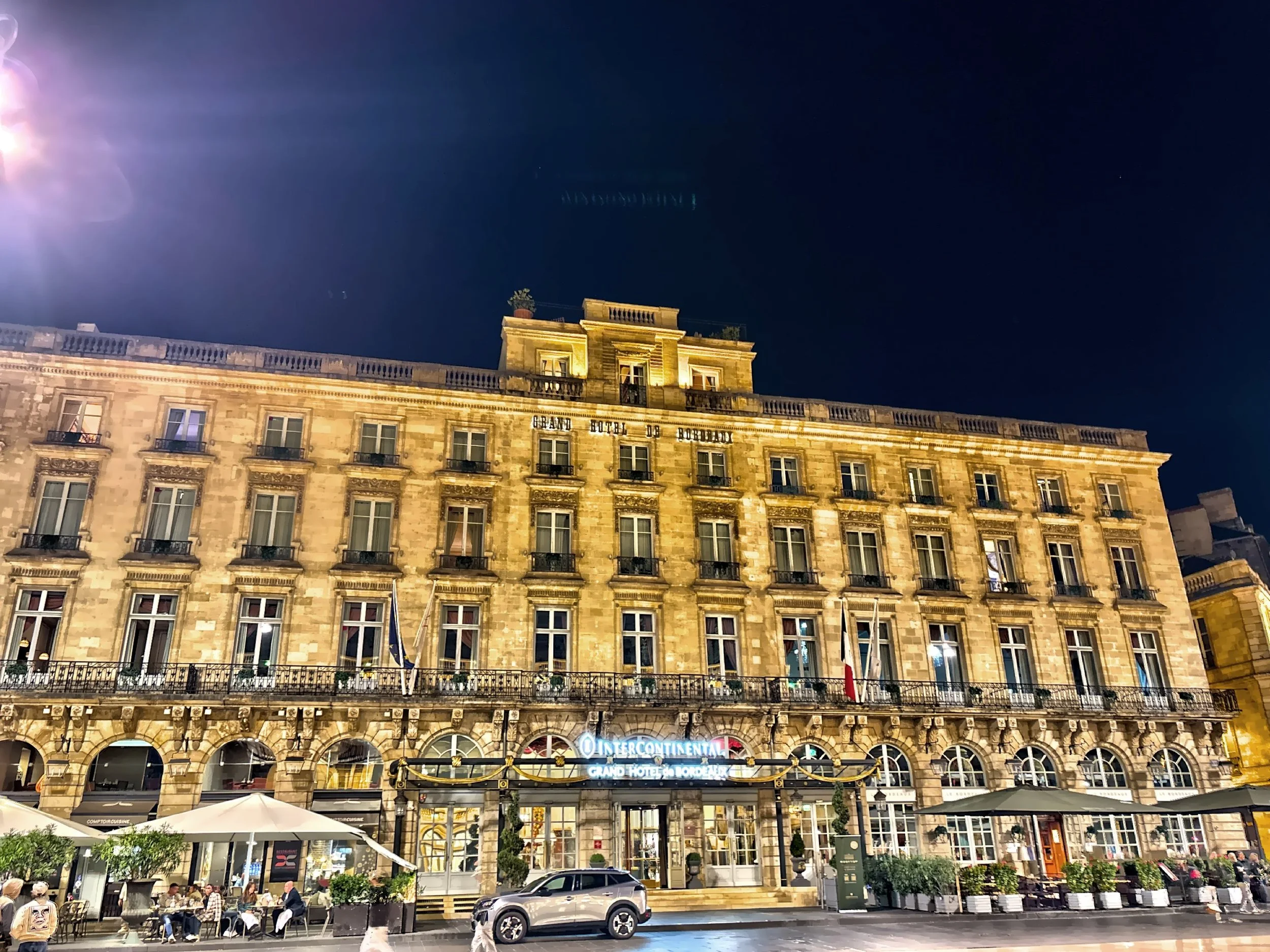
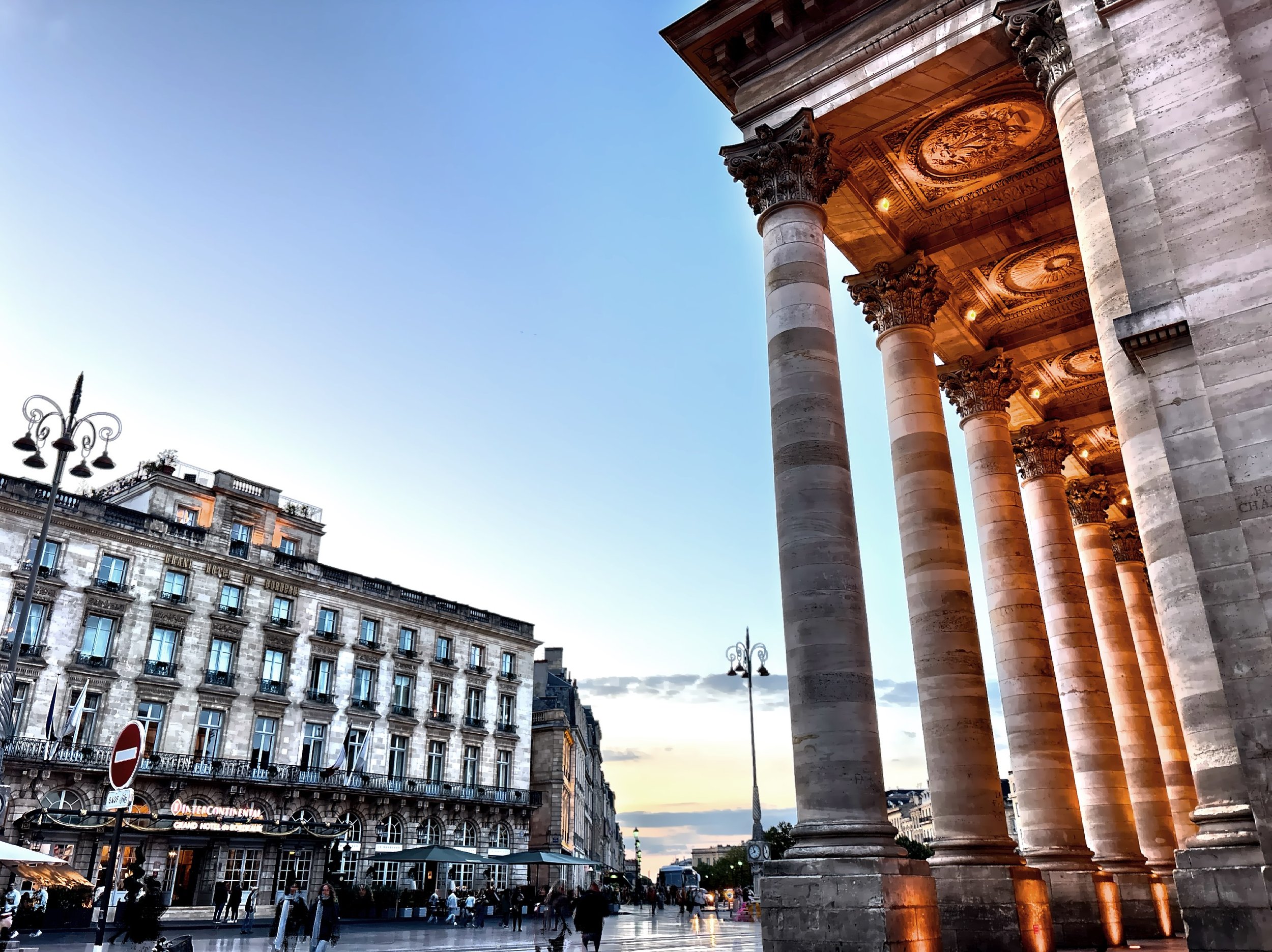
The Intercontinental Bordeaux - Le Grand Hotel originally opened in 1779 as the Hotel de Bordeaux. The building was designed by architect Victor Louis, who also designed the neighboring theater, making the two structures a unified architectural ensemble. The elegant hotel played a major role in Bordeaux’s social and cultural life.
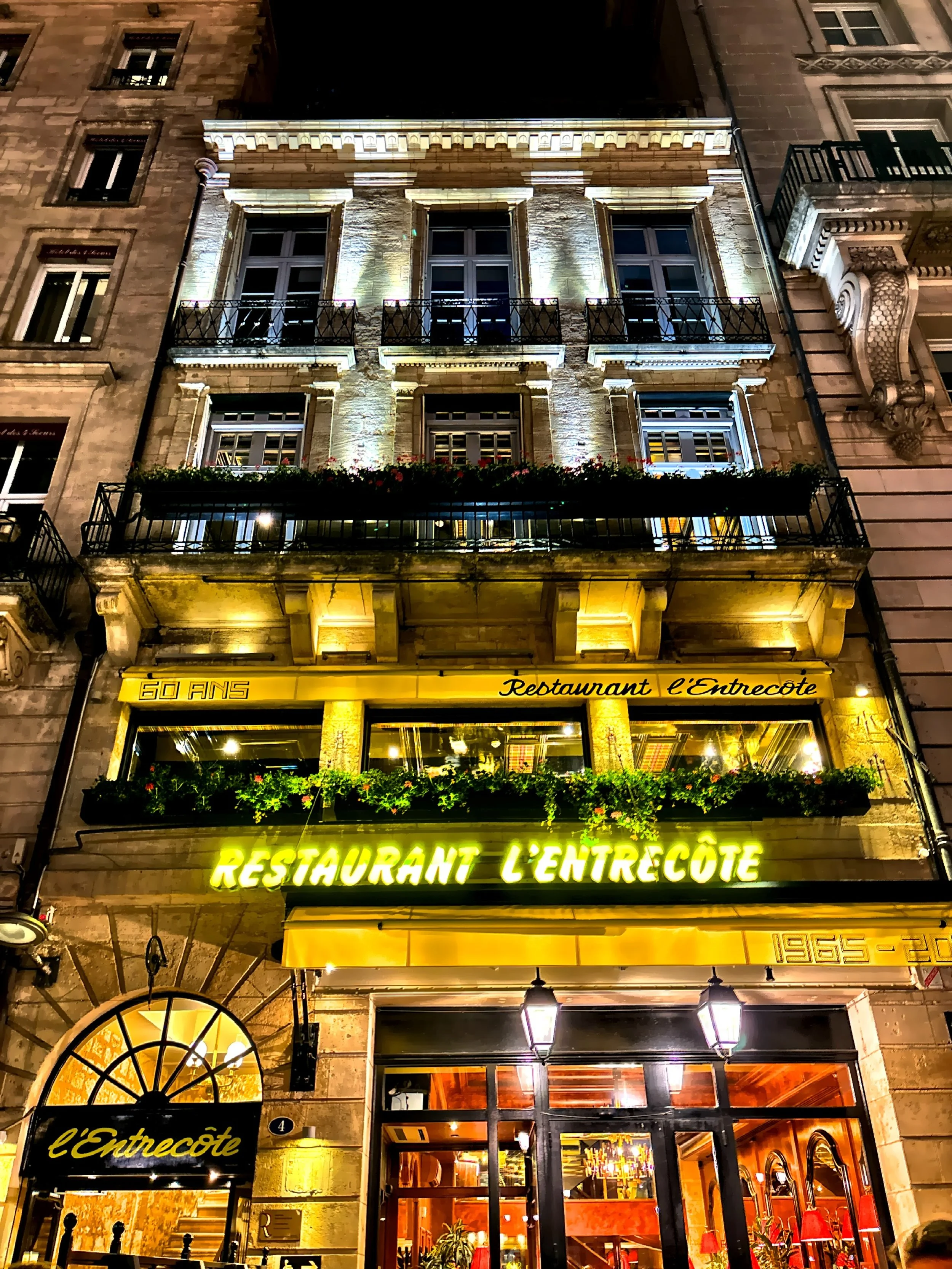
The famous French restaurant chain Le Relais de Venise L’Entrecote, known for its unique single-item menu, consisting of solely a green salad with walnuts, steak and unlined French fries served with a famous sauce. They do not take reservations and usually have a line of people down the street.
.
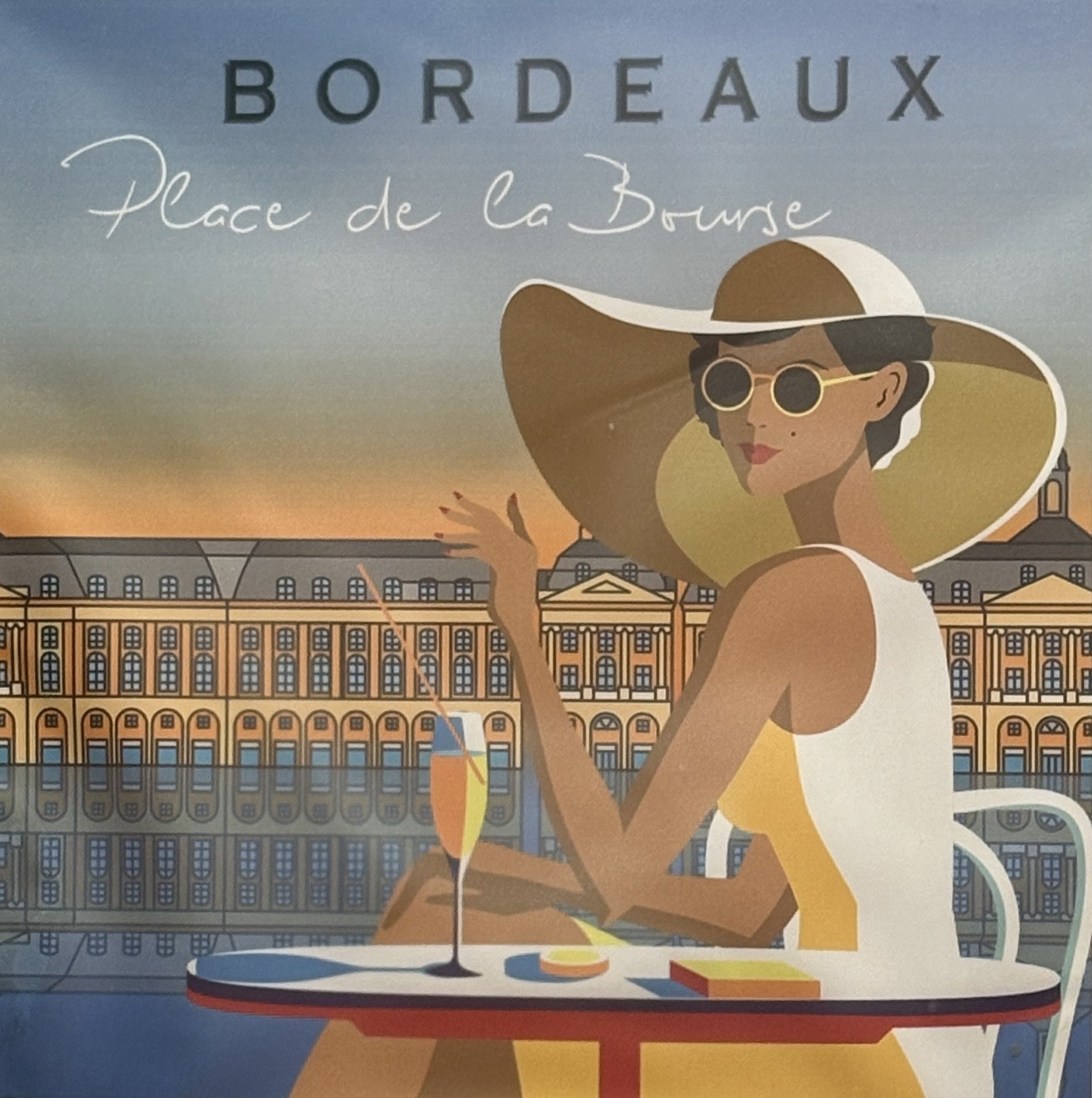
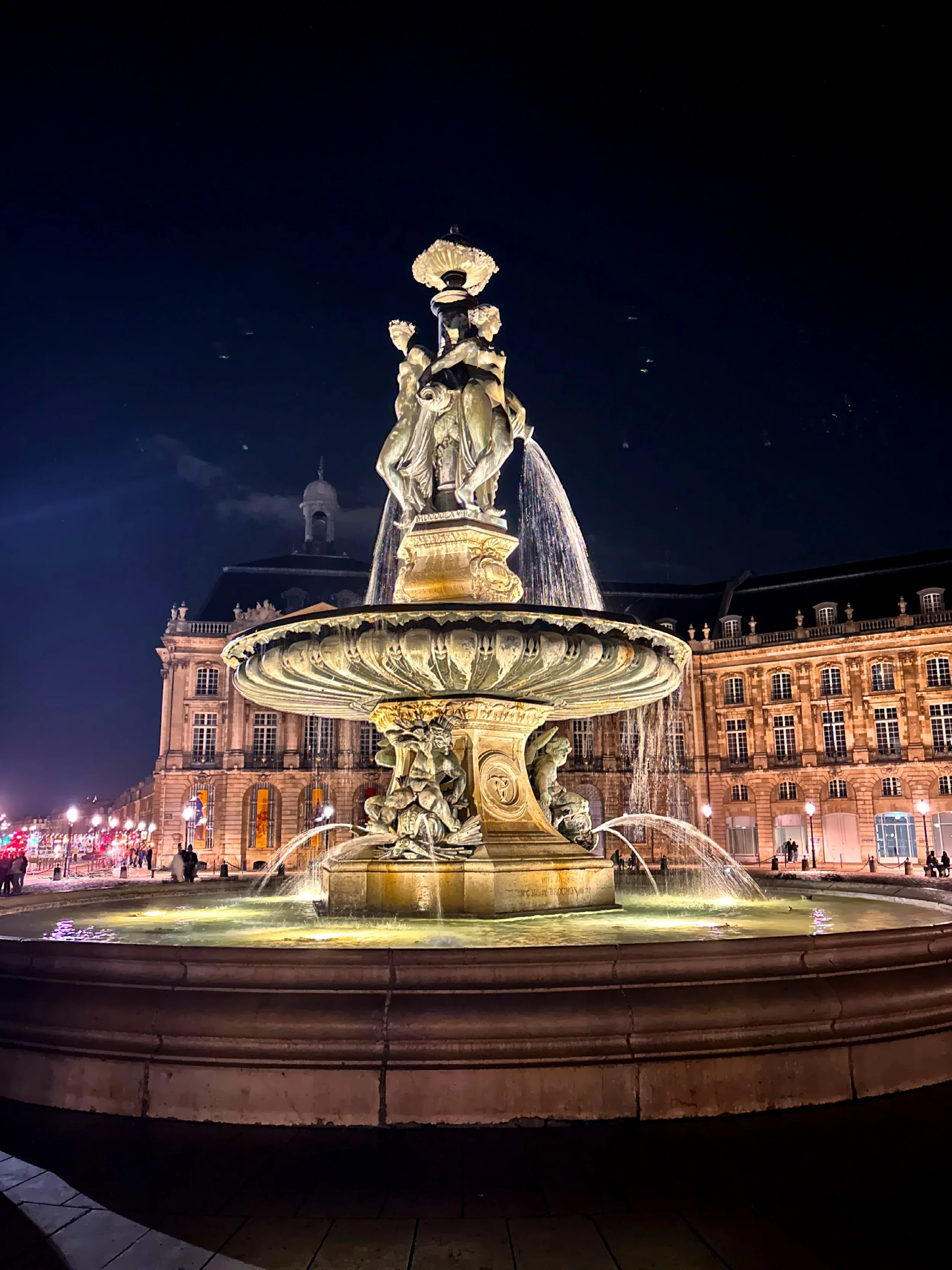
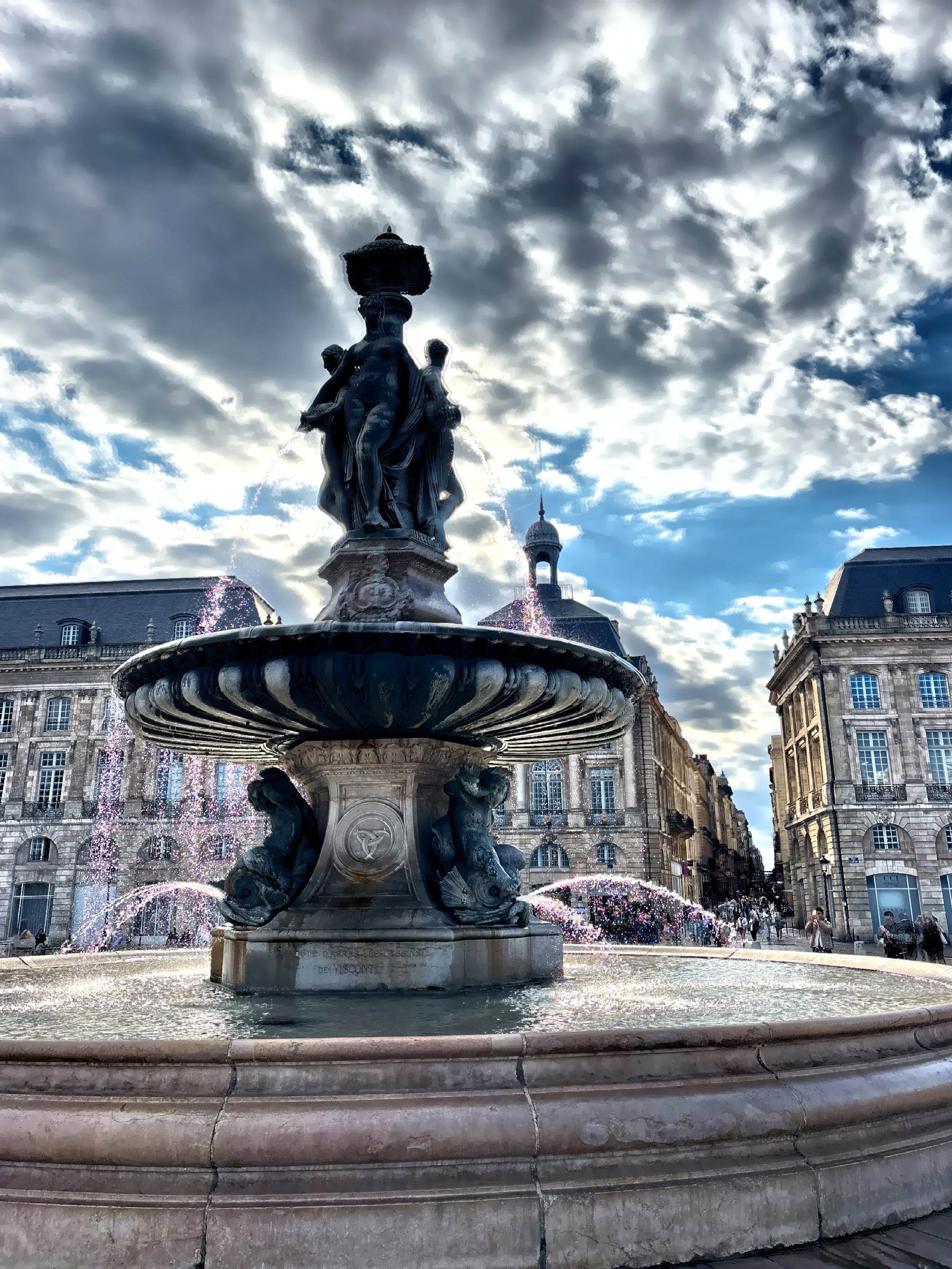
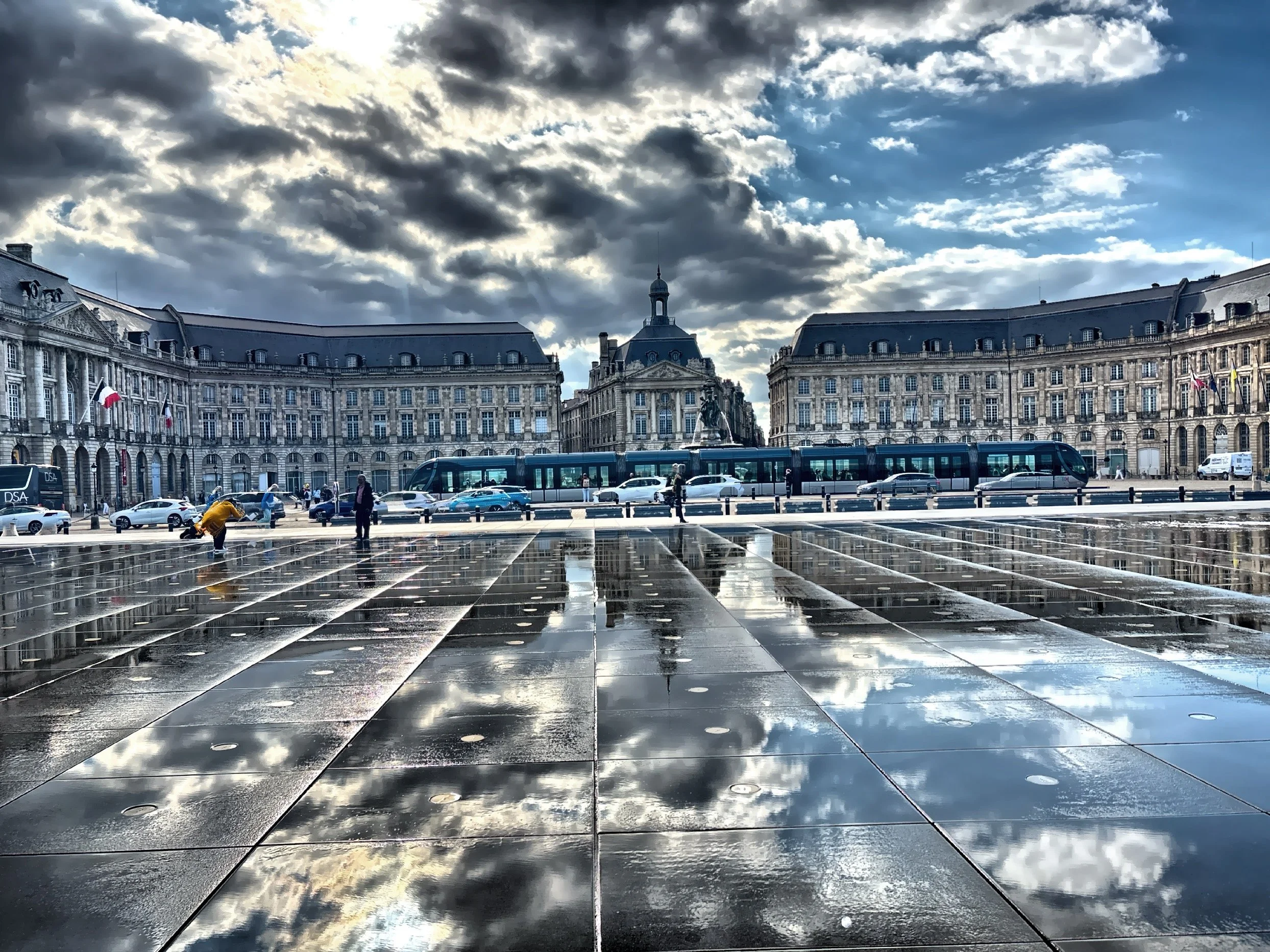
Place de la Bourse, near the river, is the biggest and fanciest square in Bordeaux.
.
.
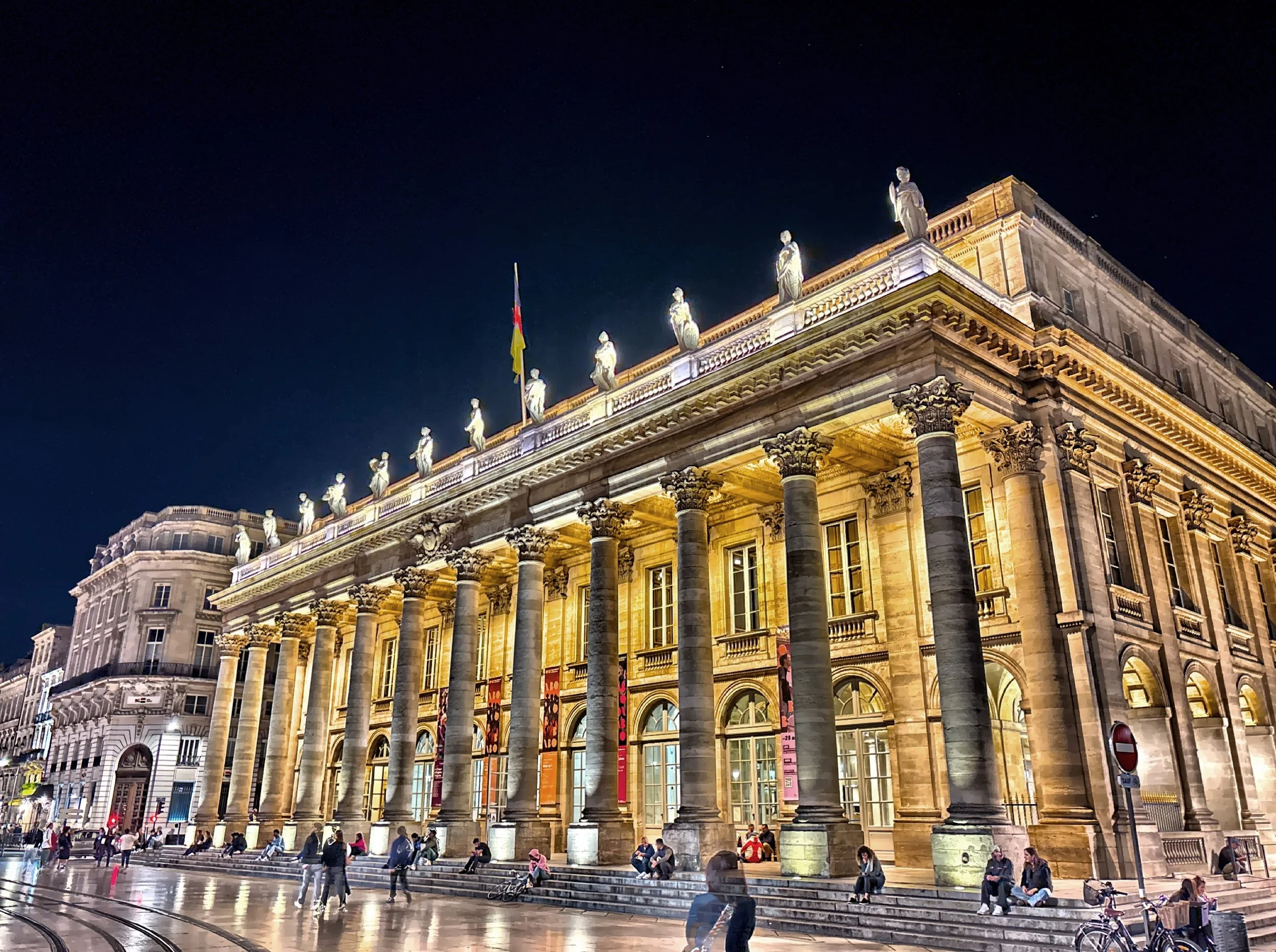
The Grand Theater is an opera house and considered to be one of the most beautiful 18th-century century halls in the world.
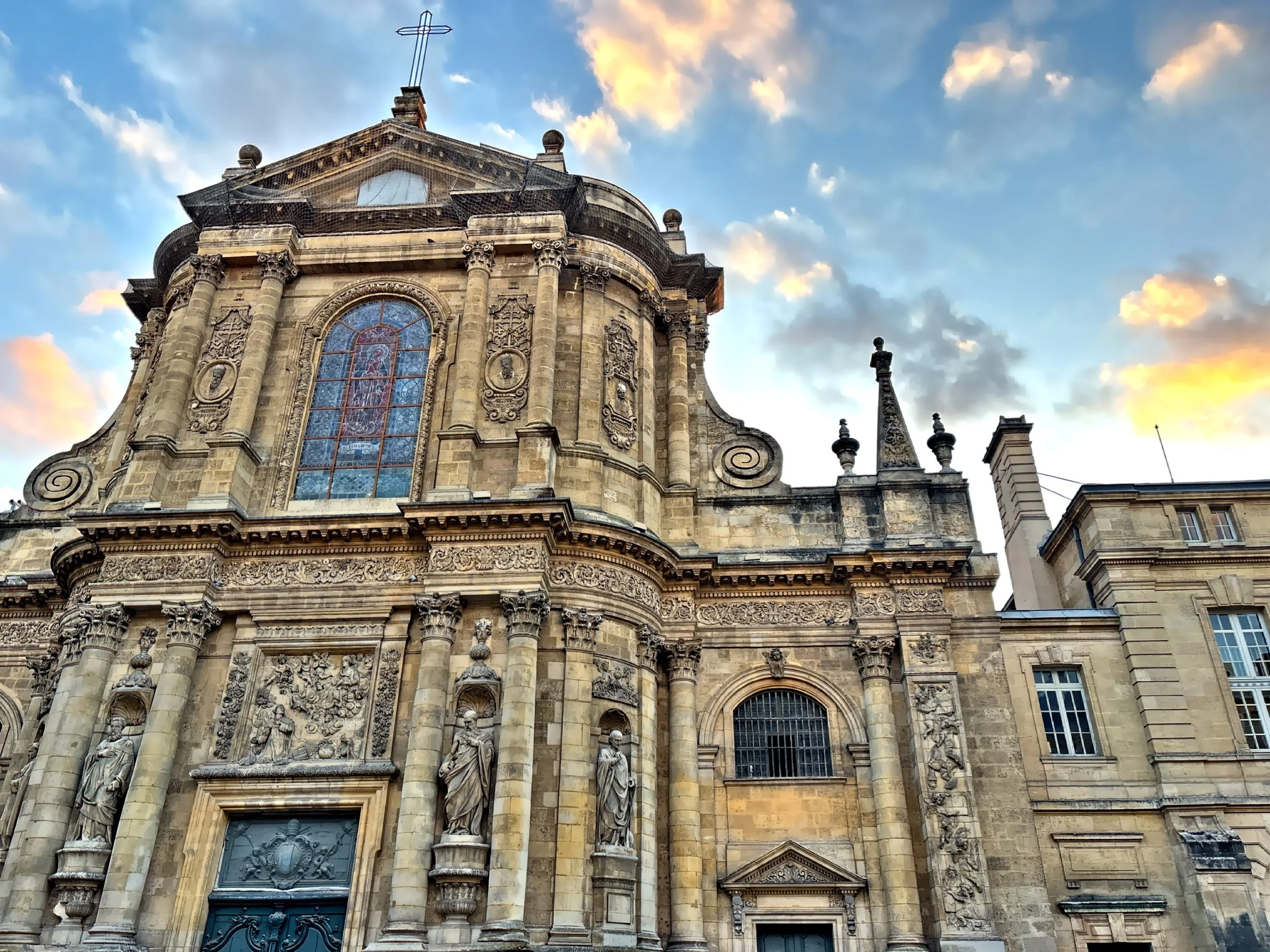
Church of Norte-Dame was built in the late 17th century and was inspired by the Church of the Gesu in Rome.
.
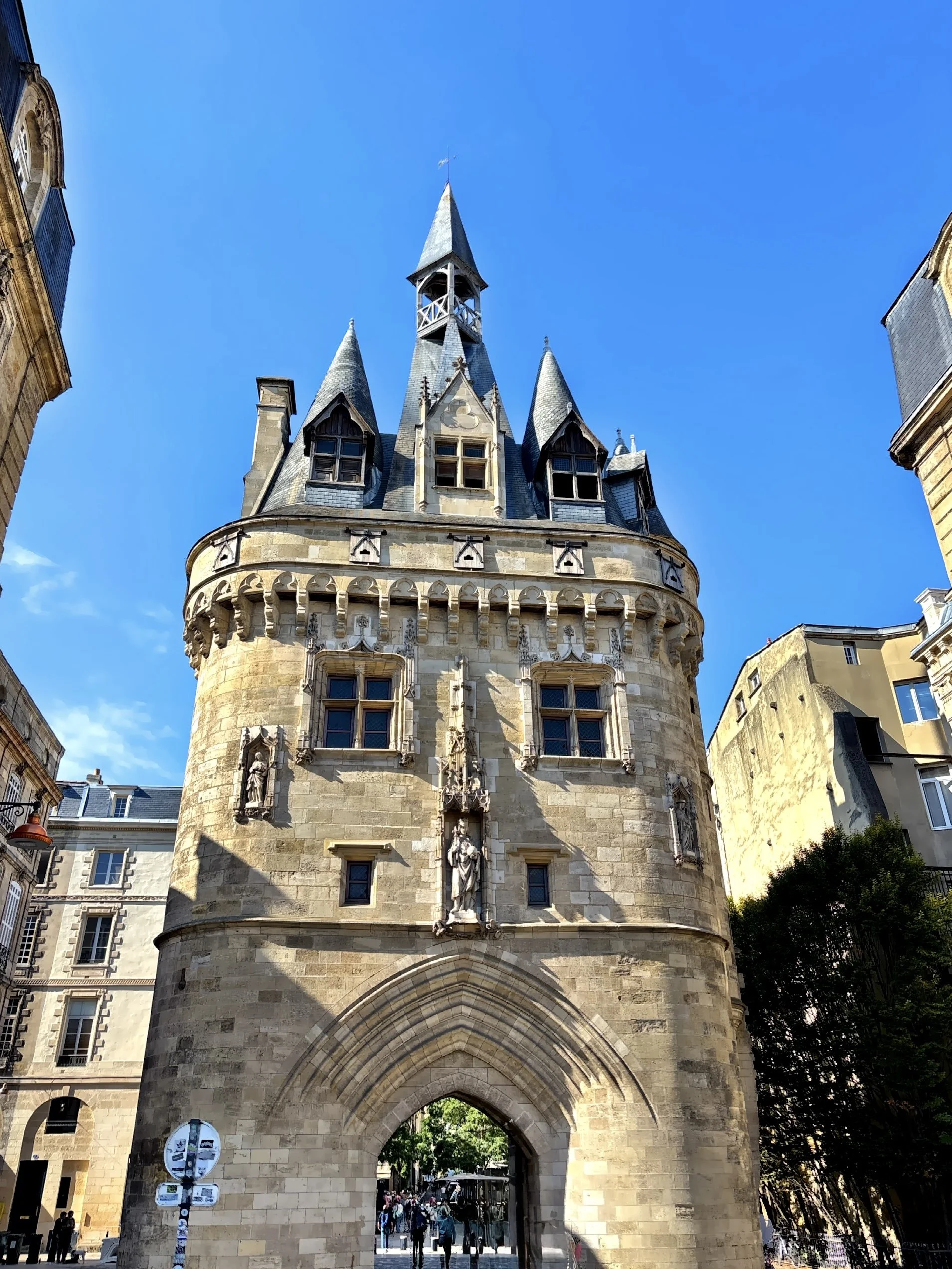
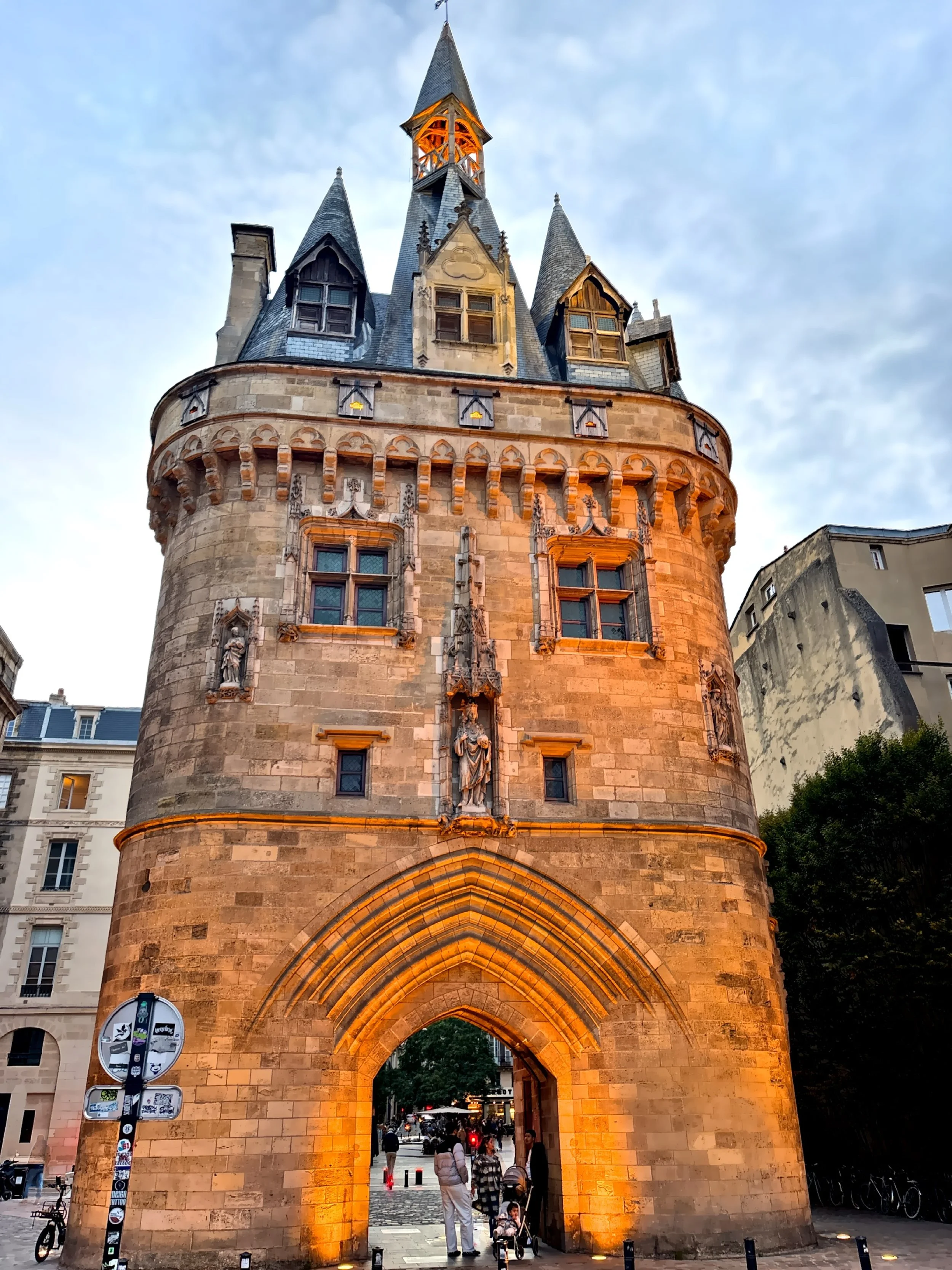
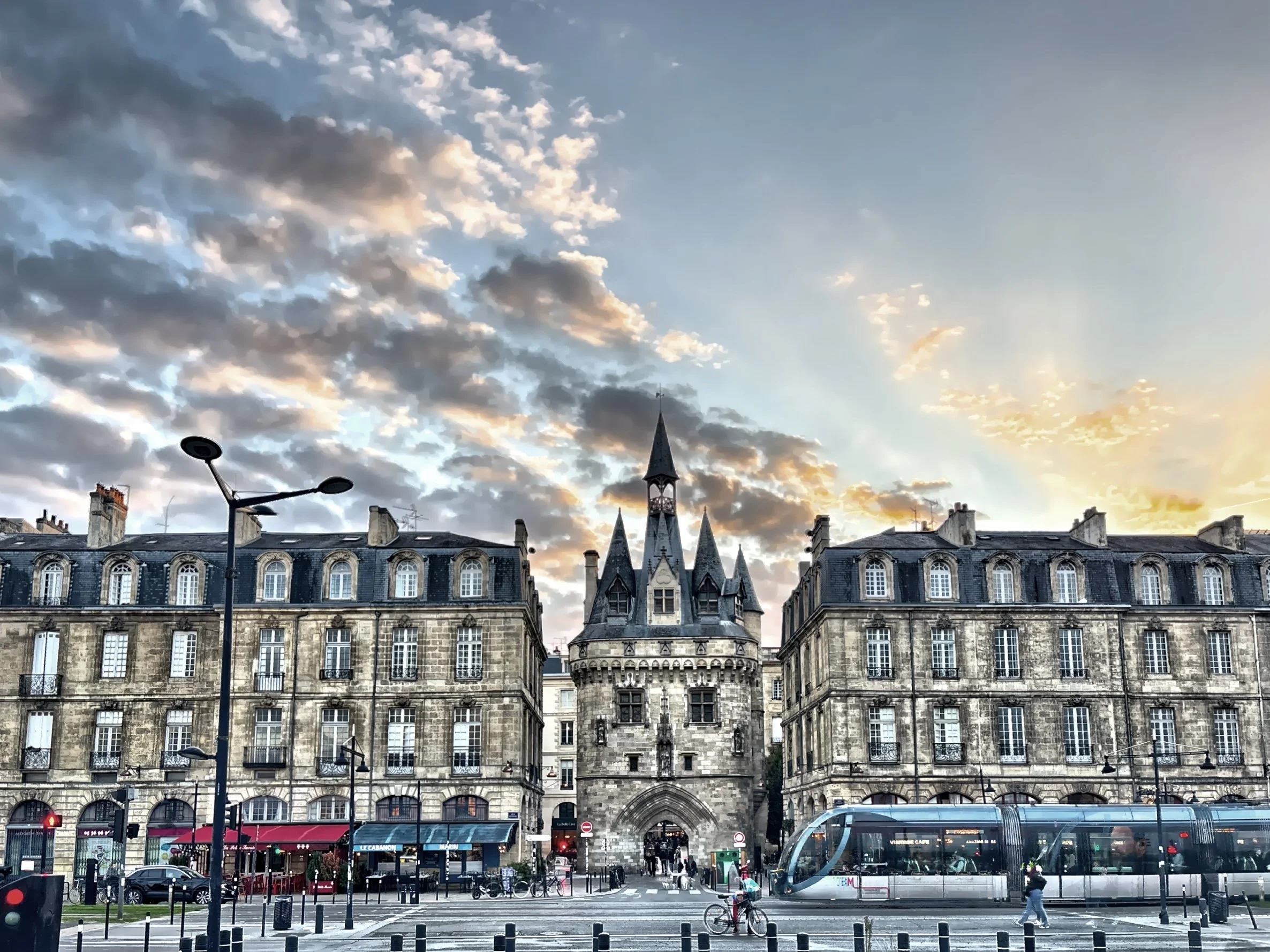
Porte Cailhau served historically as a prison and a symbol of civic authority — and it even appears on the coat of arms of Bordeaux.
The former city gate was built between 1493 and 1494.
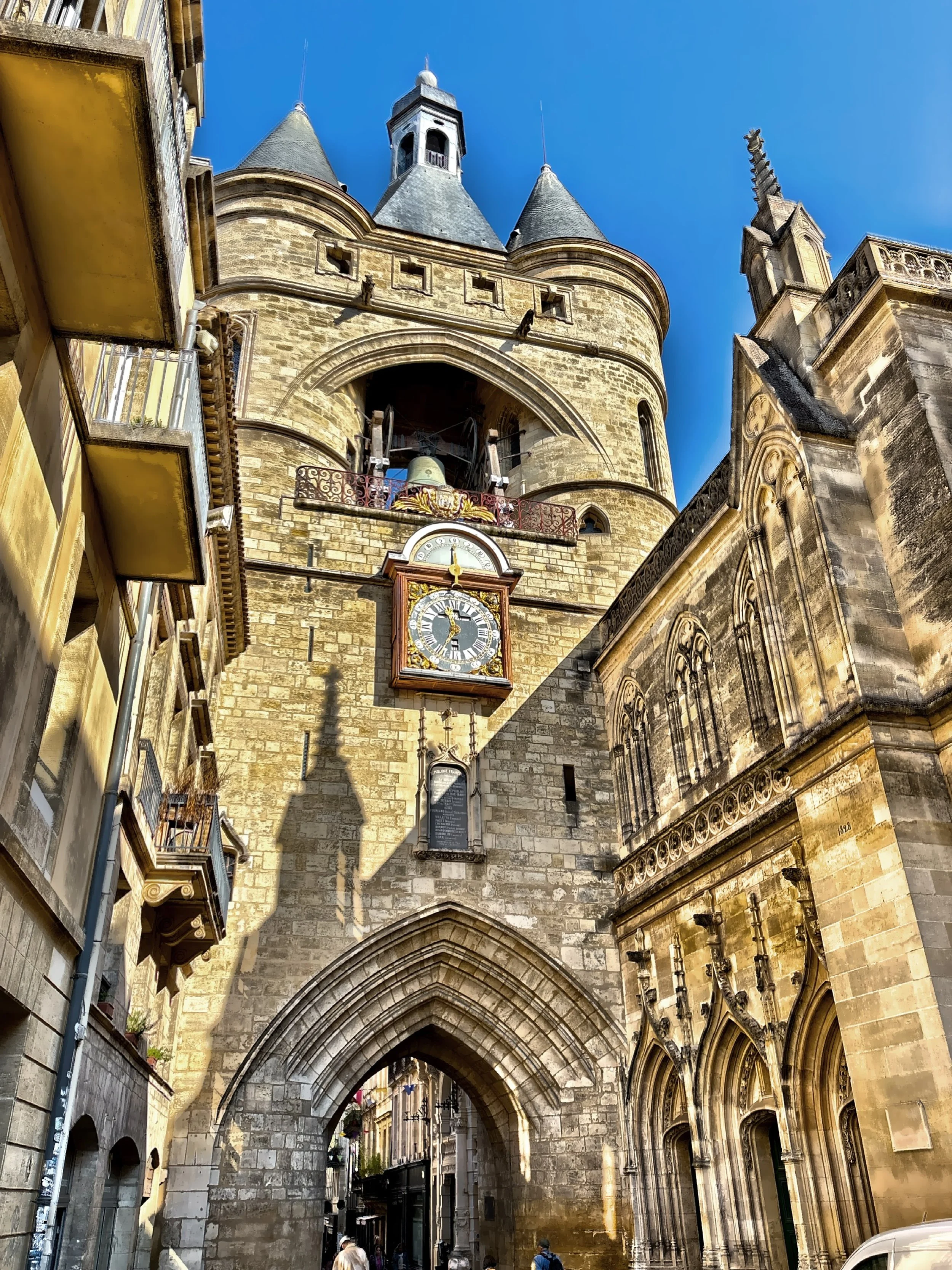
The gate bell only rings 17 times a year on major holidays and the first Sunday of the month.
.
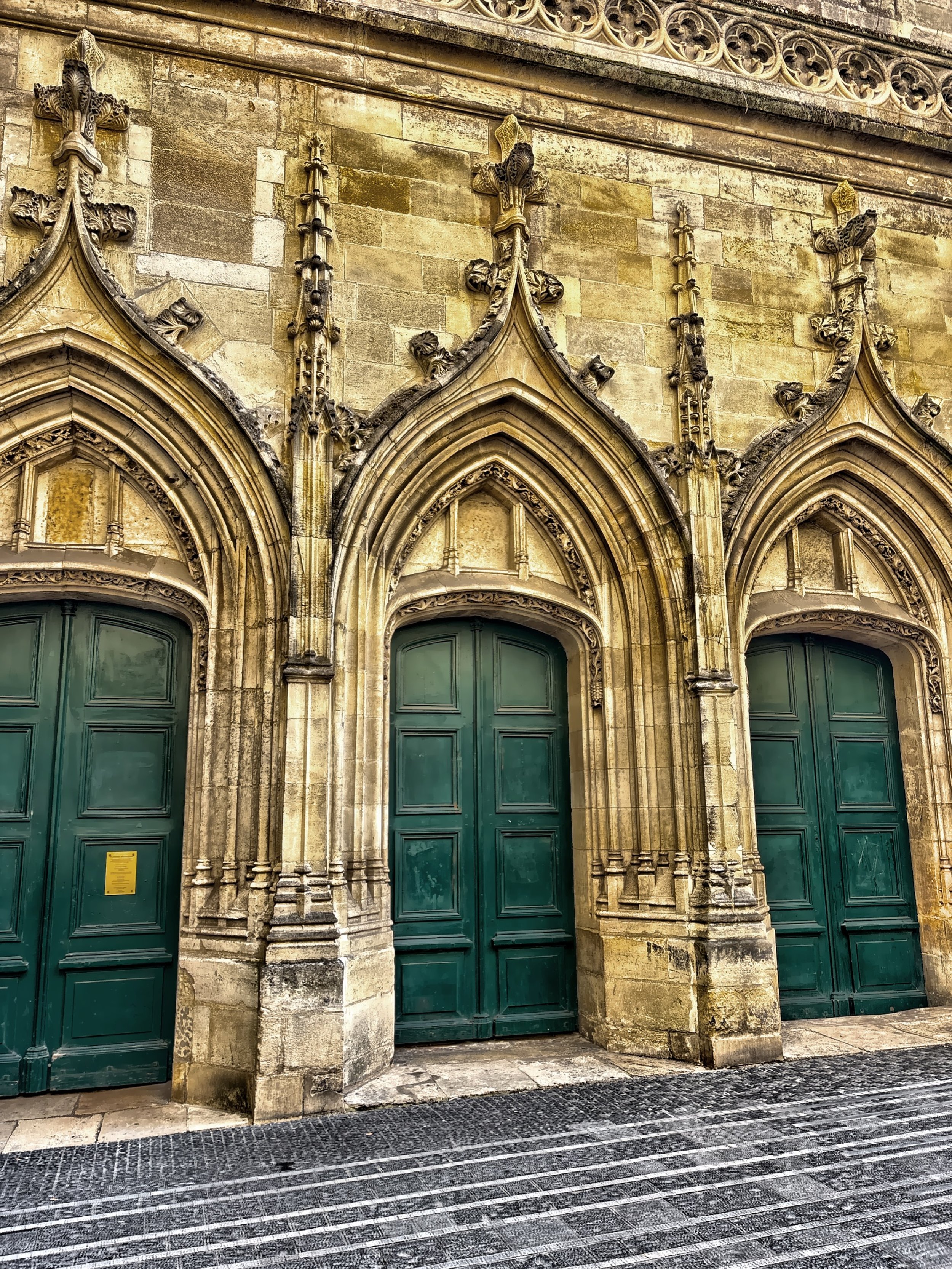
The green doors of Saint Eloi Church which was rebuilt in the middle of the 14th century.
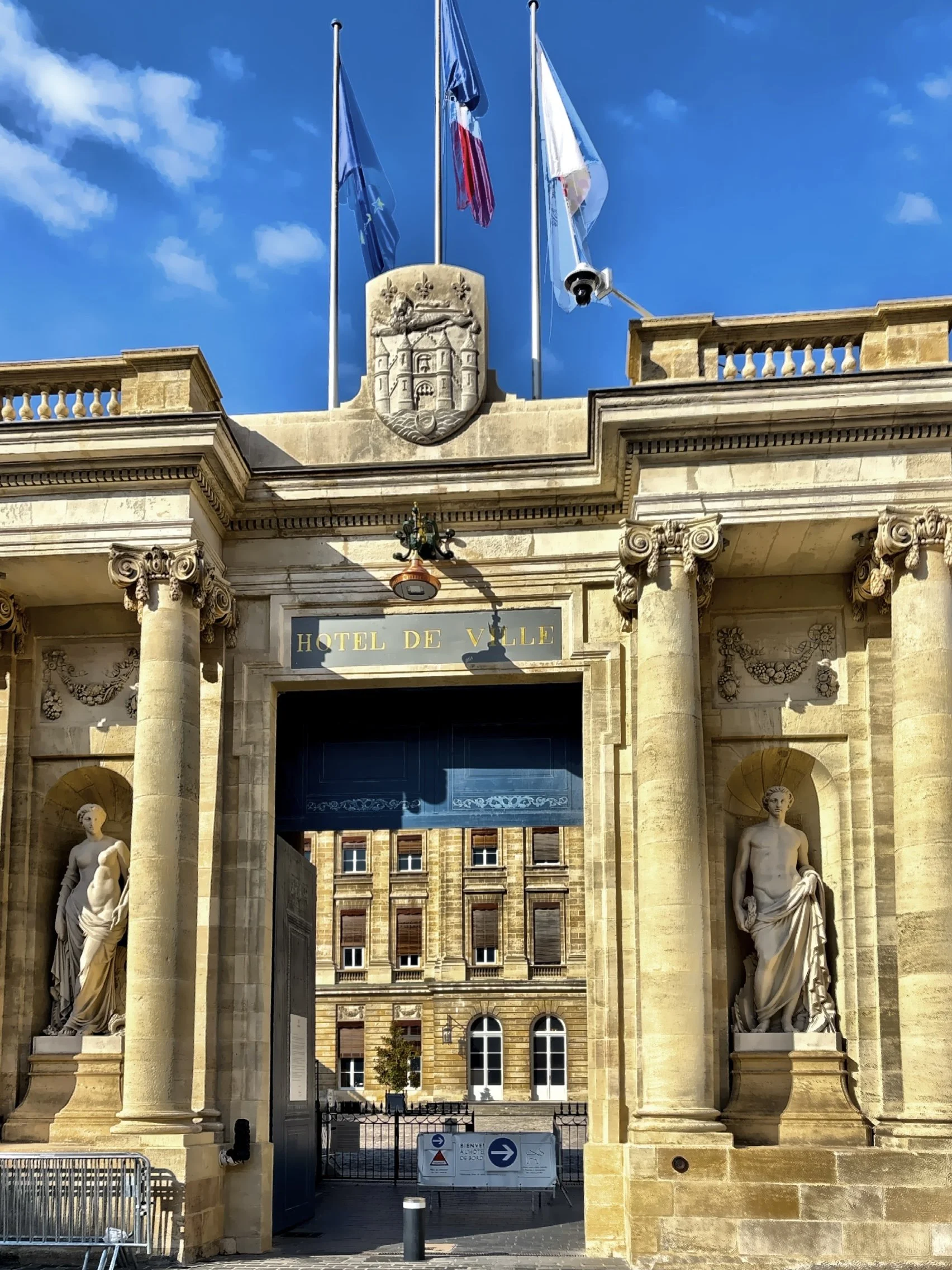
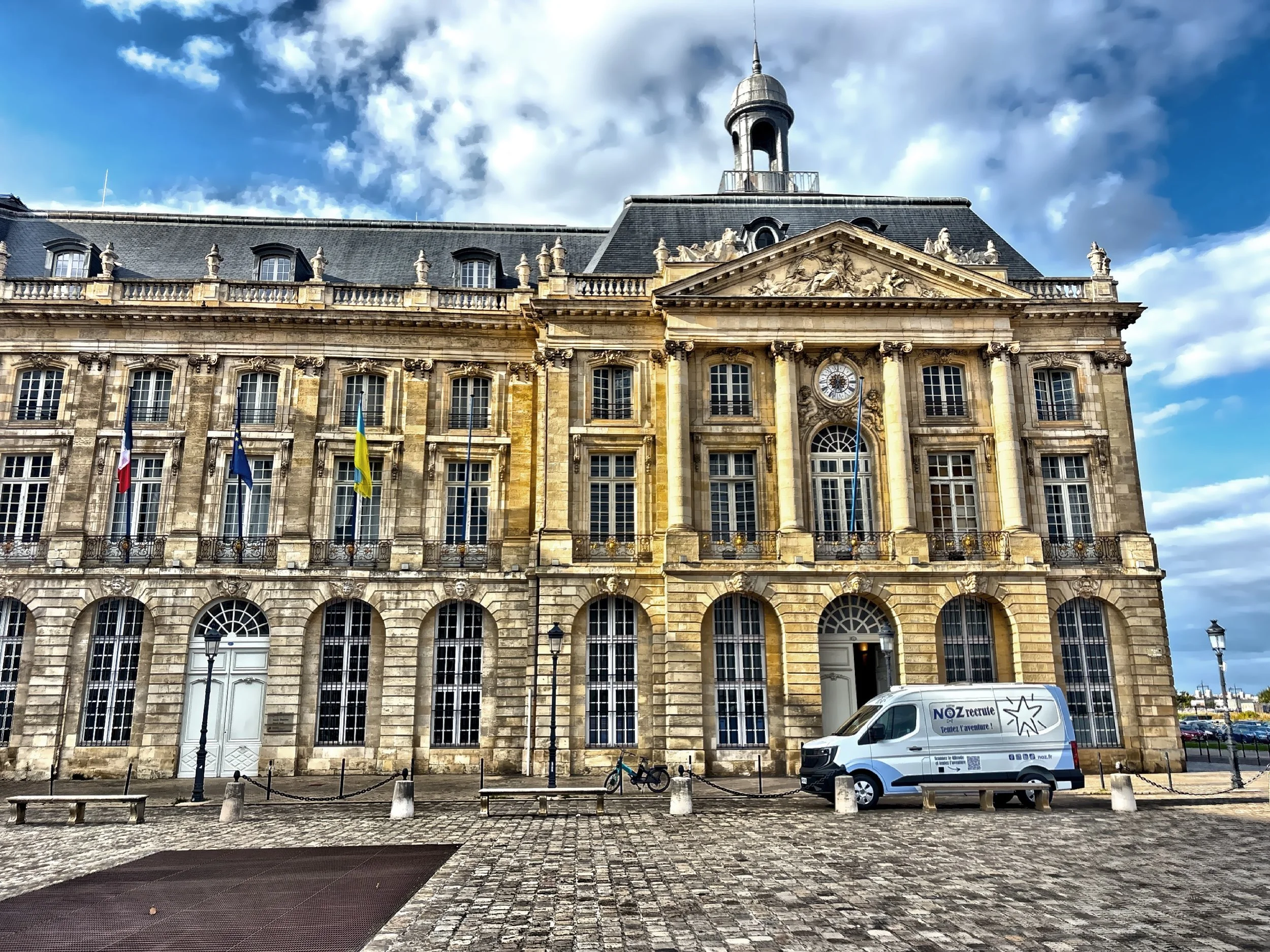
The City Hall building was built in 1784 and also houses the Fine Arts Museum.
.
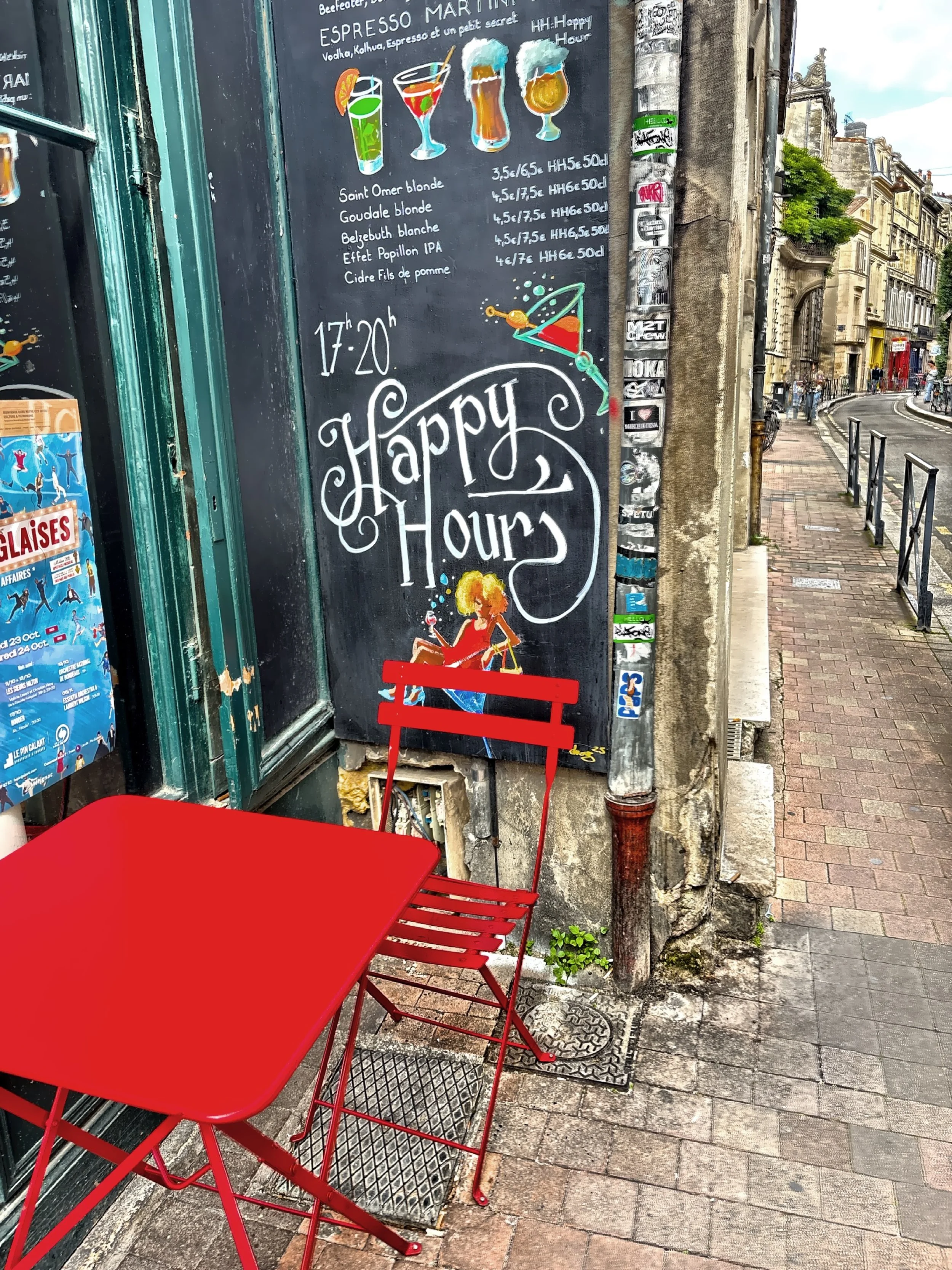
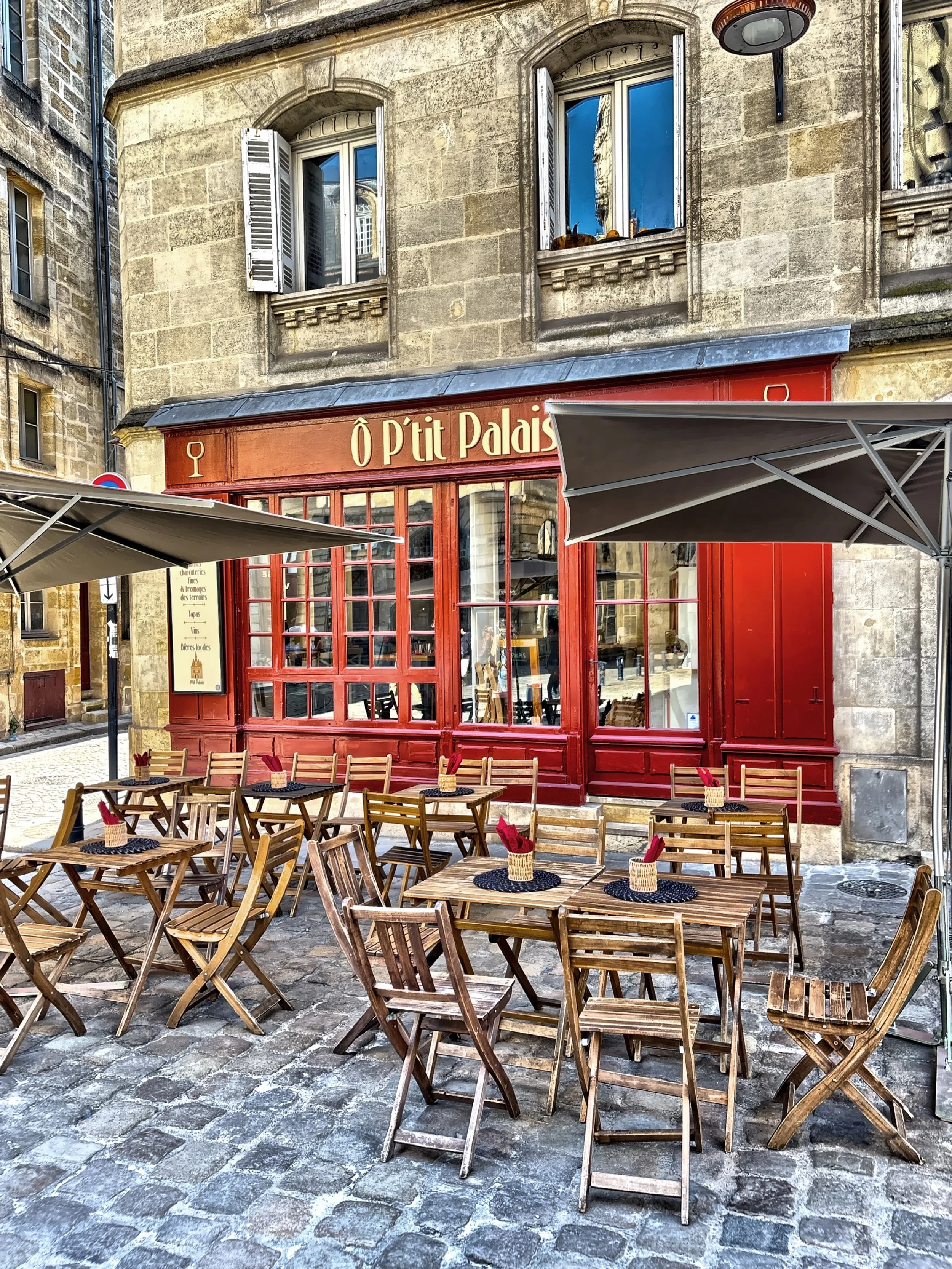
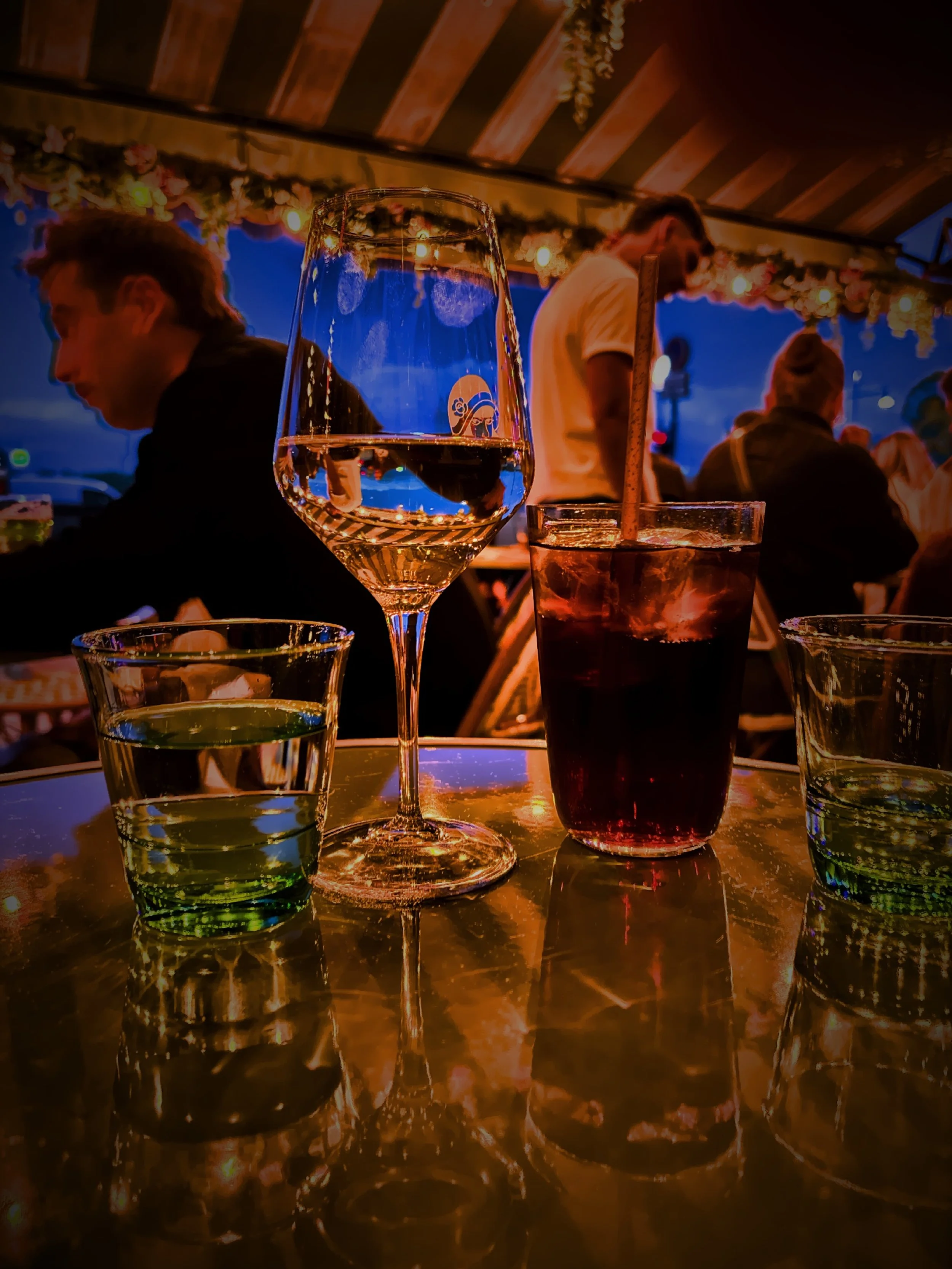
Of course, Bordeaux and wine go hand in hand, so popping into a local cafe or restaurant is part of the experience here. People sit outside for hours, chatting and snacking, and it feels very local and unhurried.
The area surrounding Porte Cailhau has been largely pedestrianized since 2009 and is a key part of the city’s historic center.
.
.
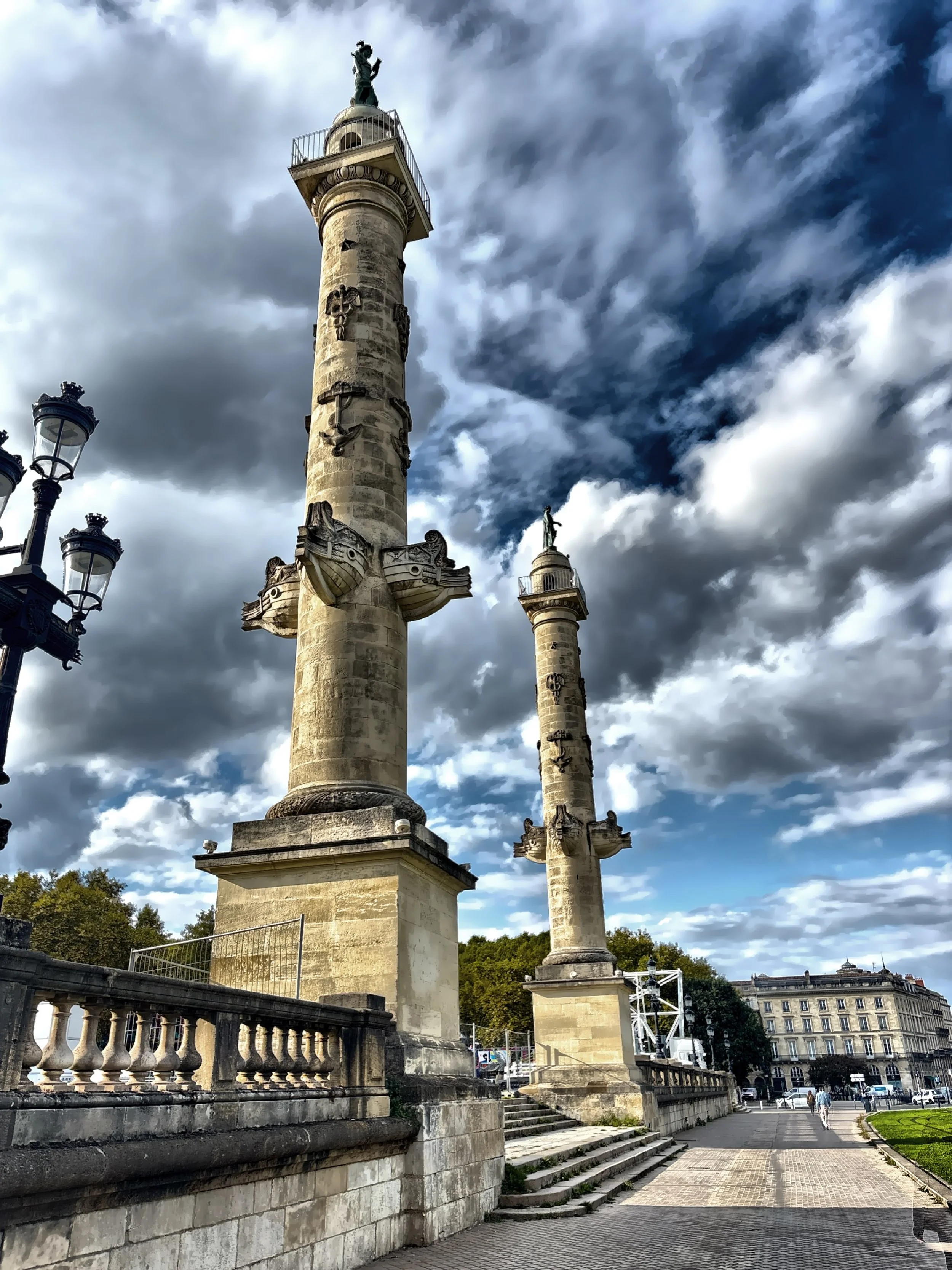
The Rostrale Columns
.
.
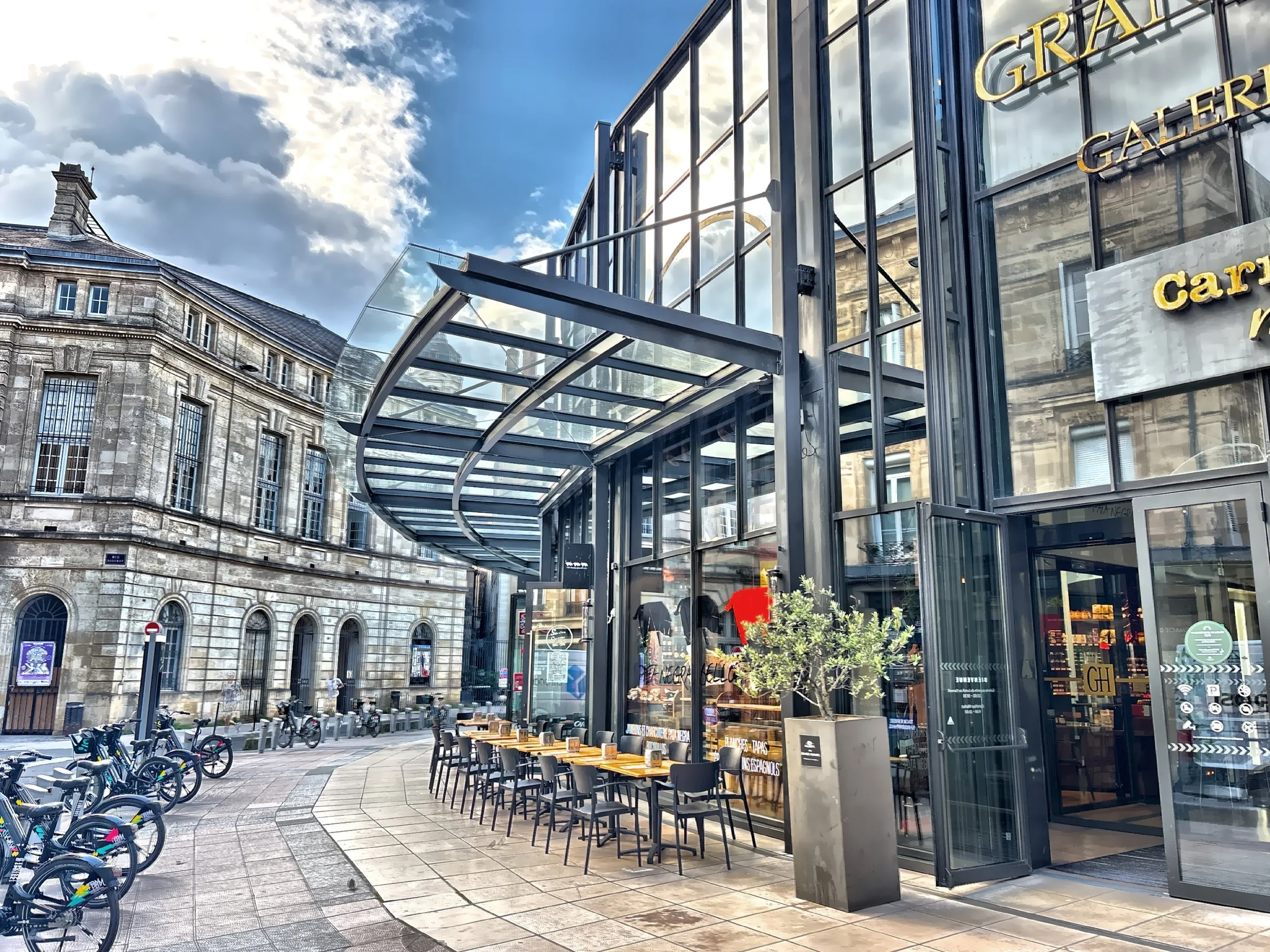
This modern glass building stands in sharp contrast to the surrounding historic structures.
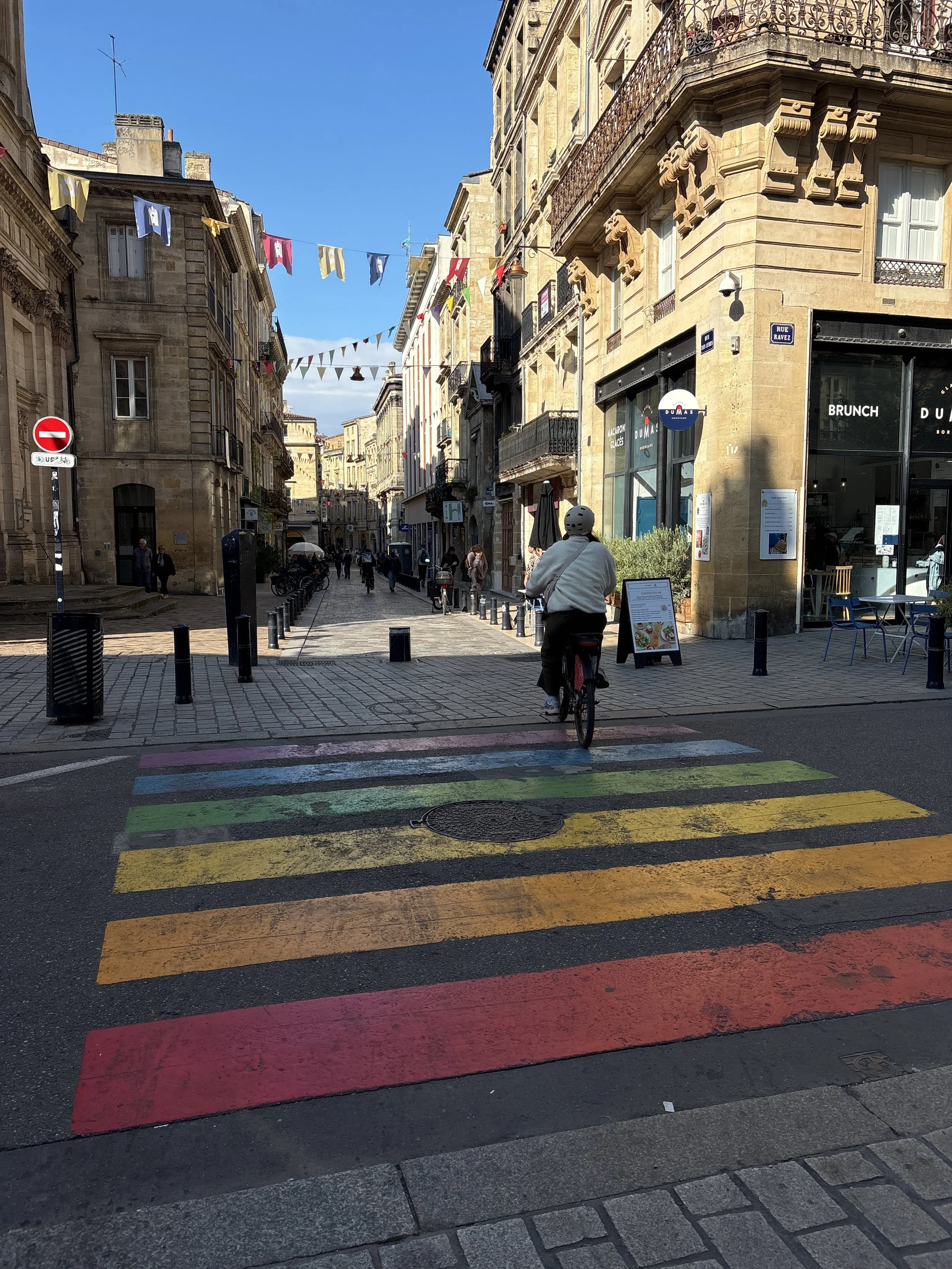
Rainbow-colored street art in the form of painted crosswalks symbolize support for the LGBTQ+ community and add vibrant visual interest to the city’s streetscape.
.
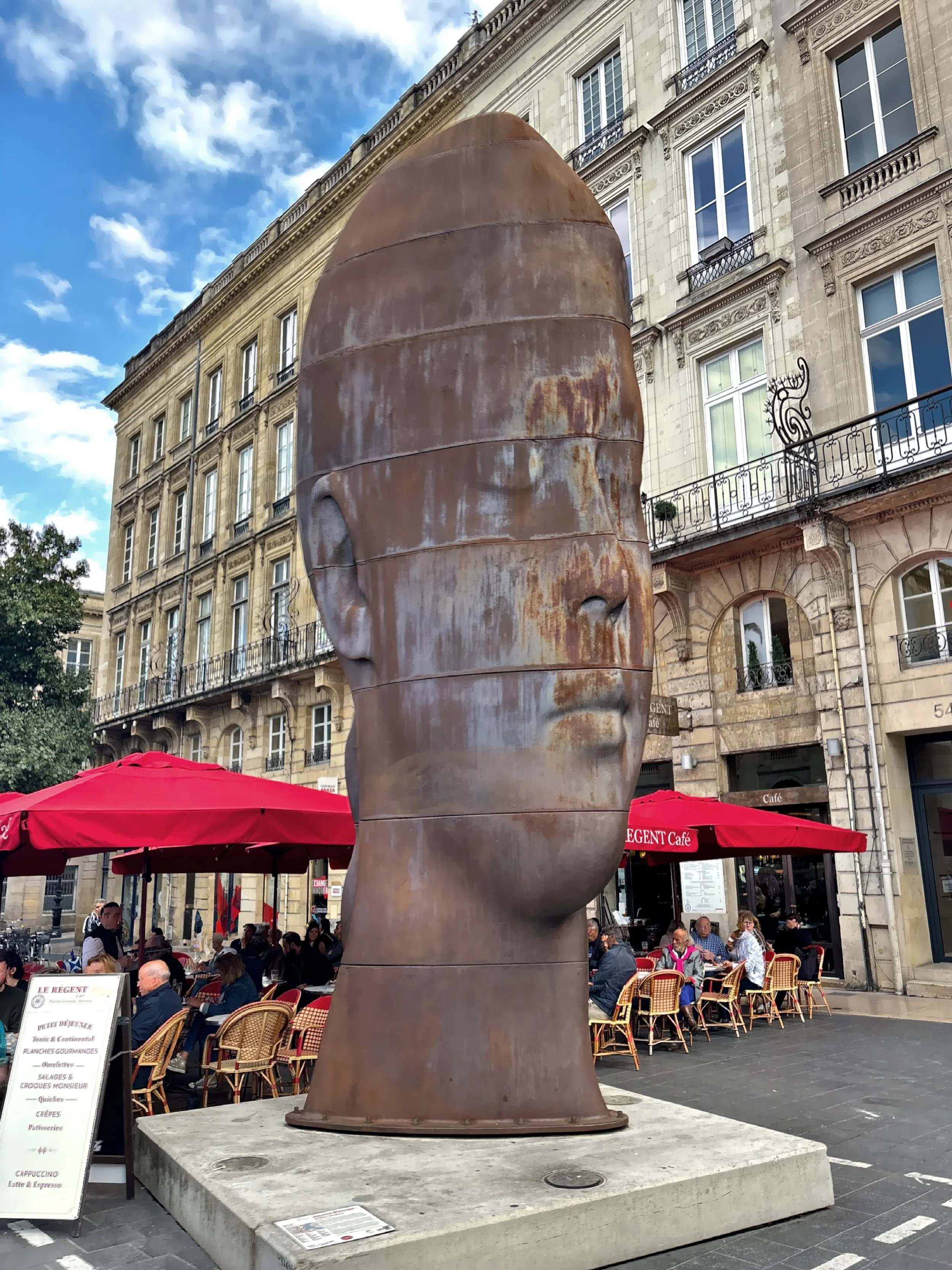
The sculpture Sanna by Jaume Plensa located in Place de la Comedie and is a part of series of large female head sculptures by Plensa that are installed in cities around the world.
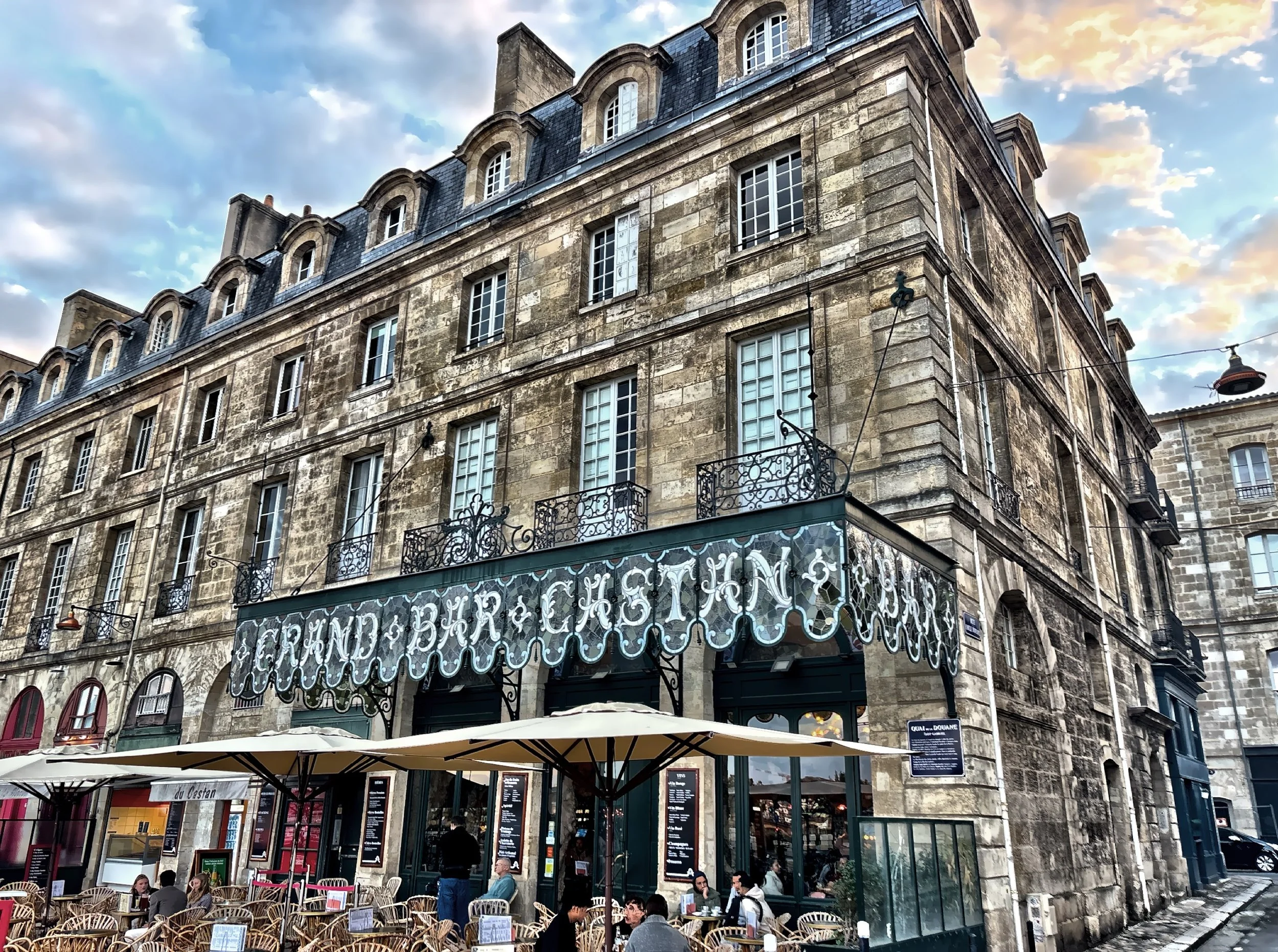
Grand Bar Caston
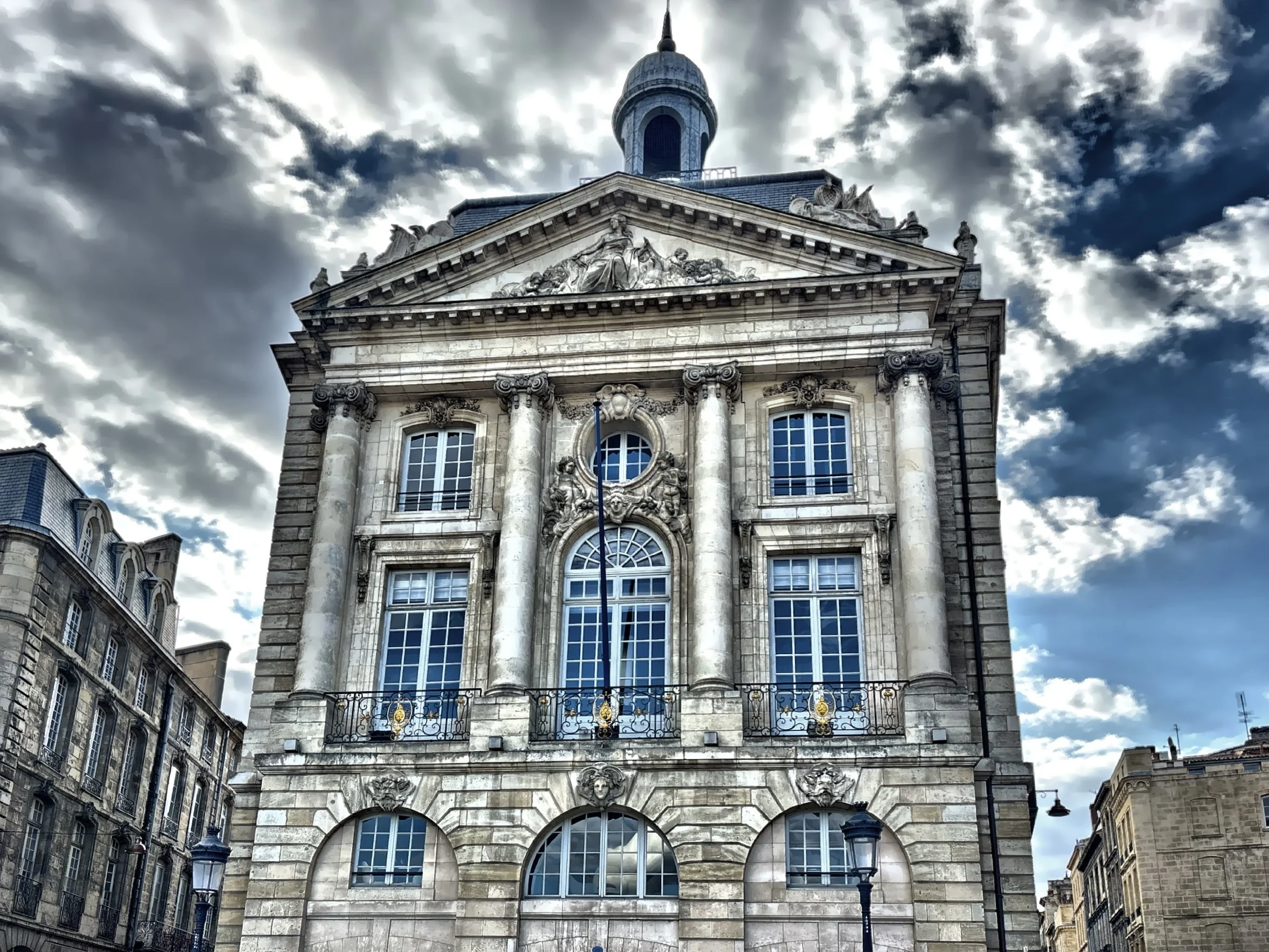
Place de la Bourse
.
.
Walking along the Garonne River you will see the water mirror reflecting the buildings and sky and giving the whole area a laid-back, almost dreamy vibe.
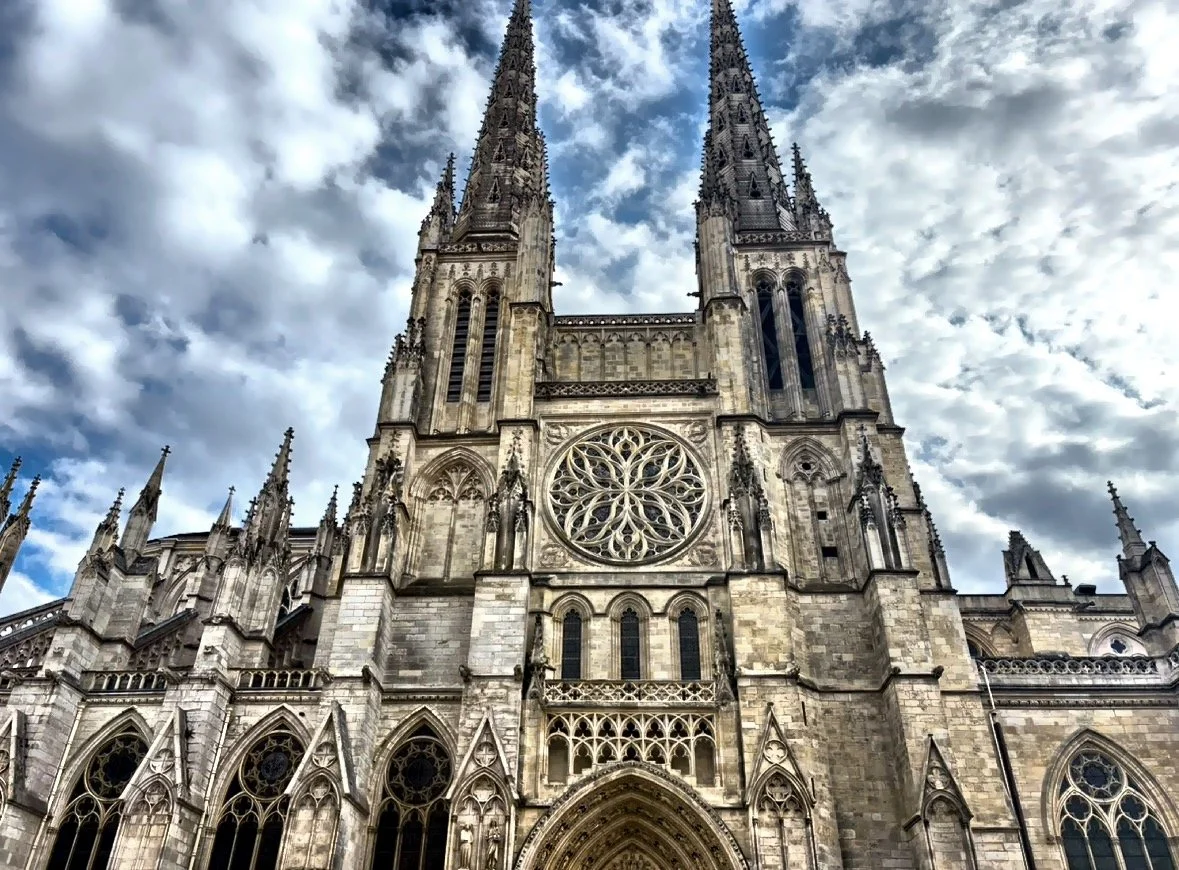
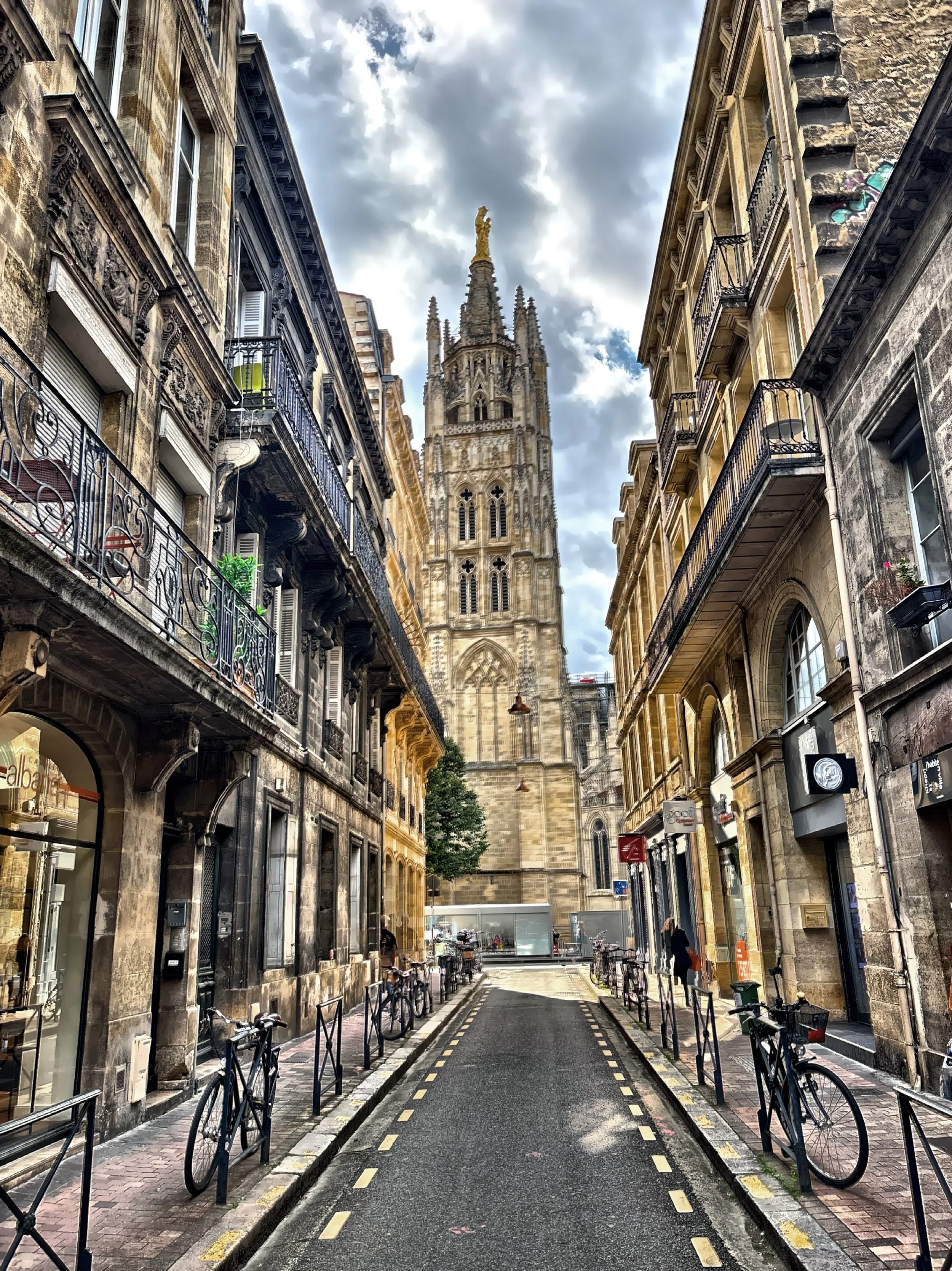
The Bordeaux Cathedral built between the 12th and 16h centuries has a separate bell tower, the Tour Pey-Berland, built in the 15th century because the cathedral itself was too fragile to support heavy bells. For many years after it was built, the tower had no bells installed, mainly due to structural concerns, cost, and historical disruptions. The bells were finally added much later, in the 19th century, and the tower still stands today as a distinctive landmark next to the cathedral.
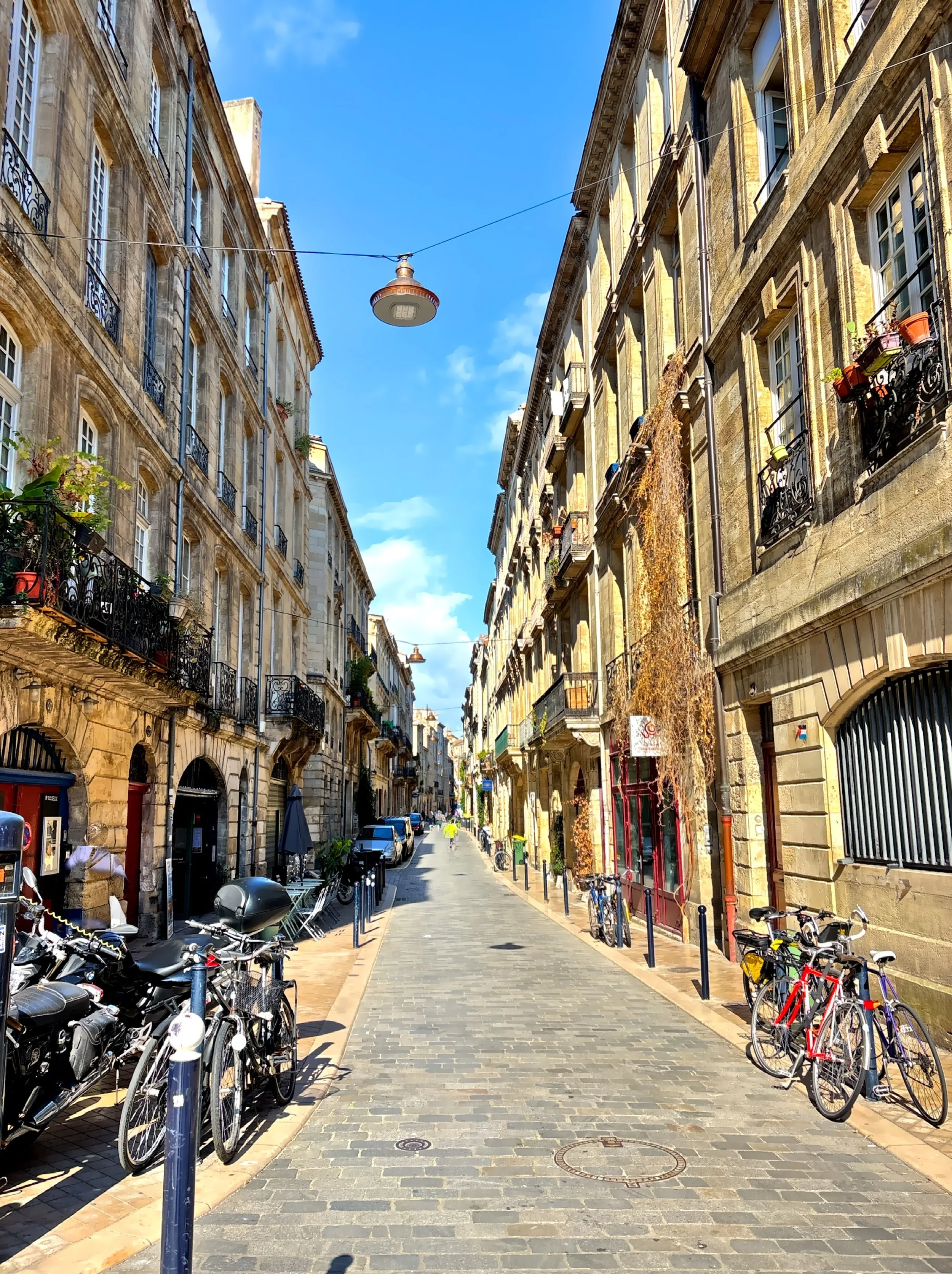
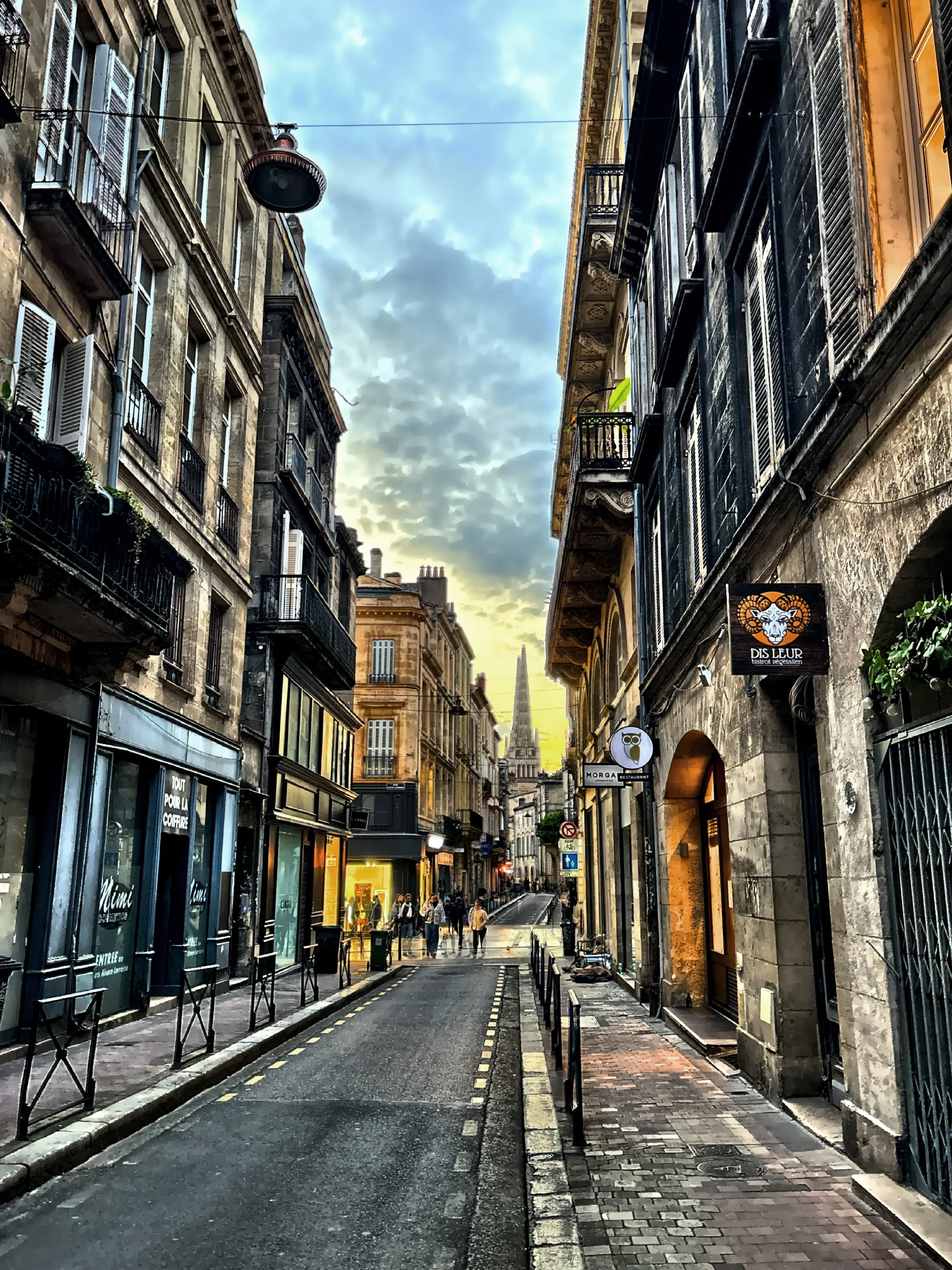
Pey Berland Tower from Rue du Loup.
.
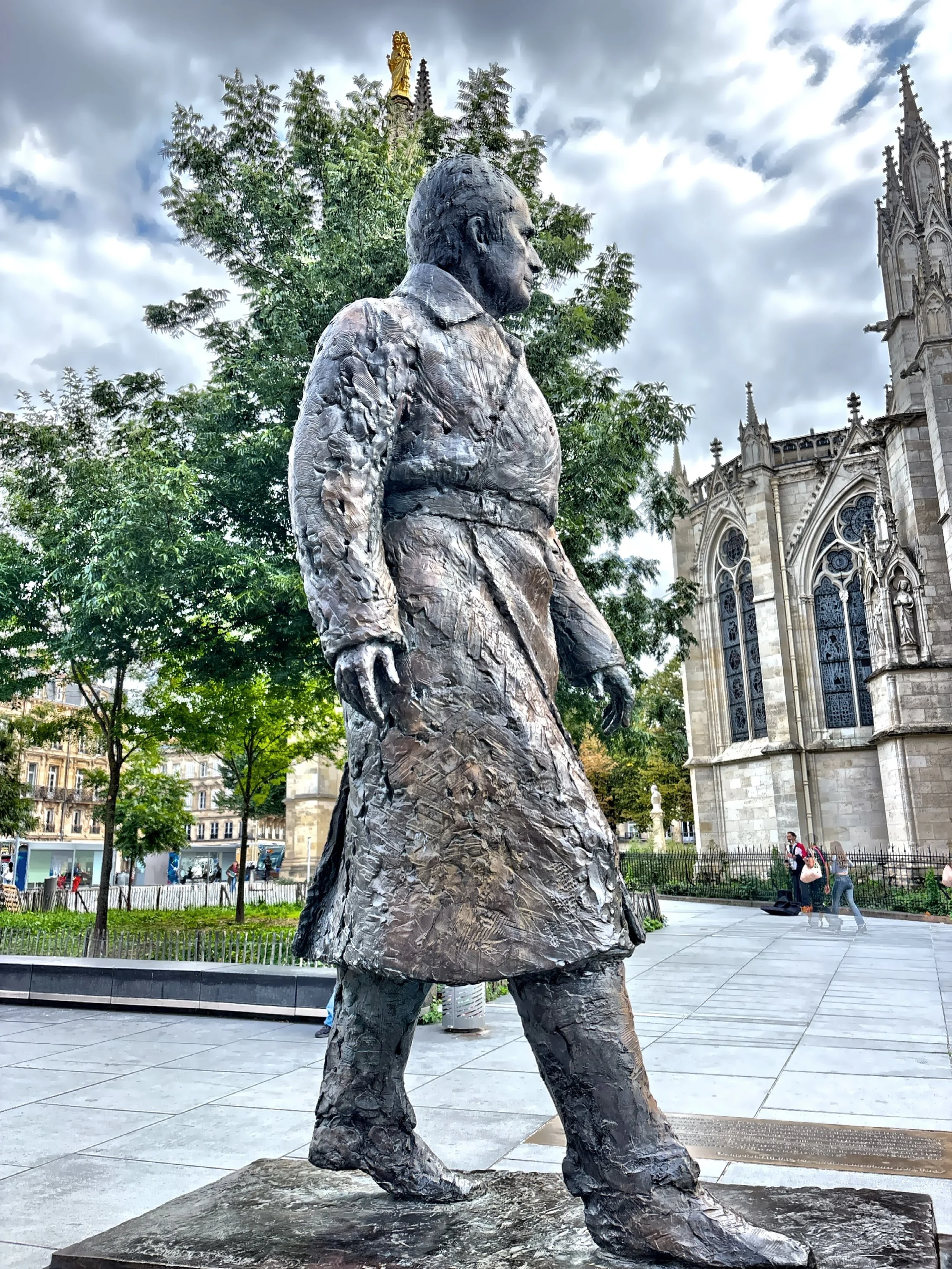
Statue of Mayor and Prime Minister Jacques Chaban-Delmas, who played a key role in the renovation and preservation of the area’s architecture.
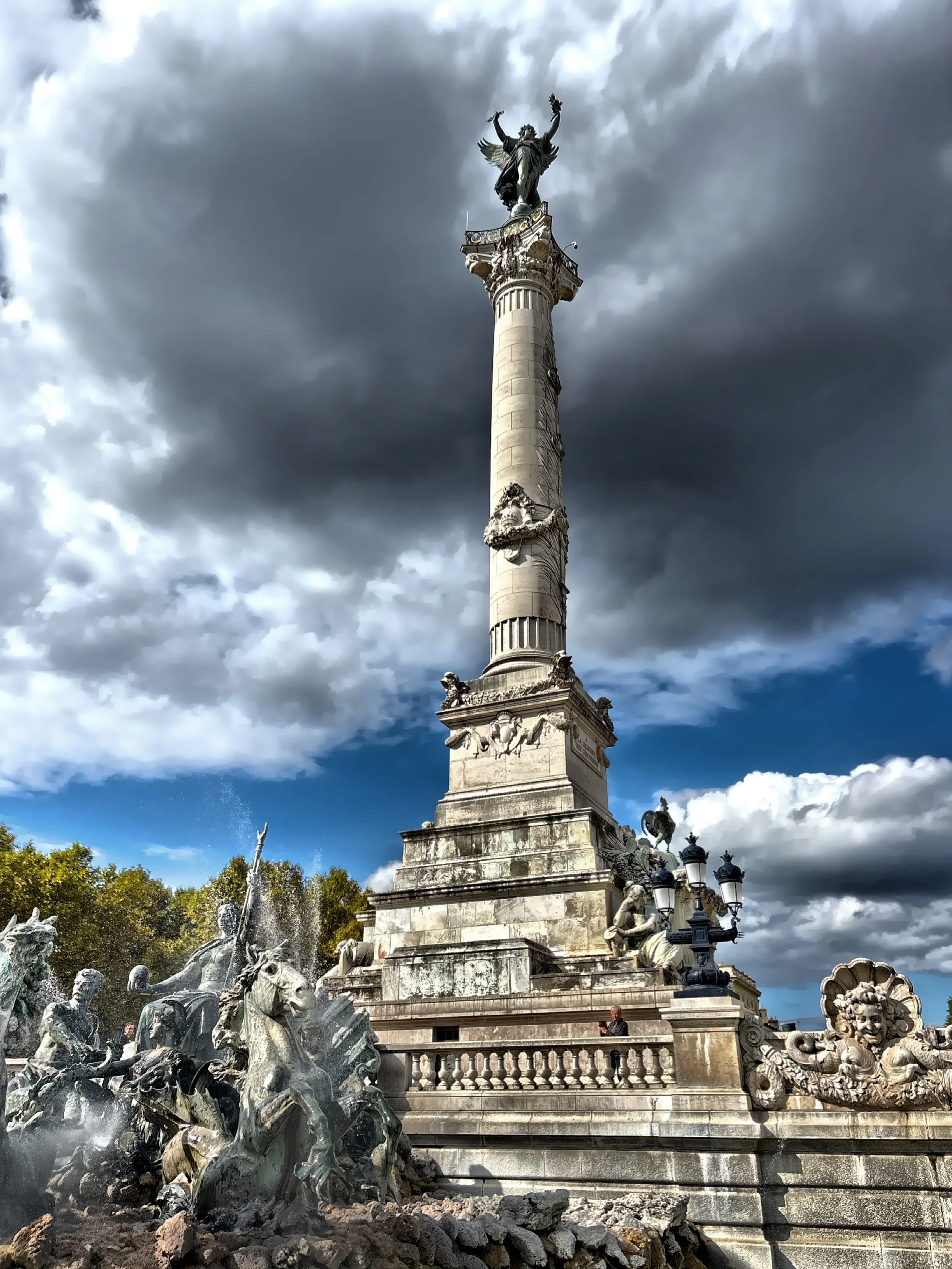
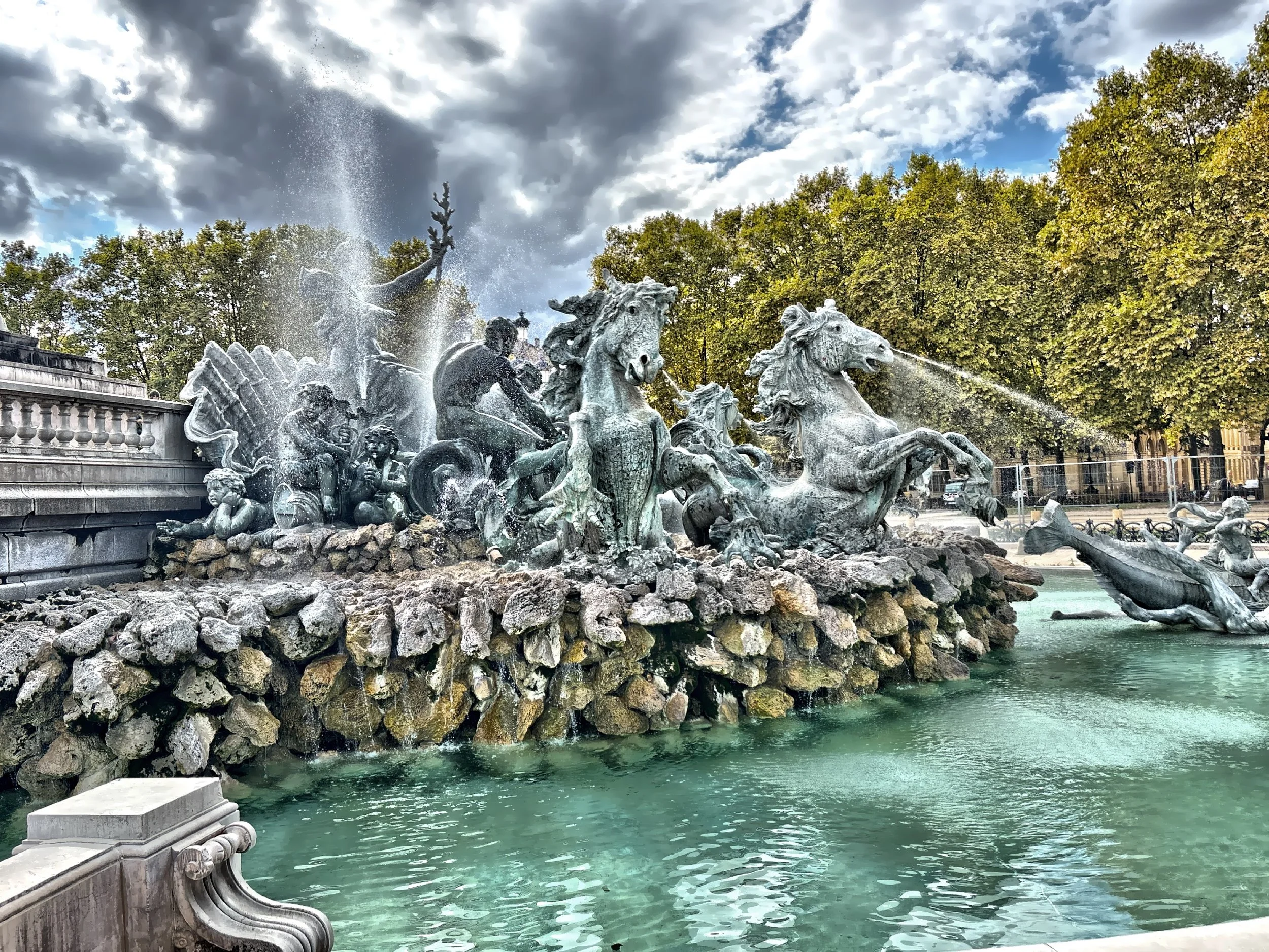
Monument aux Girondins is in the heart of the city in, Place des Quinconces, one of the city’s largest squares in Europe. Erected between 1894 and 1902 and seven as a memorial to the Gorondin deputies who were executed during the Reign of Terror of the Frech Revolution in 1703. They were considered political martyrs.
.
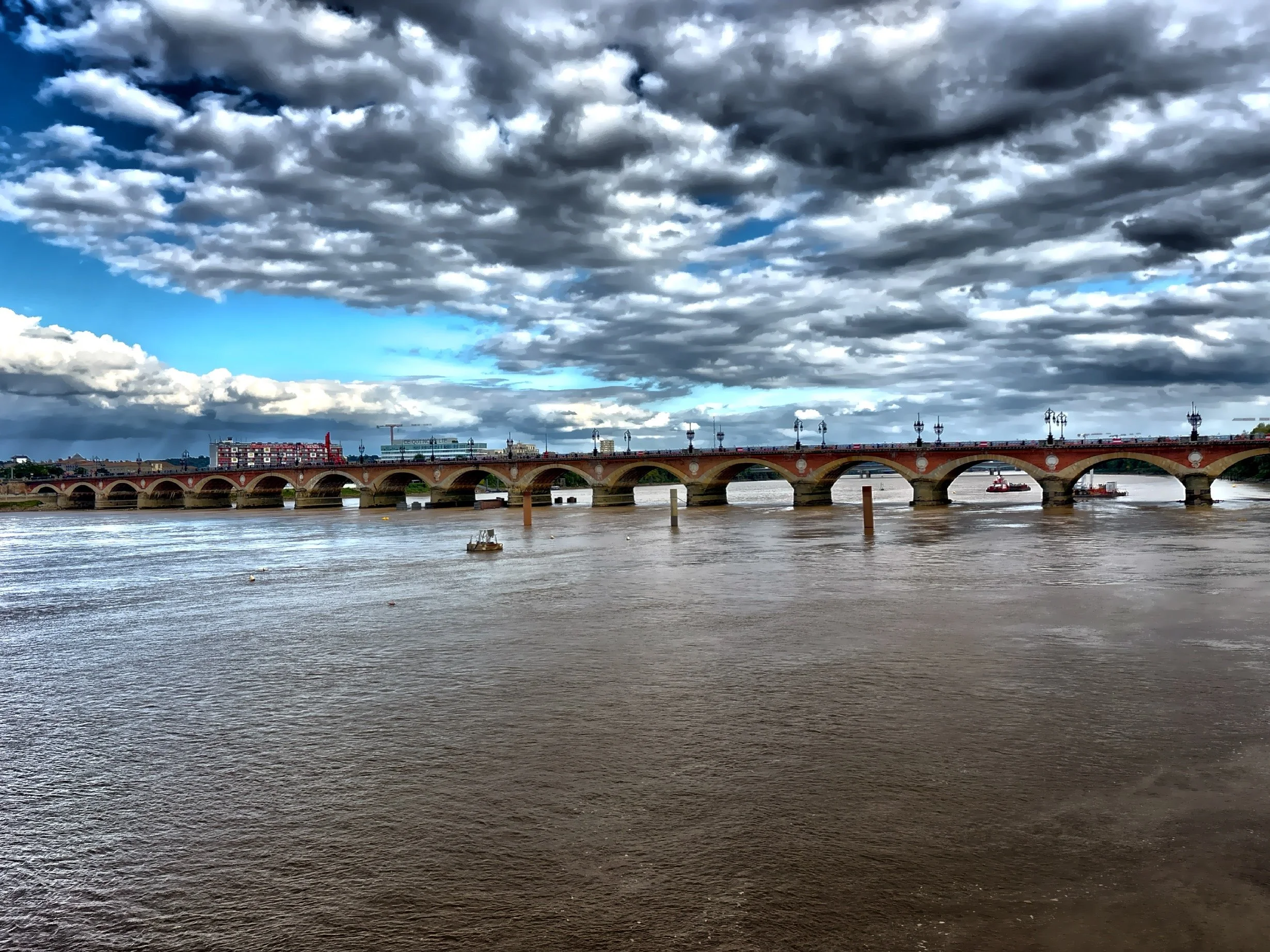
Pont de Pierre was the first bridge to cross the Garonne River and inaugurated in 1822.
What you should know:
Credit/debit cards are widely accepted.
Contactless payments (Apple Pay, Google Pay, etc.) are very common.
Locals are generally friendly but reserved – polite and helpful.
The two main official language is French, but many people do speak English.
The currency is the Euro (EU).
Both free and paid parking options are available, but the free ones are pretty limited.
Walking or biking is a great way to get around the city.
You will need a valid passport and a power convertor if you are coming from the US.
There are many restaurant and food options.
Tipping is not expected but some people do round up.
For more information: Bordeaux, France
If you enjoyed this post, feel free to check out my previous posts by clicking here.