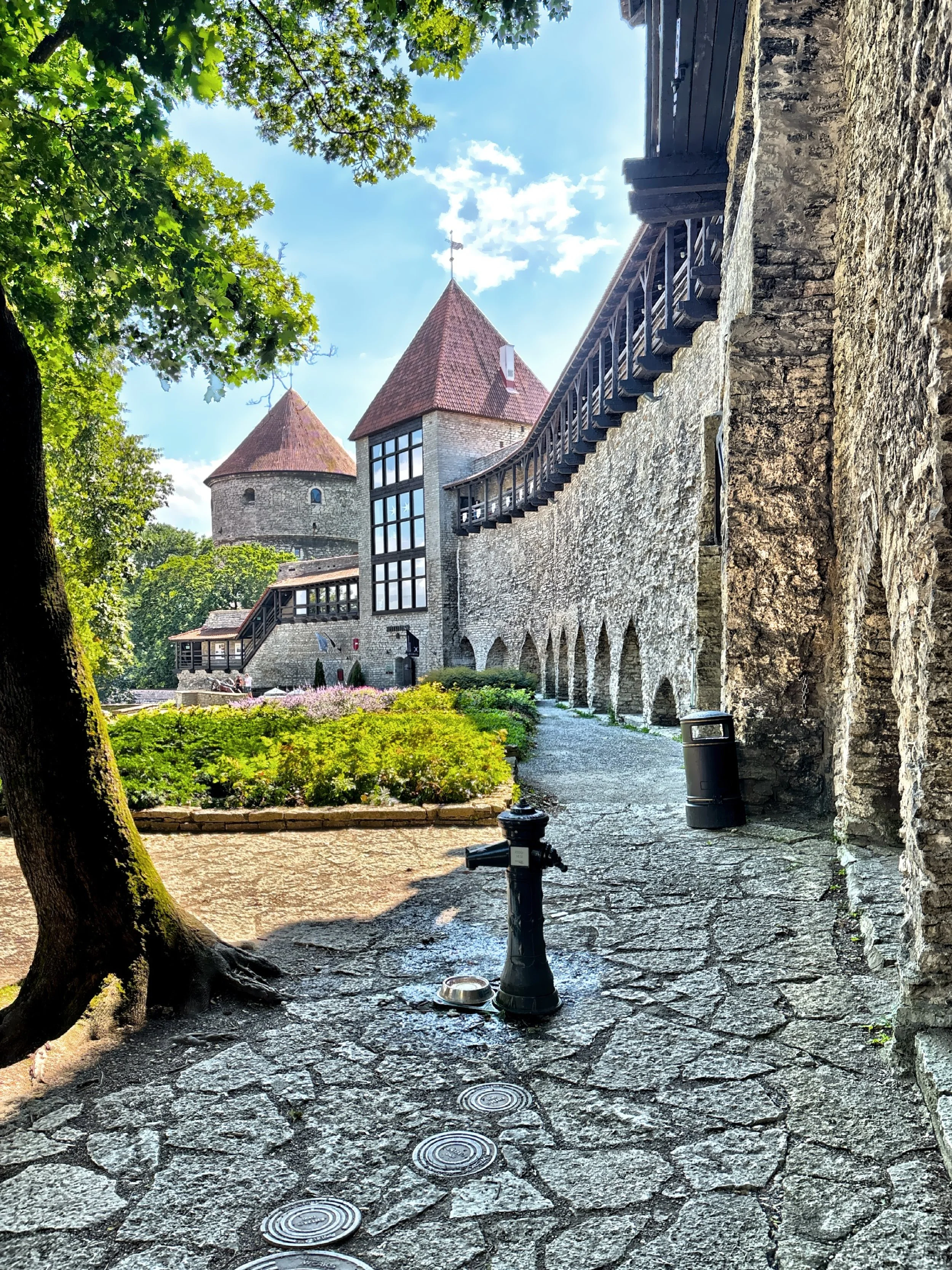
A Well-Preserved UNESCO Old Town - Tallinn, Estonia
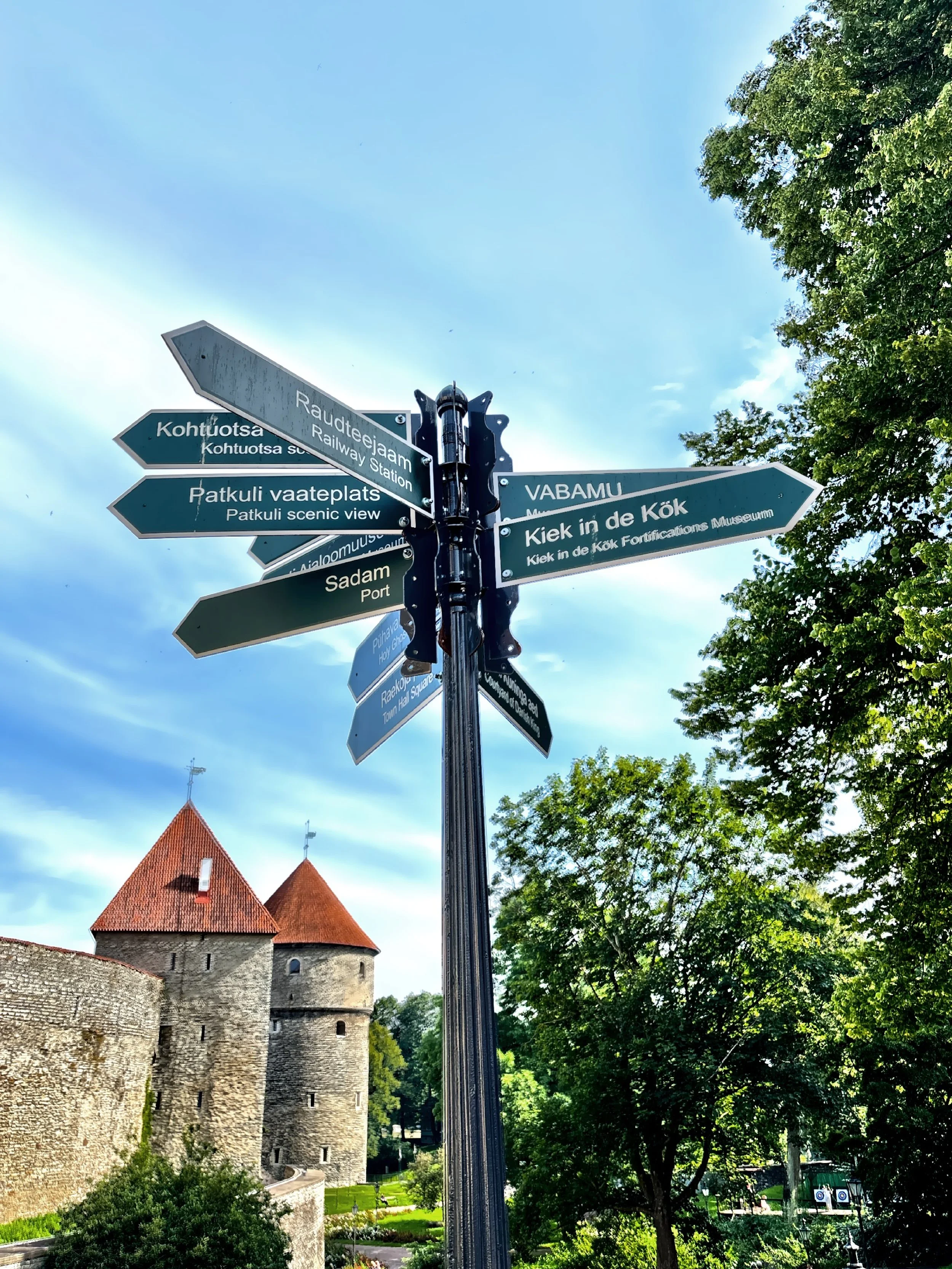
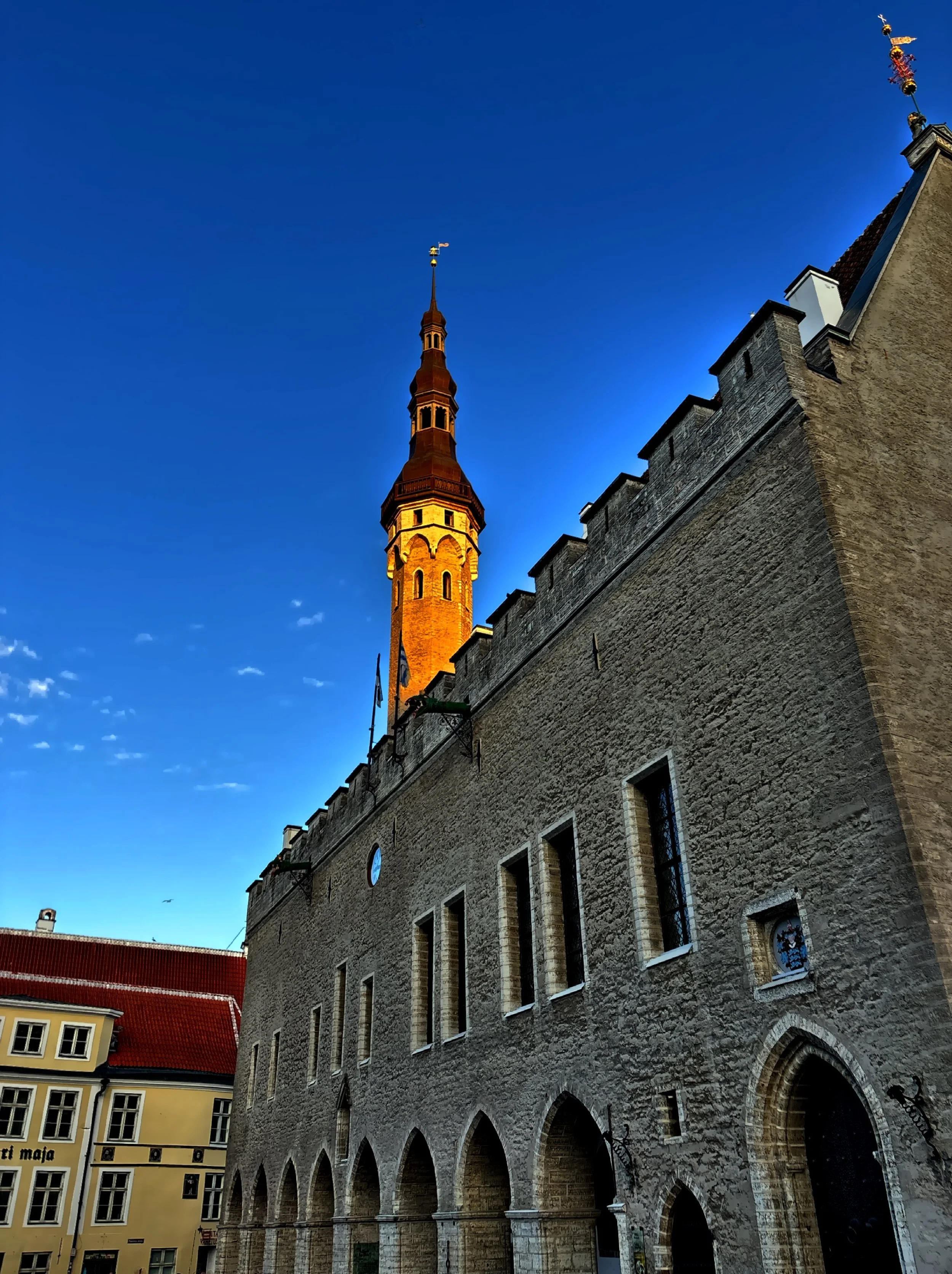
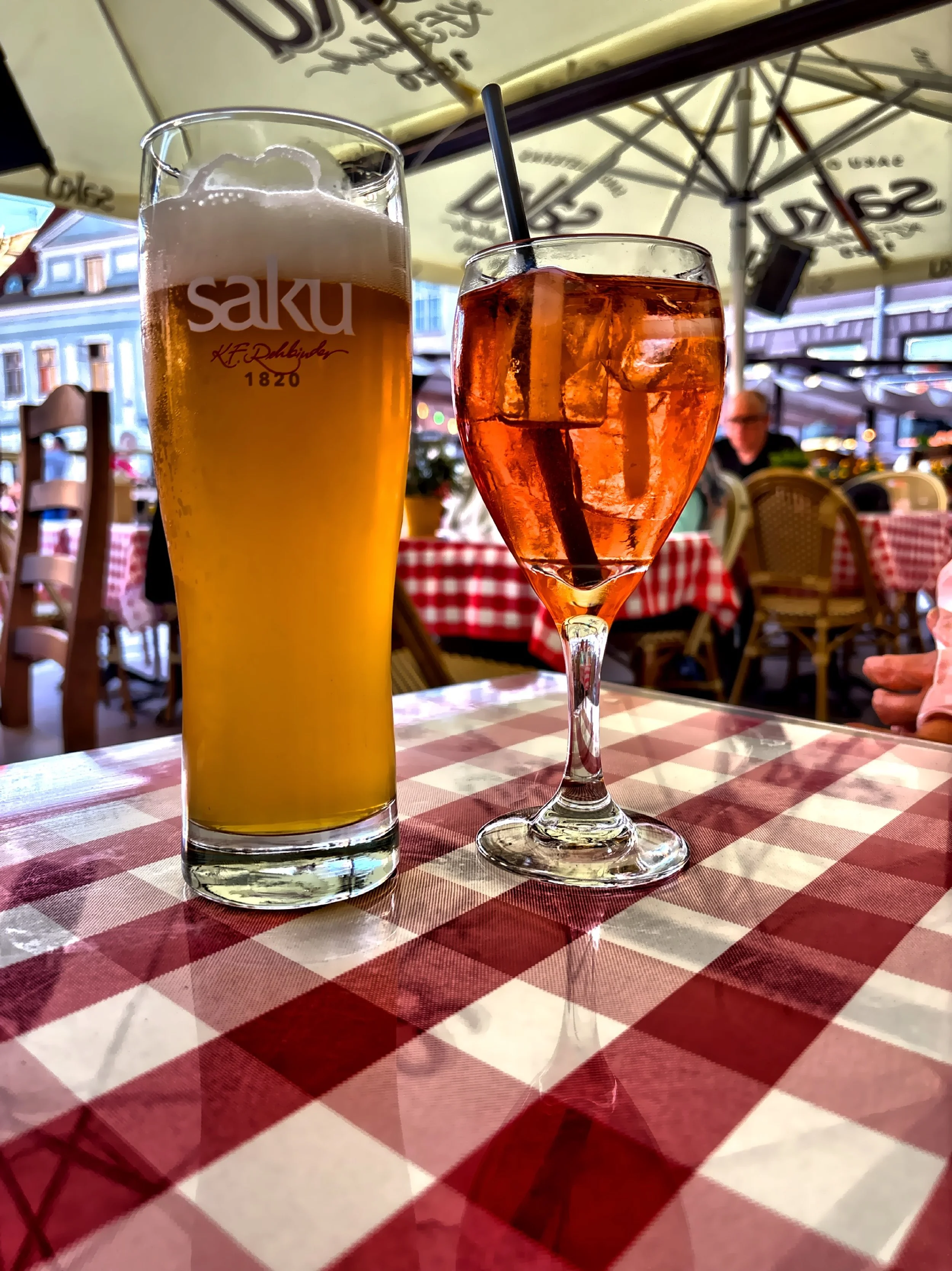
The UNESCO-listed Old Town of Tallinn, Estonia, is where medieval charm meets modern energy. One of the best-preserved old towns in Europe, it feels like stepping into a beautifully maintained fairy tale — with narrow cobblestone streets, colorful facades, medieval spires, and centuries-old walls — yet it pulses with the vibrancy of a youthful, tech-savvy capital. Entering through the ancient city gates, you're greeted by winding streets lined with steep-gabled houses and wrought-iron signs swaying gently in the breeze. At the heart of it all lies the Town Hall Square, a bustling plaza surrounded by cozy cafés, artisan shops, and the striking 15th-century Gothic Town Hall. Climbing uphill into Toompea, the upper part of the Old Town, leads you to scenic viewpoints like Kohtuotsa and Patkuli, where you can take in sweeping views of red rooftops and the Baltic Sea. Along the way, you’ll encounter noble mansions, quiet courtyards, and stone walls that whisper stories from the past. In Tallinn’s Old Town, history doesn’t just live on — it thrives, seamlessly woven into the fabric of today’s life.
This is what caught my eye - I hope you enjoy!
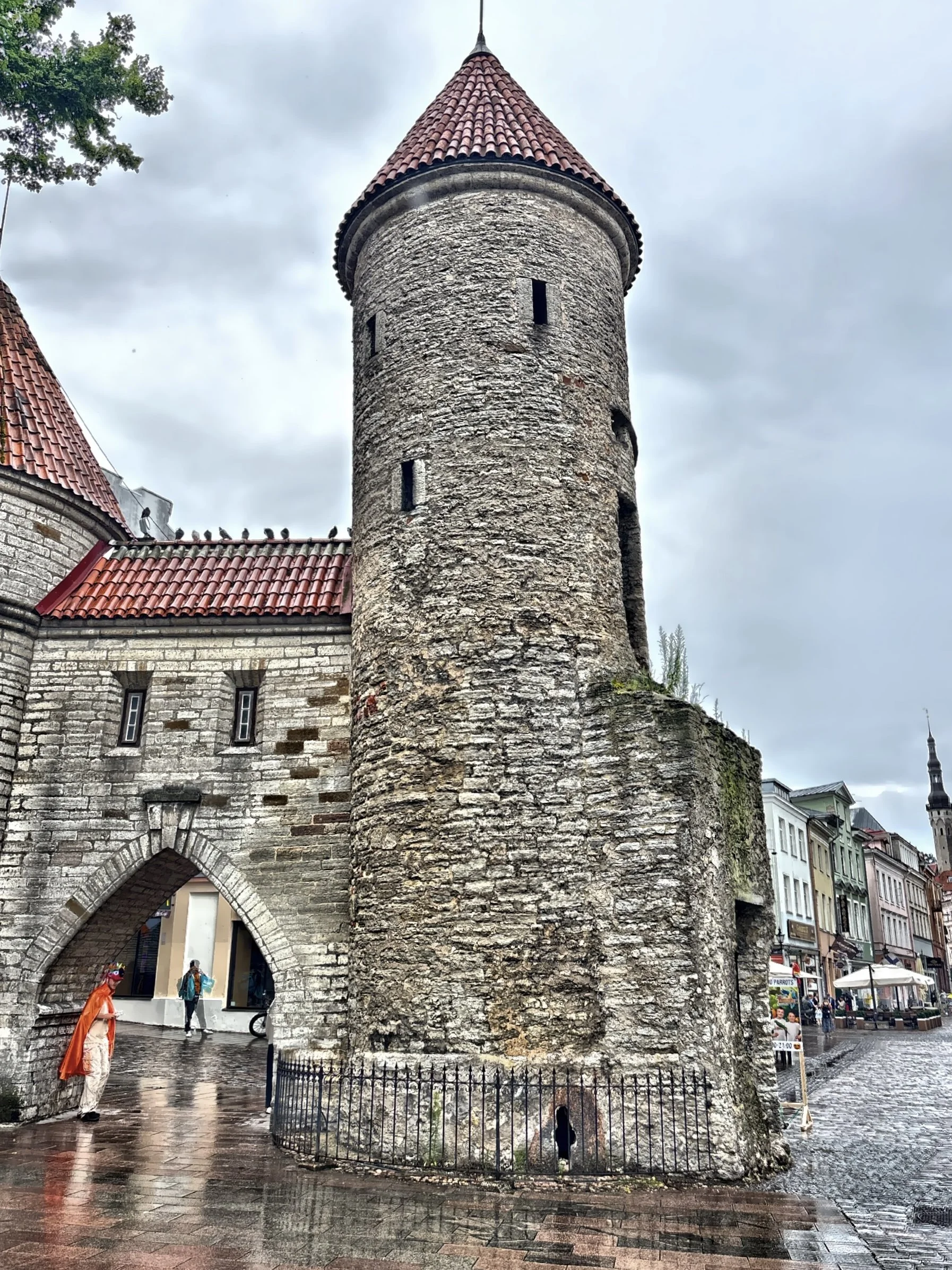
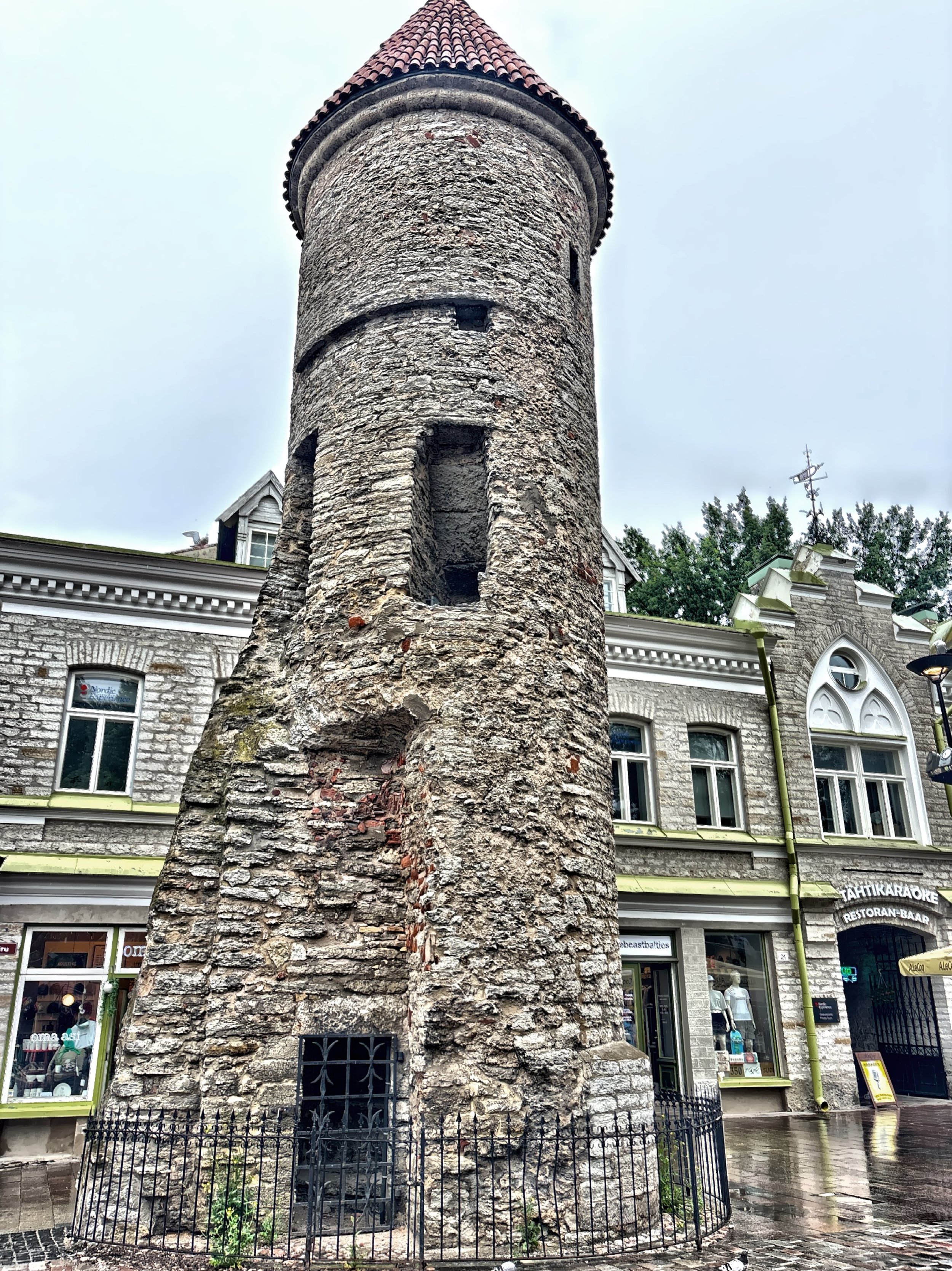
Viru Gate was part of the defense system of Tallinn city wall built in the 14th century.
.
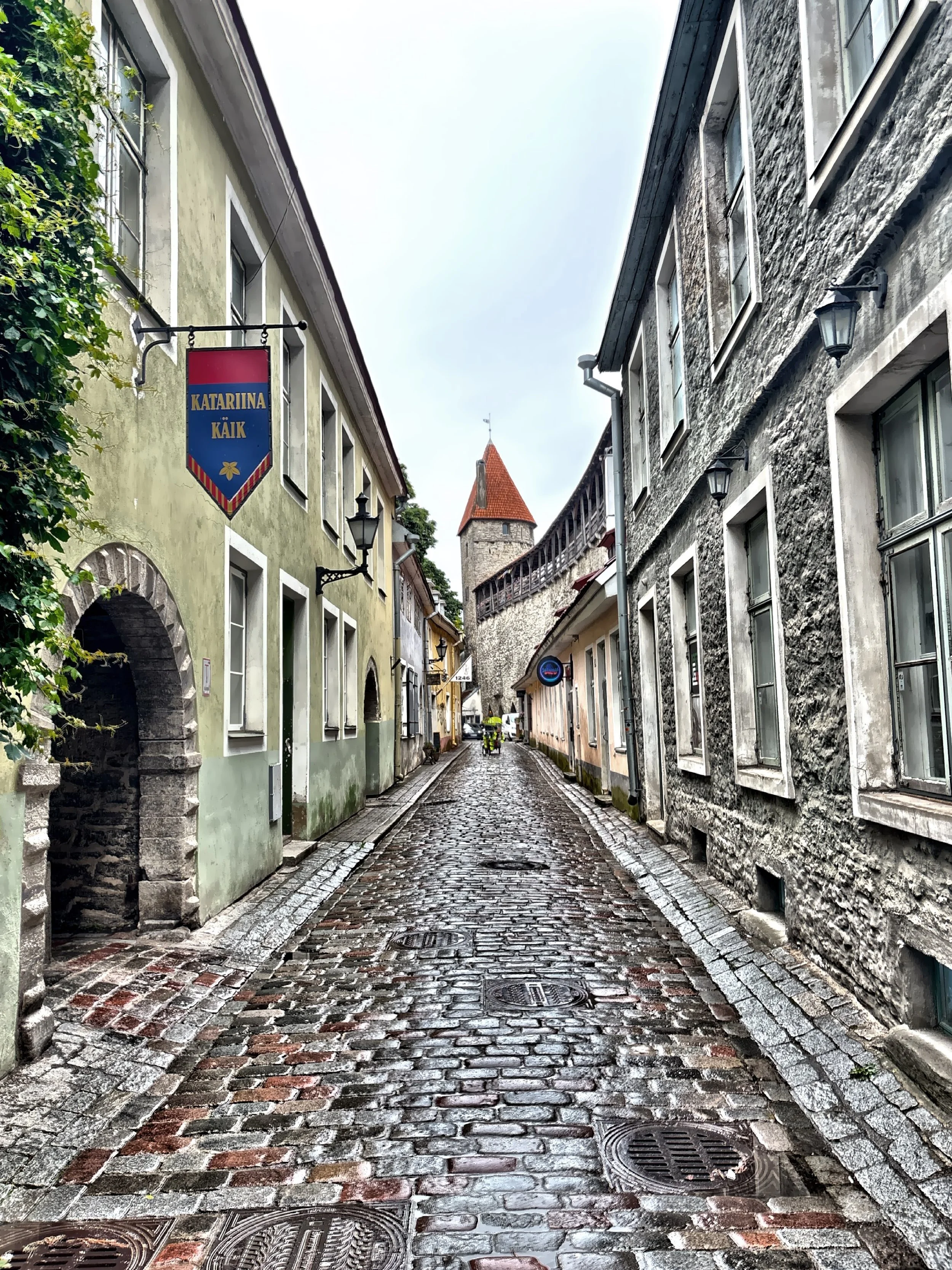
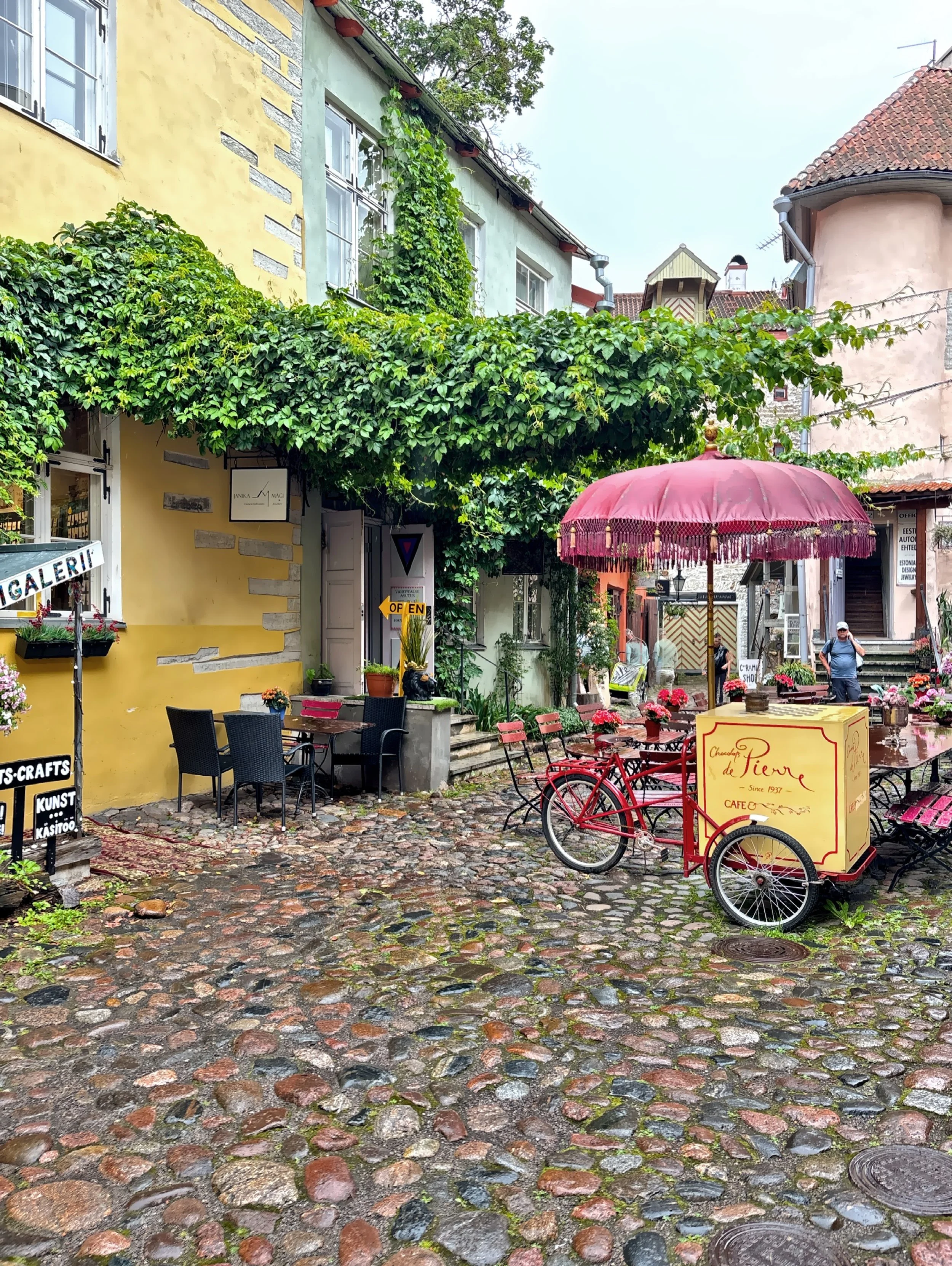
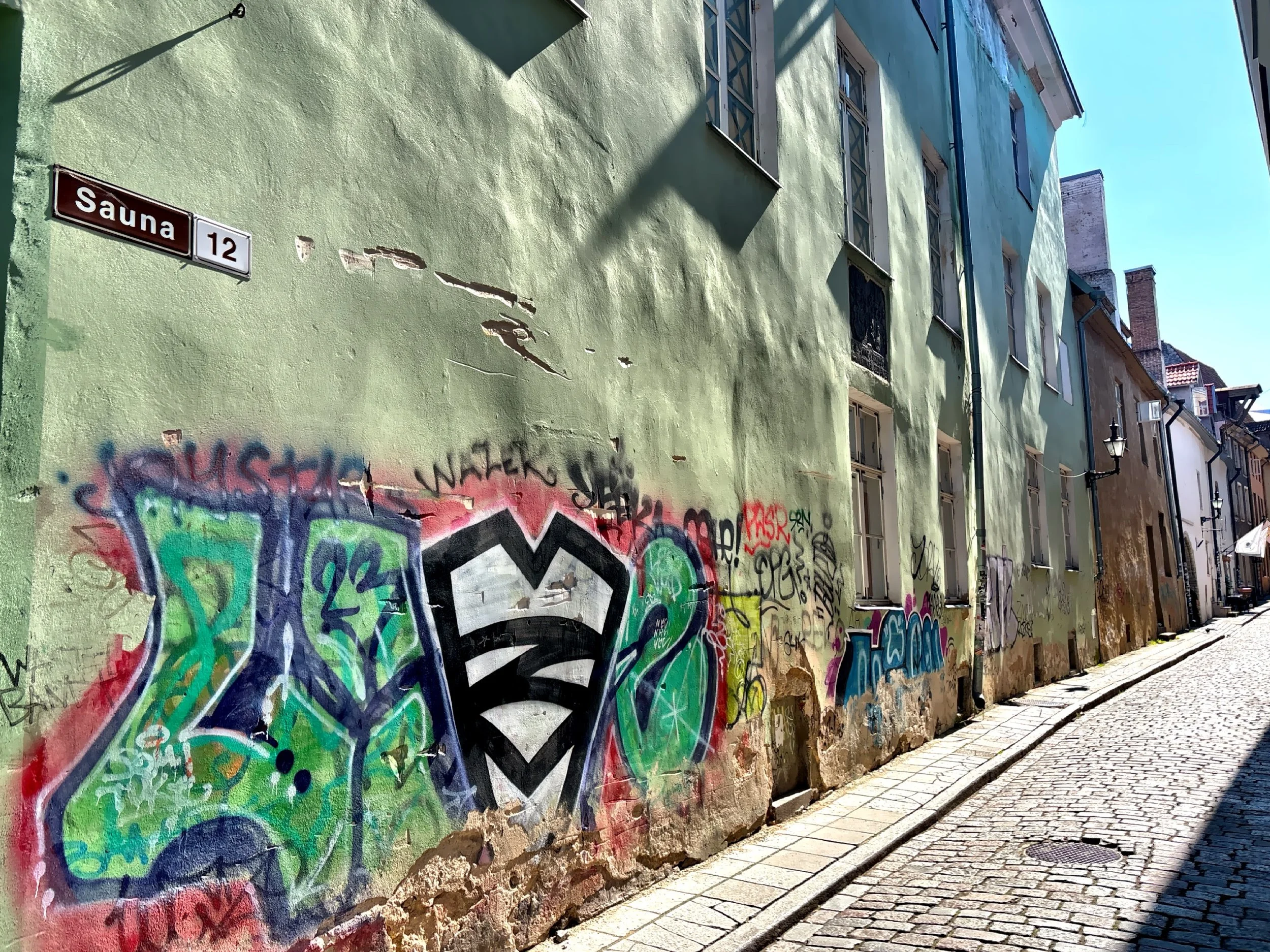
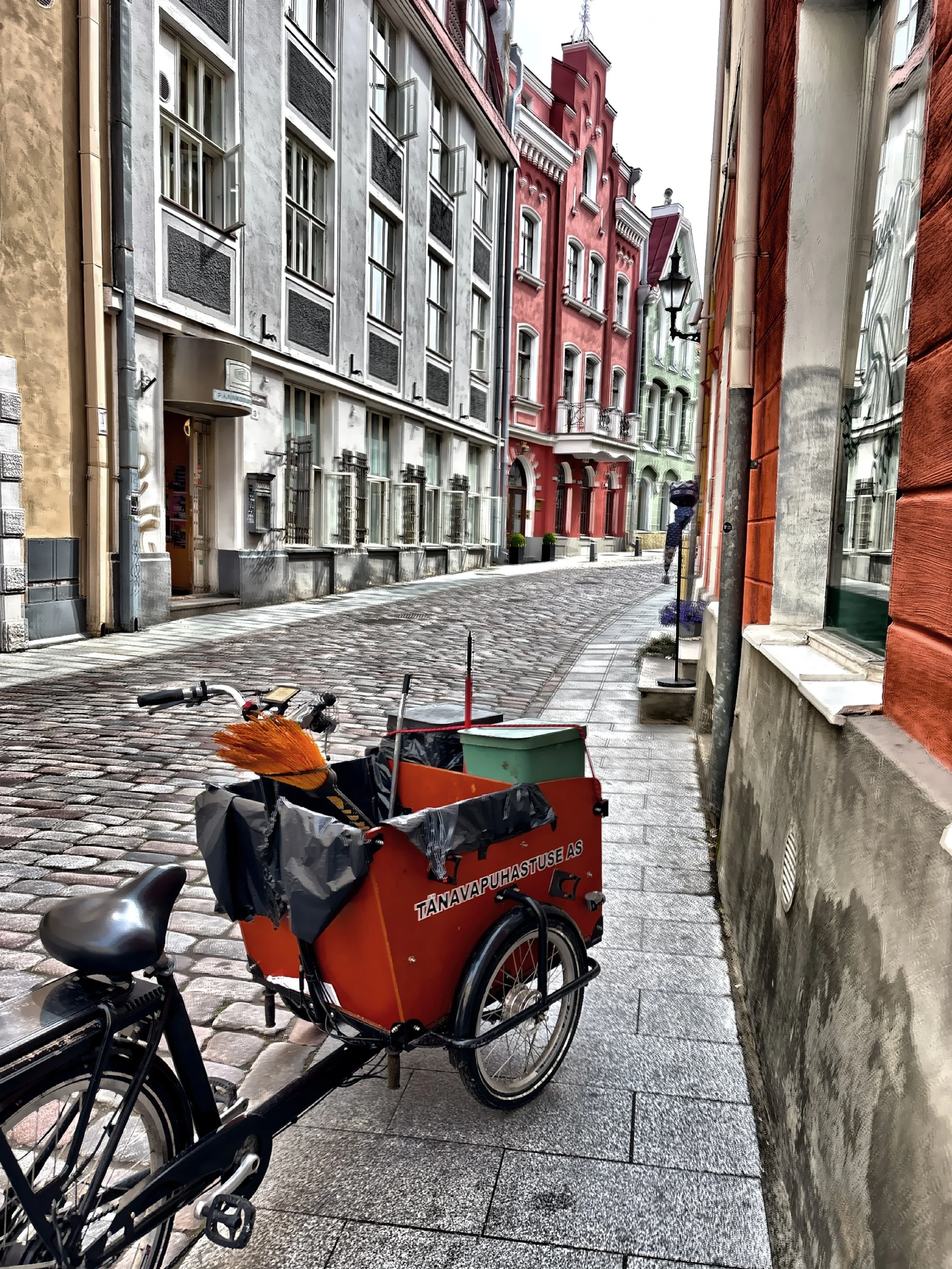
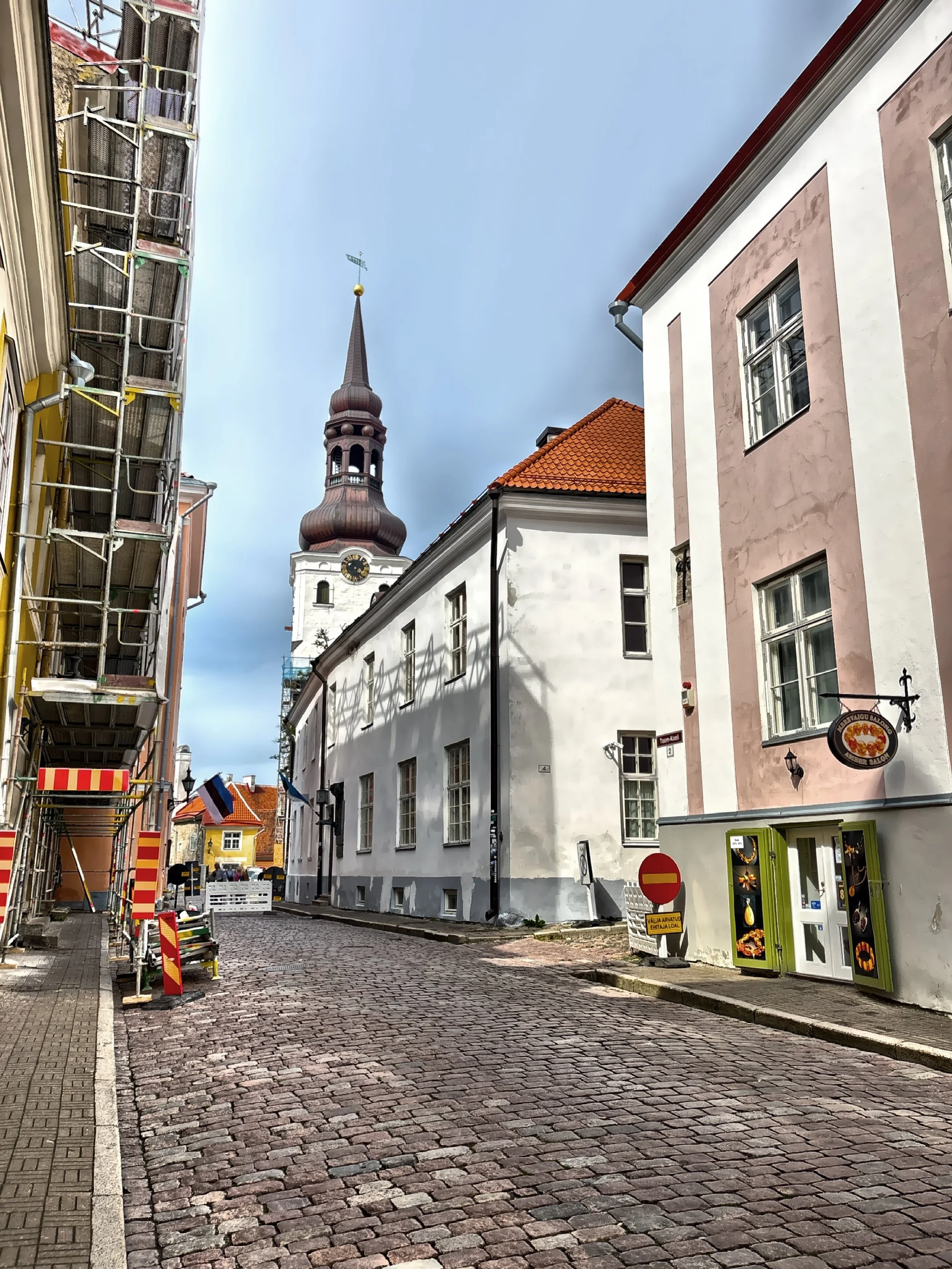
Narrow cobblestone streets waiting to be discovered.
.
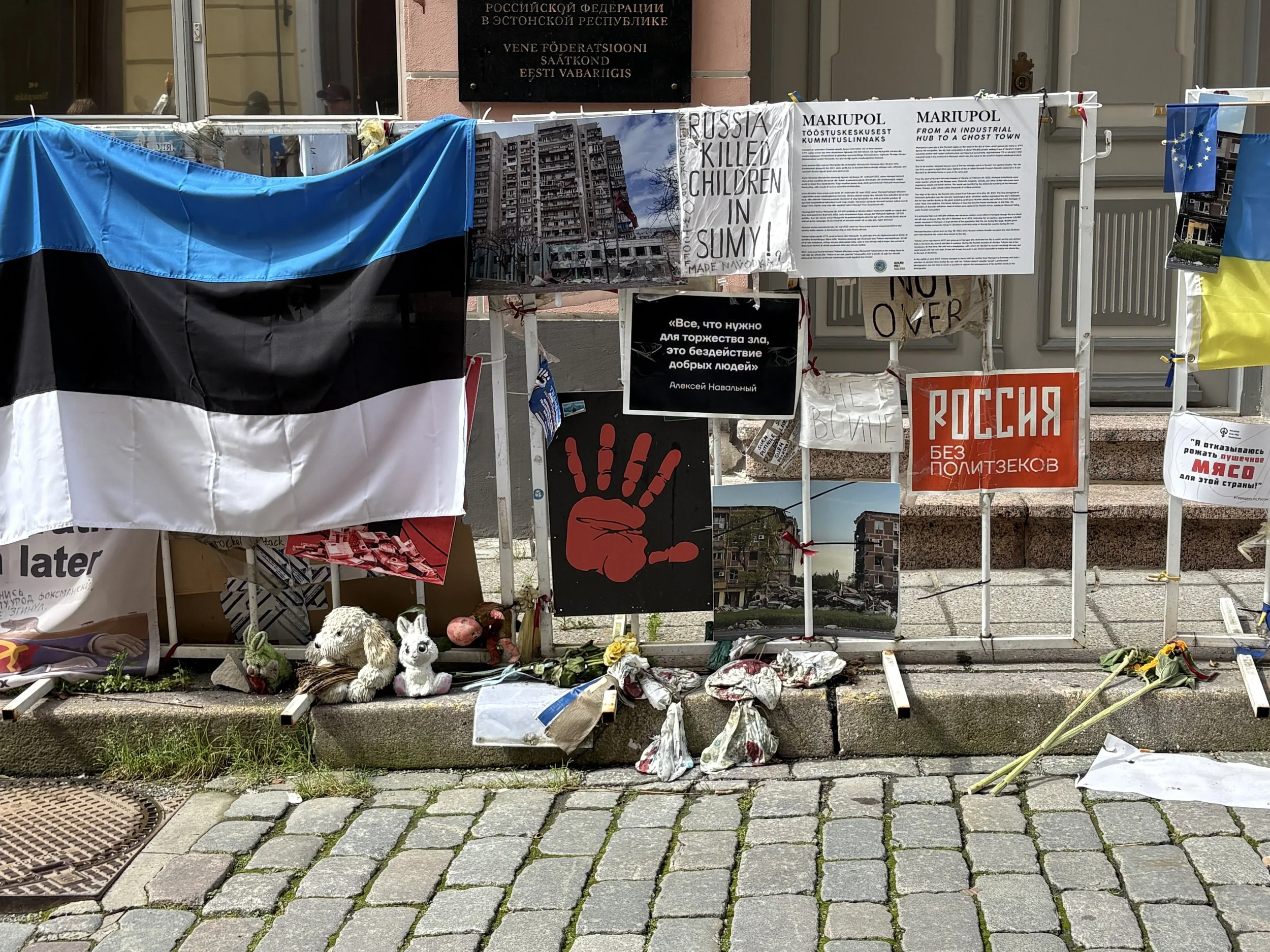
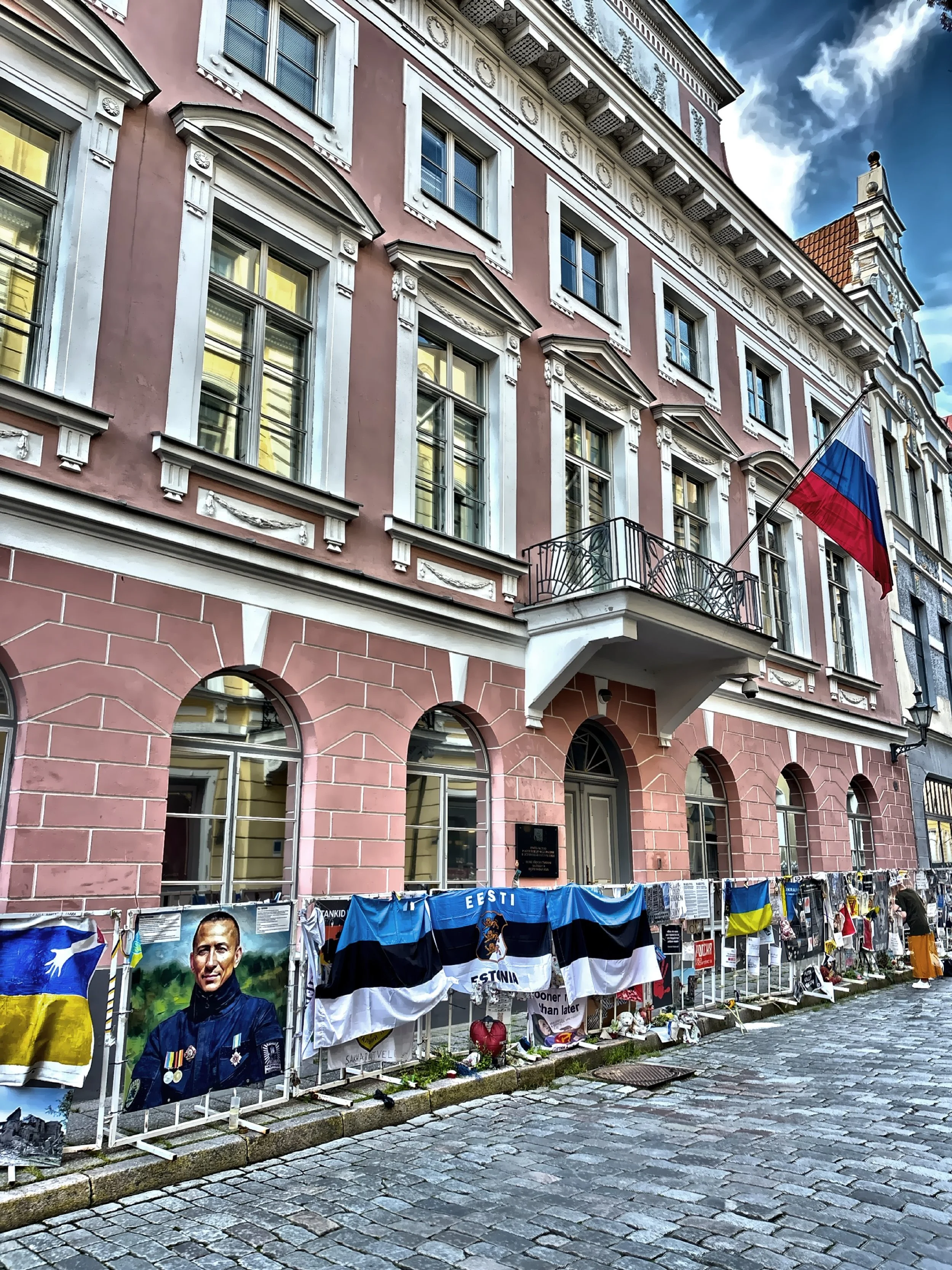
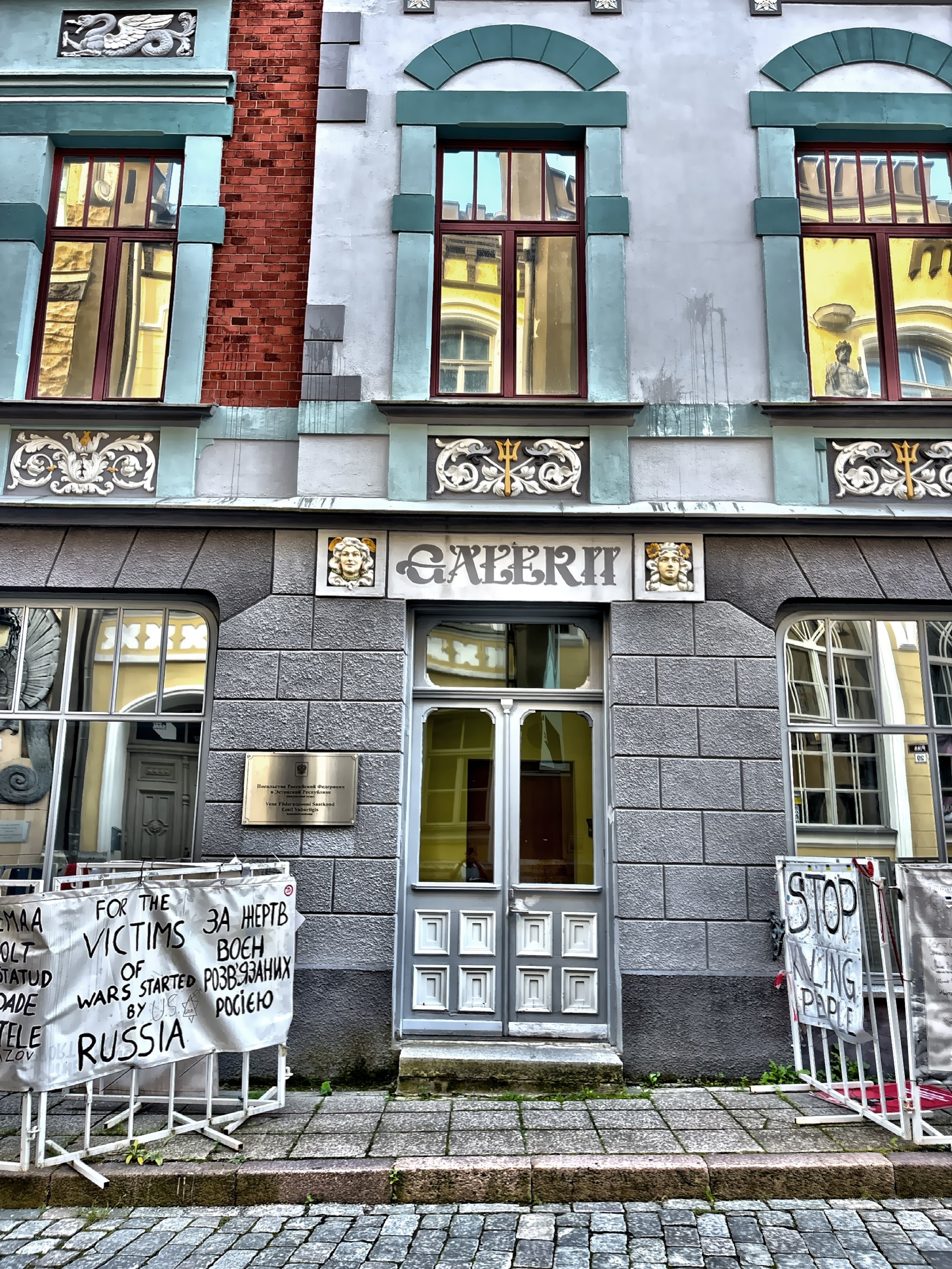
Signs of protest outside the Embassy of the Russian Federation building.
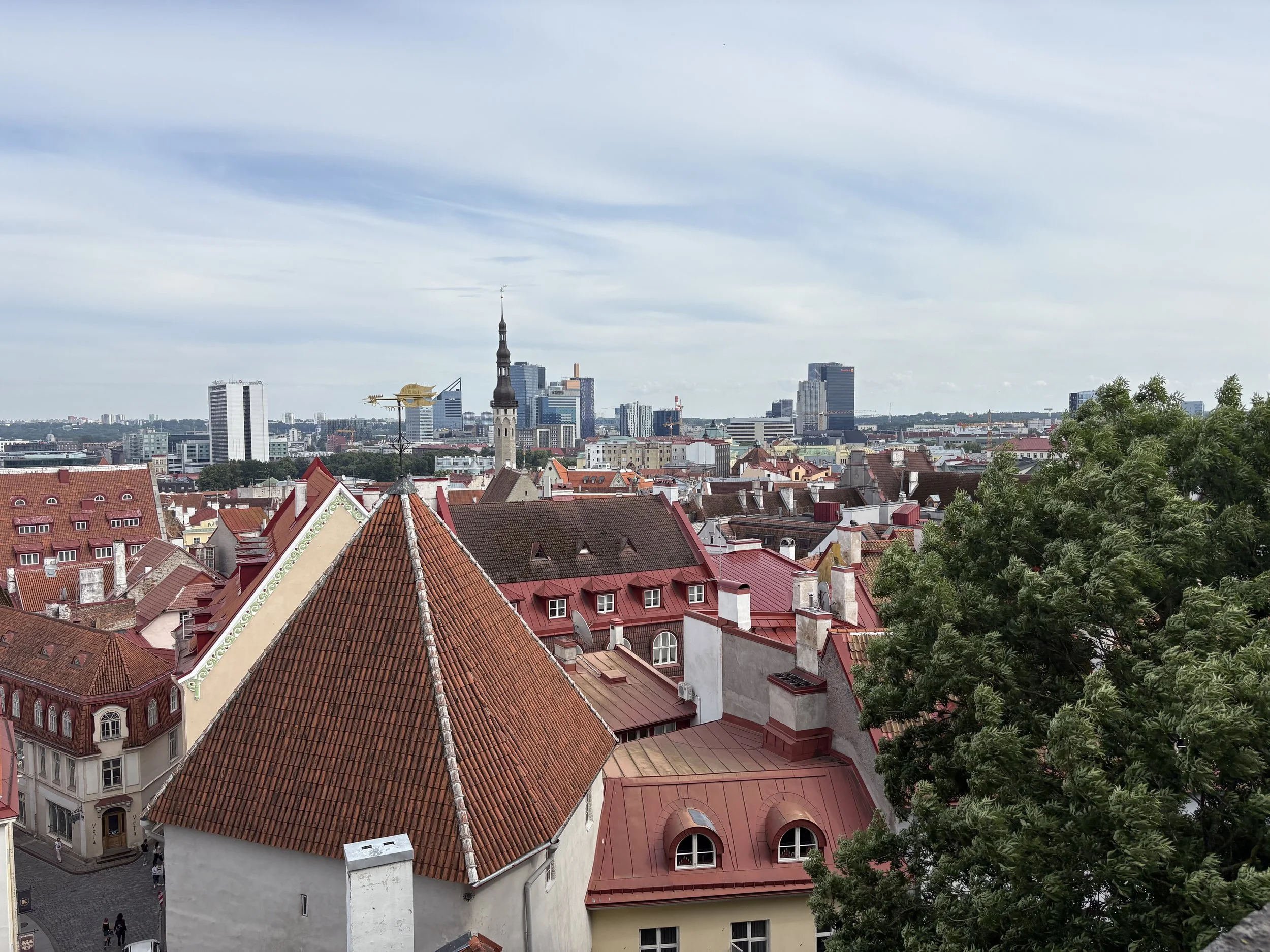
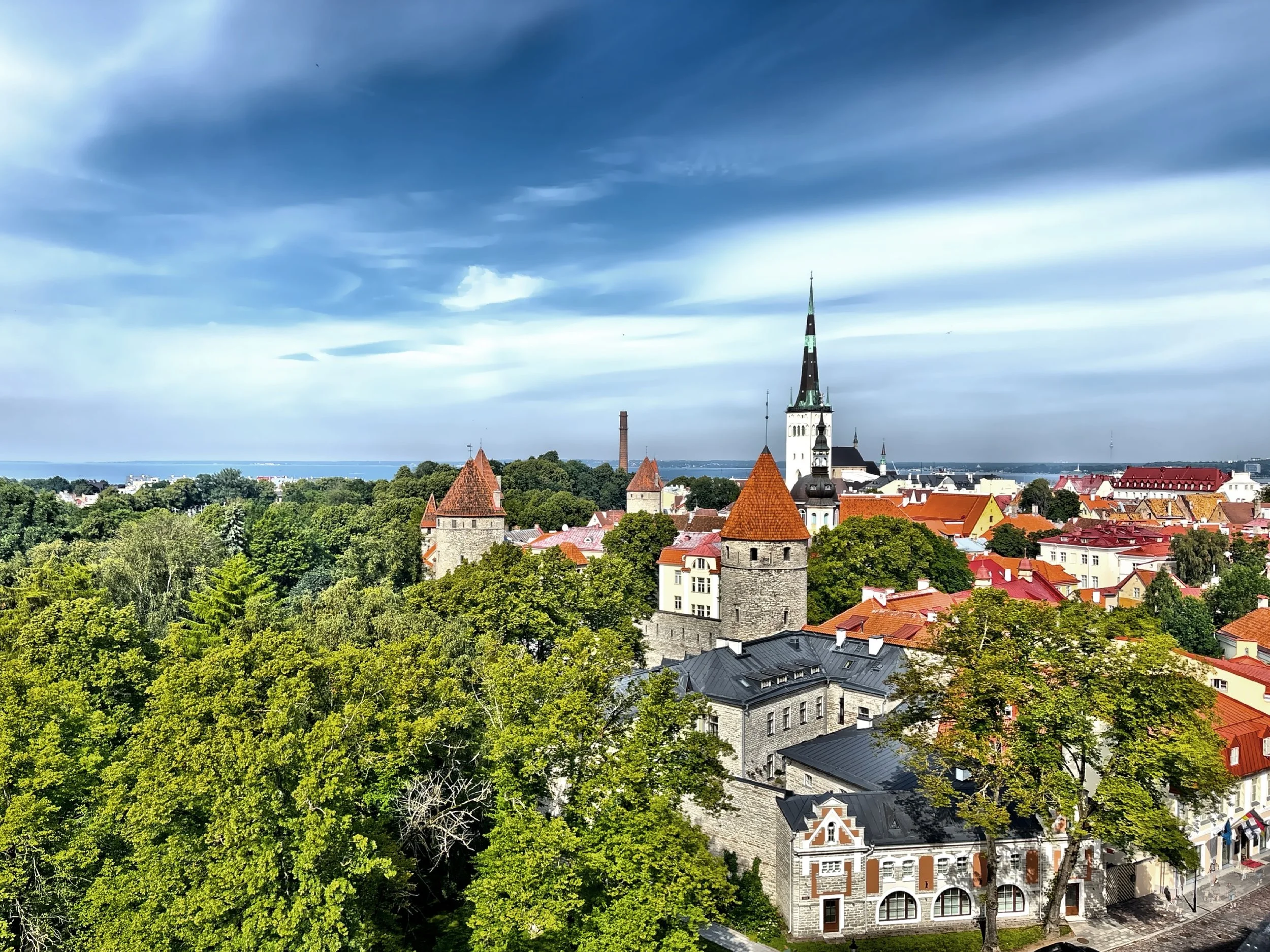
The prominent red roofs and traditional architecture are defining features of Tallinn’s Old Town, while the modern buildings and skyscrapers in the distance create a striking contrast.
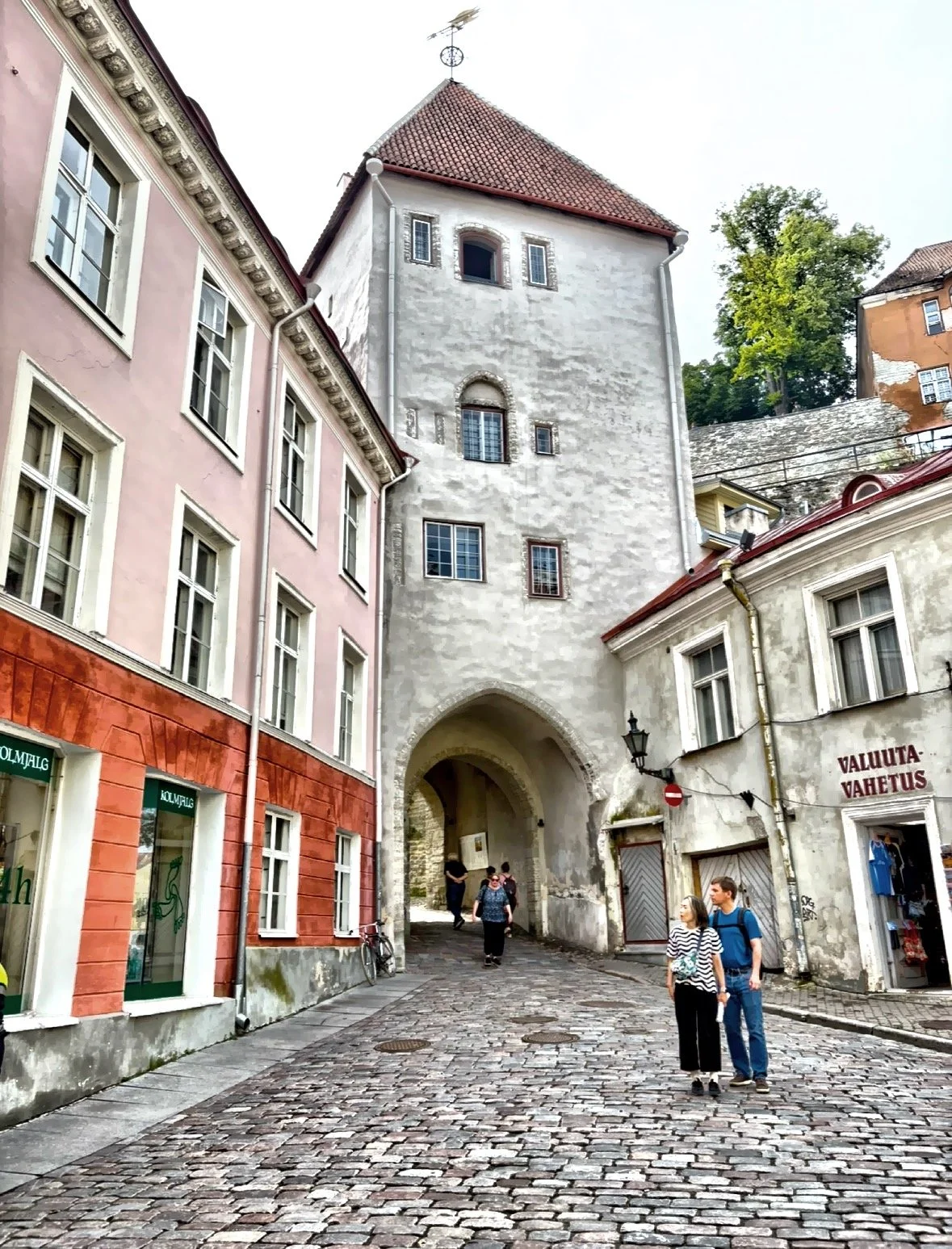
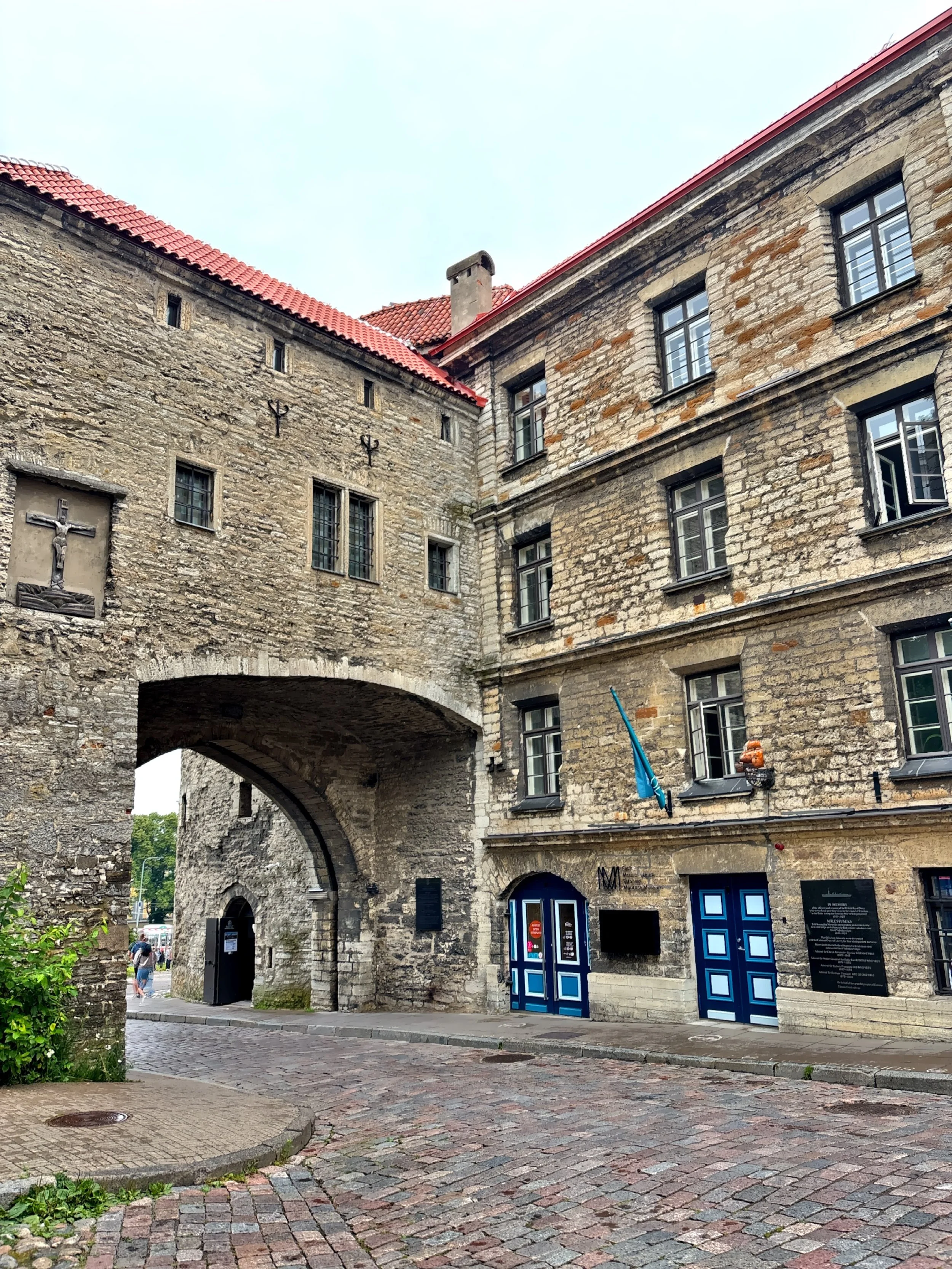
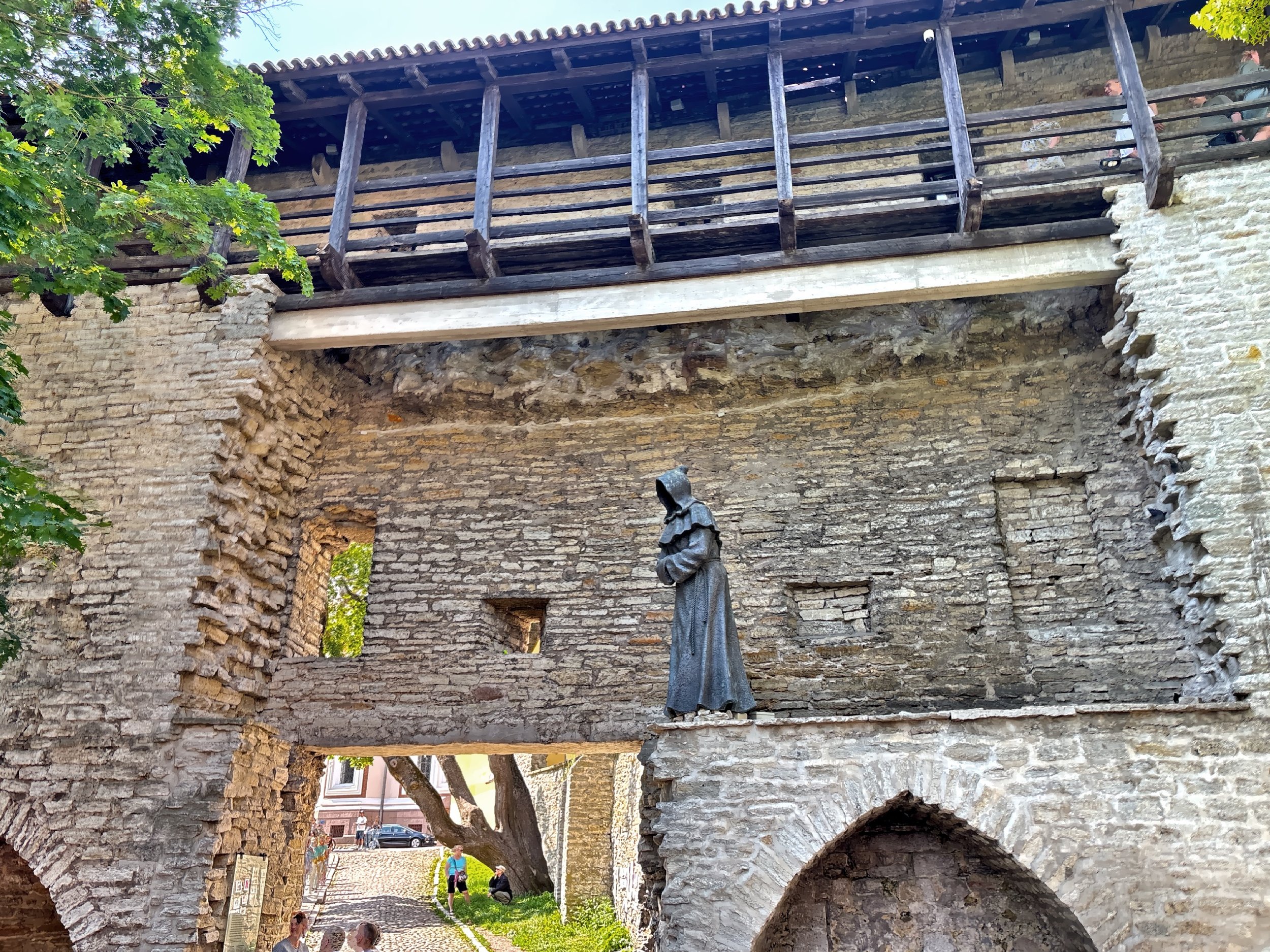
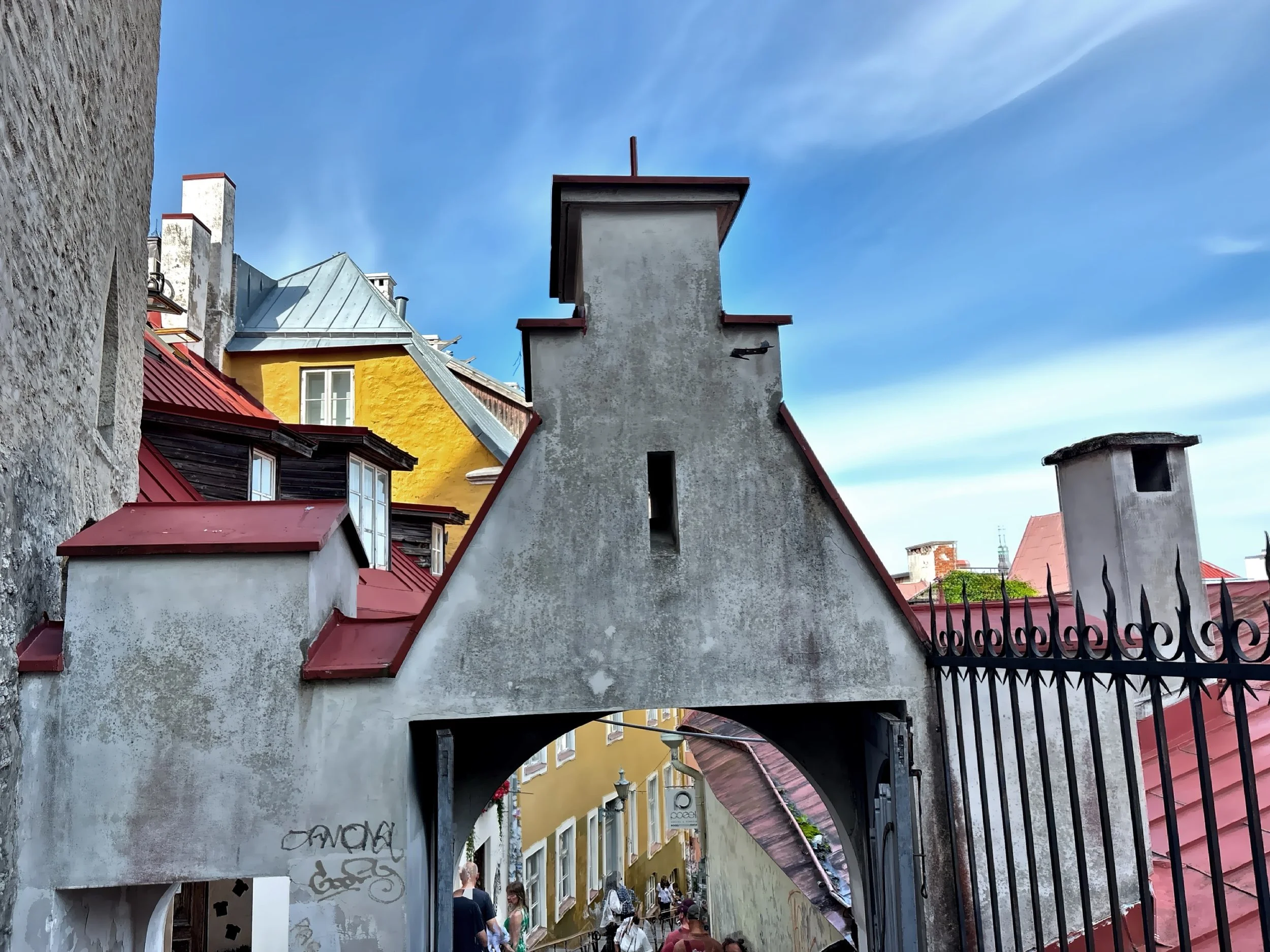
The medieval Long Leg gate from Toompea to the lower town.
Do you like the images posted?
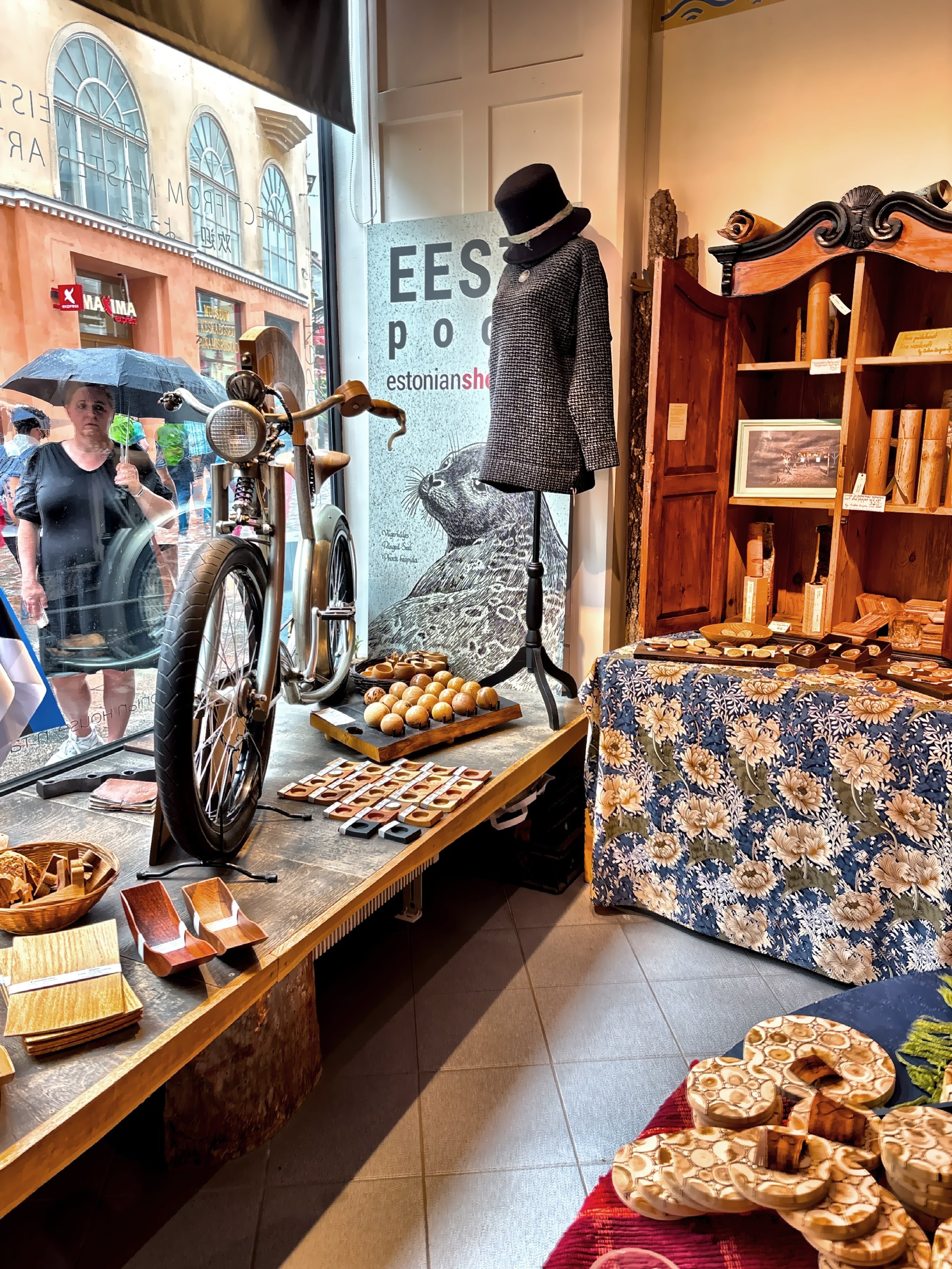
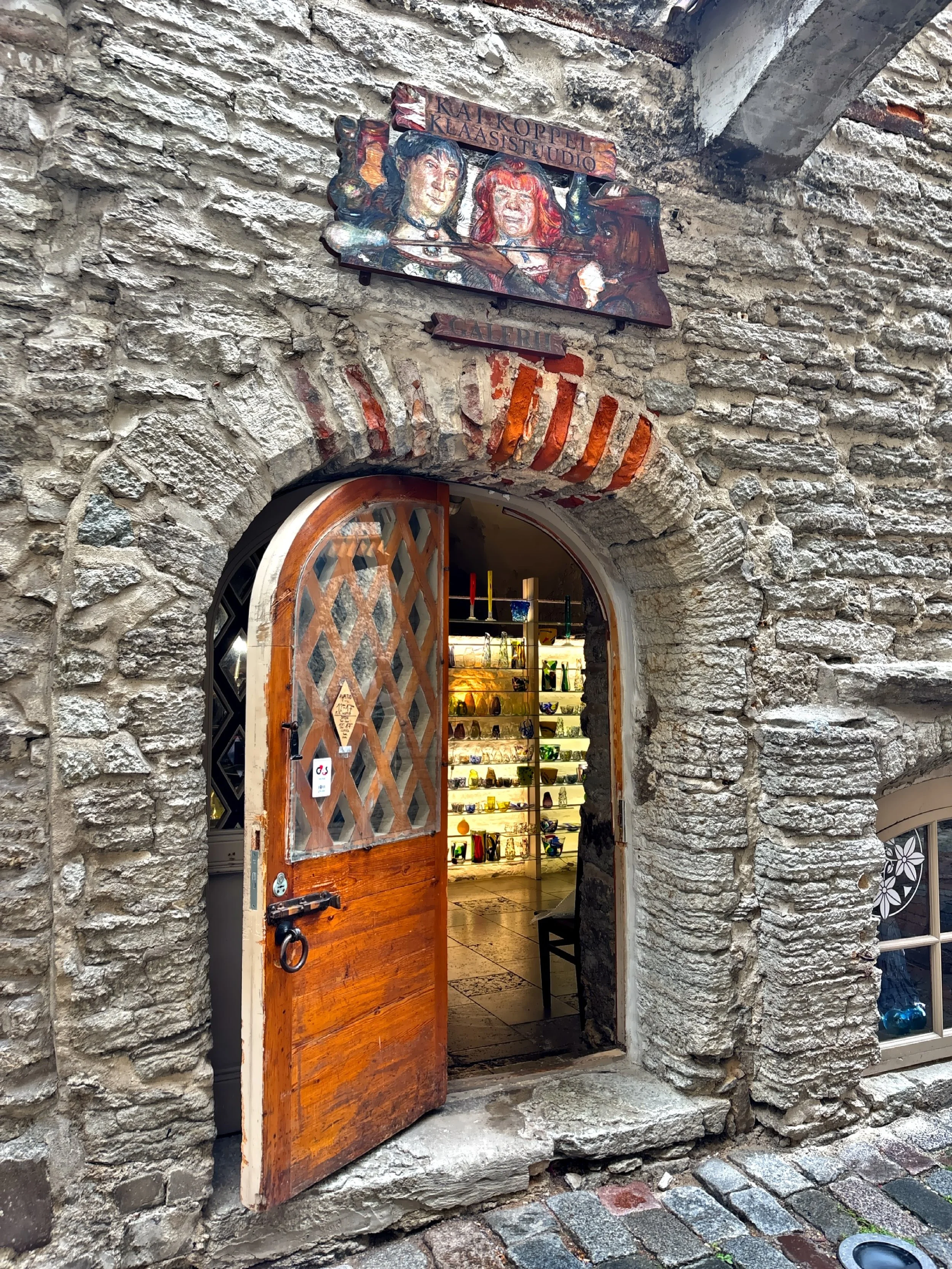
Click here to explore the shop.
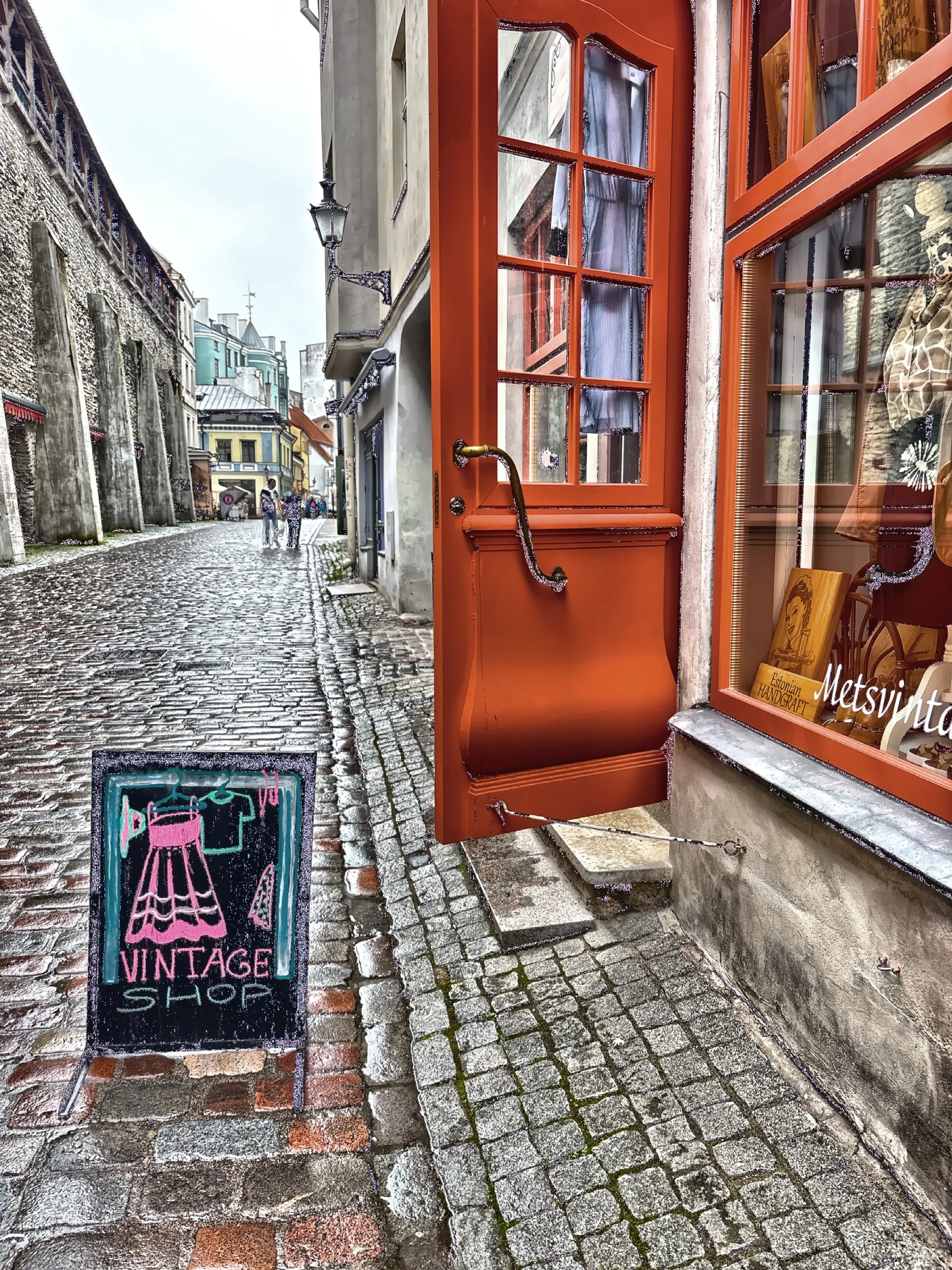
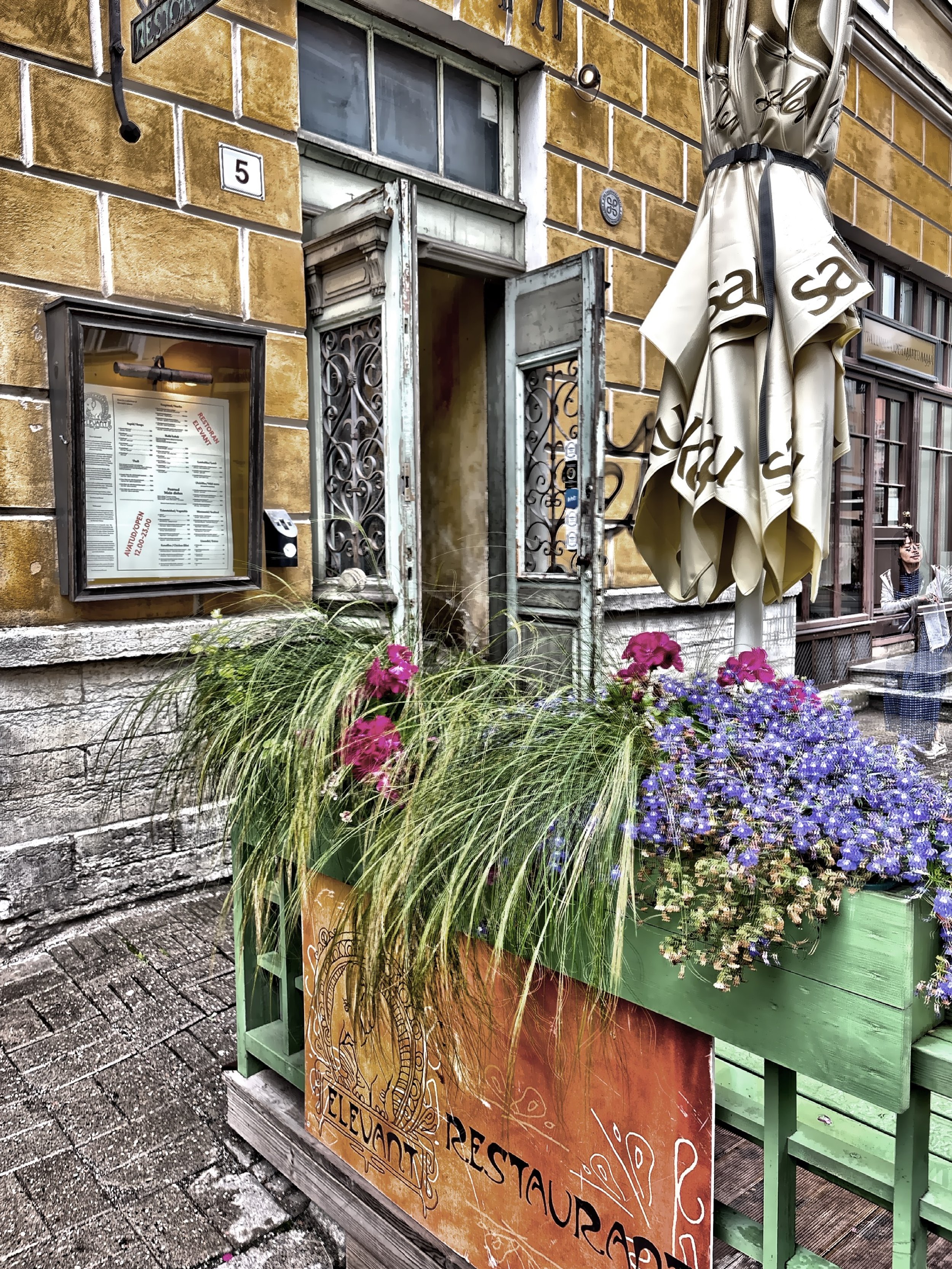
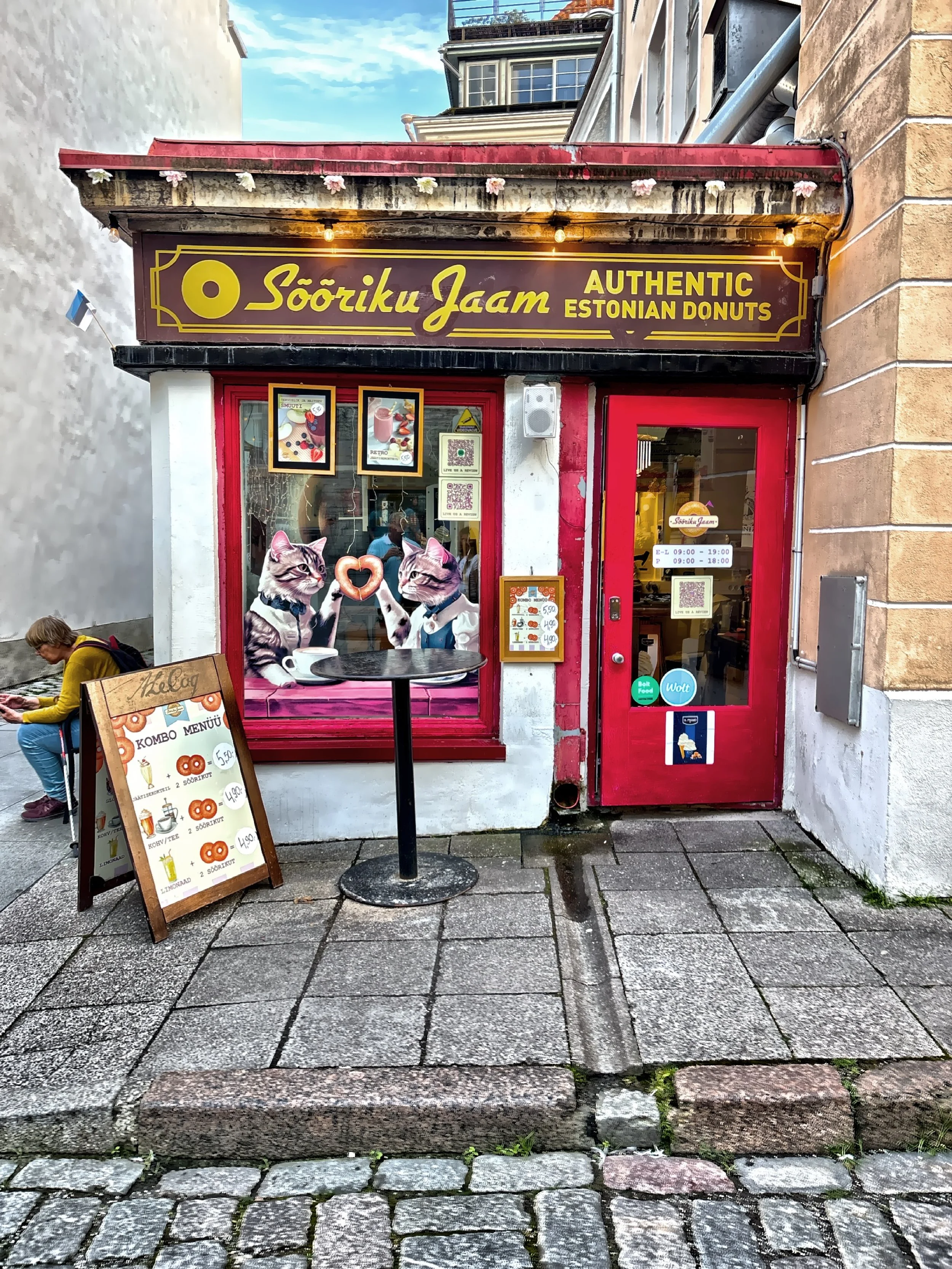
Vintage shops are also popular here too.
.
.
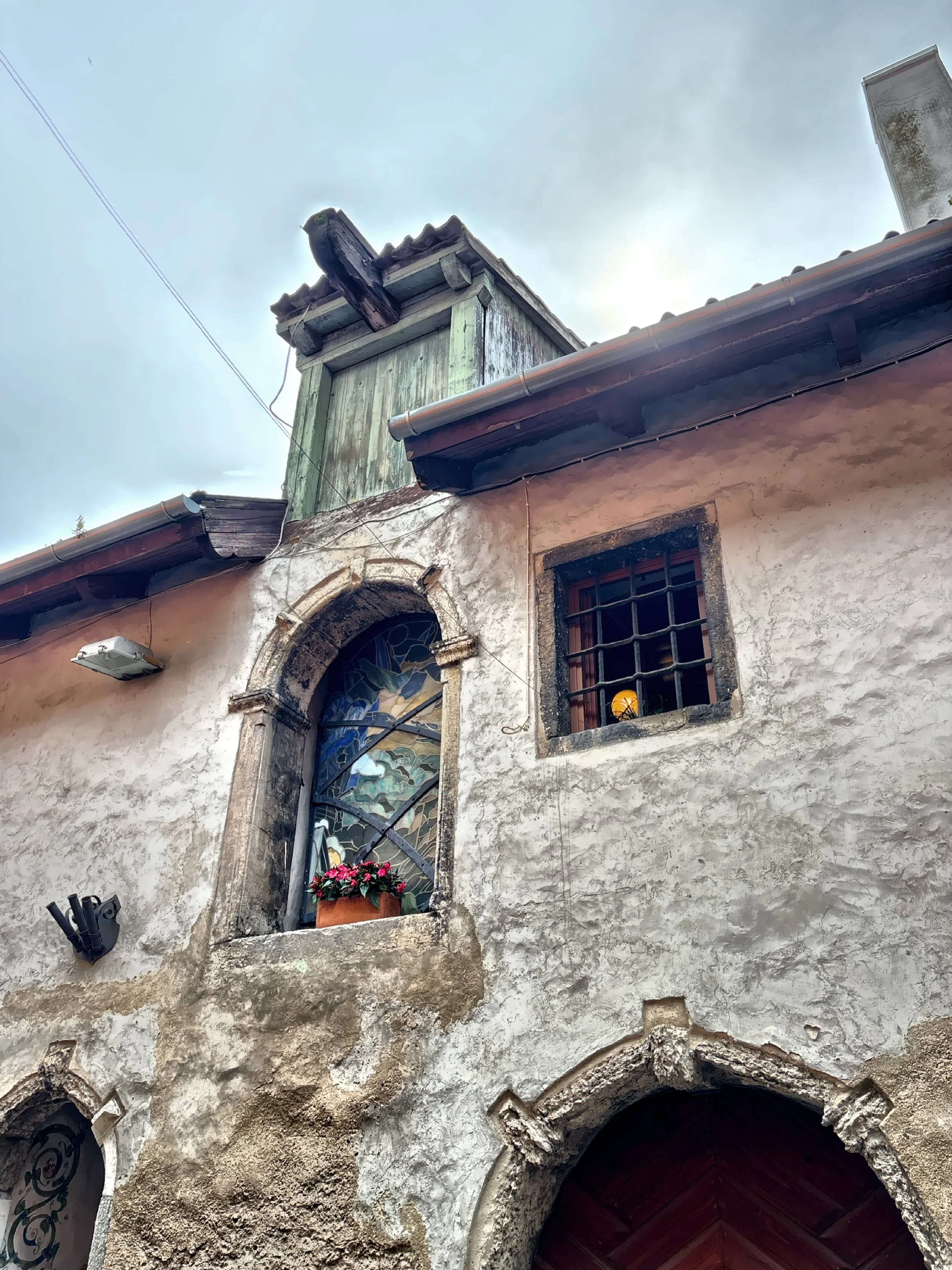
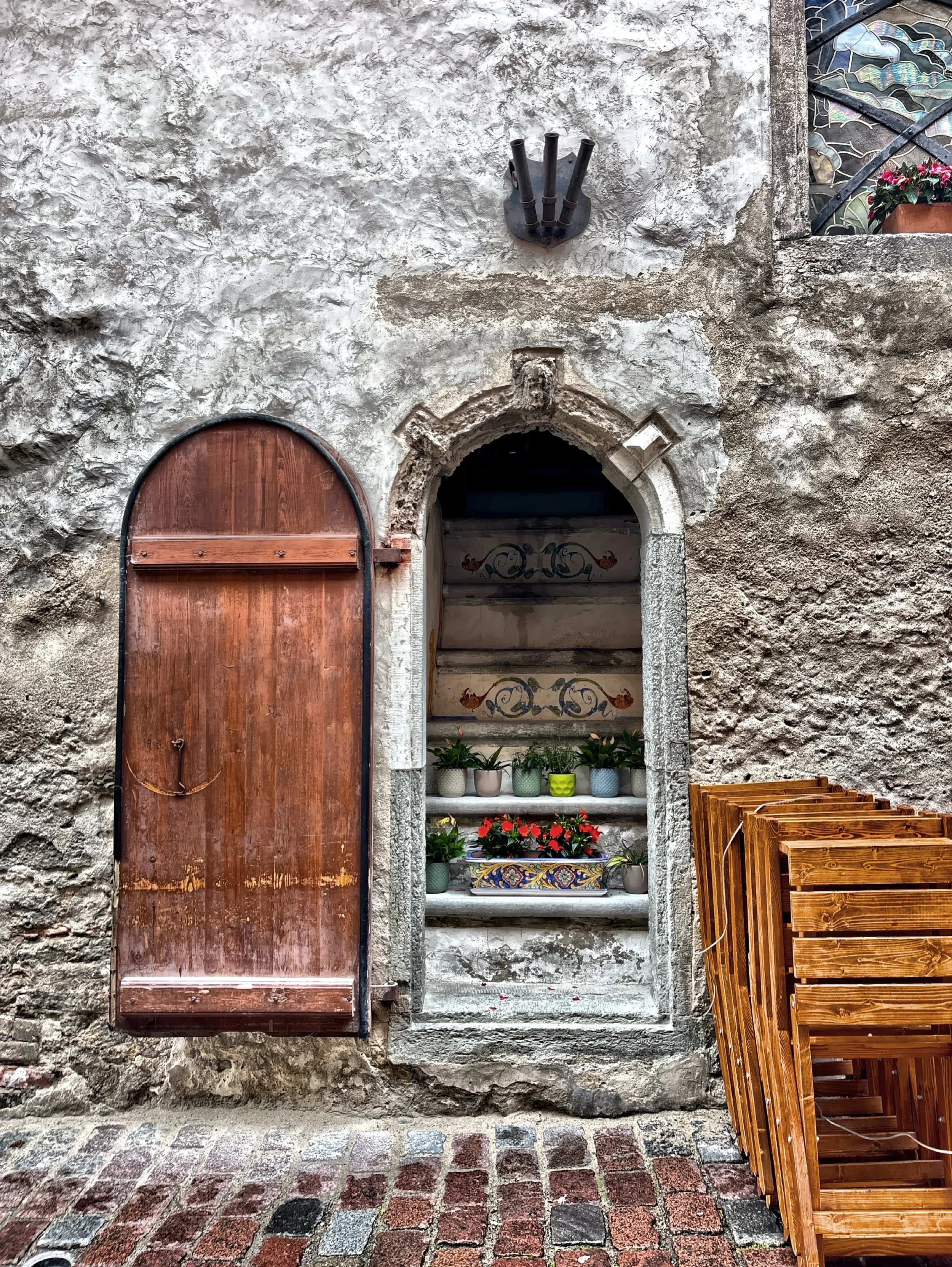
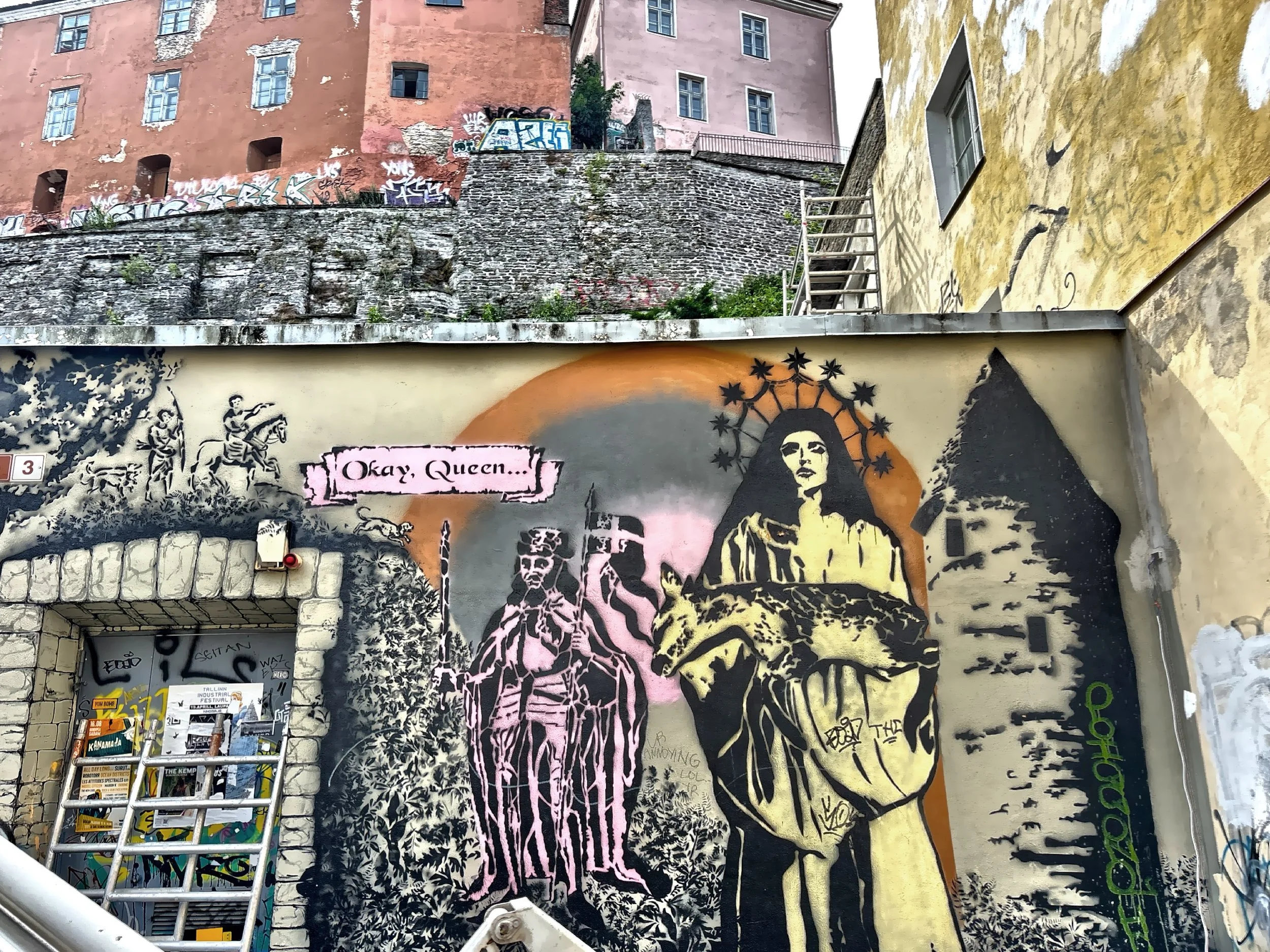
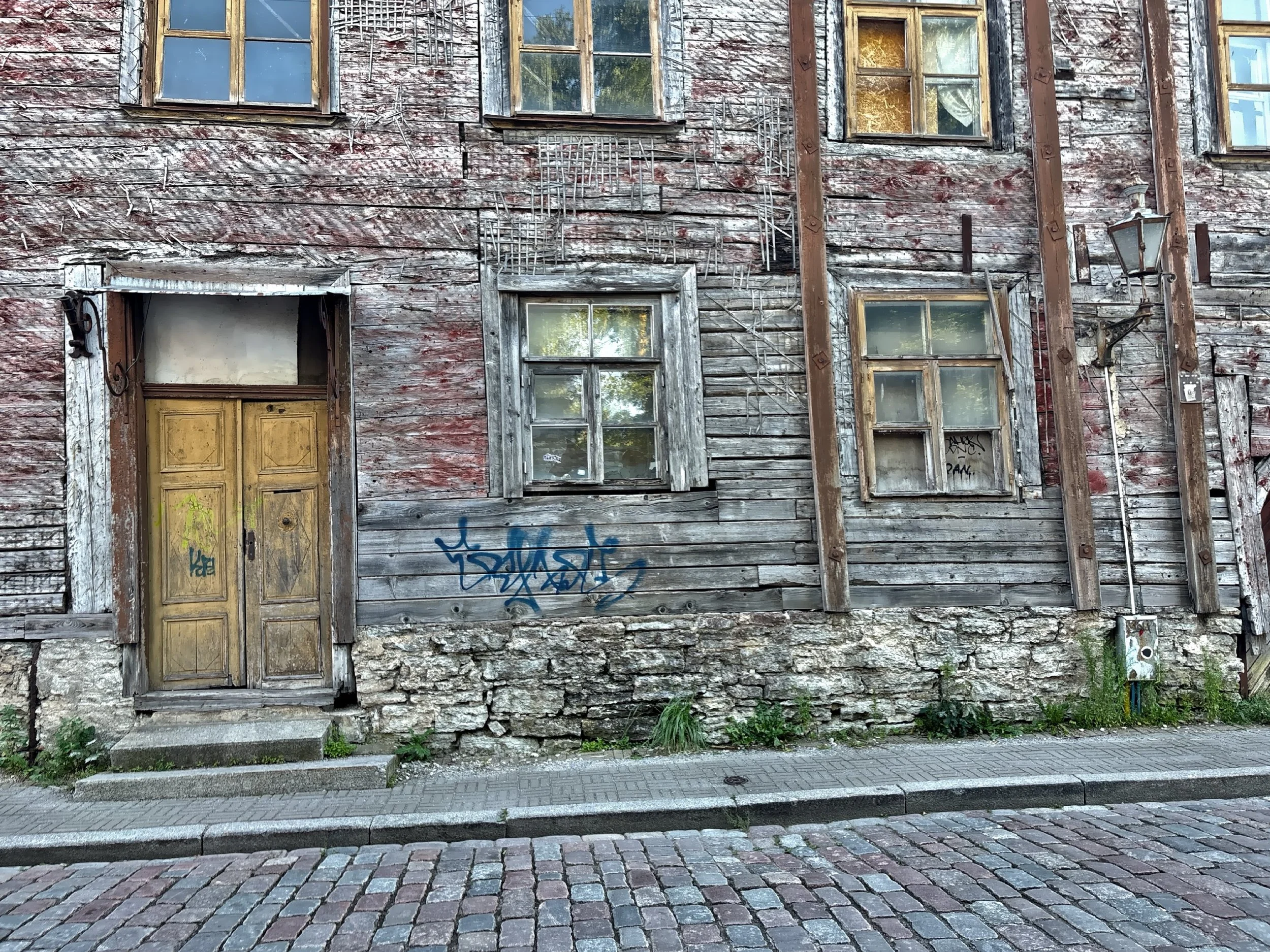
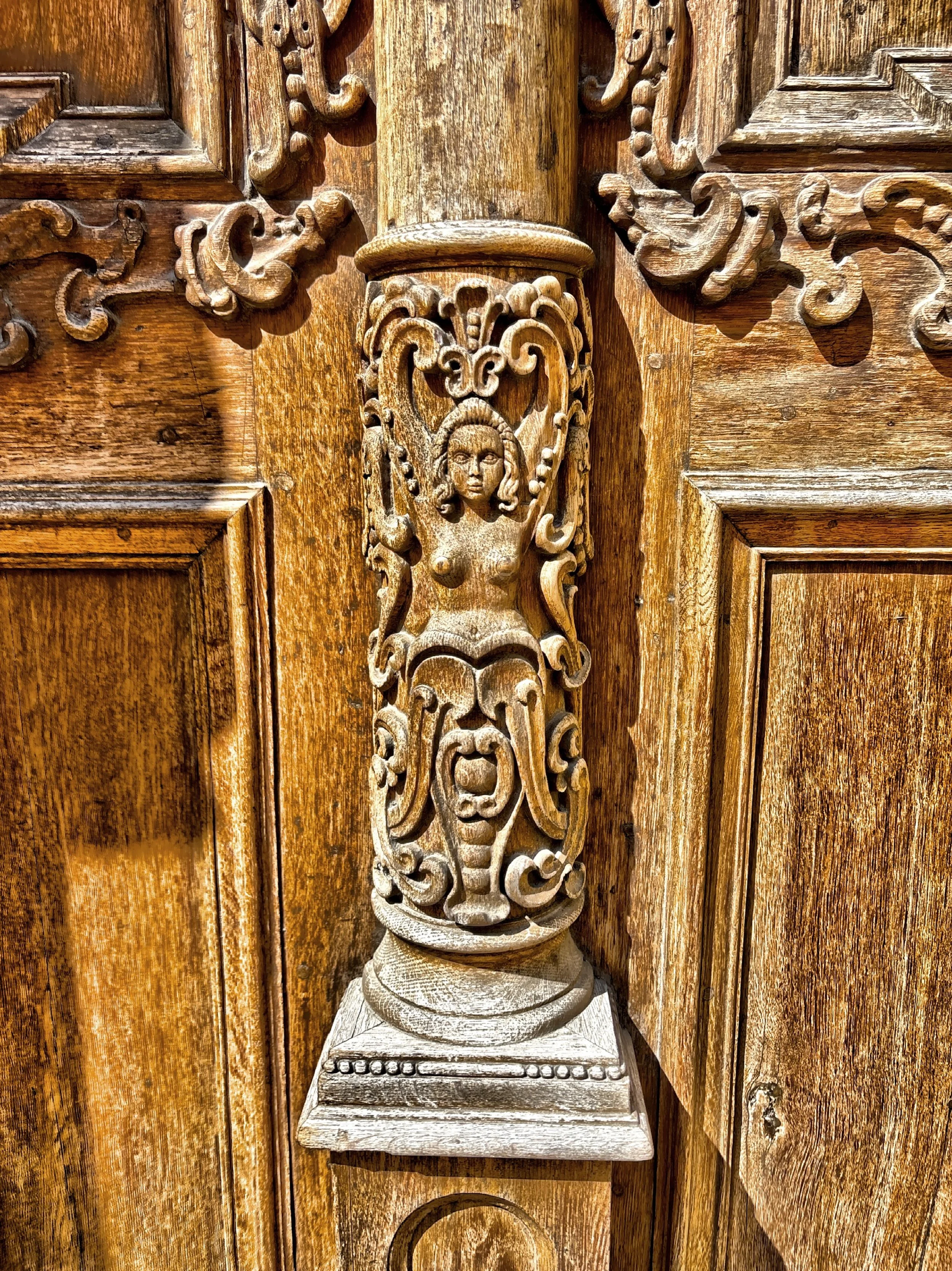
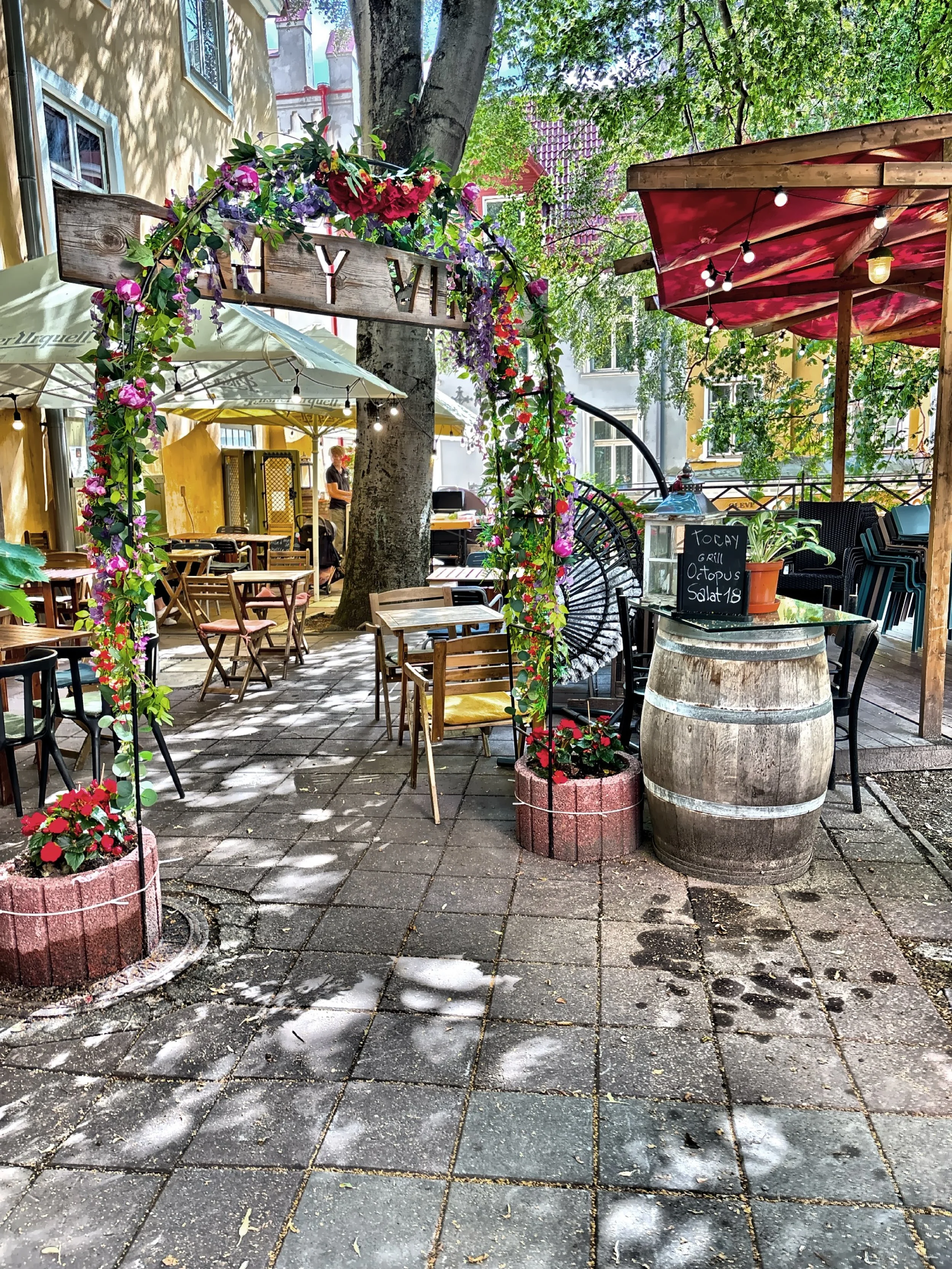
This town feels like every spot has a story to tell.
.
.
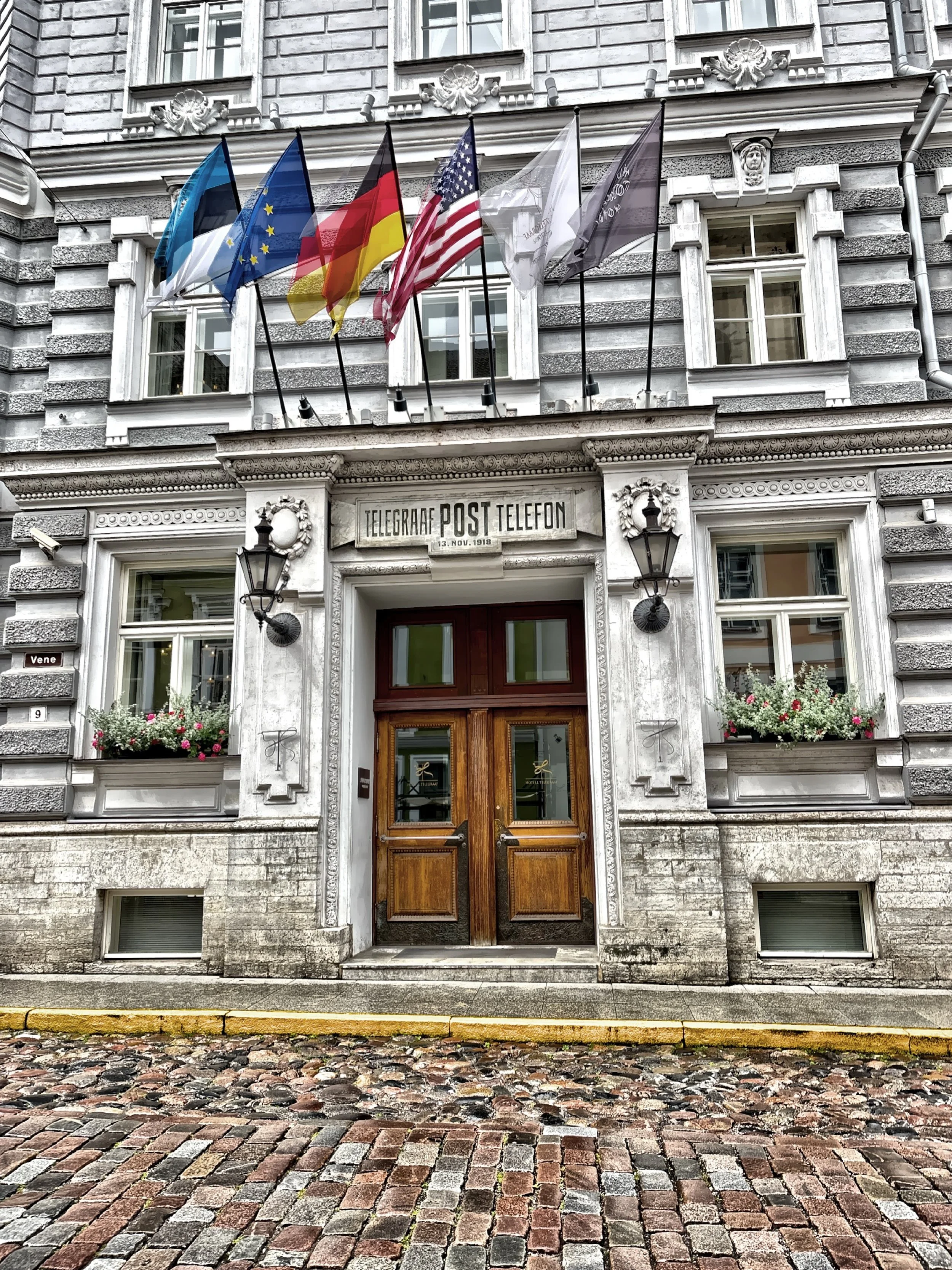
Now known as the Telegraph Hotel, it was constructed in 1878, originally serving as Estonia’s Central Telegraph Office.
.
.
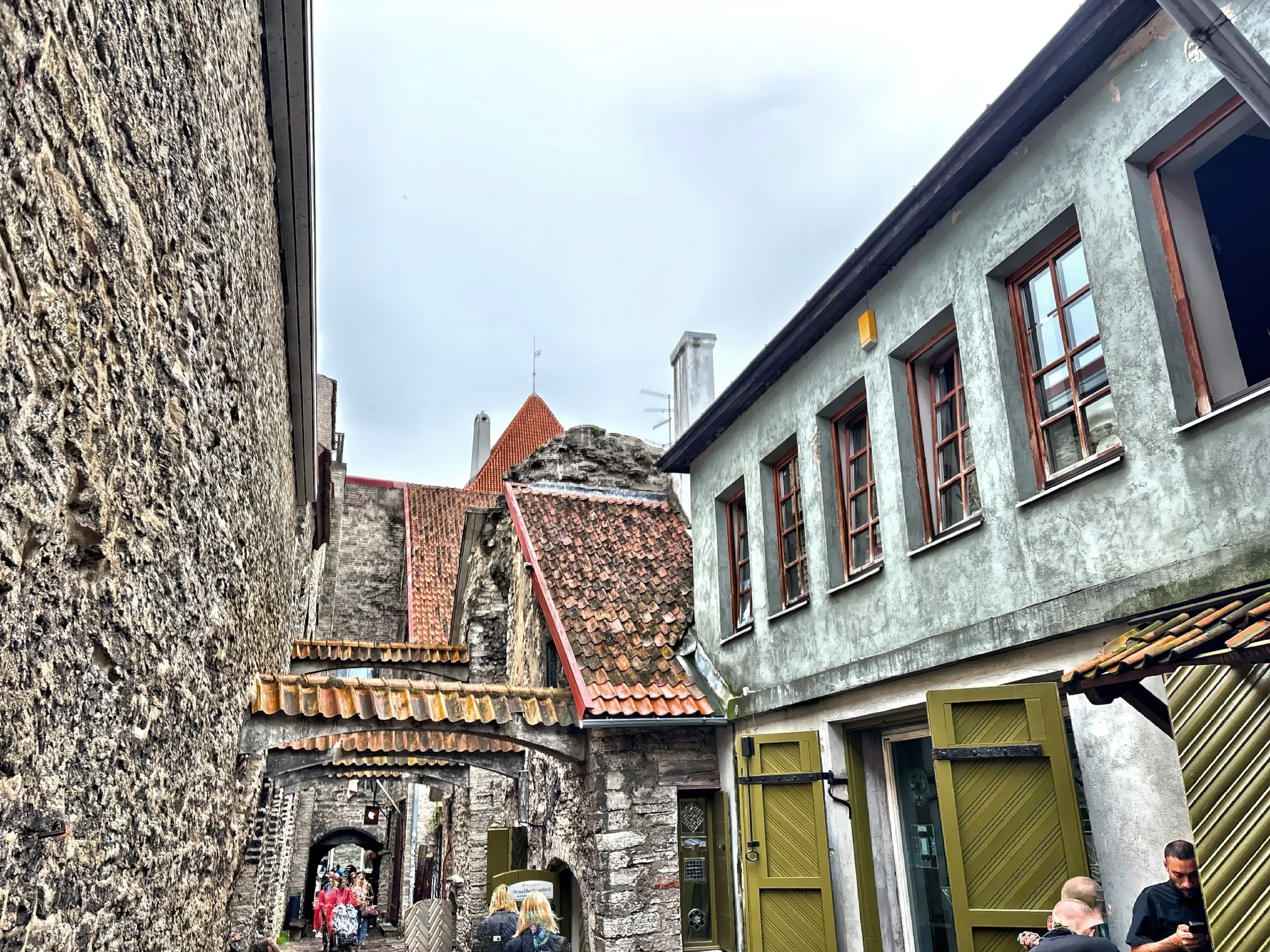
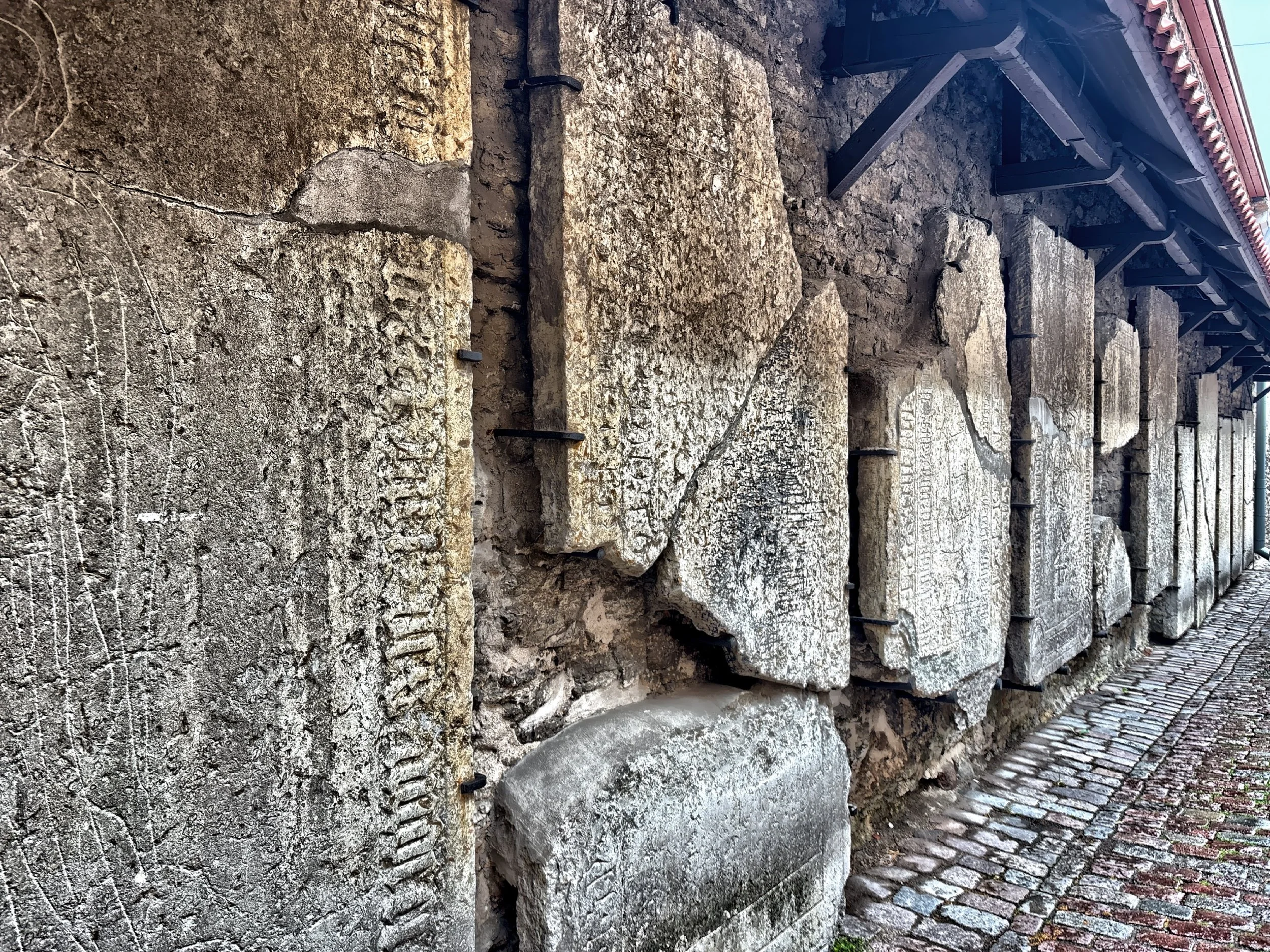
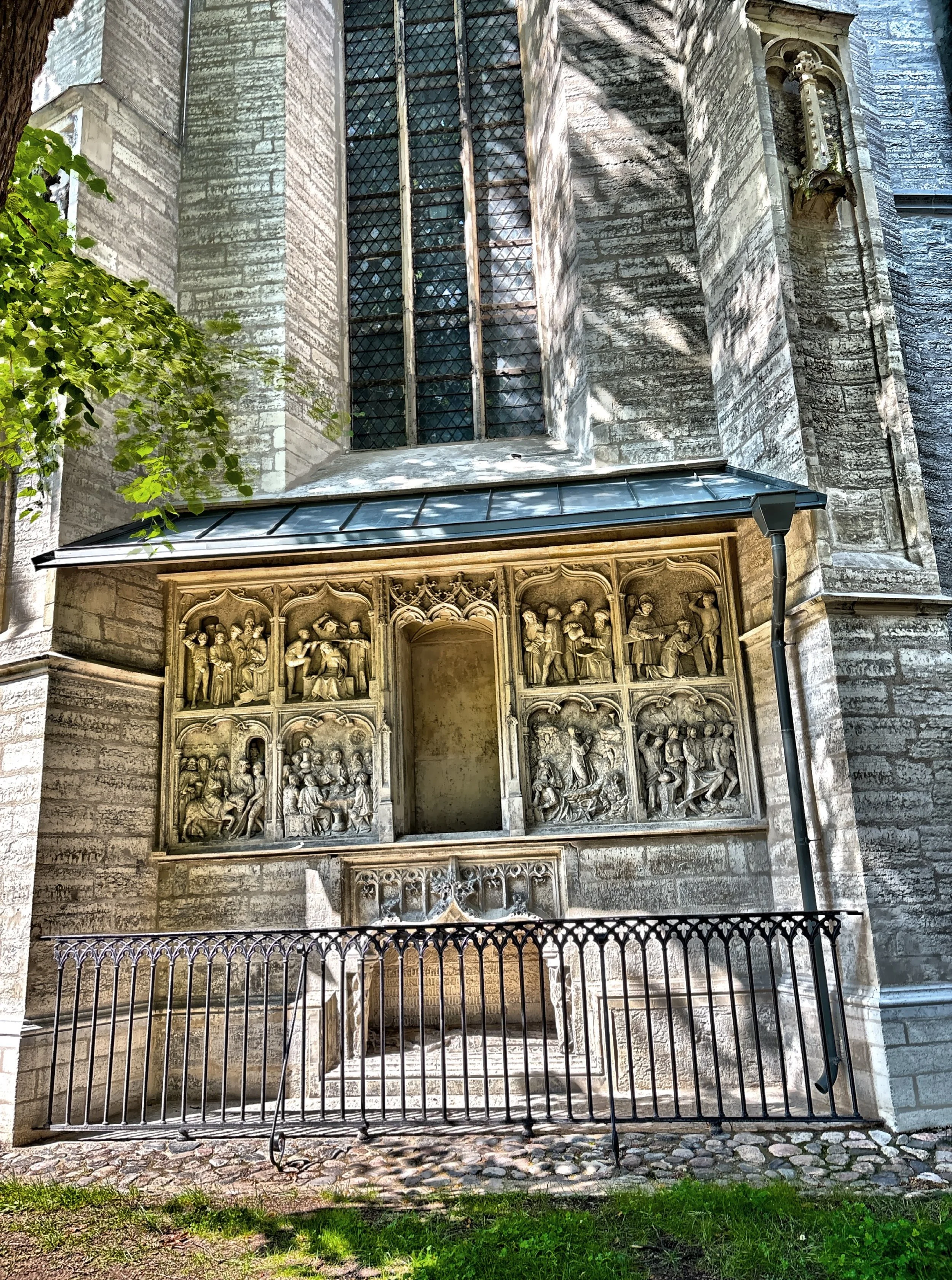
This is St Catherine’s Passage, an alley known for the medieval tombstones embedded in the wall.
.
.
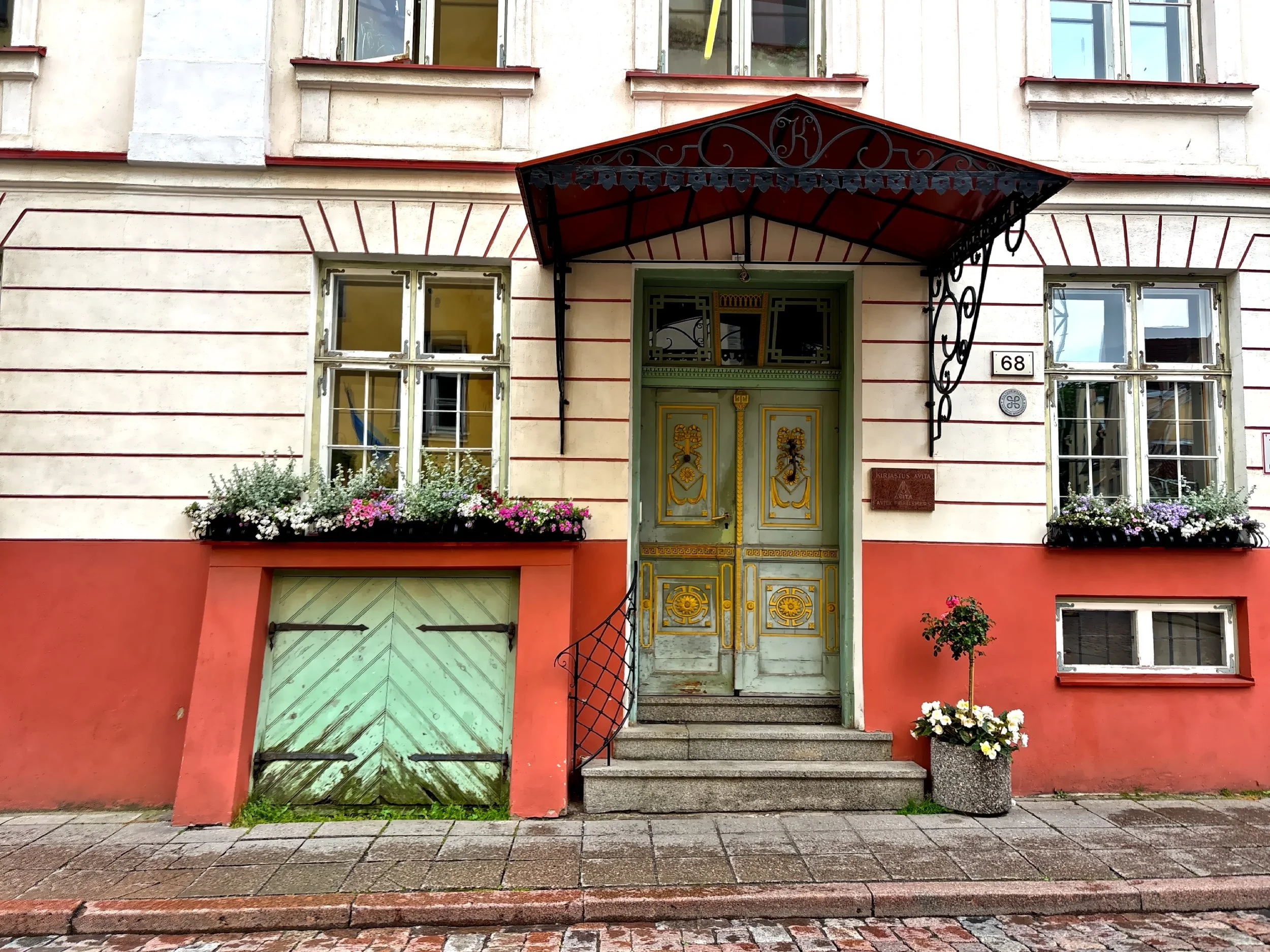
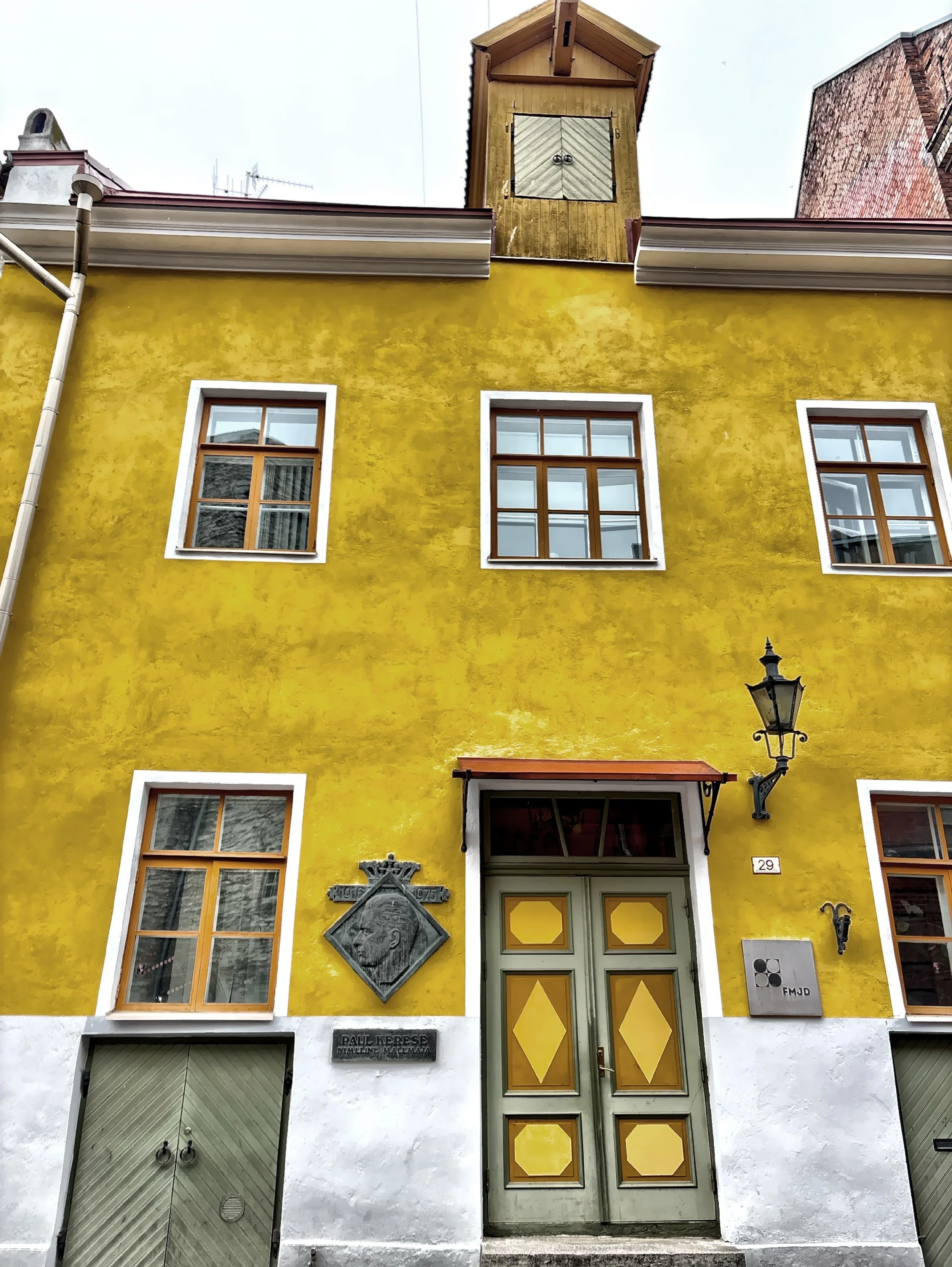
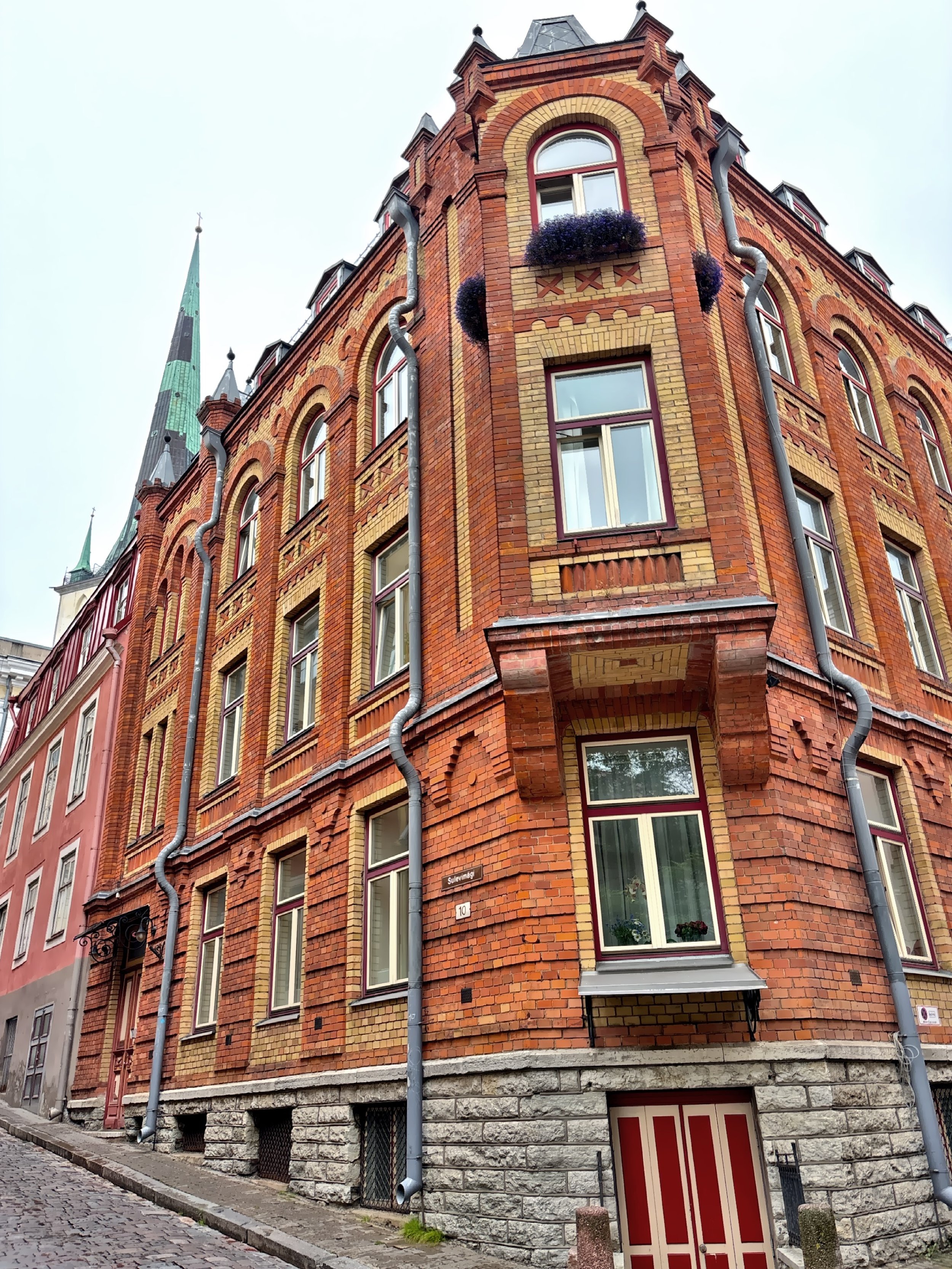
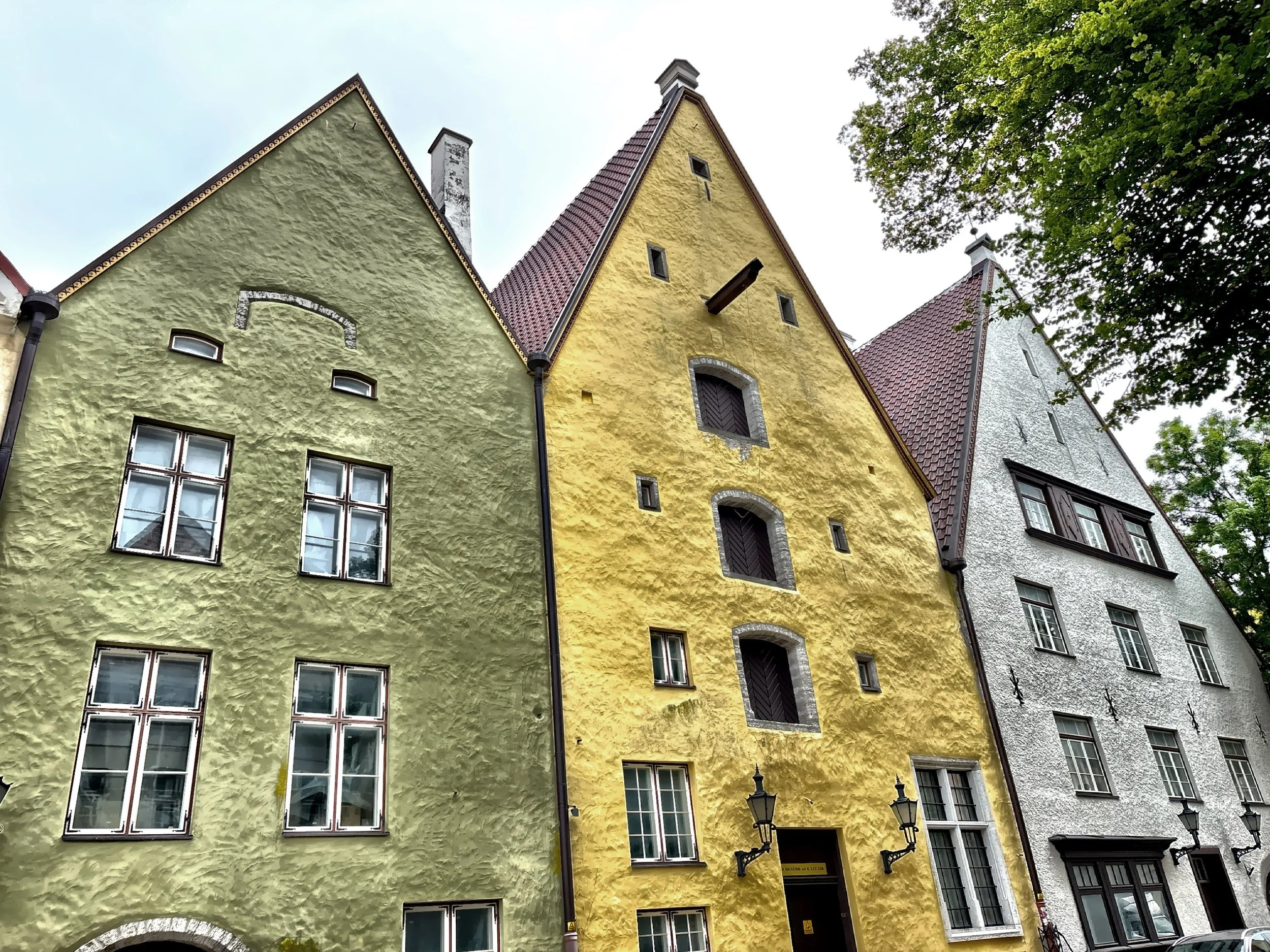
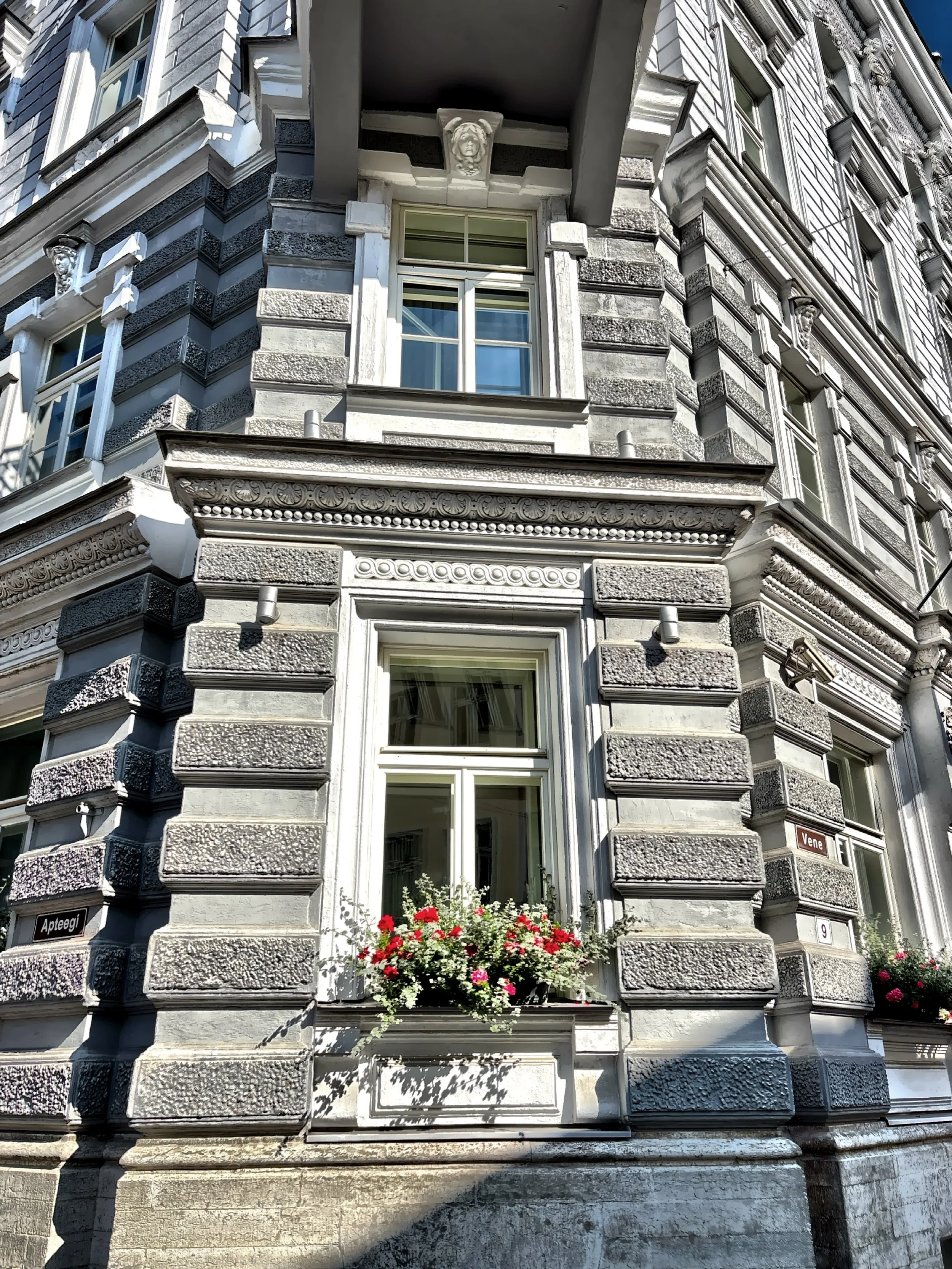
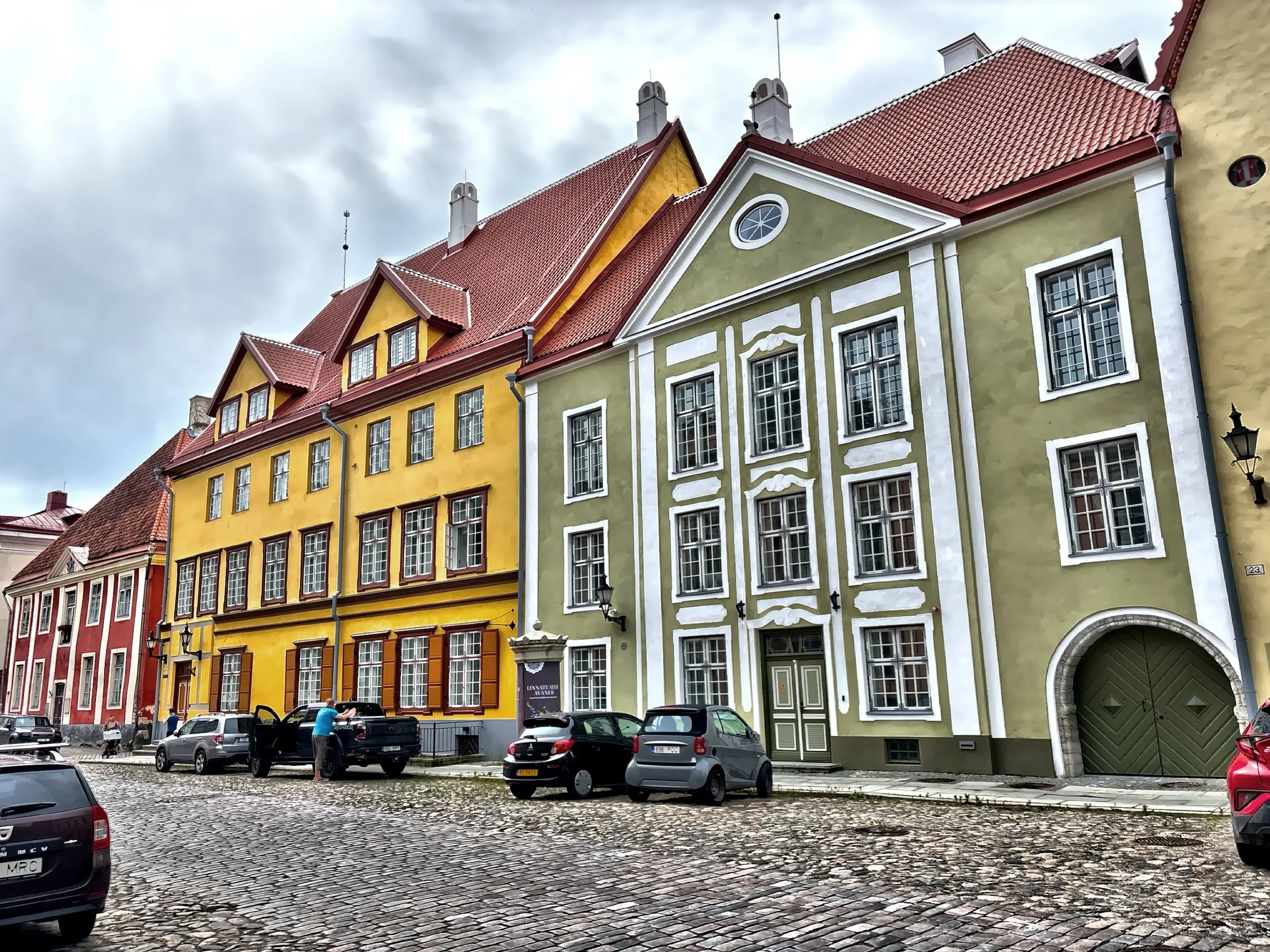
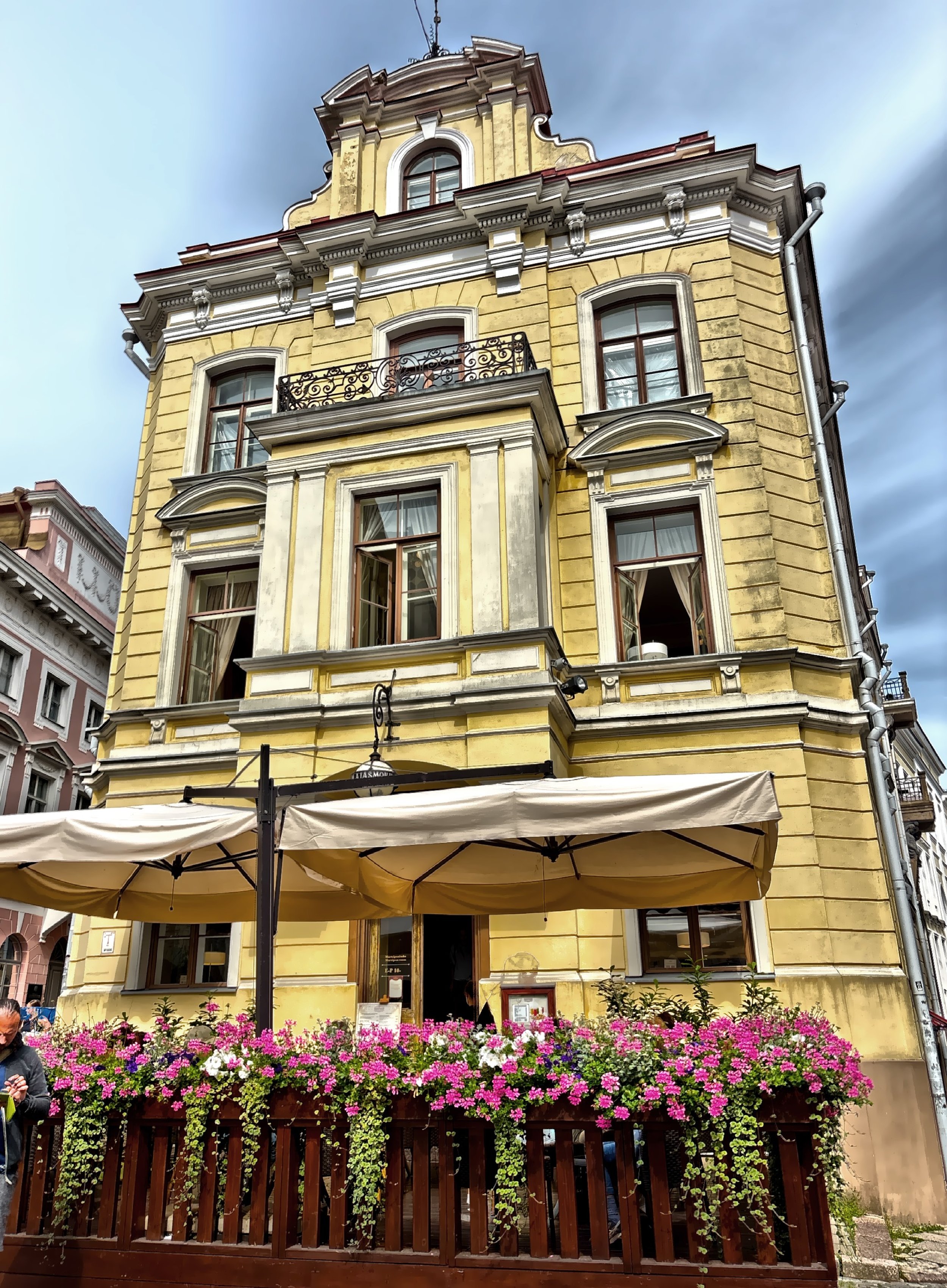
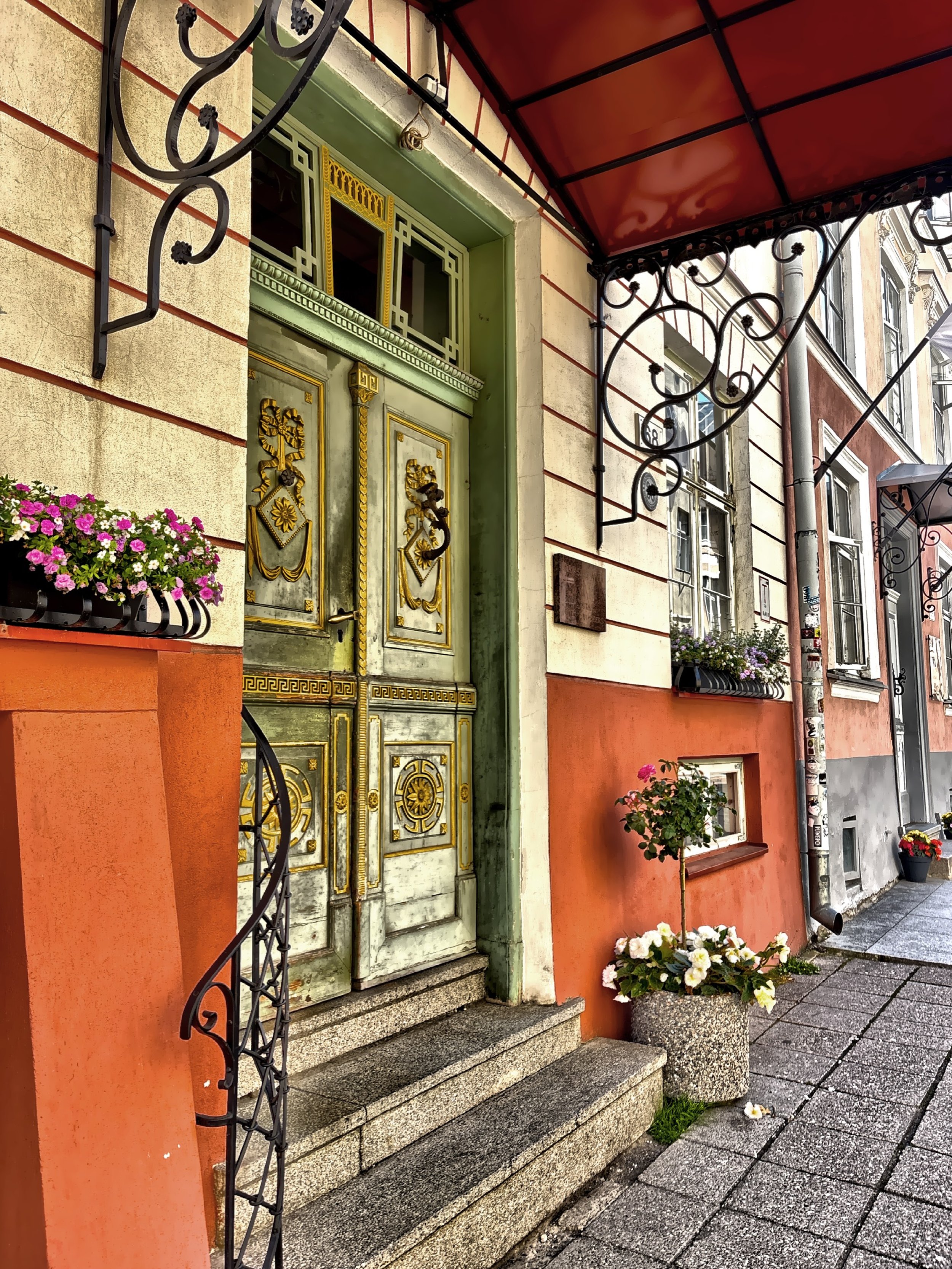
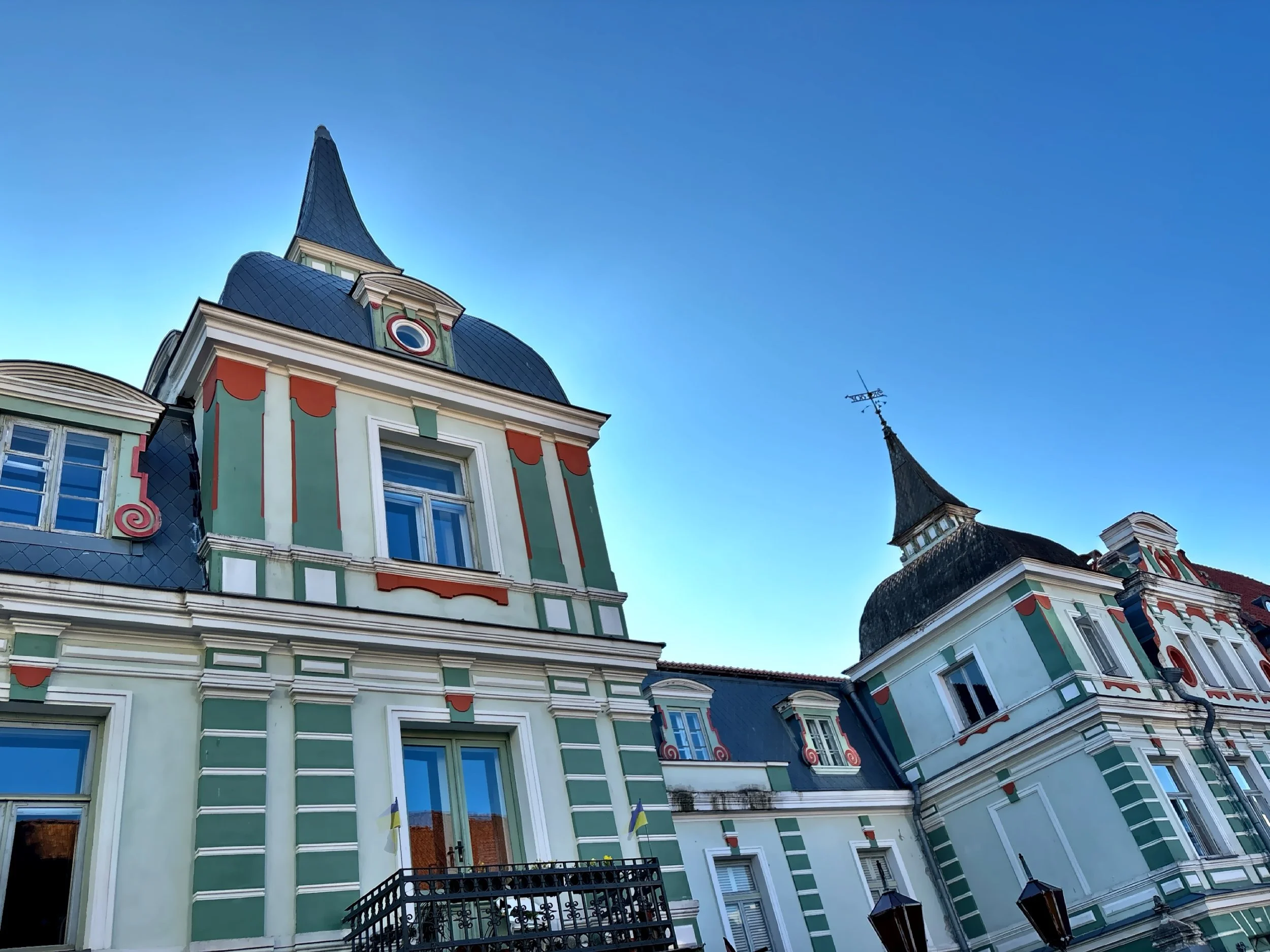
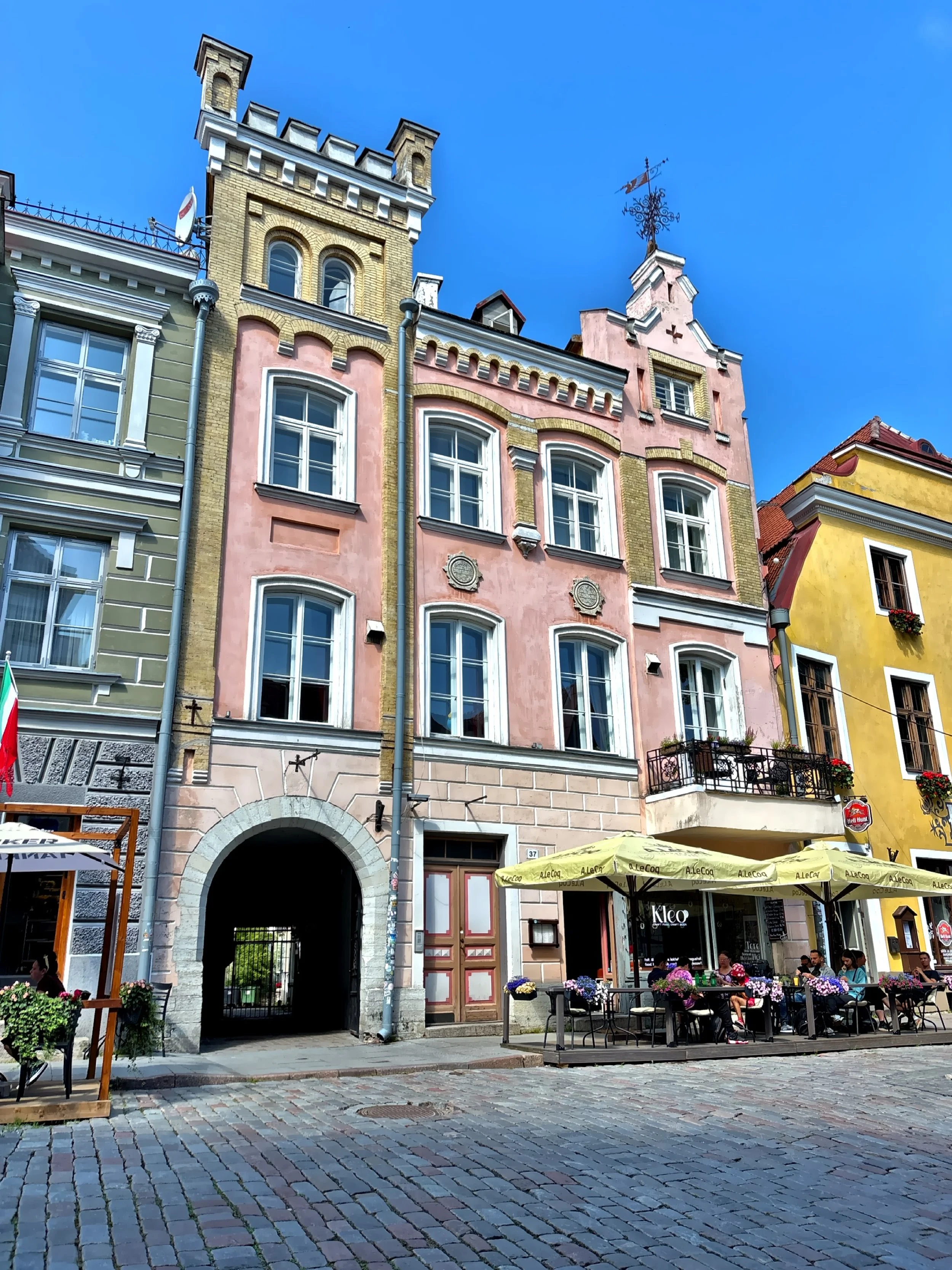
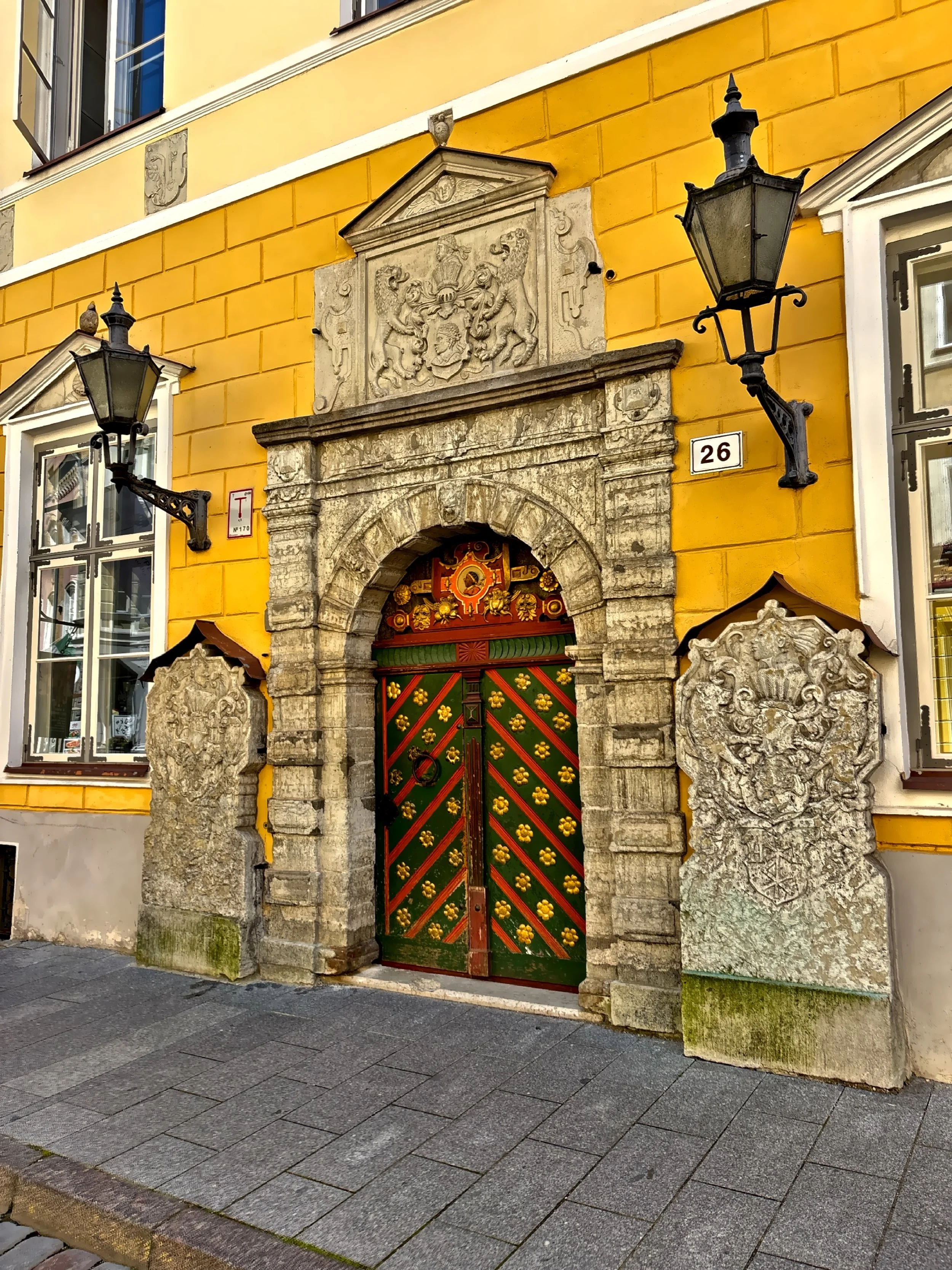
Tallinn’s Old Town is known for its well preserved medieval architecture and vibrant colors.
.
.
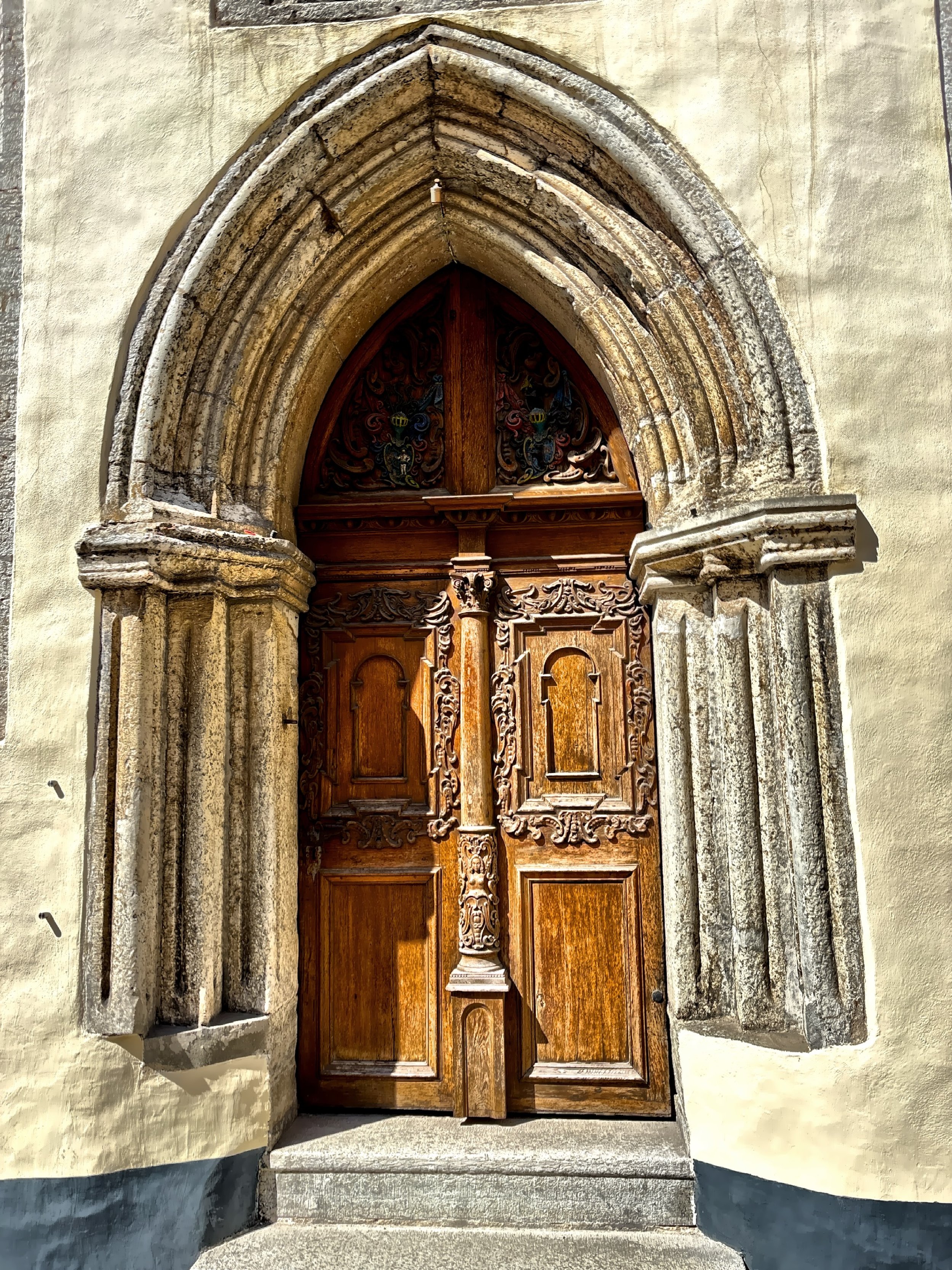
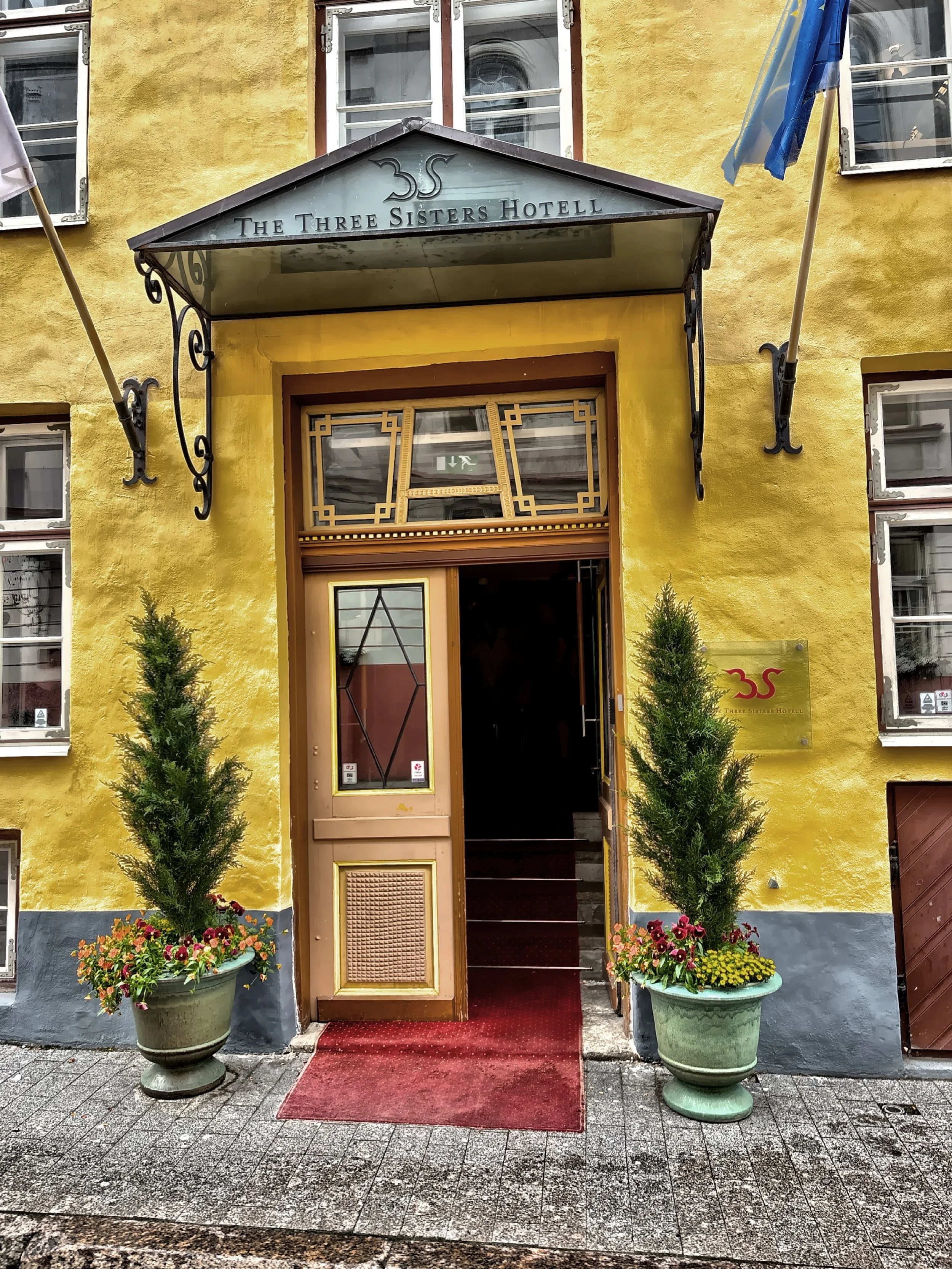
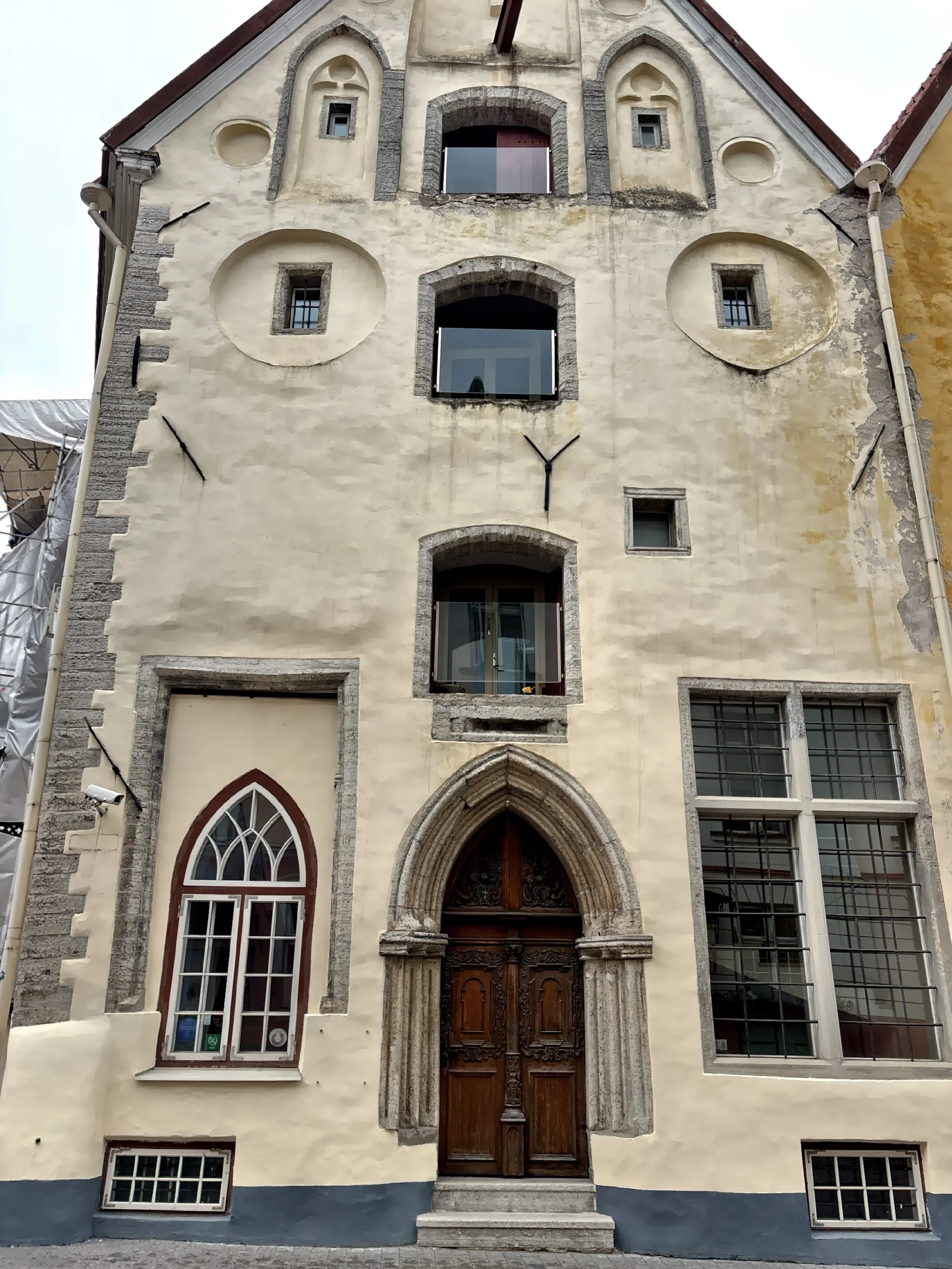
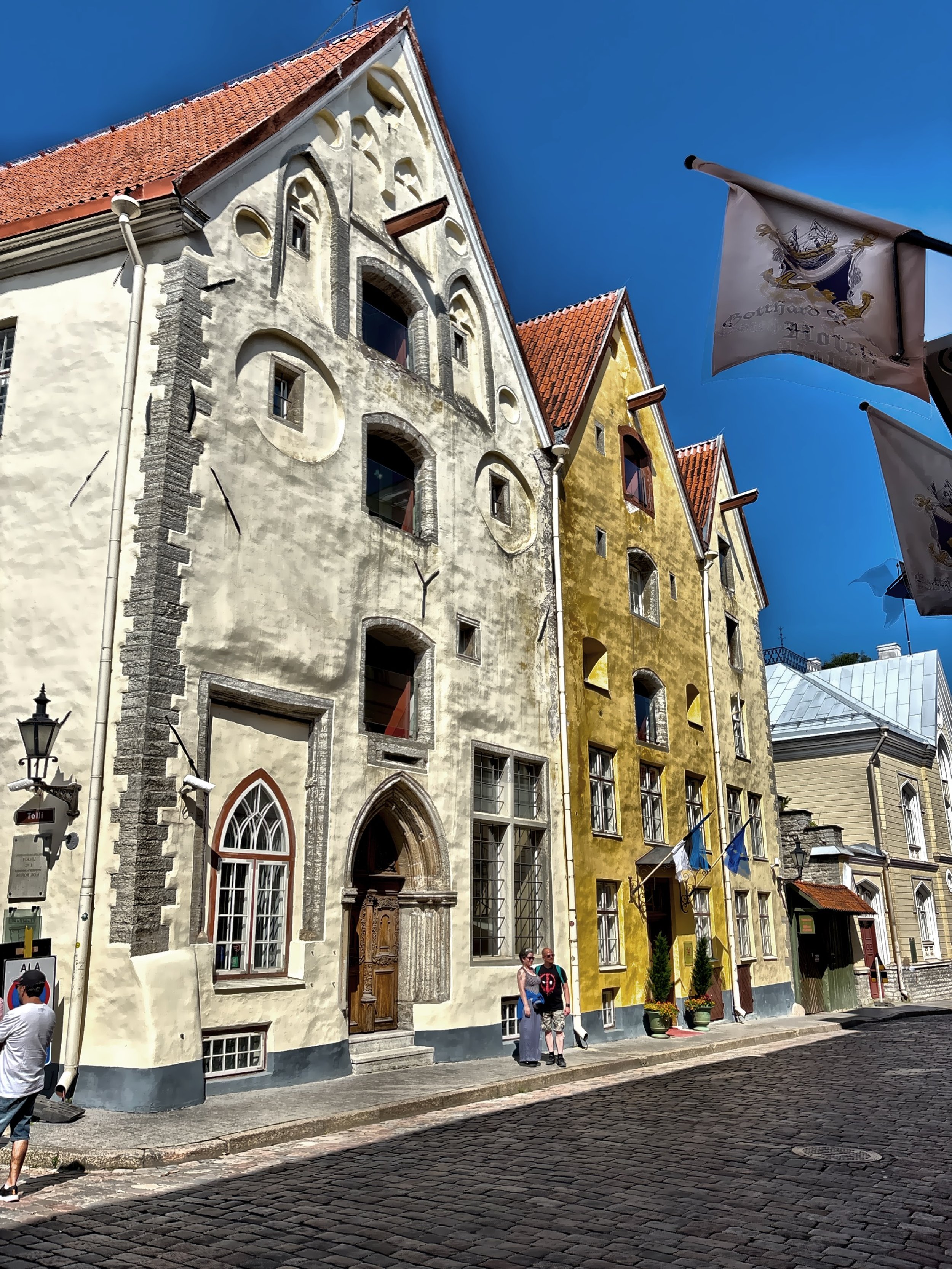
The Three Sisters House is a notable example of medieval merchant houses built around 1362 and have been combined and renovated into a luxury hotel.
.
.
.
Fat Margaret was built in the early 16th century during the reconstruction of the city gate system. Today, it is home to the Estonian Maritime Museum.
.
.
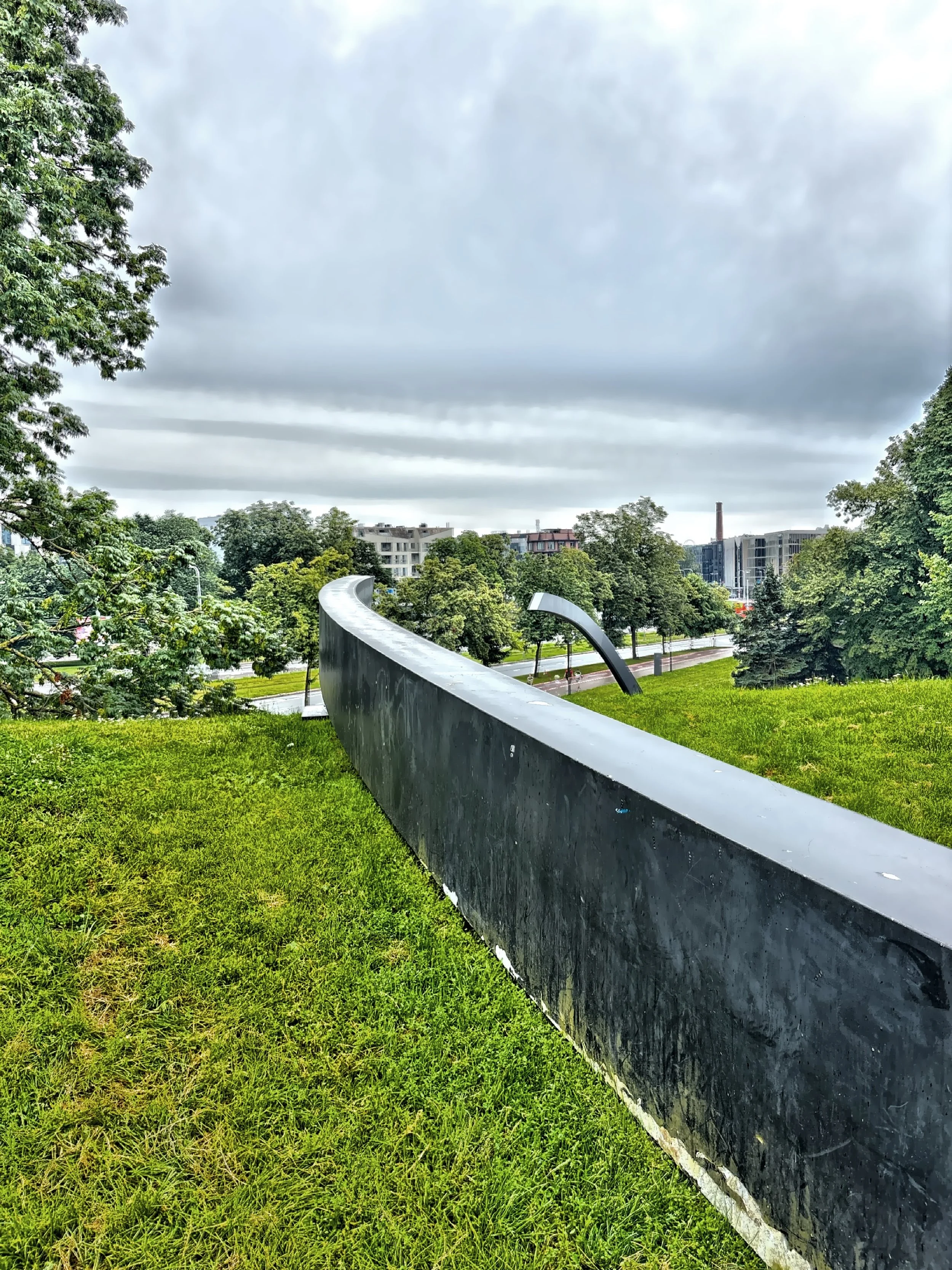
‘The Broken Line’ monument designed by Riho Luis and Jaan Saar to commemorate the 852 lives lost in the sinking of the MS Estonia in 1994.
.
.
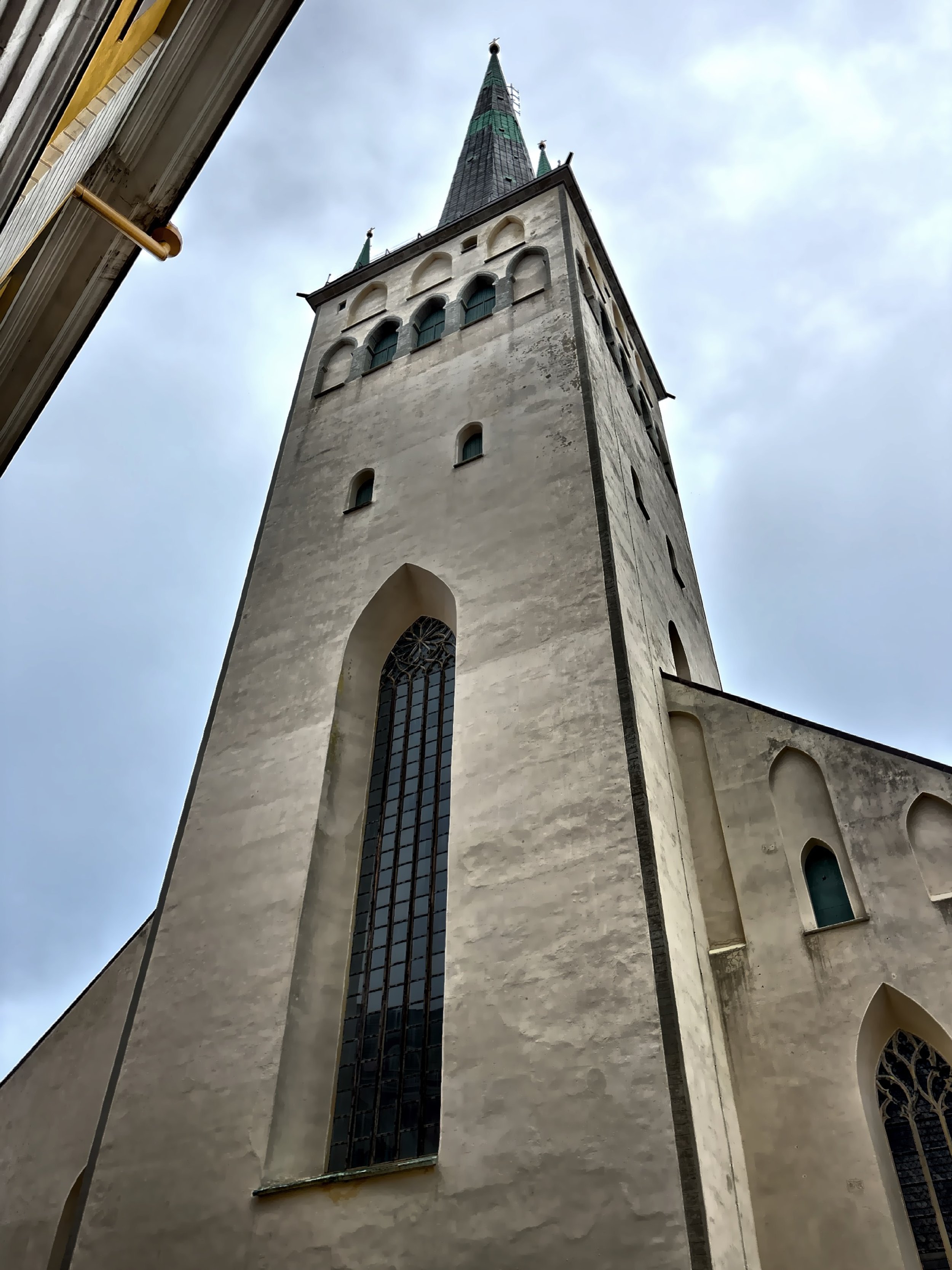
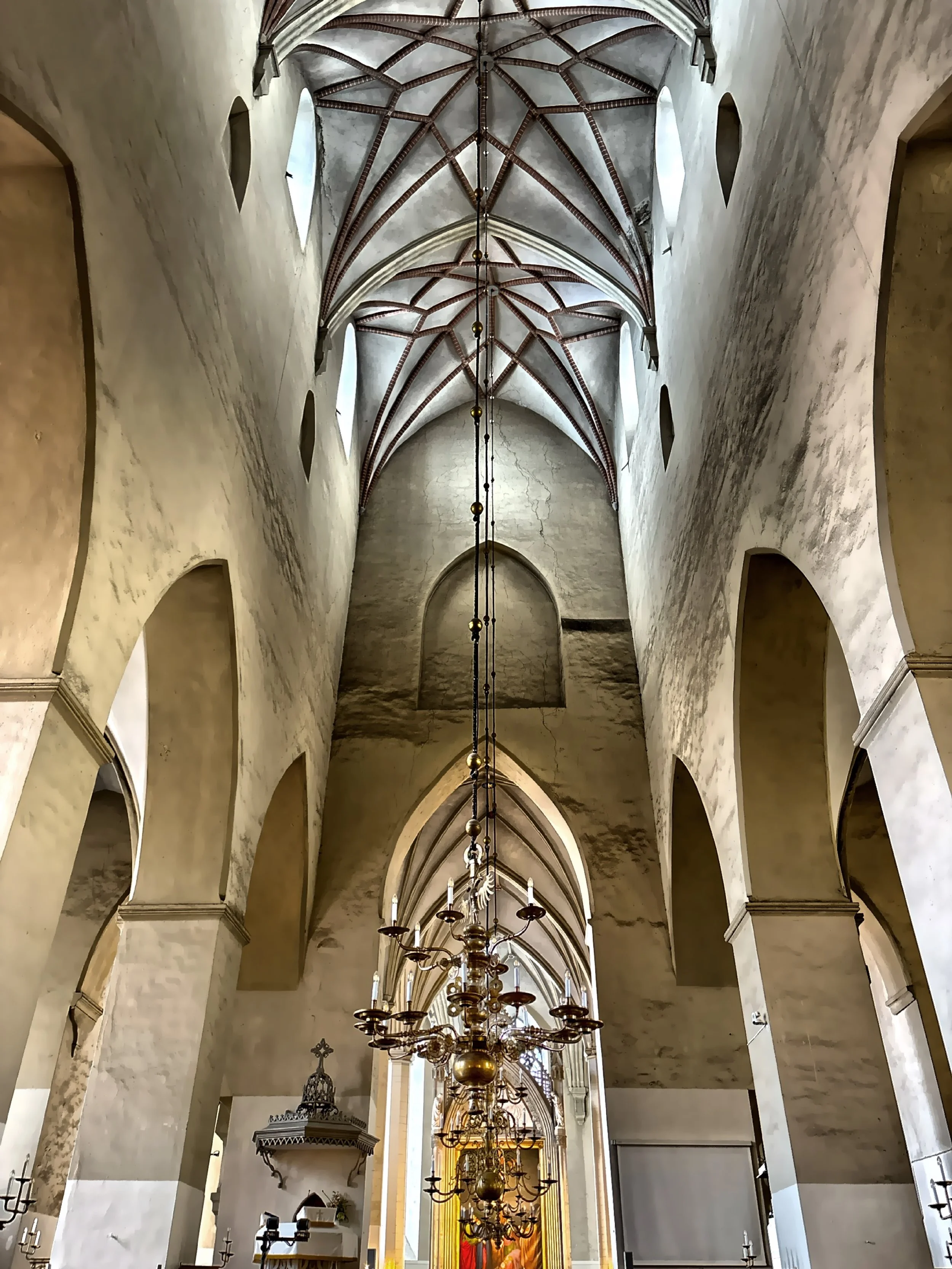
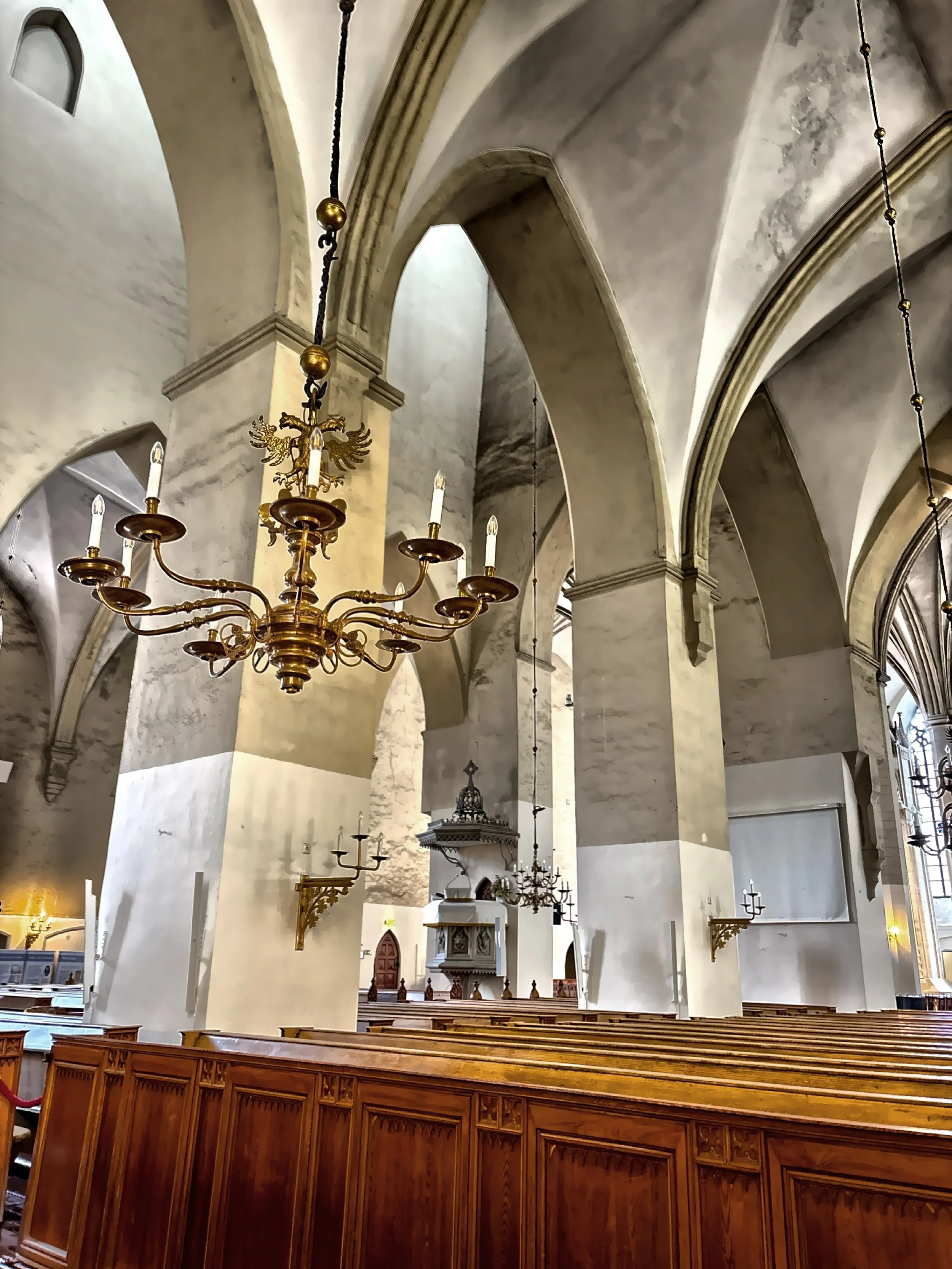
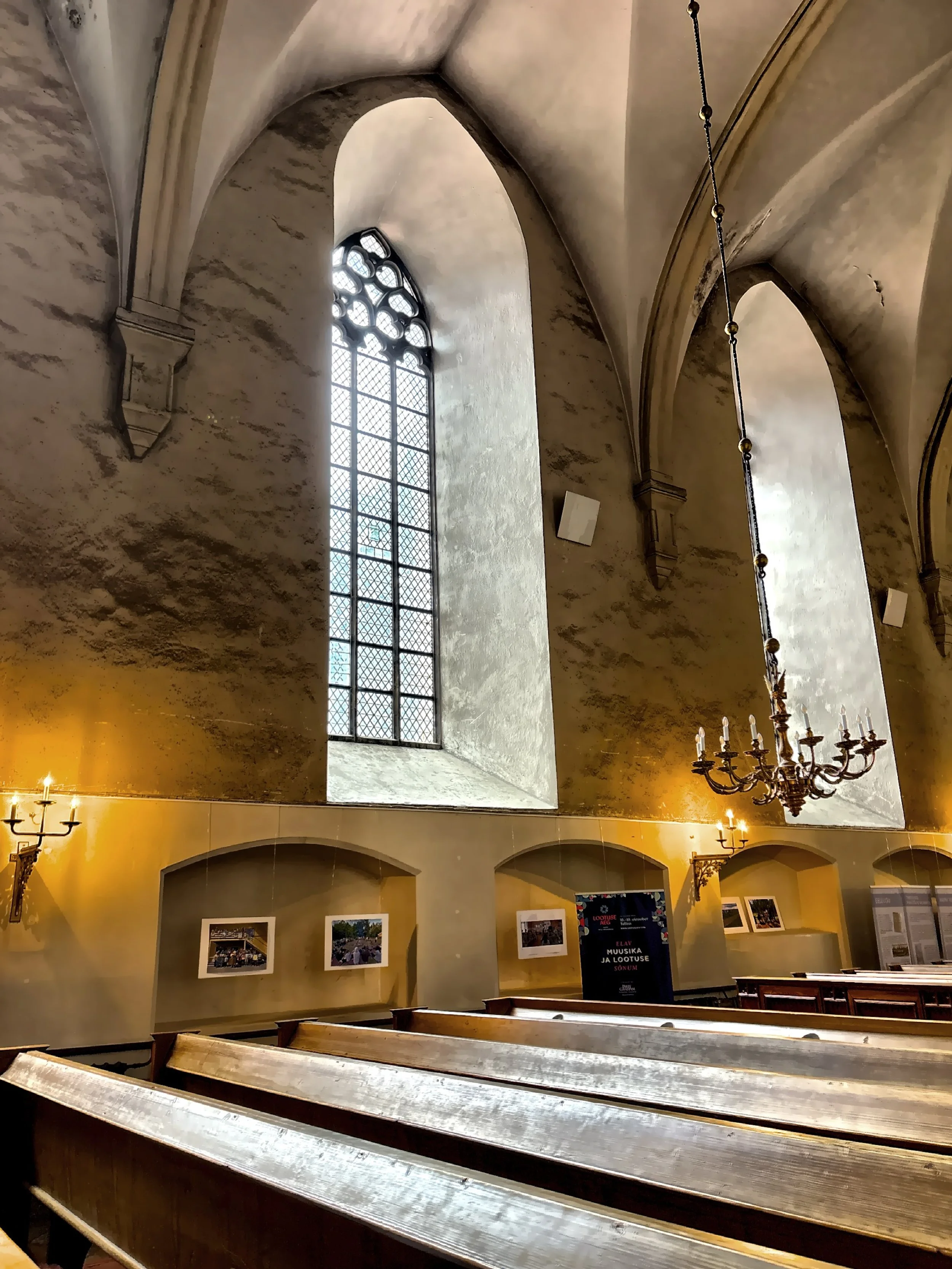
St Olaf’s Church believed to have been built in the 12th century. During the Soviet era (1944-1991), the KGB utilized the church’s spire as a radio tower and surveillance point.
Inside St Olaf’s Church
.
.
.
.
Traditional gabled houses on Lai Street
.
.
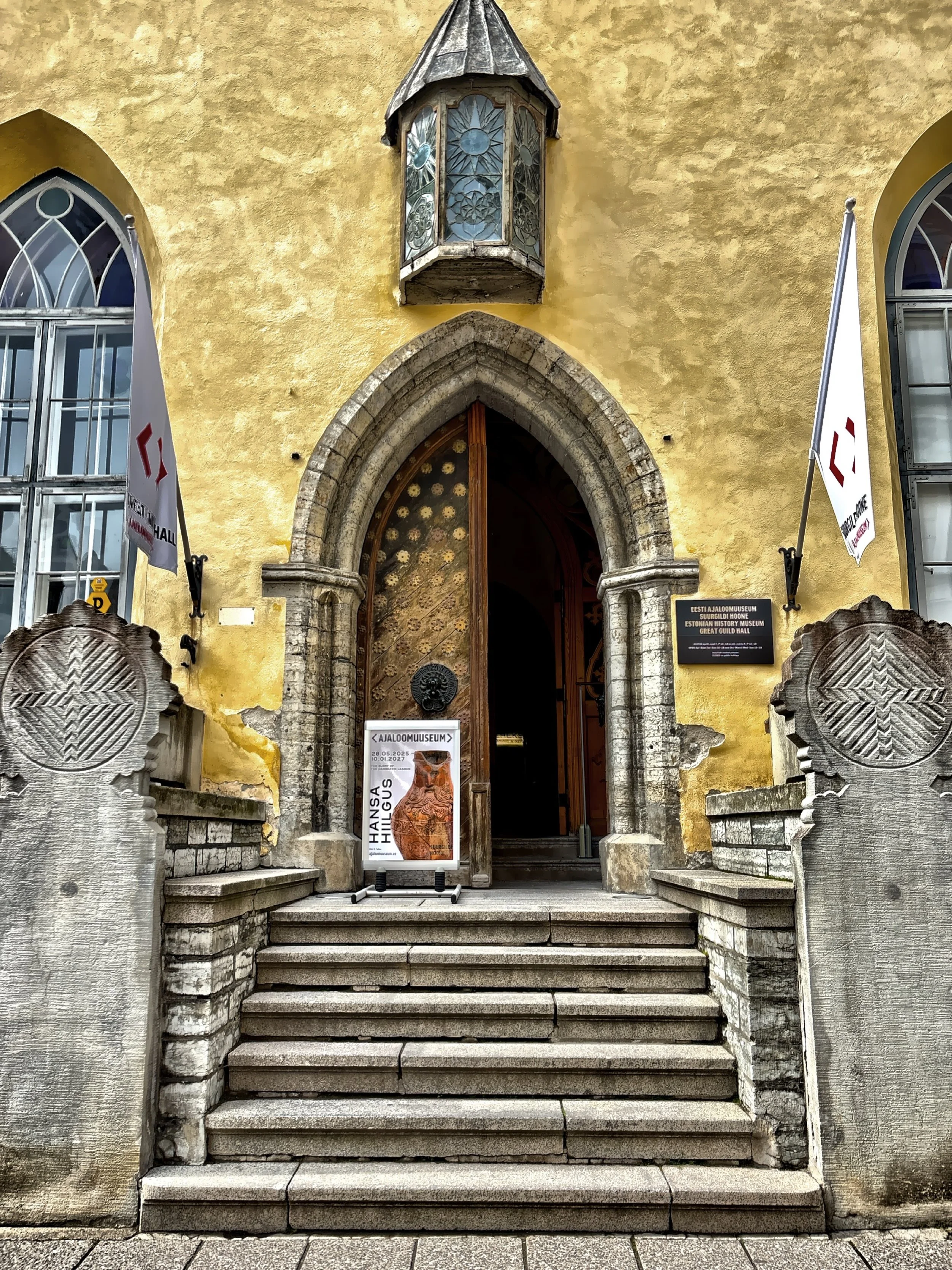
The entrance to the Great Guild Hall, completed in 1410, and now houses the Estonian History Museum.
.
Cafe Maiasmokk, the oldest cafe in Tallinn and possibly all of Estonia, has been operating since 1864.
.
.
St Mary’s Cathedral was built in 1233
Climb up to Toompea Hill for sweeping views
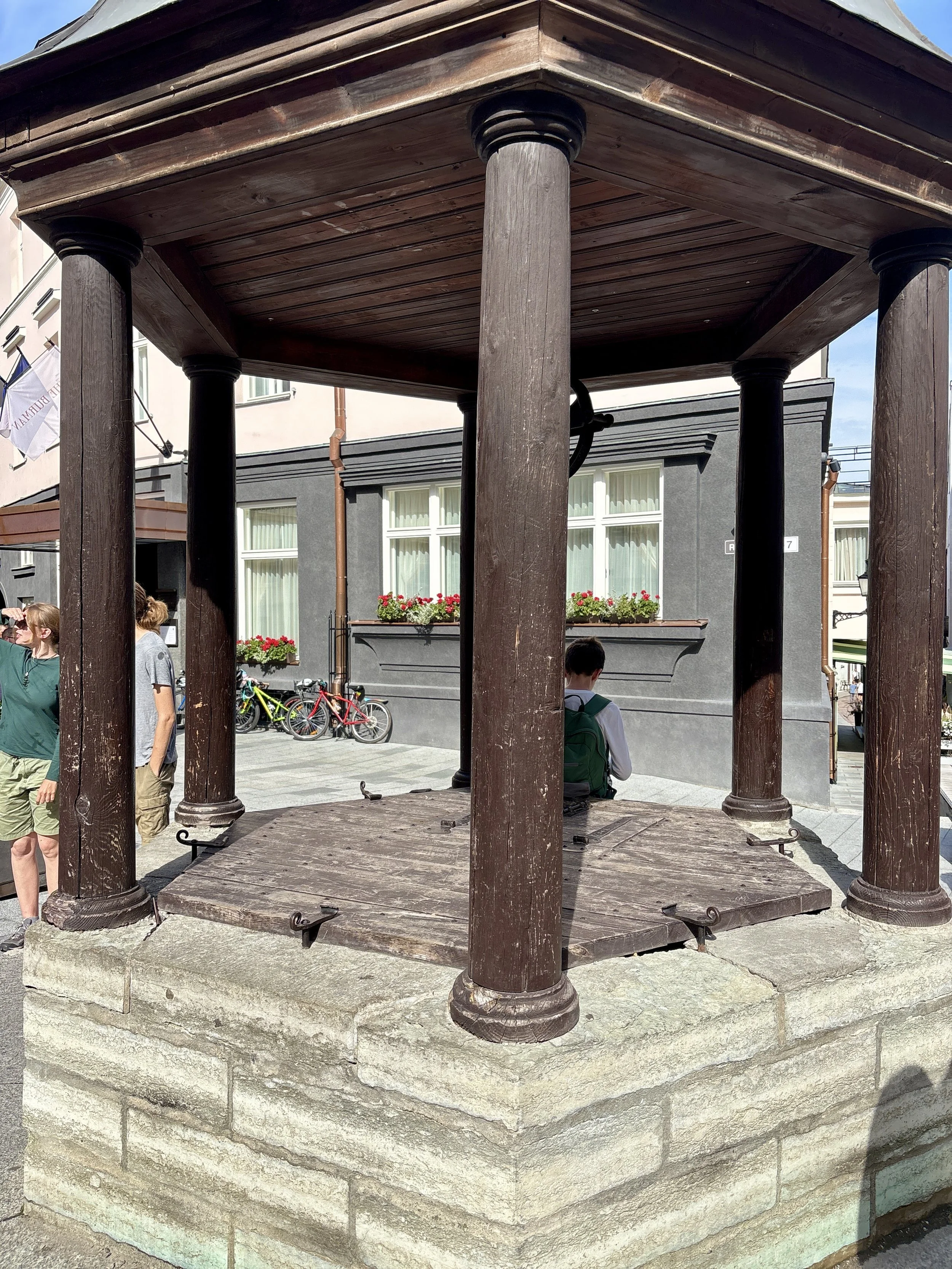
During medieval times, Cat’s Well served as a vital water source for the locals. According to legend, a water fairy was believed to live in the well and to appease it and ensure the continued flow of clean water, offerings were made. Stray cats and other animal carcasses were routinely thrown into the well as sacrifices.
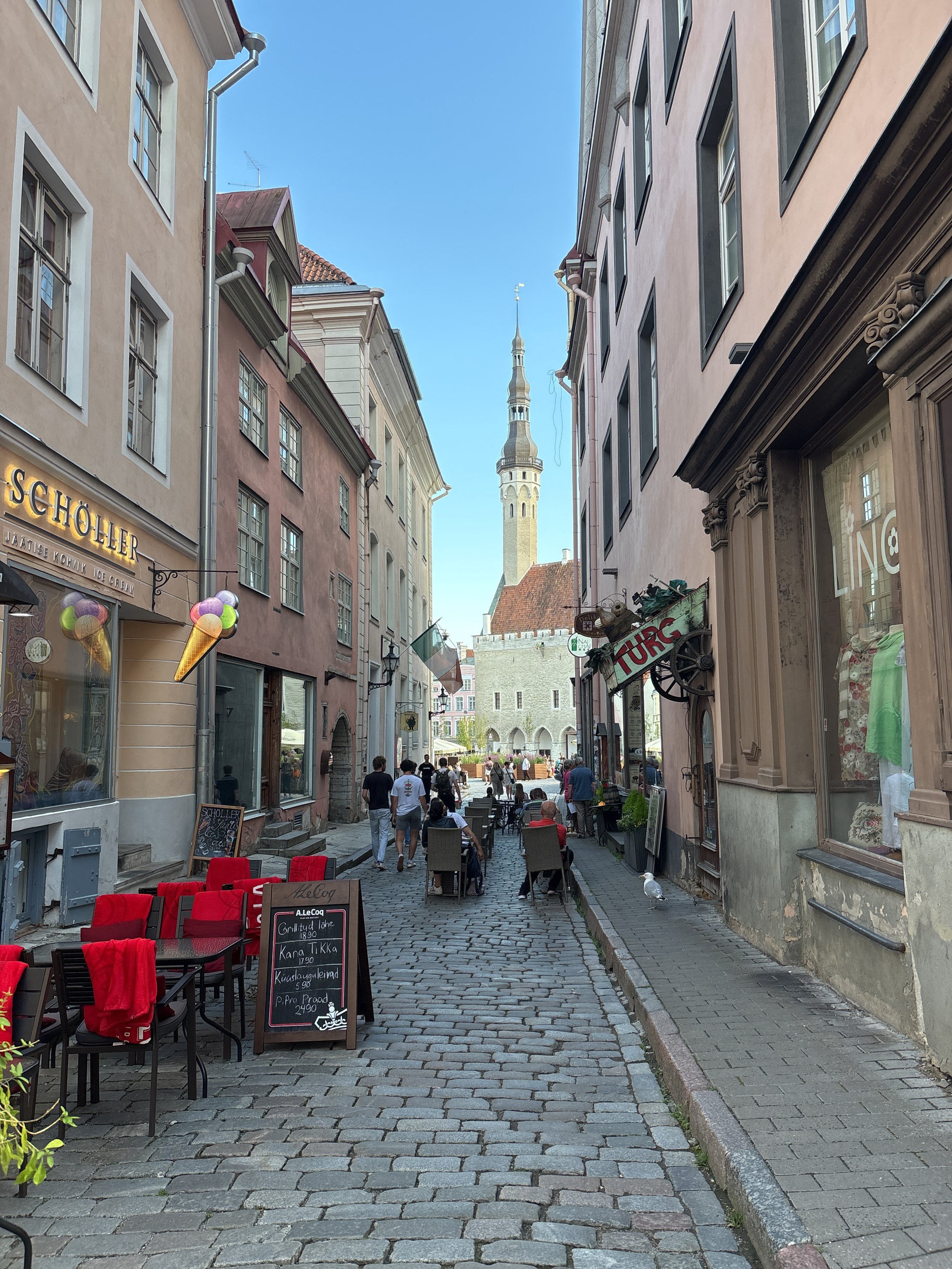
Looking down the street to Town Square, the heart of Old Tallinn.
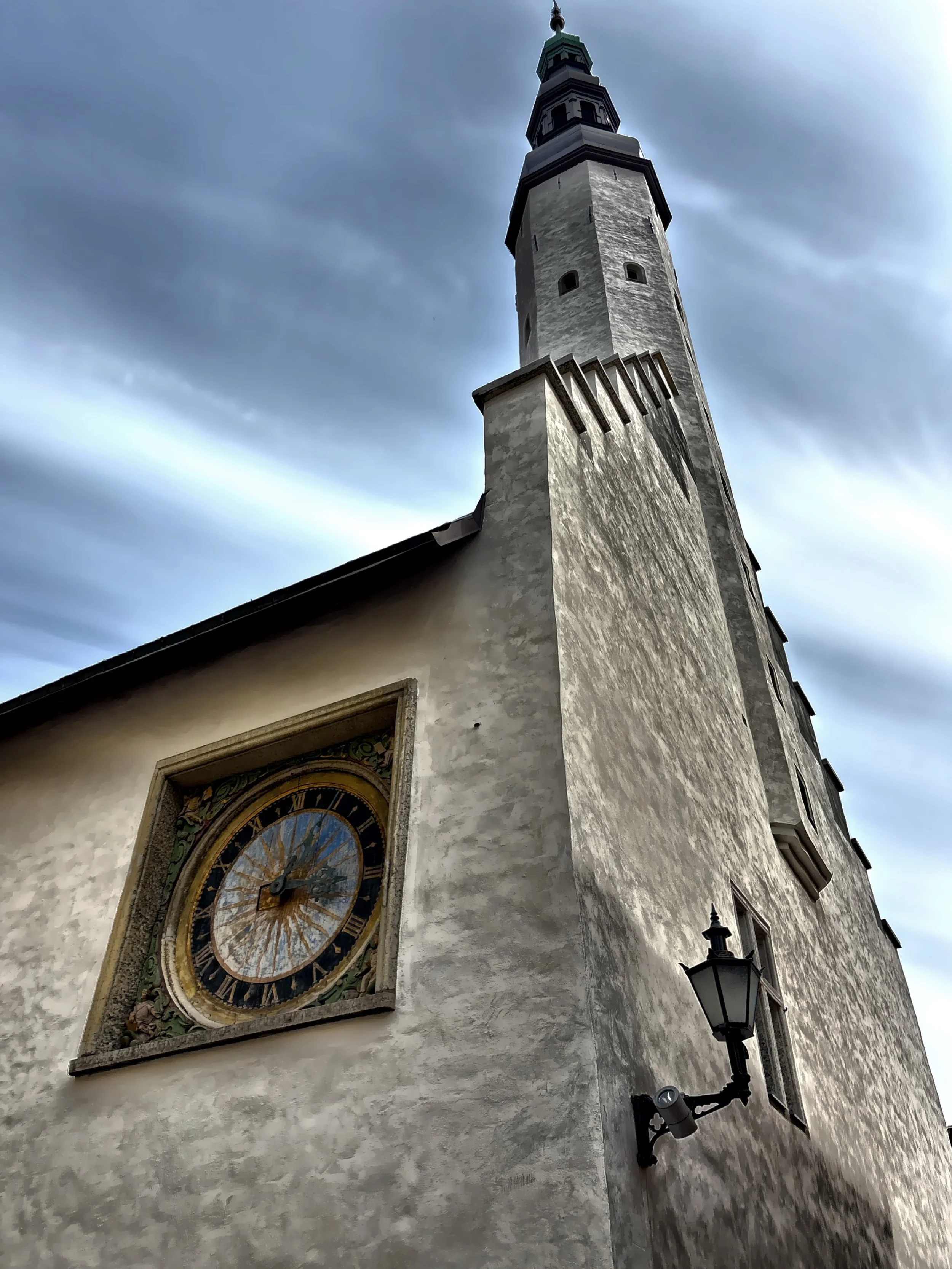
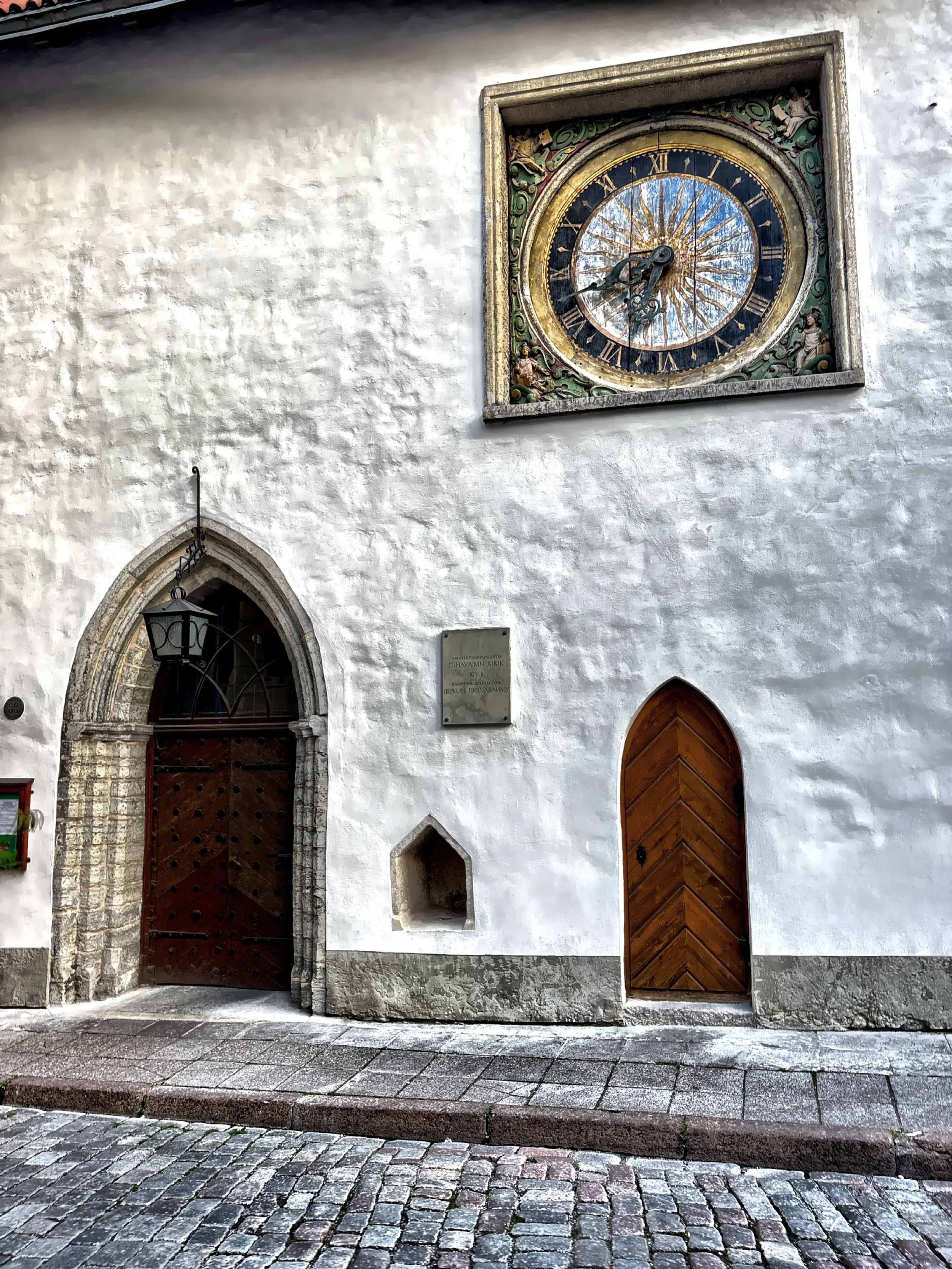
The historic clock on the exterior wall of the Church of the Holy Ghost is considered to be the oldest public clock in Tallinn. It was said to be added to the church in 1433.
.
.
.
.
The Embassy of the Russian Federation fenced with displays of protest. Estonia has been a vocal critic of Russia’s actions in Ukraine an has taken steps to sever diplomatic ties, including expelling Russian diplomats.
.
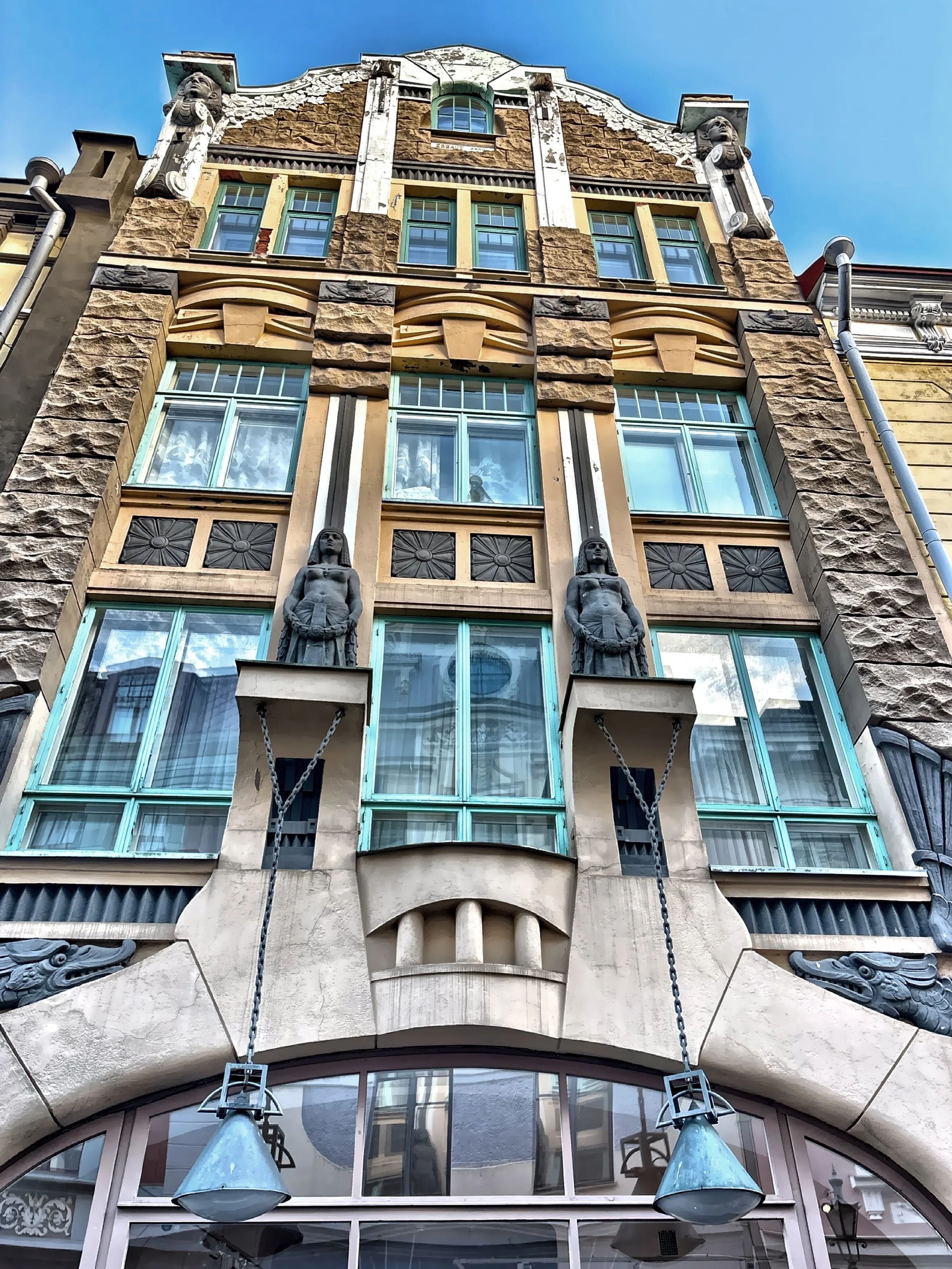
The Art Nouveau-style Draakoni Gallery was designed by Jacques Rosenbaum in 1910.
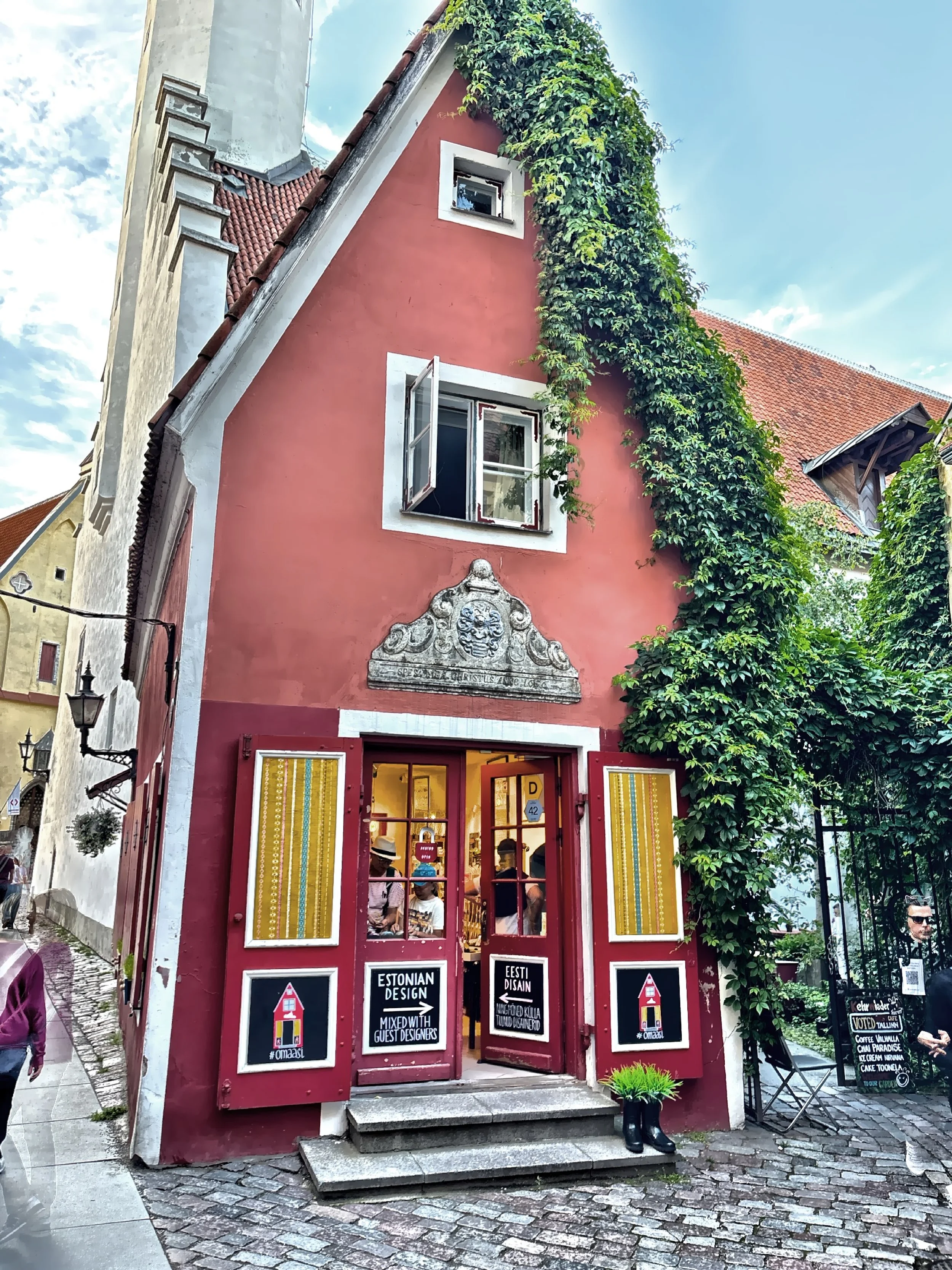
The Little Red House, built in 1656, is described as the smallest building on the shortest street in Old Town.
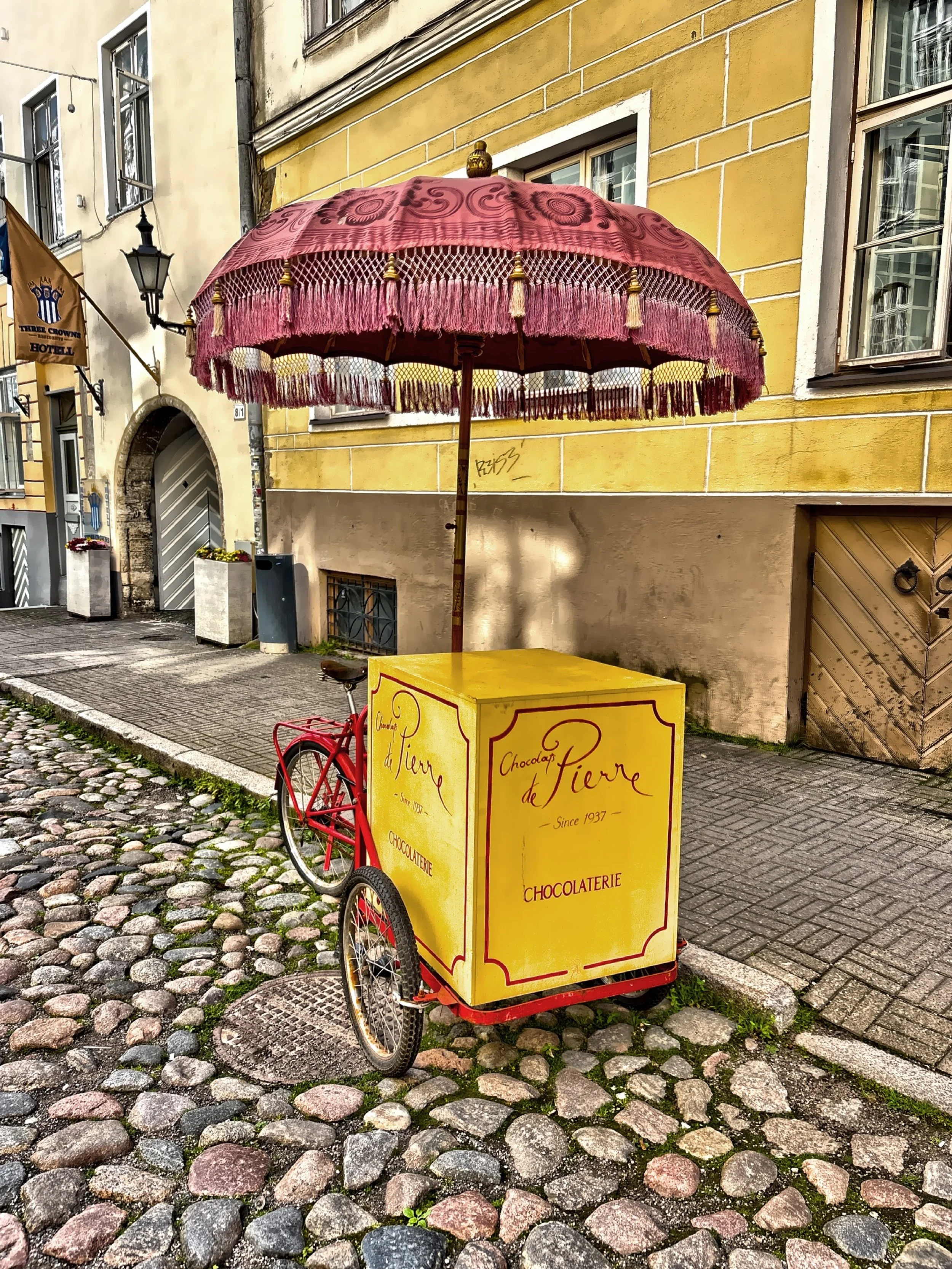
A vintage-style Chocolat de Pierre vendor’s cart.
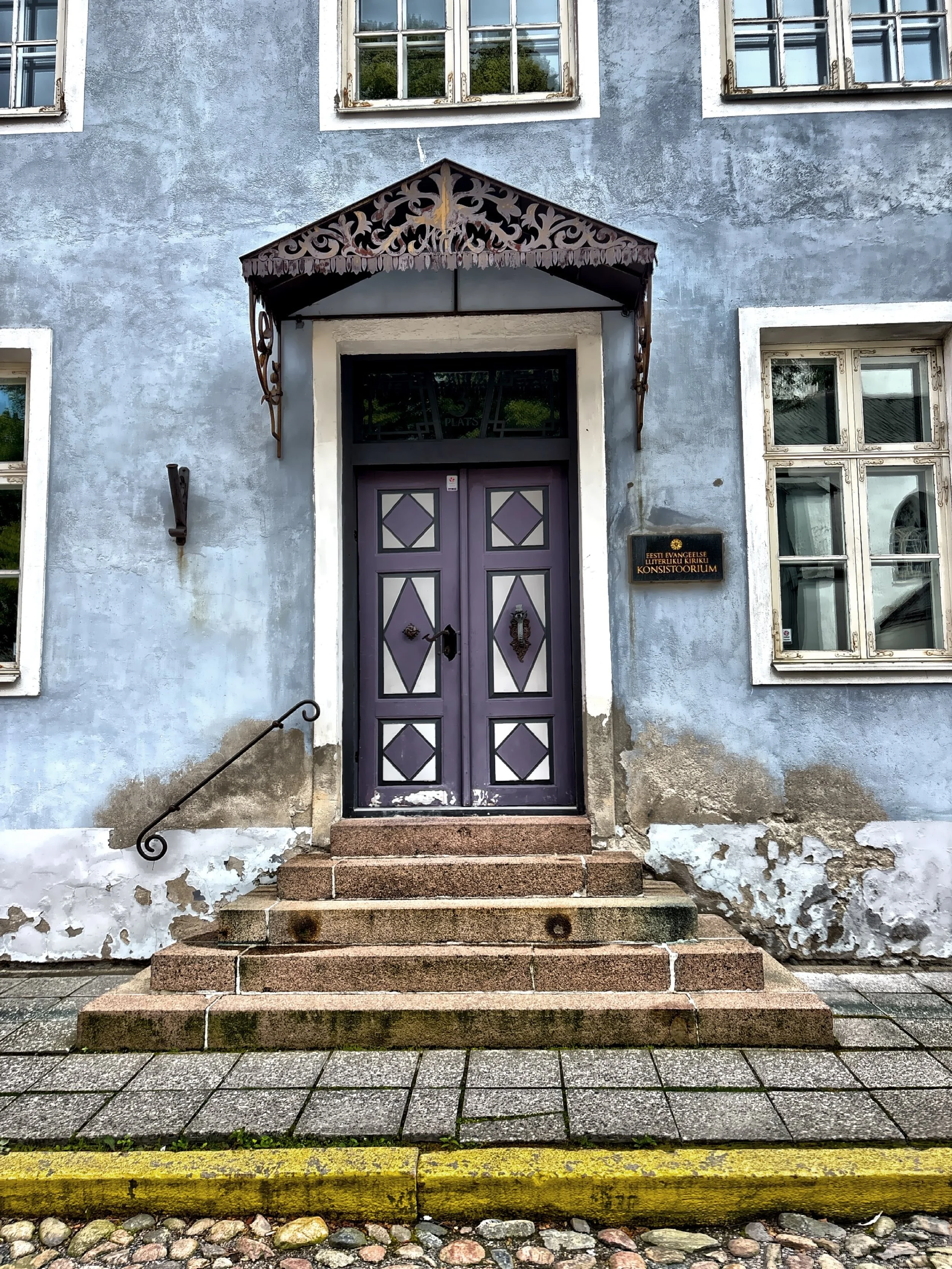
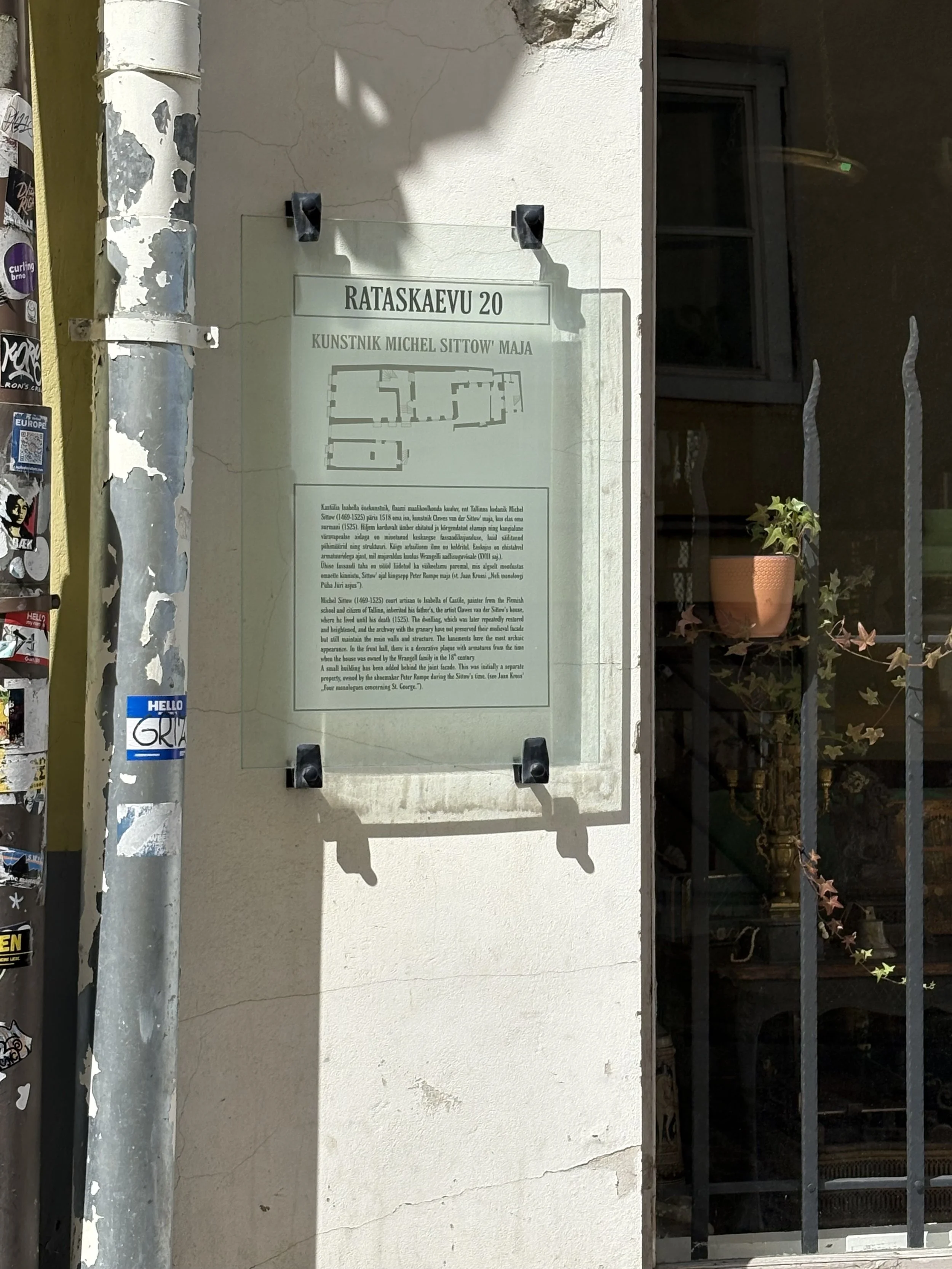
I loved how many of the old buildings had information signs attached to them, almost like little windows into their past.
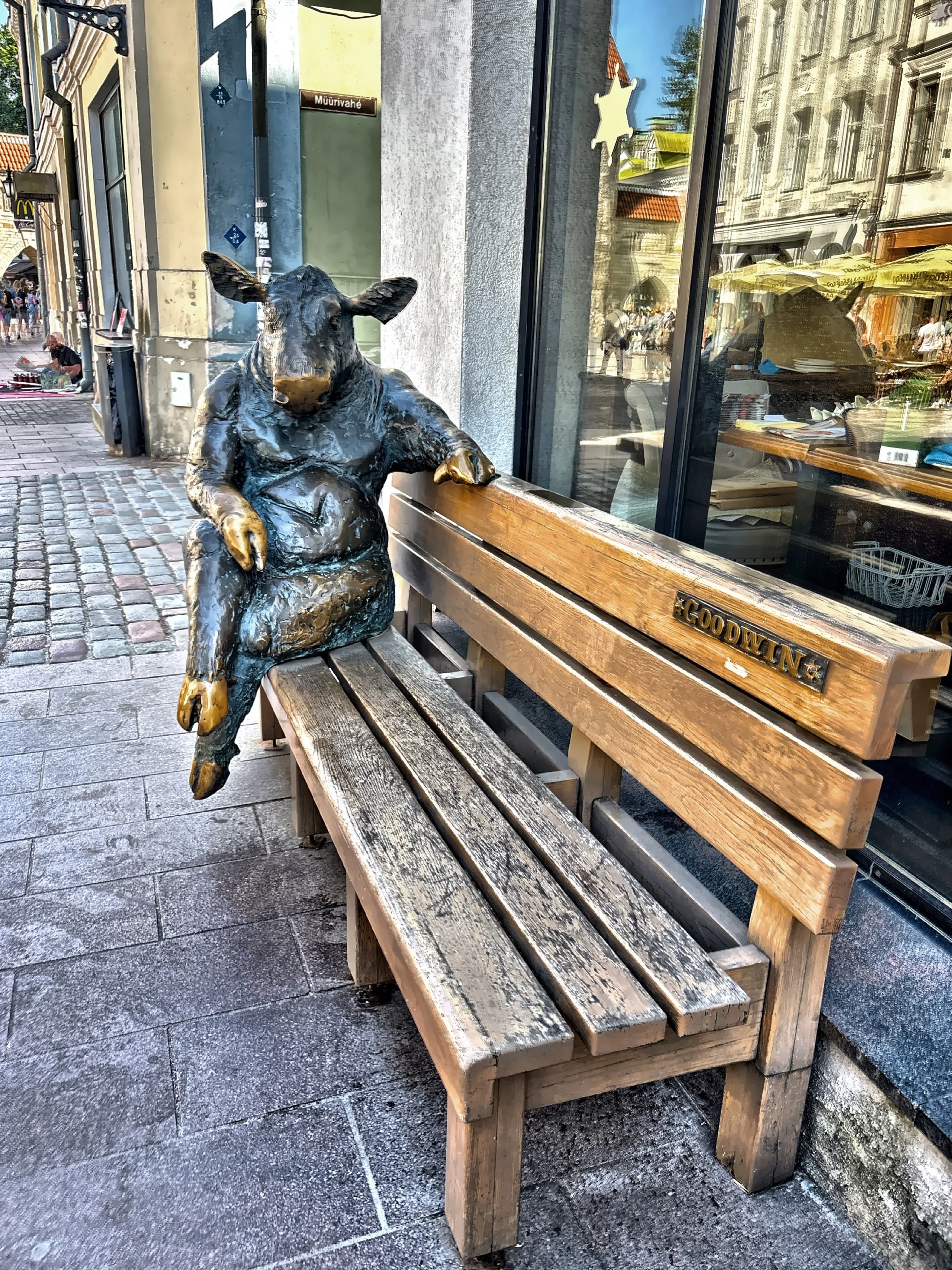
This sculpture of an anthropomorphic bull sitting on a wooden bench is called ‘Black Angus’ created by artist is Tauno Kangro in 2011.
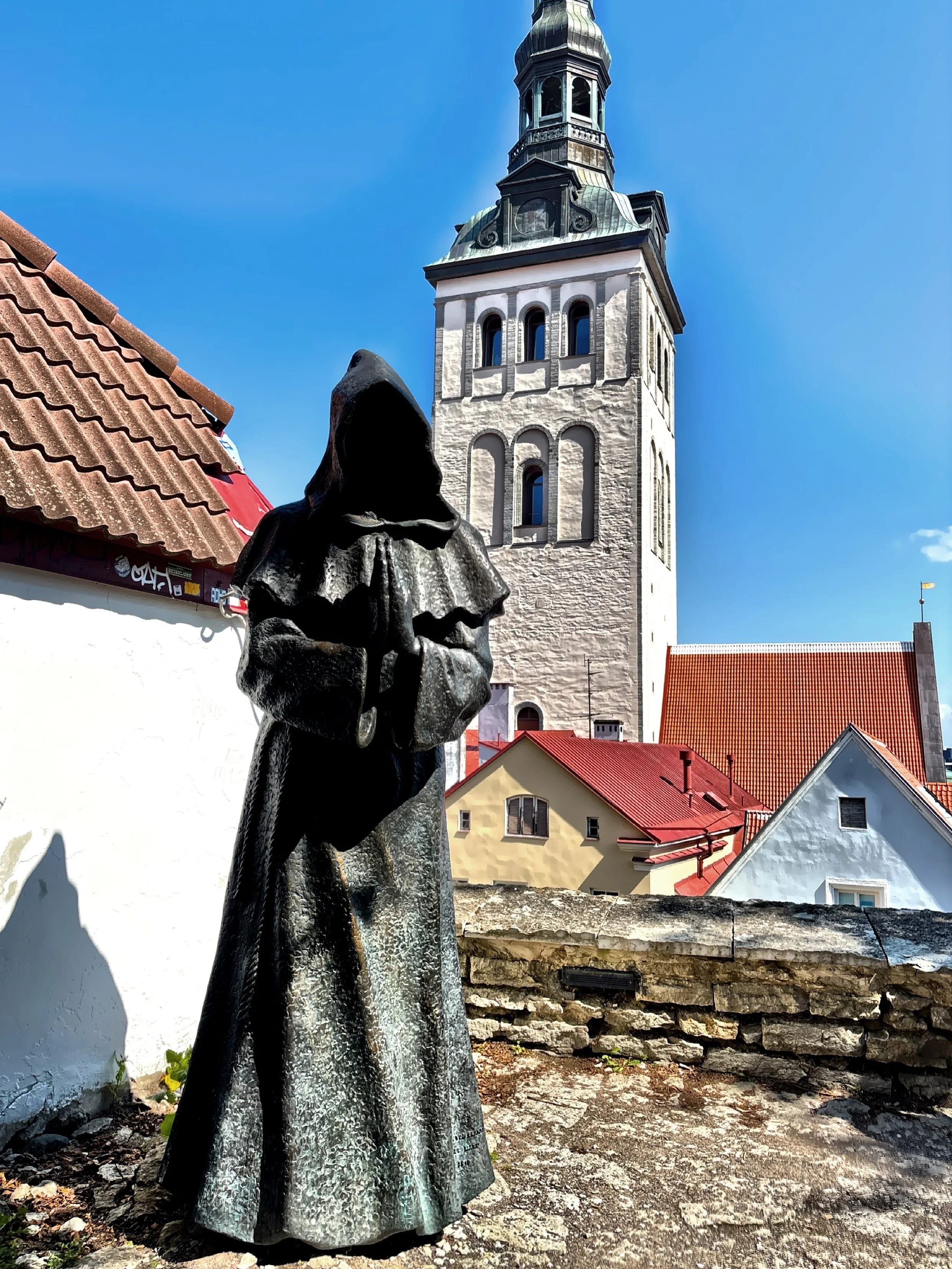
The monk sculpture is a part of a group of three, located in the Danish King’s Garden. The tower of St Nicholas Church is visible in the background.
A second monk
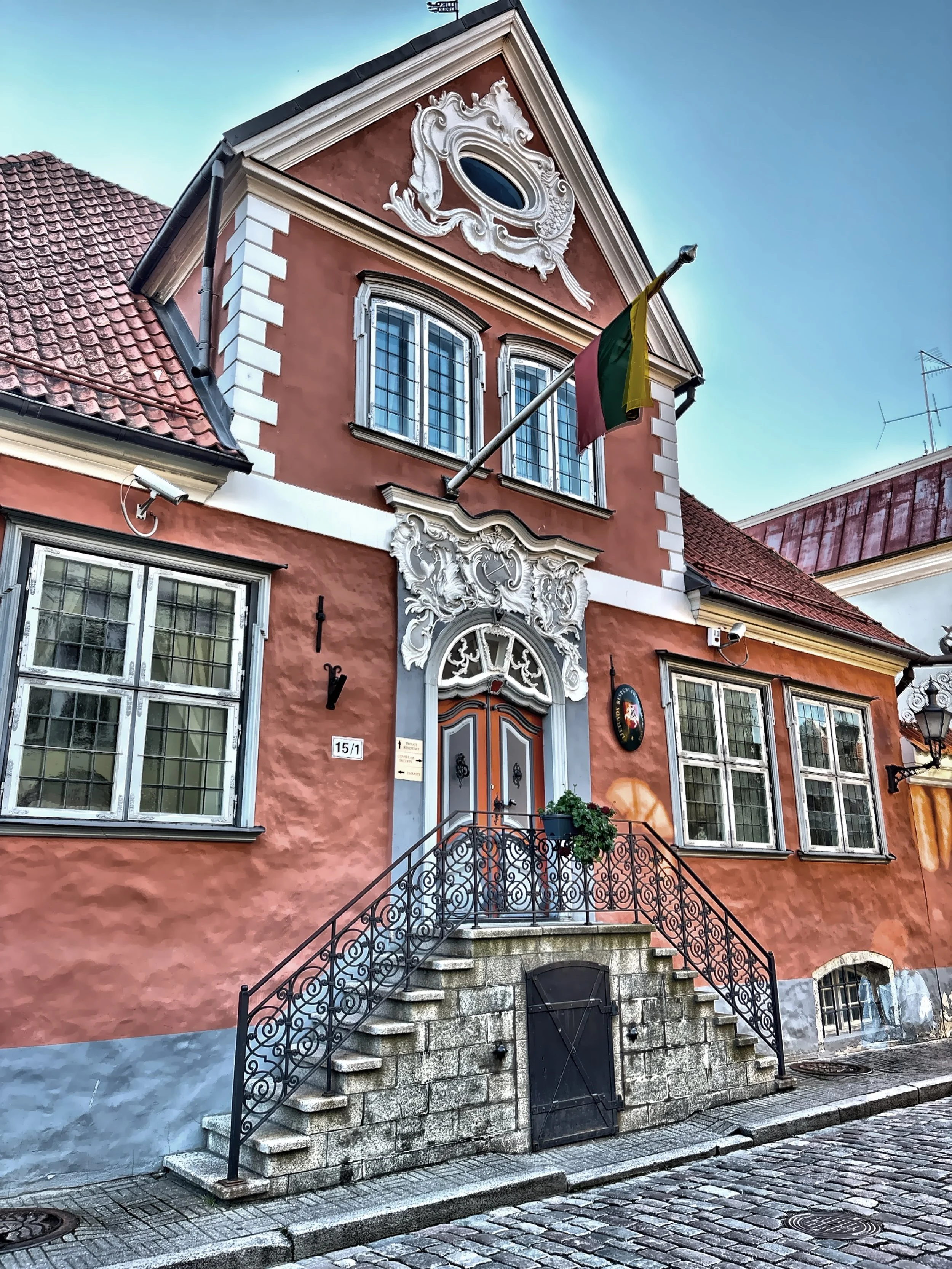
The Embassy of the Republic of Lithuania
.
.
The Cinema House building
.
.
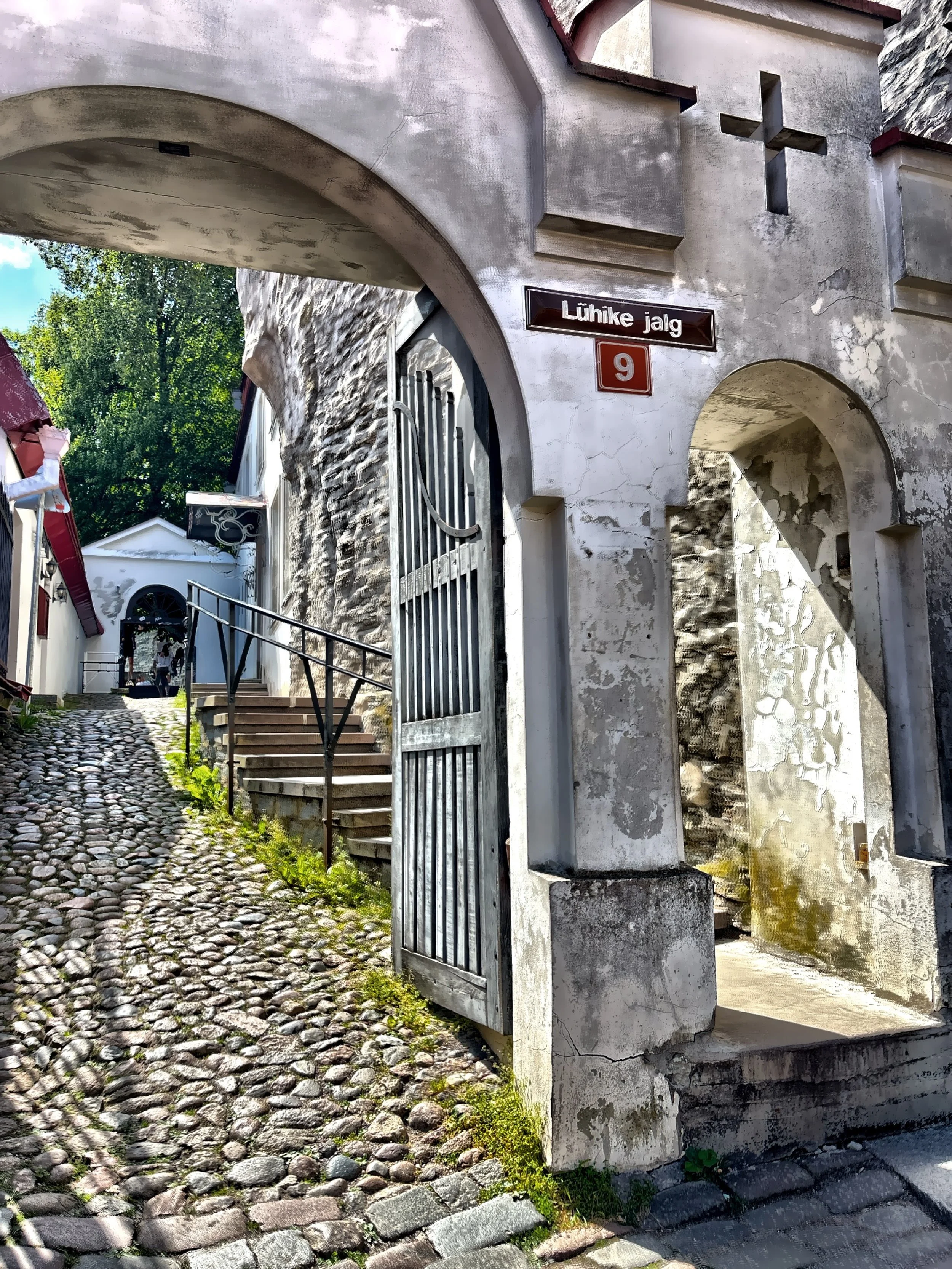
This is the short leg gate that connects the Toompea hill with the lower town.
.
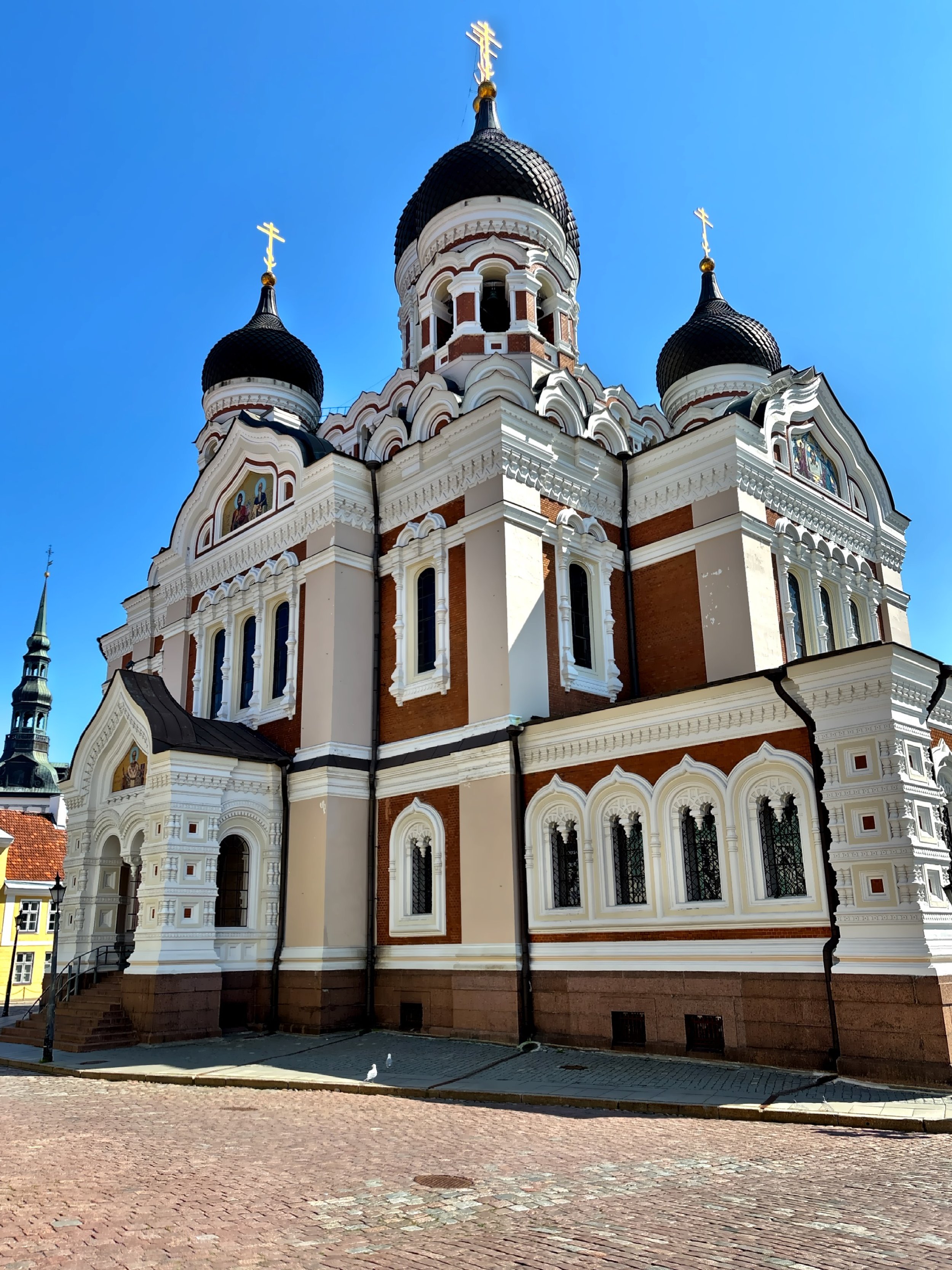
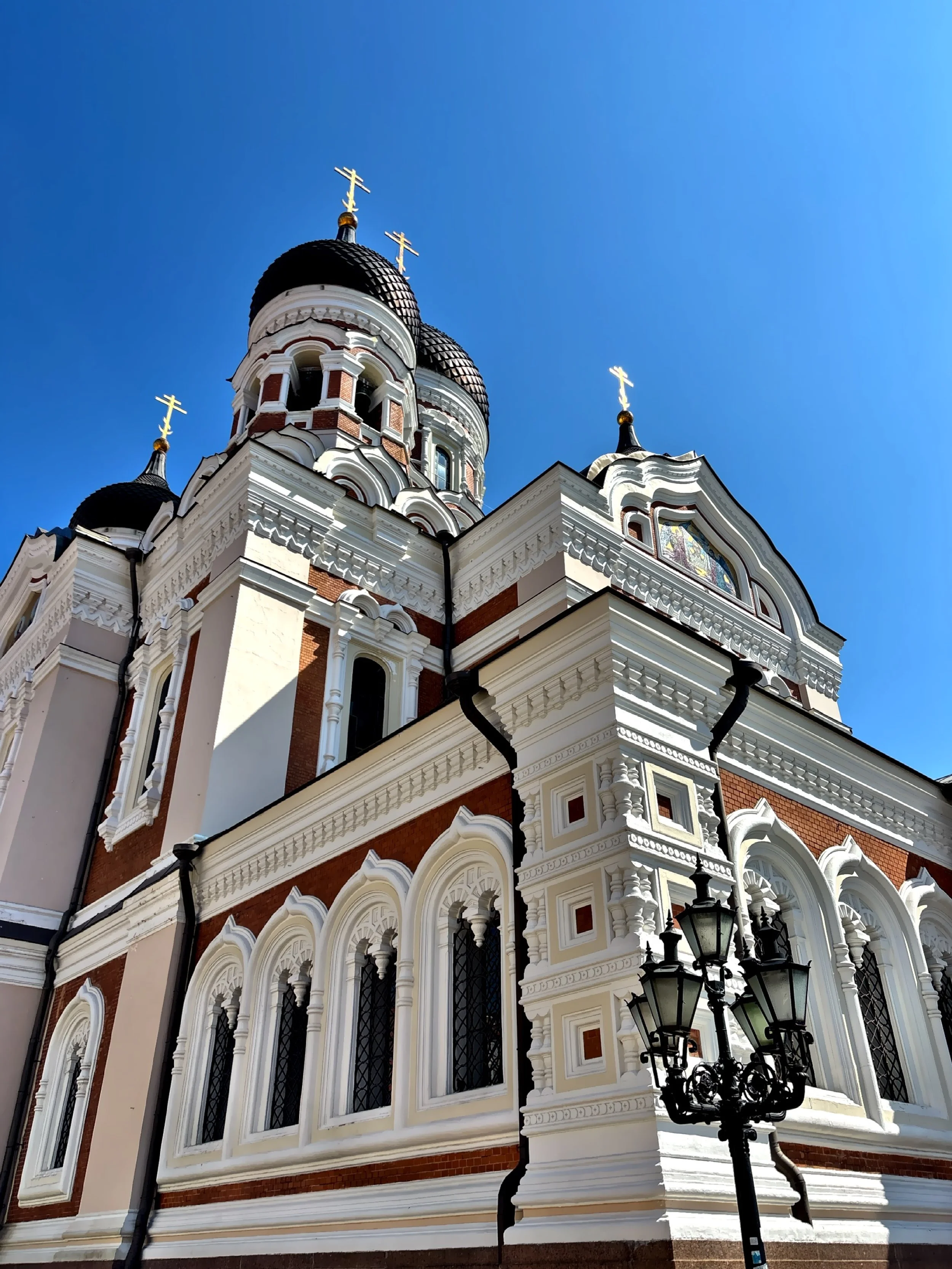
The majestic Alexander Nevsky Cathedral with its onion domes gleaming in the Baltic sun.
.
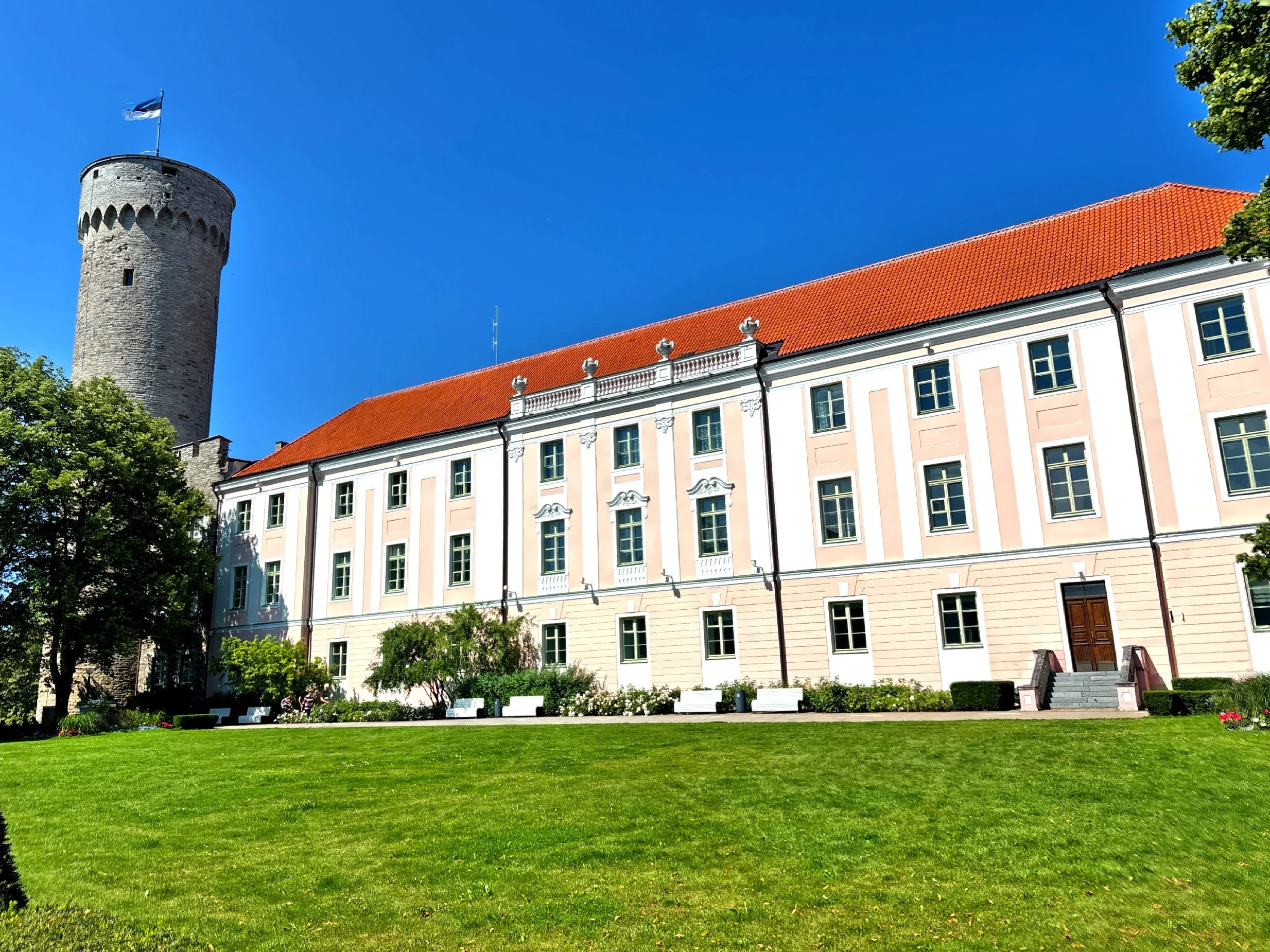
Toopea Castle set high on a hill.
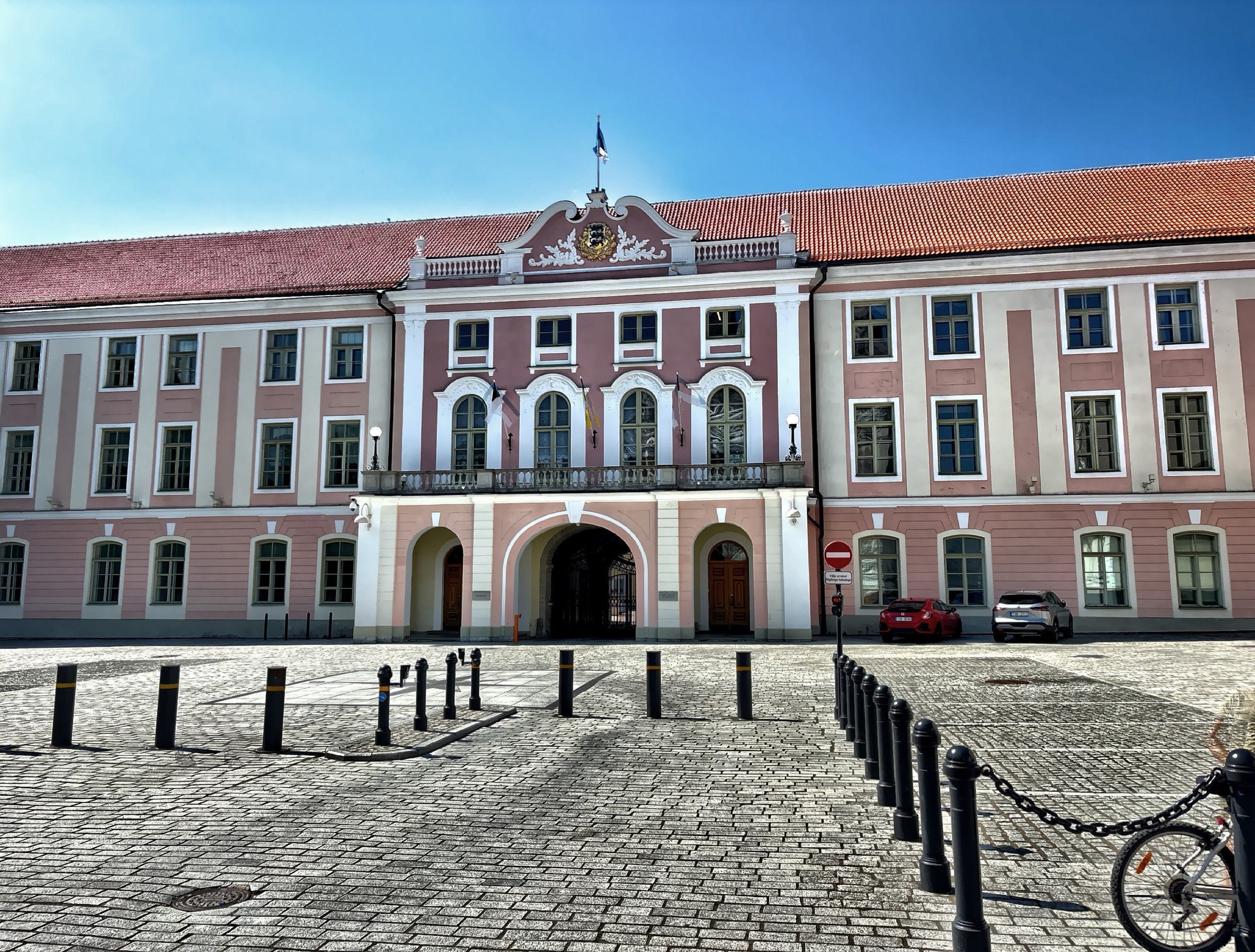
The main entrance to Toopea Castle.
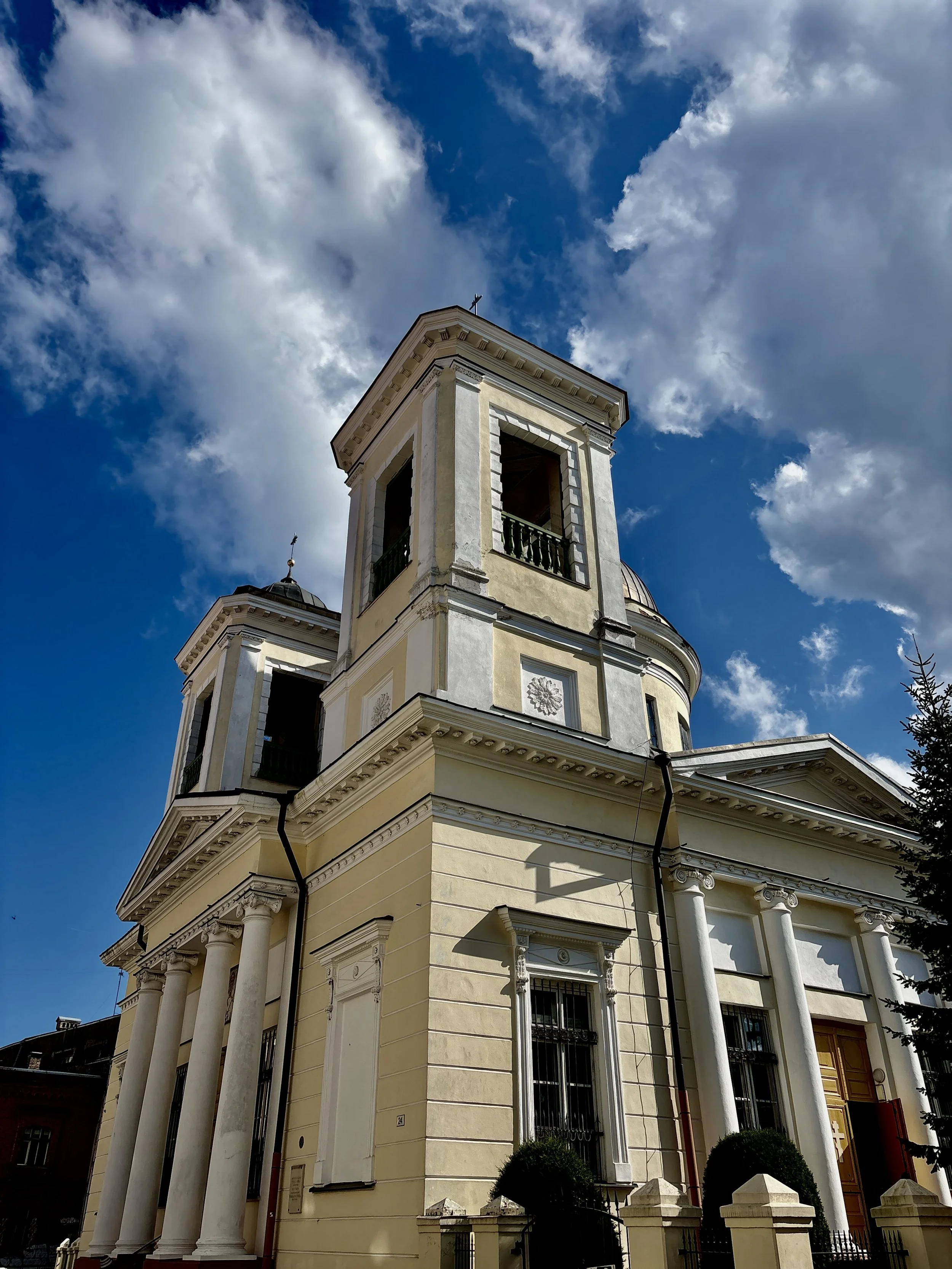
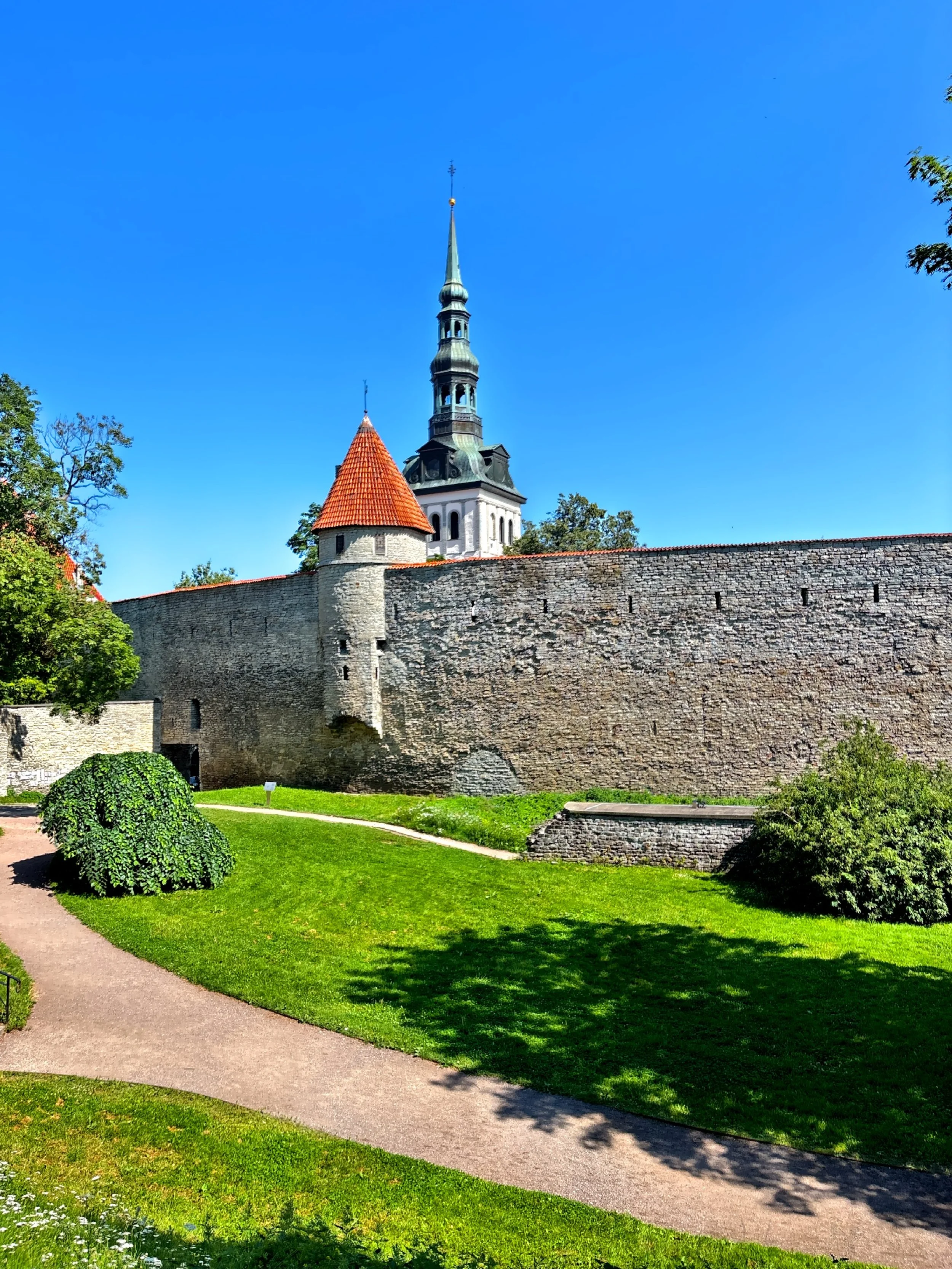
Just inside the city wall is the spire of St Nicholas Church, originally founded by German merchants in the 13th century.
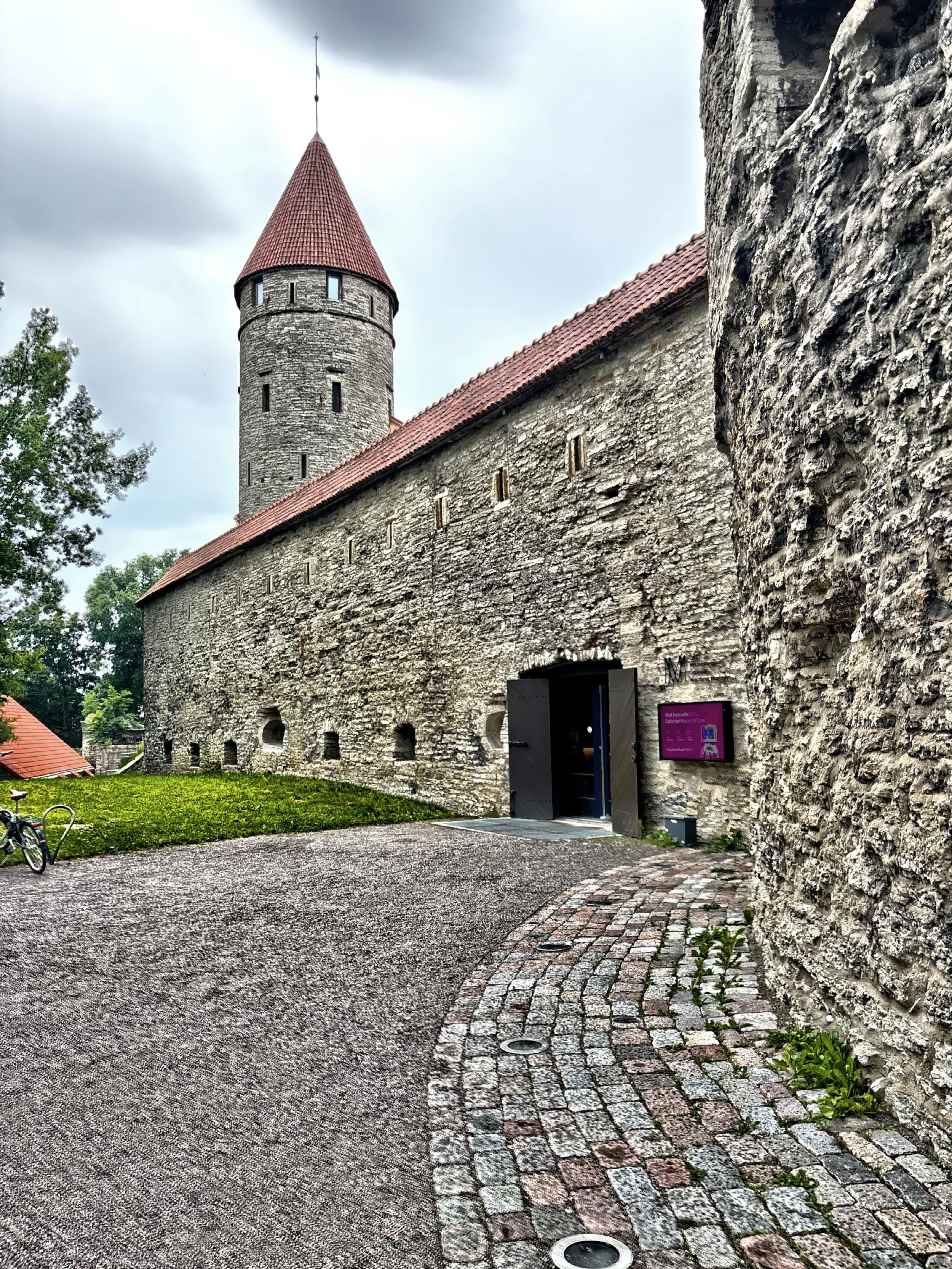
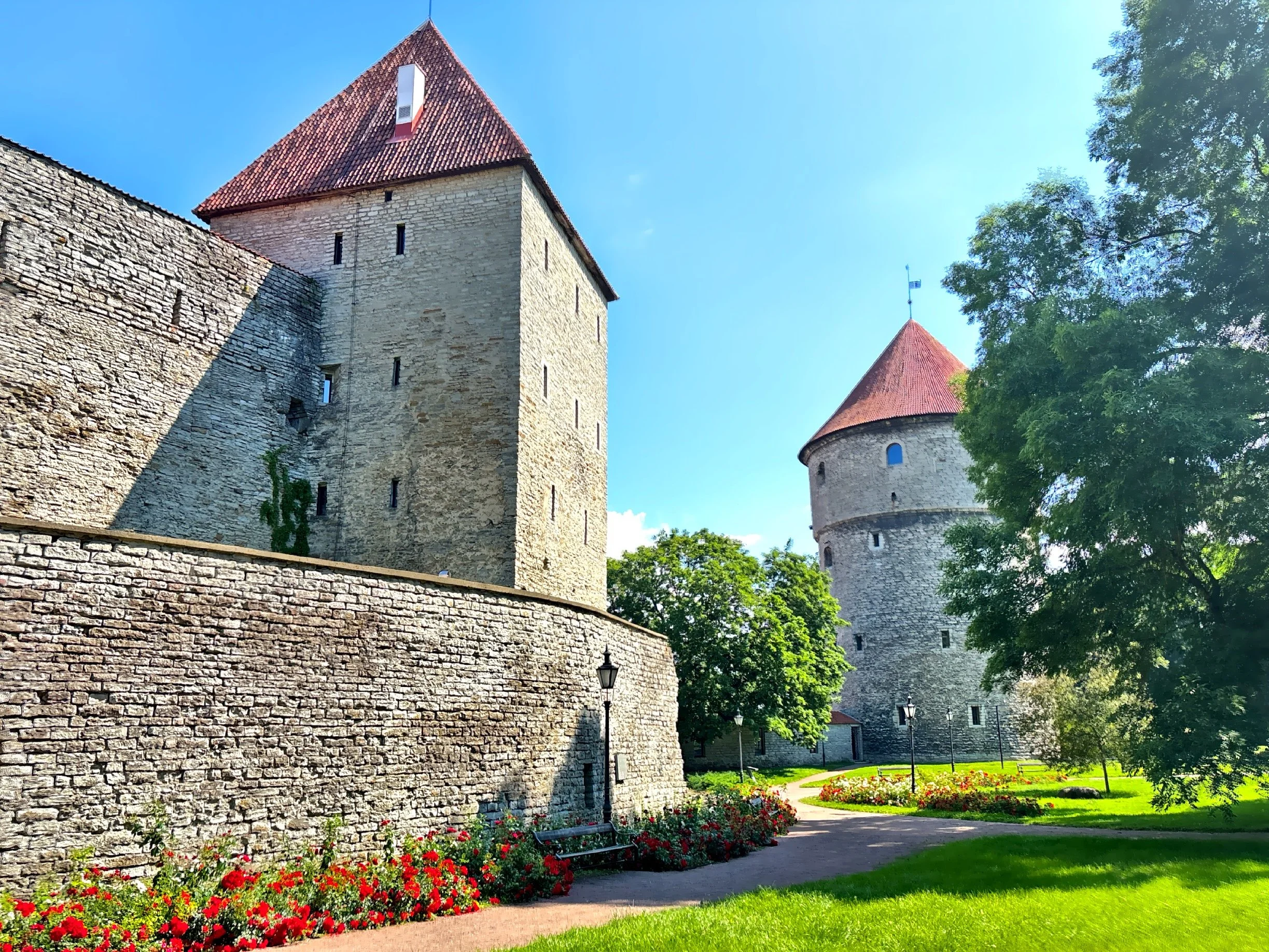
The Fortifications Museum Complex including the artillery tower built in 1475. The complex also includes Maiden’s, cannon and stable towers..
Maiden’s Tower was built in the 14th century as a defense tower.
What you should know:
Credit/debit cards are widely accepted.
Contactless payments (Apple Pay, Google Pay, etc.) are very common.
The native language is Estonian, but English is widely spoken.
The currency is the Euro (EU).
Parking can sometime be difficult at times in certain neighborhoods.
Walking is a great way to get around the city.
Locals are generally friendly but reserved – polite and helpful.
You will need a valid passport and a power convertor if you are coming from the US.
There are many restaurant and food options.
You could spend a couple of hours to a couple of days exploring here.
Tipping is not expected but some people do round up.
For more information: Tallinn, Estonia
If you enjoyed this post, feel free to check out my previous posts by clicking here.